 Refrigeration
Replacing Unionaire Sensors with Kiriazi Deep Freezer Probes: What Technicians Must Check First


Replacing Unionaire Sensors with Kiriazi Deep Freezer Probes: What Technicians Must Check First
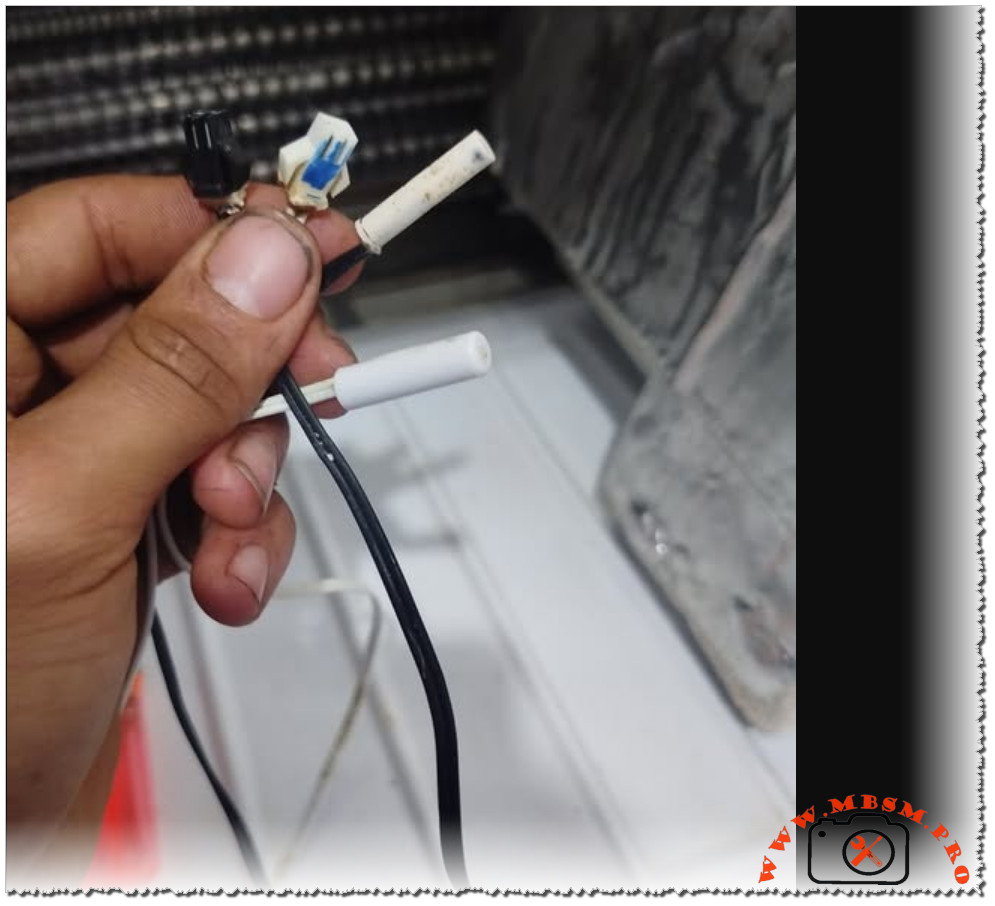
The picture shows a refrigeration technician holding several tubular temperature probes and a small white connector in front of a heavily frosted evaporator, a very typical scene when diagnosing a sensor fault in a no‑frost fridge or deep freezer. This raises the key question many technicians ask: can a Union Air (Unionaire) refrigerator or freezer sensor be safely replaced with a sensor taken from a Kiriazi deep freezer, without compromising performance or safety?
Understanding the Type of Sensors in Modern Fridges
- Most Unionaire and Kiriazi appliances use NTC thermistor sensors whose resistance changes with temperature, commonly 5 kΩ or 10 kΩ at 25 °C for domestic refrigeration.
- The probe is encapsulated in a plastic or metal tube, just like the white tubes visible in the image, and is fixed on the evaporator or in the air duct to measure cabinet or coil temperature accurately.
- The electronic control board reads the NTC value and converts it into on/off commands for the compressor and defrost heater, so any mismatch in sensor value directly alters the unit’s cooling and defrost behaviour.
When Can a Kiriazi Sensor Replace a Unionaire Sensor?
- A Kiriazi deep freezer probe can be used as a substitute for a Unionaire sensor only if the sensor type (NTC) and the nominal resistance (for example 5 kΩ or 10 kΩ at 25 °C) are the same, which is true for many domestic fridge and freezer models.
- Before installing, measure the resistance of both the old Unionaire sensor and the Kiriazi sensor with a multimeter at room temperature and again in ice water; if values are very close (within roughly 5–10%), the replacement will usually work without noticeable set‑point error.
- You also need to confirm wire length and connector type; some Kiriazi probes come with a connector that matches Unionaire, while in other cases you must move the original plug onto the new leads or use well‑insulated crimp joints, as the hand‑held bundle in the photo suggests.
Practical Replacement Steps for Field Technicians
- Always disconnect mains power before touching sensors or the control board to avoid electric shock and prevent damage to the PCB.
- Gently remove the faulty sensor from its clip on the evaporator or from the air channel, then measure its resistance at ambient and at approximately 0 °C in a cup of ice water to compare with the new Kiriazi probe.
- Install the new probe exactly where the original was, making sure it has good thermal contact with the evaporator surface or sits correctly in the airflow path, then secure it using clips or cable ties as is common in no‑frost cabinets.
Risks If the Sensor Specifications Do Not Match
- If the substitute sensor has a significantly different resistance curve, the fridge may run for too long, creating heavy ice build‑up like that visible in the background of the image, or may cut off early and never reach proper freezing temperature, leading to “not freezing enough” complaints.
- A mismatched NTC curve can confuse the automatic defrost cycle, causing recurrent issues such as blocked drain channels, solid ice around the evaporator, and poor air circulation inside the freezer compartment.
- On some digital Unionaire models, using the wrong sensor value can trigger repeated error codes or short cycling of the compressor, which shortens compressor life and annoys the customer with noisy, frequent starts.
Key Comparison Points Between Typical Unionaire and Kiriazi Probes
Pro Tips for Mbsmgroup and Mbsmpro Technicians
- Keep a stock of universal NTC probes (5 kΩ and 10 kΩ) plus resistance charts; this makes it easier to service Unionaire, Kiriazi, and other brands with one organized sensor kit.
- Before handing the appliance back to the customer, monitor freezer temperature for about 24 hours; ideally the internal thermometer should stabilise around −18 °C to −22 °C under normal conditions, and the defrost cycle should run without excessive ice accumulation.