Mbsmpro.com, Electrical Insulators, Disc, Glass, Pin, Suspension, Strain, Post, Shackle, Egg, DIN T/F, Railway, Precipitator, Overhead Line, High Voltage, Porcelain
Overview of Electrical Insulators in Overhead Power Systems
Electrical insulators are critical components that keep high‑voltage conductors mechanically supported while preventing dangerous current leakage to poles, towers, or the ground. A well‑designed insulator system improves network reliability, reduces outages, and protects people, equipment, and the environment. Modern networks use a family of specialized insulators, each optimized for a specific mechanical duty, voltage level, and pollution environment.
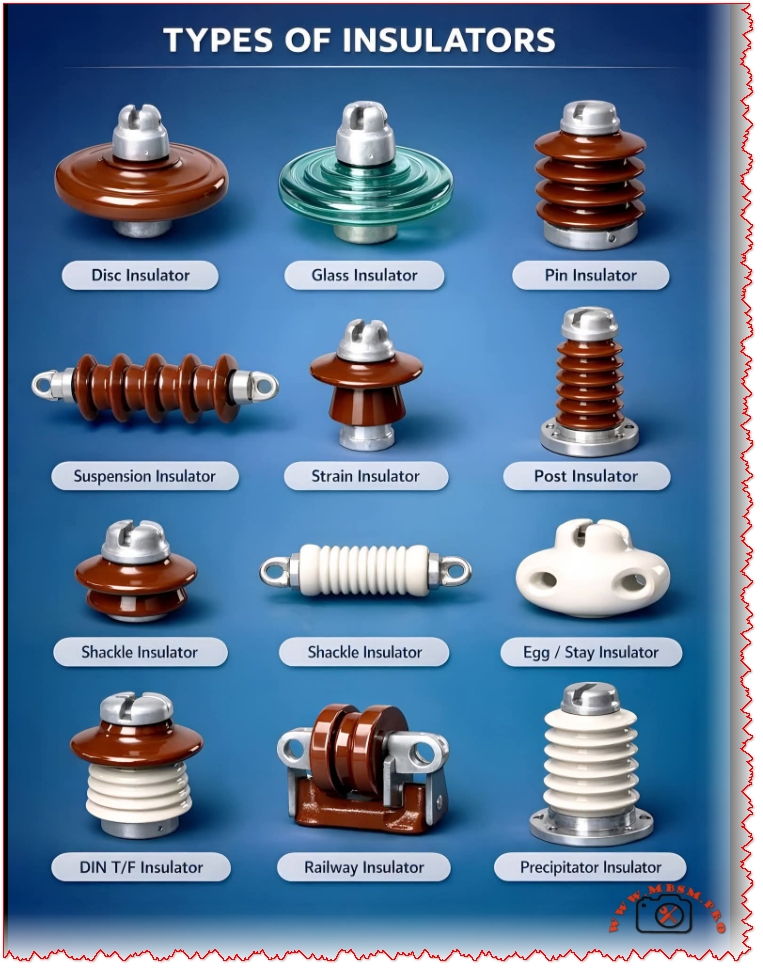
Main Types of Line Insulators
Engineers classify line insulators by how they are mounted and how they carry mechanical load along the conductor path. The list below matches the most widely used designs in transmission and distribution systems.
- Disc insulator (porcelain or glass) used as basic element in suspension and strain strings above 33 kV.
- Glass insulator disc offering high pollution resistance and easy visual detection of damage.
- Pin insulator mounted rigidly on crossarms, typically up to about 33 kV.
- Suspension insulator string built from multiple discs for medium and high‑voltage lines.
- Strain insulator string placed at line angles, dead‑ends, and river crossings to handle high tension.
- Post insulator used vertically on poles or substations where compact construction is required.
- Shackle (spool) insulator for low‑voltage distribution and service drops in urban networks.
- Egg or stay insulator inserted in guy wires to keep pole stays safely insulated near ground level.
- DIN transformer (DIN T/F) bushing‑type insulator for transformer terminations in accordance with IEC/EN dimensions.
- Railway insulator designed for catenary and contact‑wire systems in electrified traction lines.
- Precipitator insulator tailored for electrostatic precipitators in power plants and heavy industry.
Technical Characteristics and Applications
Different line locations impose very different combinations of electrical stress, mechanical tension, and environmental exposure. Selecting the right insulator type is therefore a design decision that directly affects line lifetime and maintenance cost.
Typical service applications
- Disc / suspension / strain: High‑voltage overhead lines (33–765 kV) where flexibility, modularity, and easy replacement are required.
- Pin / post: Sub‑transmission and medium‑voltage feeders where compact profile and rigid support are important.
- Shackle / egg: Low‑voltage networks and guy wires where insulation distances are small but mechanical shock can be high.
- DIN T/F / precipitator / railway: Substations, power plants, and traction systems where insulators work as bushings, support insulators, or current‑collector supports under strong pollution and vibration.
Key design parameters
Engineers usually evaluate insulators using a set of standardized parameters.
- Rated voltage and creepage distance to prevent flashover under wet and polluted conditions.
- Mechanical failing load (tension or cantilever) to withstand conductor weight, wind and ice loads, and short‑circuit forces.
- Material choice (porcelain, toughened glass, or composite polymer) according to climate, pollution level, and maintenance strategy.
- Standard compliance such as IEC 60383 or ANSI C29 to guarantee interchangeability across manufacturers.
Comparison of Porcelain, Glass, and Composite Insulators
Material selection is often as important as insulator geometry, especially in corrosive or coastal environments. The table below summarizes the most relevant differences for transmission designers.
Performance Comparison of Insulator Types
Beyond material choice, the functional type of insulator strongly influences line design, outage statistics, and maintenance planning. The next table compares several key types that appear together in many network diagrams.
SEO‑Optimized Focus Keyphrase, Title, Meta and Slug
- Focus keyphrase (Yoast SEO)
types of electrical insulators disc glass pin suspension strain post shackle egg stay railway precipitator overhead line applications - SEO title (Yoast SEO)
Types of Electrical Insulators: Disc, Glass, Pin, Suspension, Strain, Post, Shackle, Egg, Railway and More | Mbsmpro.com - Meta description (Yoast SEO)
Explore all major types of electrical insulators—disc, glass, pin, suspension, strain, post, shackle, egg, railway and precipitator. Understand ratings, materials and applications to design safer overhead lines. - Slug (Yoast SEO)
types-electrical-insulators-disc-glass-pin-suspension-strain-post-shackle-egg-railway-precipitator - Tags
electrical insulators, disc insulator, glass insulator, pin insulator, suspension insulator, strain insulator, post insulator, shackle insulator, egg insulator, stay insulator, railway insulator, precipitator insulator, porcelain insulator, glass disc insulator, composite insulator, overhead line design, high voltage transmission, power distribution, Mbsmgroup, Mbsm.pro, mbsmpro.com, mbsm
WordPress Excerpt (first 55 words)
Electrical insulators are fundamental safety components in overhead transmission and distribution networks, keeping high‑voltage conductors mechanically supported while blocking dangerous leakage currents. This article explains the main types of electrical insulators—disc, glass, pin, suspension, strain, post, shackle, egg, railway and precipitator—and compares their materials, voltage ratings, and ideal applications for modern power systems.