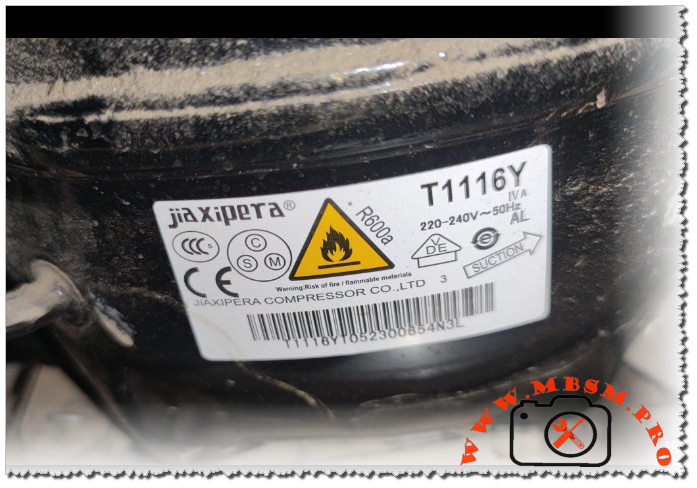
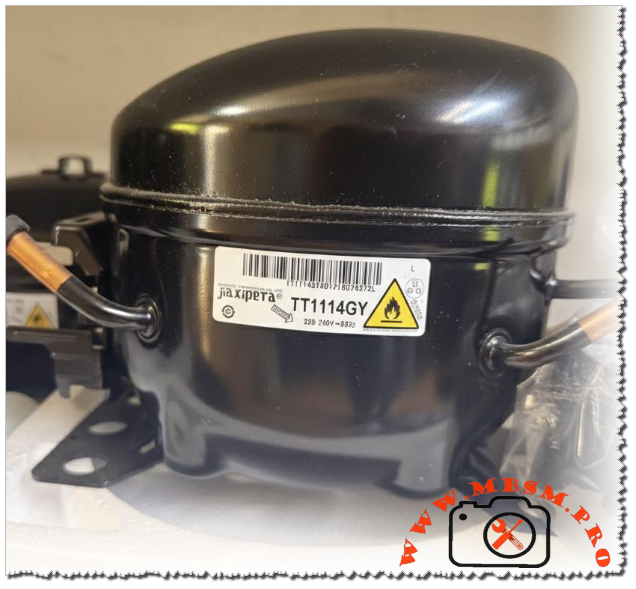
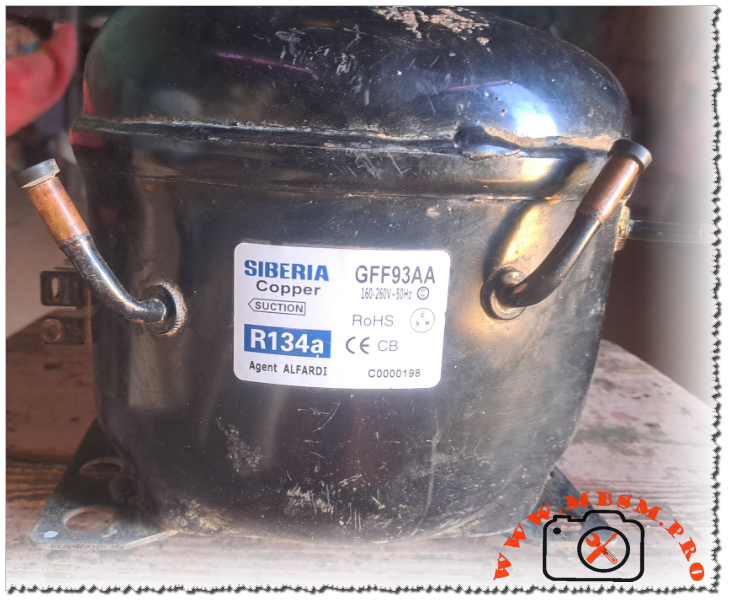
R134a vs. R600a Compressor Conversion

R134a vs. R600a Compressor Conversion mbsmpro

Mbsmpro.com, Comparison, R134a vs R600a, Compressor Retrofit, Displacement Calculation, Capillary Sizing, Refrigeration Repair


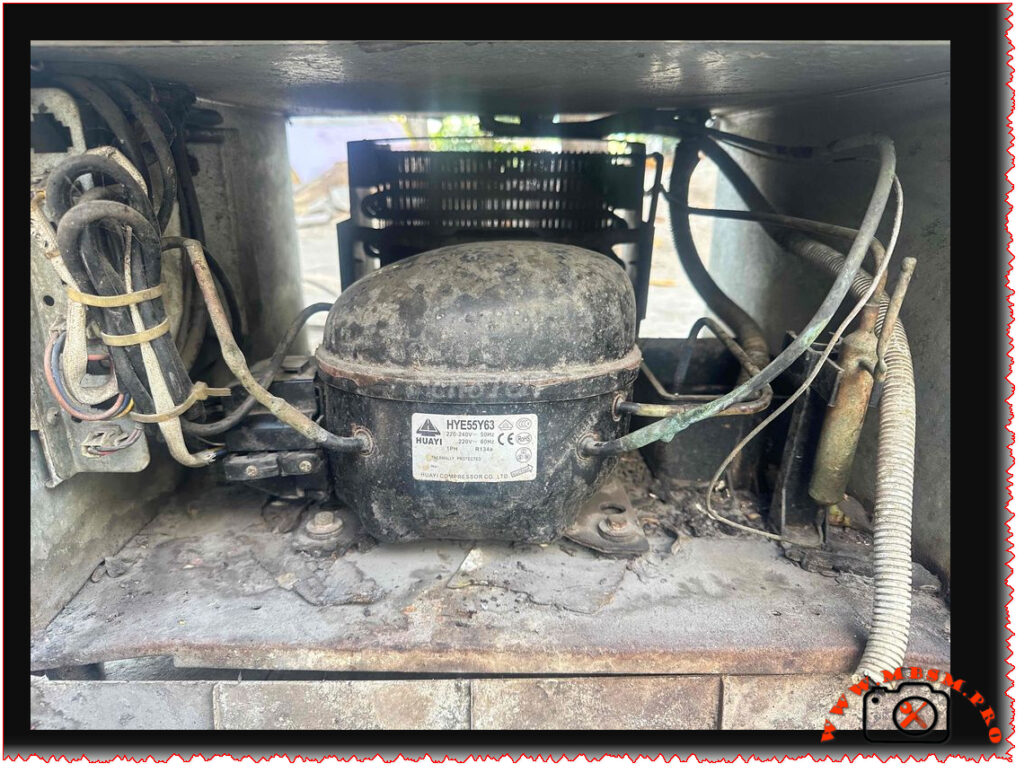
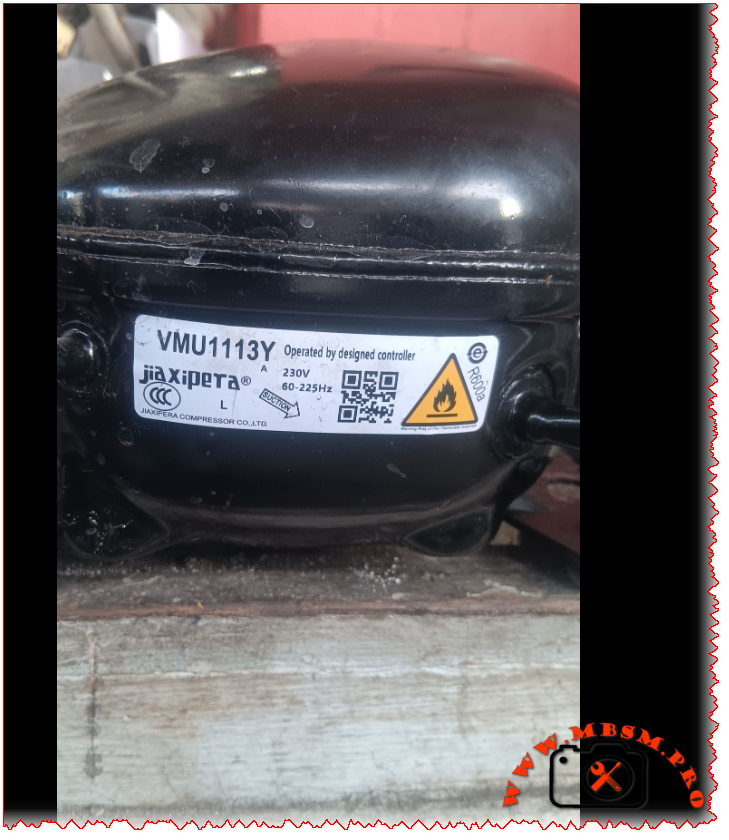
The Technician’s Guide: R134a vs. R600a Compressor Conversion

In the evolving world of refrigeration repair, the transition from HFCs (R134a) to Hydrocarbons (R600a) is no longer a choice—it is the standard. For the artisan bricoleur, understanding the relationship between these two refrigerants is critical. You cannot simply swap one for the other without understanding the physics of displacement and pressure.

This guide breaks down exactly what happens when you compare an R134a system to an R600a system, and how to correctly calculate the replacement if you are retrofitting a cabinet (changing the compressor and gas).

The Golden Rule: Displacement is King

The biggest mistake technicians make is matching “Horsepower to Horsepower” (e.g., swapping a 1/5 HP R134a with a 1/5 HP R600a). Do not do this.

R600a gas is much less dense than R134a. To pump the same amount of heat, the R600a compressor must have a larger cylinder volume (displacement).

  • R134a Displacement Factor: 1.0
  • R600a Displacement Factor: ~1.7 to 2.0

If you remove an R134a compressor with a 5.0 cc displacement and replace it with a 5.0 cc R600a compressor, the fridge will never get cold. You need an R600a compressor with approximately 8.5 cc to 10 cc to do the same work.


Technical Comparison: R134a vs R600a

Here is the data you need to understand the behavior of these gases inside your pipes.

Feature R134a (Tetrafluoroethane) R600a (Isobutane) The Difference
Operating Pressure (Low Side) 0 to 2 PSI (Positive pressure) -5 to -10 inHg (Vacuum) R600a often runs in a vacuum. Leaks suck air in.
Displacement Required Low (Dense gas) High (Light gas) R600a compressor needs ~70-80% bigger cylinder.
Charge Amount 100% (Baseline) ~45% of R134a mass If R134a took 100g, R600a takes only ~45g.
Oil Compatibility POE (Polyolester) Mineral or Alkylbenzene R600a is compatible with mineral oil (cheaper/less hydroscopic).
GWP (Global Warming Potential) 1430 (High) 3 (Very Low) R600a is eco-friendly.
Flammability A1 (Non-Flammable) A3 (Highly Flammable) Requires spark-proof tools and care.

Retrofit Table: Equivalent Displacement (Estimated)

Use this table when you are forced to replace a dead R134a compressor with a new R600a model on an existing fridge.

Original R134a Compressor Approx. Displacement Target R600a Compressor Approx. Displacement
1/6 HP 4.0 cc 1/5 HP ~7.0 – 8.0 cc
1/5 HP 5.5 cc 1/4 HP ~9.0 – 10.5 cc
1/4 HP 7.5 cc 1/3 HP ~13.0 – 14.0 cc
1/3 HP 9.0 cc 3/8 HP ~16.0 cc

Note: These are estimations. Always check the Cooling Capacity (Watts) at -23.3°C (LBP) in the datasheet. The Watts must match!


Exploitation: The Capillary Tube & Oil Dilemma

When converting a system designed for R134a to use an R600a compressor, you face two hurdles:

  1. Capillary Tube: R600a has a higher latent heat of vaporization. Ideally, it requires a slightly different restriction than R134a. However, in practice (for repair jobs), the original R134a capillary tube often works “acceptably” because the lower mass flow of R600a balances out with its higher specific volume. Do not shorten the capillary unless you have high superheat issues.
  2. Oil Mixing: R134a systems contain POE oil stuck in the evaporator. R600a compressors come with Mineral oil. While R600a can tolerate some POE, it is best to flush the system with nitrogen and a flushing agent to remove as much old POE oil as possible before brazing the new compressor.

Safety First: Working with Isobutane

  • No Brazing on Charged Systems: Never use a torch if there is any chance of gas in the system. Use tube cutters.
  • Ventilation: R600a is heavier than air. It settles in low spots (floors, inspection pits). Ensure good airflow.
  • Spark-Free: When vacuuming, ensure your pump switch and relay are not sparking sources near the vents.

R134a vs. R600a Compressor Conversion mbsmpro

Focus Keyphrase:

R134a vs R600a Compressor Conversion Comparison

SEO Title:

Mbsmpro.com, Comparison, R134a vs R600a, Compressor Retrofit, Displacement Calculation, Capillary Sizing, 1/5 HP

Meta Description:

Master the R134a to R600a conversion. Learn why displacement ratios matter (1.7x rule), how to calculate charge weight (45%), and essential safety tips for retrofitting fridge compressors.

Slug:

r134a-vs-r600a-compressor-conversion-displacement-guide

Tags:

Mbsmgroup, Mbsm.pro, mbsmpro.com, mbsm, R600a Conversion, R134a Replacement, Compressor Displacement, Fridge Repair, HVAC Retrofit, Isobutane Safety, Capillary Sizing, 1/5 HP Compressor

Excerpt:

Switching from R134a to R600a requires more than just changing the gas. This guide explains the critical “Displacement Rule”—why R600a compressors need nearly double the cylinder volume of R134a units to produce the same cooling. We cover charge calculation (45% rule), oil compatibility, and safety protocols for the modern artisan.


Embraco NEU2178GK, compressor

Embraco NEU2178GK, compressor mbsmpro

Mbsmpro.com, Embraco, NEU2178GK, 1 HP, LBP, R404A, 220-240V, 50Hz, 16.8 cc, CSR, Commercial Freezer Compressor


The Cold Heart of Commercial Freezing: Embraco NEU2178GK

If you are an artisan bricoleur or a refrigeration technician working on commercial island freezers or restaurant reach-ins, you have likely encountered the Embraco NEU2178GK. This isn’t your standard domestic fridge compressor; this is a 1 HP powerhouse designed for the heavy lifting required by Low Back Pressure (LBP) applications using R404A or R507 refrigerant.

Known for its robust “Made in Slovakia” build, the NEU2178GK is a CSR (Capacitor Start, Capacitor Run) motor. This is a critical detail for technicians: unlike simpler PTCSCR compressors, this unit relies on a precise electrical box containing both a start capacitor and a run capacitor to manage its high starting torque (HST). It is the engine you choose when you need reliability in a -30°C environment.

Why the “GK” Matters

In Embraco’s nomenclature, the “K” at the end (as in NEU2178GK) often signifies a specific motor type—in this case, one designed for High Starting Torque. This means it can restart even if pressures haven’t fully equalized, a common scenario in busy commercial kitchens where doors are opened frequently.


Technical Specifications: The Data You Need

Here is the breakdown of the technical capabilities of this compressor.

Feature Specification
Model NEU2178GK
Brand Embraco (Nidec)
Horsepower (HP) 1 HP
Displacement 16.80 cm³ (cc)
Refrigerant R404A / R507 / R452A
Application LBP (Low Back Pressure)
Voltage 220-240V ~ 50Hz
Cooling Capacity ~900 W (at -23.3°C ASHRAE)
Motor Type CSR (Capacitor Start & Run)
Start Capacitor 88 – 108 µF / 330V
Run Capacitor 15 µF / 400V
Oil Type POE 22 (Polyolester)
Oil Charge 350 ml
Expansion Device Capillary or TXV (Expansion Valve)

Exploitation: Installation Tips for the Artisan

Installing a 1 HP commercial compressor is different from swapping a domestic one. Here are the “golden rules” for the NEU2178GK:

  1. The Electric Box is Mandatory: You cannot bypass the capacitor box. This motor needs the 15µF run capacitor to maintain efficiency and keep the windings cool, and the start capacitor to kick the rotor into motion against high head pressure.
  2. Moisture is the Enemy: This compressor comes filled with POE oil. POE is like a sponge for humidity. If you leave the plugs open for more than 15 minutes, the oil absorbs moisture that vacuum pumps cannot remove. Keep it sealed until the last second.
  3. Nitrogen Sweep: Because R404A systems use POE oil, any carbon from brazing will turn into sludge and block the capillary tube immediately. Always braze with a trickle of nitrogen flowing through the pipes.
  4. R452A Compatibility: If R404A is expensive or restricted in your area, this compressor is often compatible with R452A, a drop-in replacement with a lower GWP (Global Warming Potential), but always check the discharge temperature.

Comparison: Embraco NEU2178GK vs. The Competition

When you can’t find the exact Embraco model, you need a replacement. Here is how it stacks up against the heavyweights from Secop and Tecumseh.

Compressor Brand Approx. HP Displacement Verdict
NEU2178GK Embraco 1 HP 16.8 cc Best for high-torque commercial freezers.
SC21CL Secop (Danfoss) ~7/8 – 1 HP 20.95 cc Older design, physically larger, very reliable.
CAJ2464Z Tecumseh 1.5 HP 34.4 cc Much more powerful; usually overkill for this slot.
NT2180GK Embraco 1 HP 20.4 cc The “big brother” of the NEU series; fits if you have space.

Pro Tip: If replacing a Secop SC21CL with this Embraco NEU2178GK, you may need to adjust the pipework as the Embraco is slightly more compact (lower height: ~206mm vs Secop ~219mm).


Performance Analysis: Power Consumption

One reason technicians love the NEU series is efficiency.

  • Current (Amps): At typical freezer conditions (-25°C), it draws about 4.3 Amps.
  • LRA (Locked Rotor Amps): 21.0 A. If your clamp meter reads 21A instantly and stays there, your compressor is mechanically seized or the start capacitor is dead.

Performance Analysis: Power Consumption

One reason technicians love the NEU series is efficiency.

  • Current (Amps): At typical freezer conditions (-25°C), it draws about 4.3 Amps.
  • LRA (Locked Rotor Amps): 21.0 A. If your clamp meter reads 21A instantly and stays there, your compressor is mechanically seized or the start capacitor is dead.

Embraco NEU2178GK, compressor mbsmpro

Focus Keyphrase: Embraco NEU2178GK 1 HP Compressor R404A

SEO Title: Mbsmpro.com, Embraco, NEU2178GK, 1 HP, LBP, R404A, 220-240V, 50Hz, 16.8 cc, CSR, Commercial Freezer

Meta Description: Discover the Embraco NEU2178GK 1 HP Compressor (R404A/LBP). Full technical specs, CSR wiring guide, and comparisons with Secop and Tecumseh for commercial refrigeration repairs.

Slug: embraco-neu2178gk-1-hp-compressor-r404a-lbp-specs

Tags: Mbsmgroup, Mbsm.pro, mbsmpro.com, mbsm, Embraco NEU2178GK, 1 HP Compressor, R404A, Commercial Freezer, CSR Motor, NEU2178GK Specs, Refrigeration Repair, 16.8cc Compressor

Excerpt: The Embraco NEU2178GK is the definitive choice for 1 HP commercial freezing applications. Featuring a robust CSR motor and 16.8cc displacement, this R404A compressor delivers high starting torque for demanding environments. This guide details the electrical requirements, installation tips, and how it compares to Secop and Tecumseh alternatives.


AC vs DC Refrigerator Compressors

AC vs DC Refrigerator Compressors mbsmpro

Mbsmpro.com, Refrigerator Compressors, AC vs DC, Digital Inverter, Energy Saving, Low Noise, Precise Temperature Control, Home and Commercial Cooling

AC vs DC Refrigerator Compressors: The New Battle Inside Your Fridge

Refrigerator compressors are moving from simple AC motors to sophisticated DC inverter technology that promises lower bills, less noise, and tighter temperature control. DC inverter compressors now dominate premium refrigerators, while classic AC units remain attractive where upfront cost is critical.​

Core Principles of AC and DC Compressors

  • AC refrigerator compressors use alternating current and usually work ON/OFF at fixed speed; the thermostat starts and stops the motor when cabinet temperature crosses the set point, which wastes energy in frequent restarts.​
  • DC inverter compressors run on direct current and adjust speed continuously by changing voltage and frequency, matching cooling capacity to real load instead of cycling at full power.​​
  • This variable‑speed strategy cuts start‑up current peaks, improves part‑load efficiency, and keeps evaporator temperature more stable than fixed‑speed AC designs.​​

Technical Comparison: AC vs DC Compressors

Operating characteristics

  • AC compressors behave like a binary switch: either maximum capacity or stopped, which increases mechanical stress and temperature swings inside the refrigerator compartment.​
  • DC compressors modulate rotation speed; at light load they run slowly, reducing compression ratio and internal losses while still maintaining required suction pressure.​​
  • Inverter control electronics rectify the AC mains, then generate controlled DC power for the brushless motor so the system can follow fine temperature commands from the controller.

Energy and performance

  • Tests on household units show DC inverter refrigerator compressors can cut electricity use by around 20–30 % compared with equivalent fixed‑speed AC models, especially in part‑load operation.​​
  • More precise temperature control improves food quality and reduces frost build‑up, which further improves long‑term efficiency by keeping heat‑exchange surfaces cleaner.​​

Performance Table: AC vs DC Refrigerator Compressors

Criterion AC Compressor (Fixed‑Speed) DC Inverter Compressor
Power supply 1‑phase AC mains, typically 220–240 V 50 Hz in domestic fridges Rectified to DC, controlled by inverter electronics ​
Control mode ON/OFF cycling at single speed Variable‑speed, continuous modulation ​
Typical energy use Baseline; higher at part‑load due to frequent starts About 20–30 % lower consumption in comparable fridges ​
Noise level Noticeable start/stop clicks and vibration Significantly quieter; soft start and smoother rotation ​
Temperature stability Wider swings around set point Tight, stable cabinet temperature, better food preservation ​
Purchase cost Lower compressor and control cost Higher due to inverter electronics and BLDC motor ​
Best use cases Budget fridges, simple commercial units, robust environments Premium domestic fridges, solar/off‑grid systems, medical and high‑value storage ​

Economic and Practical Trade‑Offs

  • In many markets, the added cost of a DC inverter refrigerator can be recovered in a few years purely through lower electricity bills, especially where tariffs are high or usage is continuous.​​
  • AC compressors remain competitive in low‑cost appliances and in regions with unstable power quality, because they use simpler starting gear and cheaper spare parts.​
  • For OEMs, copper windings, precision machining, and control electronics are key cost drivers; optimizing these elements can cut compressor manufacturing cost by about 10 % without sacrificing performance.

Application Comparisons Beyond Domestic Refrigeration

1. Solar and mobile refrigeration

  • DC compressors powered directly from 12 V or 24 V battery systems avoid inverter losses and are now common in RVs, boats, telecom shelters, and off‑grid vaccine coolers.
  • Their compact form factor and high part‑load efficiency make them ideal for portable coolers and mini freezers where every amp‑hour matters.

2. Air conditioning and heat pumps

  • In AC and heat‑pump systems, inverter compressors use the same DC modulation principle to deliver faster pull‑down and quieter operation while reducing energy use and vibration.
  • Variable‑speed technology combined with economizer or vapor‑injection circuits further boosts heating capacity at low ambient temperature, as seen in modern R410A DC EVI compressors.​

3. Commercial refrigeration

  • Conventional fixed‑speed hermetic AC compressors still dominate walk‑in coolers and supermarket cases because of their low cost and well‑known service procedures.​
  • However, new digital inverter and scroll solutions can provide up to 40 % better energy efficiency and noticeably lower greenhouse‑gas emissions compared with legacy constant‑speed compressors.

Extended Specification Table: AC, DC Inverter, and Inverter Scroll

Feature Classic AC Hermetic DC Inverter Hermetic Digital/Inverter Scroll
Motor type Induction, fixed‑speed Brushless DC with inverter AC or BLDC with digital/inverter control ​
Typical capacity control 0 or 100 % 20–120 % continuous modulation 10–100 % through digital or speed modulation ​
Start current 4–8× running current (needs PTC or relay) Soft‑start; close to running current Soft‑start via inverter; reduced grid impact ​
COP at part‑load Drops sharply High COP due to optimized speed High, especially in comfort AC 
Maintenance Simple, widely available spares Electronics sensitive to surge and moisture Requires trained technicians and diagnostics ​
Typical noise Higher cycling noise Very low continuous hum Low; suited for residential AC 

Choosing Between AC and DC Compressors

  • For home refrigerators, DC inverter models are now the best choice when long‑term energy savings, low noise, and food quality are priorities, even if initial price is higher.​​
  • For entry‑level appliances or harsh workshop environments, robust AC compressors remain relevant thanks to their simplicity and lower replacement cost.​​
  • In specialized segments such as medical cold chains, telecom shelters, and high‑end commercial cabinets, DC and inverter compressors offer clear advantages in reliability, temperature accuracy, and total cost of ownership.​​
AC vs DC Refrigerator Compressors mbsmpro


Samsung SD162H‑L4UA S01, hermetic , compressor 

Samsung SD162H‑L4UA S01, hermetic , compressor  mbsmpro

Samsung SD162H‑L4UA S01, 1/5 HP, R134a, 200‑220V 50Hz / 220V 60Hz, LBP Refrigerator Compressor – Specifications, Performance Tables, Use & Comparison

Model overview

The Samsung SD162H‑L4UA S01 is a hermetic reciprocating compressor designed for small household refrigerators using R134a refrigerant, with dual‑voltage operation at 200‑220V 50Hz and 220V 60Hz.
It belongs to the SD162 family widely used in under‑counter and reach‑in cabinets where high efficiency, reliable starting, and low noise are required.

Electrical and identification data

This section summarizes the key electrical characteristics typically associated with the SD162H series working with R134a in low back pressure applications.

Parameter Samsung SD162H‑L4UA S01 Notes
Manufacturer Samsung Hermetic reciprocating compressor.
Refrigerant R134a Optimized for domestic refrigeration.
Voltage range 200‑220V 50Hz / 220V 60Hz Single‑phase AC power.
Phase 1Ph, thermally protected Internal overload protector.
Locked Rotor Amps (LRA) 5.5 A (label) Indicates starting current peak.
Typical displacement (family) ≈ 6–7 cm³ Comparable to SD162Q‑L1UA at 6.16 cm³.
Motor type RSCR / RSIR equivalent Relay start with start capacitor, high starting torque.
Compliance CE, RoHS For household appliances in EMEA.

These values make the Samsung SD162H‑L4UA suitable for compact refrigerators in the 150–250 liter class where moderate starting current and good efficiency are important.

Cooling performance and application range

Samsung does not publish an open public sheet for every sub‑suffix, but performance can be estimated from SD162Q‑L1UA and similar 1/5 HP R134a LBP models.

Operating condition Typical value (SD162 family) Comment
Displacement about 6.1–6.9 cm³ Similar frame size to SD162Q‑L1UA (6.16 cm³).
Nominal power ≈ 1/5 HP Classified for small refrigerator duty.
Evaporating temperature −30 °C to −10 °C LBP range for fresh‑food and freezer compartments.
Condensing temperature ≈ 54 °C (ASHRAE) Standard test condition.
Cooling type Natural convection shell cooling No external fan required.

In practical use this means the compressor can work both in standard refrigerator mode around −10 °C evaporating and in small freezer compartments near −25 °C with reduced capacity but stable operation.

Comparison with similar R134a compressors

To help with replacement and design decisions, the next table compares Samsung SD162H‑L4UA with two other 1/5–1/4 HP R134a hermetic compressors often referenced in technical catalogs.

R134a domestic compressors comparison

Feature Samsung SD162H‑L4UA S01 Samsung SD162Q‑L1UA ACC GL80AN
Refrigerant R134a R134a R134a
Nominal HP 1/5 HP (family) 1/5 HP 1/5 HP
Displacement ≈ 6–7 cm³ 6.16 cm³ 8.1 cm³
Application LBP refrigerator LBP refrigerator HMBP / beverage coolers
Voltage 200‑220V 50Hz / 220V 60Hz 220‑240V 50Hz 220V 50Hz
Motor type RSCR / RSIR PTC‑RSCR RSIR
Typical use Household fridge, small freezer Household fridge, 1‑door / 2‑door Display coolers, merchandisers

Compared with SD162Q‑L1UA, the SD162H‑L4UA keeps similar capacity but offers a label‑specified 5.5 A LRA, which can be interesting when designing systems with modest starting current constraints.
Against ACC GL80AN, the Samsung unit generally has slightly lower displacement, making it better suited to compact cabinets where low noise and reduced energy use are more critical than maximum capacity.

Practical exploitation, reliability and installation tips

In workshop practice the Samsung SD162H‑L4UA S01 is appreciated for:

  • Strong load capacity during pull‑down of warm cabinets, inherited from the SD162 series design.
  • Reliable starting performance thanks to the RSCR/RSIR motor concept combined with an internal thermal protector.
  • Low noise and vibration, making it acceptable for domestic kitchens and small commercial premises.

When using this compressor as a replacement:

  • Match refrigerant (R134a), voltage, and application range (LBP) to the original unit to avoid overheating and low capacity.
  • Keep suction line sizing close to Samsung recommendations in general catalogs to preserve return gas cooling and oil return.
  • Use clean‑brazing practice and always replace the filter‑drier after opening the circuit to protect the compressor against moisture and acids.
Samsung SD162H‑L4UA S01, hermetic , compressor  mbsmpro


Maneurop MTZ160HW4VE

Maneurop MTZ160HW4VE mbsmpro

Mbsmpro.com, Compressor, MTZ160HW4VE, 13 hp, Maneurop, Cooling, R134a R404A R407C R507A, 20.3 kW, 380‑400/3/50Hz 460/3/60Hz, MBP/HBP, Hermetic reciprocating

Maneurop MTZ160HW4VE overview

The Maneurop MTZ160HW4VE is a heavy‑duty hermetic reciprocating compressor designed by Danfoss for medium‑back‑pressure commercial refrigeration with HFC refrigerants R134a, R404A, R407C, and R507A.
It targets cold rooms, process chillers, milk tanks, and larger beverage installations where robust construction, multi‑refrigerant flexibility, and three‑phase power supply are required.

Technical specifications and operating data

The MTZ160HW4VE belongs to the MTZ160‑4VI family and combines a three‑phase motor with high‑efficiency pistons to reach double‑digit horsepower levels.
Its nominal cooling capacity is about 20.3 kW at 50 Hz, with operation possible on 380‑415 V/3/50 Hz or 460 V/3/60 Hz networks.

Main technical data – MTZ160HW4VE

Parameter Value Notes
Compressor family Maneurop MTZ160‑4VI Medium‑temperature line.
Technology Hermetic reciprocating Piston design.
Nominal cooling capacity (50 Hz) 20.3 kW At R404A MBP rating.
Motor power supply 380‑415 V 3~ 50 Hz, 460 V 3~ 60 Hz Wide voltage range 340–440 V @ 50 Hz.
Motor protection Internal overload protector Thermally protected windings.
Max. operating current Around 36 A at 460 V 60 Hz Label LR (locked‑rotor) approx. 140 A.
Max. condensing temperature 50 °C According to series guideline.
Minimum suction gas temp. −35 °C LP slide TS min.
PS design pressure 22.6 bar PED data.
Oil type Danfoss POE 160PZ Factory charge of polyester oil.
Compatible refrigerants R134a, R404A, R407C, R507A and new blends like R448A/R449A/R452A Multi‑refrigerant platform.

This table shows why the MTZ160HW4VE is positioned as a 13 hp‑class compressor for large medium‑temperature duties rather than domestic or small commercial equipment.
The internal overload, POE 160PZ oil, and 22.6‑bar shell rating give it the safety margin needed for high‑pressure HFC blends like R404A and R507A.

Field applications and exploitation potential

Because of its capacity and three‑phase motor, the MTZ160 series is frequently installed in:

  • Medium‑temperature cold rooms for food storage in supermarkets and restaurants.
  • Process chillers, milk tanks, and air‑dryer systems that need stable evaporating temperatures and long run times.

For installers, the multi‑refrigerant capability is a real advantage: the same MTZ160HW4VE shell can be used with traditional R404A/R507A or retrofitted to lower‑GWP blends like R448A or R449A, provided the system is re‑calculated using Danfoss performance software.
The POE 160PZ oil ensures full miscibility with HFC and HFO blends, which is essential for good oil return in long piping runs and vertical risers in supermarket systems.

Value comparison with another Maneurop and Copeland models

To position this compressor on the market, it is useful to compare it with a smaller Maneurop MTZ80‑4VI and with a scroll alternative such as a Copeland ZR81KCE.

Capacity comparison

Model Technology Refrigerants Nominal capacity at 50 Hz Typical application
MTZ80‑4VI Hermetic reciprocating R404A/R507A/R407C/R134a ≈10 kW at MBP. Small cold rooms, display cases.
MTZ160HW4VE (MTZ160‑4VI) Hermetic reciprocating R404A/R507A/R407C/R134a 20.3 kW at MBP. Large cold rooms, process cooling.
Copeland ZR81KCE Hermetic scroll R404A/R407C etc. ≈18–19 kW at AHR MBP conditions. Packaged condensing units, rooftop units.

The MTZ160HW4VE clearly delivers about double the cooling capacity of the MTZ80‑4VI, which justifies its use in bigger cold rooms or multi‑evaporator racks.
Against a similar‑capacity Copeland scroll, the reciprocating design may be a bit noisier but offers higher displacement and strong performance at lower evaporating temperatures, making it attractive in heavy commercial refrigeration.

Operating range and refrigerant flexibility

Model Evaporating range Condensing limit Refrigerant flexibility
MTZ160HW4VE Medium‑temp, down to about −25 °C with R404A. Up to 50 °C condensing. R404A, R507A, R407C, R134a, R407A/F, R448A, R449A, R452A.
Copeland ZR scroll Medium‑temp, usually not as deep at low evaporating. Similar condensing limits depending model. Some models have narrower approved refrigerant lists.

From this table, the MTZ160HW4VE stands out by its very wide refrigerant portfolio, which is a strong value for installers looking for future‑proof solutions during HFC phase‑down.
Scroll compressors remain strong competitors in efficiency and sound level, but they are not always as tolerant to liquid slugging or deep evaporating conditions as a rugged reciprocating Maneurop.

Installation, reliability and service notes

Danfoss guidelines for MT/MTZ compressors specify that these units must be installed with proper crankcase heaters, suction line filters, and accurate superheat control to avoid liquid floodback.
They also recommend limiting the number of starts to around 12 per hour and ensuring correct phase rotation and voltage balance to protect the three‑phase motor.

During service, only POE 160PZ oil should be used, and charging must be done as a liquid from the cylinder when handling zeotropic blends such as R407C, R448A, or R449A to prevent fractionation.
When retrofitting from R404A to a lower‑GWP blend, system components such as expansion valves and line sizes must be checked against the new operating pressures and mass flow predicted by Danfoss software tools.

Maneurop MTZ160HW4VE mbsmpro


Copeland KCE444HAG hermetic compressor

Copeland KCE444HAG hermetic compressor mbsmpro

Mbsmpro.com, Compressor, KCE444HAG, 3/8 Hp, Copeland, R134a, 230V 50Hz, High / Medium temperature, Water cooler applications

Overview of the Copeland KCE444HAG compressor

The Copeland KCE444HAG is a hermetic reciprocating compressor designed for high and medium temperature commercial refrigeration using R134a refrigerant.
It is widely used in water coolers and bottle coolers where stable performance, compact size, and low noise are required.

Technical specifications and operating range

The KCE444HAG belongs to the KCE family and uses a connecting‑rod type reciprocating mechanism with a single‑phase induction motor.
Its evaporating temperature range is approximately −17.8°C to +12.8°C, covering typical high / medium temperature applications in beverage and water cooling.

Main electrical and performance data

Parameter Value Notes
Refrigerant R134a HFC, medium‑pressure.
Nominal horsepower 0.36 HP (≈3/8 HP) Depending on rating condition HBP/CBP.
Cooling capacity 1077 W (HBP), 551 W (CBP) At specified EN12900 conditions.
Power input 475 W (HBP), 339 W (CBP) Single‑phase operation.
Voltage / frequency 230 V, 50 Hz, 1‑phase Typical for water coolers 40–80 L.
Motor type 2‑pole single‑phase induction Internally thermally protected.
Application group High / Medium temperature (HBP / CBP) Not suitable for low‑temperature freezing.
Compressor cooling Fan, about 350 ft³/min Forced air cooling around shell.
Oil type / volume POE, approx. 0.31 L Pre‑charged from factory.
Approx. internal free volume 2400 cm³ (81.1 oz) Without oil.

This specification table is essential for system designers who must match condenser size, evaporator load, and expansion device selection to the compressor envelope.
Using the correct voltage, frequency, and oil type is critical to preserve warranty and avoid early motor or mechanical failure.

Application examples and exploitation in the field

In practice, the KCE444HAG is commonly installed in:

  • Water coolers between 40 and 80 liter nominal storage.
  • Bottle coolers and small commercial beverage merchandisers operating in high or medium temperature ranges.

For water coolers, the compressor offers enough capacity to chill drinking water quickly while keeping energy consumption moderate, thanks to its roughly 475 W input at high‑back‑pressure conditions.
In bottle coolers, the wide evaporating envelope from negative temperatures up to more than +10°C allows flexible control of cabinet temperature without putting the compressor outside its design limits.

Performance comparison with similar compressors

To understand the real value of the KCE444HAG, it is useful to compare it with another well‑known R134a hermetic compressor such as the GL90AA (ZMC EGL90AA) widely used in domestic and light commercial refrigeration.

Capacity and power comparison

Model Refrigerant Nominal HP Cooling capacity (approx.) Input power Typical use
KCE444HAG R134a 0.36 HP 1077 W (HBP), 551 W (CBP) 475 W (HBP) Commercial water/bottle coolers.
EGL90AA (GL90AA) R134a 0.25 HP 227 W (LBP) Domestic refrigerators, small LBP cabinets.

From this table, the KCE444HAG clearly delivers a much higher cooling capacity than the EGL90AA, which translates into faster pull‑down times and suitability for larger, more demanding systems.
However, the smaller EGL90AA consumes less power and is better suited where low‑back‑pressure, small‑load operation is required, such as household fridges and compact freezers.

Application temperature range comparison

Model Application group Evaporating temperature range
KCE444HAG HBP / CBP −17.8°C to +12.8°C.
EGL90AA LBP Around −35°C to −6.7°C in typical LBP charts.

The table shows why the KCE444HAG is chosen for positive temperature applications like water coolers, while the EGL90AA works better in freezer‑type systems requiring lower evaporating temperatures.
Selecting the wrong compressor for the required evaporating range can lead to high discharge temperatures, low efficiency, and premature failure.

Installation, reliability, and service considerations

The KCE444HAG compressor must be operated inside the condensing and evaporating temperature envelope defined by the manufacturer to guarantee long service life.
The datasheet specifies that performance values are valid only inside this envelope and also gives maximum allowable internal moisture and solid residue limits, emphasizing the need for clean, well‑evacuated systems.

Technicians should:

  • Use R134a only and charge with the correct POE oil volume if a major repair requires oil replacement.
  • Keep the mounting angle within the 5° limit and respect guidelines for handling and disposal listed in the detailed product documentation.

Good airflow around the compressor and condenser, combined with properly sized capillary or expansion valve, keeps shell temperature and discharge pressure under control, further improving reliability in continuous water‑cooler duty.

Copeland KCE444HAG hermetic compressor mbsmpro


LG BMG110NHMV Inverter Compressor

LG BMG110NHMV Inverter Compressor mbsmpro

Mbsmpro.com, Compressor, BMG110NHMV, 1/4 hp, LG inverter, Cooling & Freezing, R600a, 220‑240V 50/60Hz, LBP capacity, BLDC, −29°C to −10°C

The LG BMG110NHMV is a variable‑speed BLDC inverter compressor for R600a refrigerators and freezers, working on 220–240 V, 50/60 Hz in low‑back‑pressure applications. With a nominal rating close to 1/4 hp and a speed range from 1200 to 4500 rpm, it delivers flexible capacity and high efficiency for modern domestic appliances.


BMG110NHMV technical profile

LG’s catalog lists the BMG110NHMV in the BMG inverter R600a series, designed for high‑efficiency household refrigerators. The nameplate confirms R600a refrigerant, thermal protection and 220–240 V supply.

Main data and operating point

Parameter BMG110NHMV value
Manufacturer LG Electronics / LG Compressor & Motor 
Series BMG inverter R600a 
Model BMG110NHMV 
Refrigerant R600a (isobutane) 
Motor type BLDC inverter, variable speed 
Supply 220–240 V, 50/60 Hz (inverter‑driven, 60–225 Hz) 
Application LBP domestic refrigerator / freezer 
Speed range 1200–4500 rpm 
Test condition Evap −23.3 °C / Cond 54.4 °C / ambient 32 °C 
Nominal capacity at 4500 rpm ≈ 262 W (894 Btu/h) 
Input power at 4500 rpm ≈ 146 W 
COP at 4500 rpm ≈ 1.79 W/W (≈ 6.11 Btu/W·h) 

At lower speeds like 1500–1800 rpm, capacity drops to around 102–125 W while COP remains near 1.74–1.75, allowing the compressor to modulate for part‑load efficiency.


Capacity table across speeds

The inverter control lets the same compressor cover a wide load range without cycling, which is reflected in LG’s performance table.

Cooling capacity vs power – BMG110NHMV (R600a LBP)

Speed (rpm) Capacity (kcal/h) Capacity (W) Capacity (Btu/h) Power (W) COP (W/W) EER (Btu/W·h)
4500 225 262 894 146 1.79 6.11 
3000 172 200 683 108 1.85 6.32 
1800 108 125 427 72 1.75 5.97 
1500 88 102 349 59 1.74 5.95 
1200 70 82 279 48 1.72 5.87 

These values show how the inverter platform lets manufacturers tune energy labels by operating much of the time at lower speeds, while still having 262 W on tap for rapid pull‑down.


Comparison with other LG inverter R600a models

LG’s catalog groups the BMG110NHMV with BMG110NAMV and BMG089 series models, all R600a BLDC compressors for LBP applications. Comparing their data helps installers and designers choose the right size.

LG R600a BLDC inverter comparison

Model Series Nominal hp class Capacity at 4500 rpm (W) Power (W) COP (W/W) Typical cabinet volume*
BMG089NAMV BMG ≈ 3/16 hp 217 W 119 W 1.83 200–260 L refrigerators 
BMG089NHMV BMG ≈ 3/16 hp 217 W 126 W 1.72 high‑efficiency 200–260 L 
BMG110NAMV BMG 1/4 hp class 262 W 144 W 1.82 280–350 L fridges/freezers 
BMG110NHMV BMG 1/4 hp class 262 W 146 W 1.79 280–350 L refrigerators / freezers 

*Cabinet volume estimates are typical ranges inferred from inverter R600a design practice, not explicit catalog values.

The BMG110NHMV thus occupies a sweet spot between the smaller BMG089 series and larger BMK/BMA models, ideal for mid‑size no‑frost or multi‑door refrigerators where load fluctuates strongly.


Comparison with fixed‑speed R600a compressors

To highlight the benefit of inverter technology, it is useful to compare BMG110NHMV with a typical constant‑speed R600a compressor of similar hp rating. LG’s own reciprocating catalog and third‑party suppliers show 1/4 hp fixed‑speed R600a models with similar cooling capacity but higher average power consumption.

Inverter vs fixed‑speed R600a – indicative comparison

Feature BMG110NHMV (inverter) Typical 1/4 hp fixed‑speed R600a compressor
Speed control 1200–4500 rpm via BLDC inverter  Single speed (≈ 3000 rpm)
Nominal capacity ≈ 262 W at −23.3 °C  ≈ 250–270 W at similar point 
Input power 146 W at full speed, 48–108 W at reduced speed  ≈ 180–200 W constant 
COP / EER Up to ≈ 1.85 W/W (6.3 Btu/W·h)  Typically 1.5–1.6 W/W (5.1–5.5 Btu/W·h) 
Temperature control Smooth, low‑noise modulation  On/off cycling, higher noise and temperature swing
Energy label impact Enables A+/A++ energy classes in many markets  Usually lower efficiency class

This comparison explains why OEMs increasingly specify BMG‑series compressors in premium, energy‑efficient refrigerators.


Safety and application notes for R600a systems

Because BMG110NHMV uses R600a, a flammable hydrocarbon, system design and service procedures must follow IEC and manufacturer guidelines.

  • Charge quantities in household refrigerators are limited, typically below 150 g, to remain within safety limits.
  • Electrical components near the compressor must be sealed or spark‑free, and any repair involving brazing requires full refrigerant recovery and ventilation.

These constraints do not reduce performance; they simply require disciplined handling, especially when replacing the compressor or modifying pipework.

LG BMG110NHMV Inverter Compressor mbsmpro


GMCC PE90HME‑4 hermetic compressor

GMCC PE90HME‑4 hermetic compressor mbsmpro

Mbsmpro.com, Compressor, PE90HME‑4, 1/3 hp class, GMCC, Cooling, R134a, 265–295 W, 1.55 A, 1Ph 220‑240V 50/60Hz, LBP capacity, RSCR motor, −23.3°C to −10°C

The GMCC PE90HME‑4 is a hermetic reciprocating refrigerator compressor optimized for R134a and low‑back‑pressure applications at 220–240 V, 50/60 Hz. With a displacement of about 9.0 cm³ and catalog cooling capacities between 265 and 295 W around freezer conditions, it sits in the 1/3 hp performance class and targets domestic and light commercial refrigerators.


GMCC PE90HME‑4 technical identity

The label identifies the compressor as thermally protected, RoHS‑compliant and designed for R134a static‑cooling appliances. It belongs to the PE series of GMCC light commercial units produced by Anhui Meizhi Compressor Co., Ltd.

Nameplate and catalog data

Item Value / description
Brand GMCC – Anhui Meizhi Compressor Co., Ltd. 
Model PE90HME‑4 
Refrigerant R134a, low‑back‑pressure (LBP) range 
Voltage / frequency 220–240 V, 50/60 Hz, single‑phase (1Ph) 
Motor type RSCR (resistance start, capacitor run) 
Displacement ≈ 9.0 cm³ 
Cooling capacity 265–295 W at LBP conditions (−23.3 °C evap, 32.2 °C amb.) 
Input power ≈ 1.52–1.55 A rated current at 220–240 V 
Application Static‑cooling domestic and small commercial refrigerators, freezers and coolers 
Protection Internal thermal protector, RoHS environmental compliance 

The RSCR motor concept means a start capacitor is used only during start while a smaller run capacitor remains in circuit, balancing starting torque, efficiency and cost for fractional‑horsepower refrigeration.


Operating envelope and performance

GMCC’s reference data for the PE90H1F‑4 and PE90HME‑4 show nearly identical working limits, giving a clear view of the envelope in which this compressor is expected to operate. These limits are critical for system designers who must match capillary length, condenser size and evaporating temperature.

Operating limits

Parameter Typical PE90HME‑4 values
Evaporating temperature range −35 °C to −10 °C (LBP) 
Nominal rating point −23.3 °C evap / 32.2 °C ambient / 55 °C condensing 
Voltage range 187–254 V (50 Hz) 
Ambient temperature range 0–43 °C 
Max condensing temperature 60–70 °C 
Max discharge gas temperature 130 °C 
Max winding temperature 130 °C (internal) 
Max pump‑down pressure ≈ 1.82 MPa 

At the nominal point the compressor typically delivers around 265 W at 1.55 A, while higher ambient or less negative evaporating temperatures move capacity closer to 295 W but also increase power input. GMCC specifies vibration levels below 4.9 m/s² and sound levels compatible with household refrigerator noise expectations.


Comparison with other GMCC R134a PE series models

To position the PE90HME‑4 correctly for selection and replacement, it helps to compare it with nearby models such as PE65H1H‑9 and PE90H1F‑9 from the same GMCC R134a range.

GMCC R134a LBP models – performance comparison

Model Displacement (cm³) Cooling capacity at 50 Hz (W)* HP class Rated current (A) Application
PE65H1H‑9 6.5 190–195 W 1/4 hp  ≈ 1.47–1.55 LBP domestic refrigerators
PE90HME‑4 9.0 265–295 W 1/3 hp class  ≈ 1.52–1.55 LBP refrigerators / freezers
PE90H1F‑9 9.0 275–280 W 1/3 hp+  ≈ 1.50 LBP with wide‑voltage range
PE120HMH★ 12.0 320 W 3/8–1/2 hp  ≈ 1.45 L/MBP commercial coolers

*Capacity values taken at −23.3 °C evap / 32 °C amb., minor differences by catalog edition.

Compared with the PE65H1H‑9, the PE90HME‑4 delivers roughly 40–50% more capacity at similar current, making it better suited to 280–400 L refrigerators or small freezers that need stronger pull‑down. Against the PE90H1F‑9, performance is very close; differences are mainly in voltage tolerance (wide‑range versions) and detailed application approvals rather than raw capacity.


Practical applications and selection tips

Designers and technicians usually choose the GMCC PE90HME‑4 when they need a robust, mid‑size R134a compressor that balances capacity, energy efficiency and cost. It is especially attractive in markets where 220–240 V 50 Hz is standard and where appliances are exposed to high ambient temperatures.

Typical uses

  • Static‑cooling household refrigerators in the 300–400 L range.
  • Upright or chest freezers requiring −23 °C design evaporating temperature.
  • Commercial beverage coolers and display cases using R134a and capillary expansion.

Selection and replacement considerations

Checkpoint Why it matters
Refrigerant Must be R134a; conversion from R12 or R600a requires full system redesign. 
Evaporating temperature Ensure design conditions fall inside −35 to −10 °C LBP range. 
Condenser and capillary sizing Match to 265–295 W capacity to avoid flood‑back or high‑head faults. 
Voltage stability Mains should remain within 187–254 V; more unstable grids may justify wide‑voltage models like PE90H1F‑9. 
Start components RSCR start kit (PTC + capacitor) must match GMCC’s specified values to guarantee torque and reliability. 
GMCC PE90HME‑4 hermetic compressor mbsmpro


Compressor Windings, CSR Terminals

Compressor Windings, CSR Terminals mbsmpro

Mbsmpro.com, Compressor, CSR terminals, Common Start Run, PTC relay, overload, start and run capacitor wiring, PSC CSIR CSR motors, multimeter ohm testing

Compressor Windings, CSR Terminals, and Start Devices: Practical Guide for Technicians

Single‑phase hermetic compressors use three terminals – Common (C), Start (S), and Run (R) – and a combination of overload, relay, and capacitor to start and run safely. Correctly interpreting CSR pin configuration and wiring the starting devices is critical for reliable refrigeration service work and for avoiding repeated compressor burn‑outs.


Understanding C, S, and R terminals

On most refrigeration compressors, the three pins form either a triangle or a straight line, and each pin connects to one or both motor windings inside the shell. When the original diagram is missing, technicians can still identify each terminal by measuring resistance with a digital multimeter.

Typical resistance relationships

Measurement pair Identification rule Typical range*
C–R Run winding (lowest resistance) About 1–5 Ω on small fractional‑HP units. 
C–S Start winding (medium resistance) Usually 3–11 Ω, often 3–5 times C–R. 
S–R Start + run (highest resistance) Equals C–S + C–R by ohm’s law. 

*Values vary by model; always compare with the manufacturer’s data sheet when available.

To confirm readings, many trainers recommend writing each resistance value on a sketch of the pin layout and checking that the highest reading equals the sum of the other two. If the numbers do not add up, the compressor may have an open winding or internal damage.​


CSR, RSIR, CSIR and PSC motor concepts

Single‑phase hermetic motors are classified by how capacitors and relays are used with start and run windings. The most common arrangements in light commercial refrigeration are RSIRPSCCSIR and CSR, each with different starting torque and component requirements.

Motor types and starting characteristics

Motor type Components Typical use case Starting torque
RSIR (Resistance Start Induction Run) Start relay + start winding, no capacitor Small domestic refrigerators, low starting torque.  Low
PSC (Permanent Split Capacitor) Run capacitor in series with start winding Smooth, efficient operation, good for low starting load. ​ Low–medium
CSIR (Capacitor Start Induction Run) Start capacitor + relay, start winding only during start Higher torque for larger compressors up to ≈ 3/4 HP.  High
CSR (Capacitor Start Capacitor Run) Start capacitor + run capacitor + potential or current relay Very high starting torque for hard‑start conditions.  Very high

CSR systems keep a smaller run capacitor in the circuit after startup to improve power factor and running efficiency while the start capacitor is removed by the relay. These motors are common in high‑starting‑torque (HST) versions of commercial compressors where frequent cycling and high condensing pressures are expected.


Overload, PTC relay, and run capacitor wiring

The start device assembly brings together three safety‑critical components: thermal overload, relay (or PTC), and capacitor. Correct wiring ensures that line voltage reaches the run winding continuously, energizes the start winding only during startup, and disconnects the compressor when overcurrent or overheating occurs.

Typical PTC / solid‑state relay and overload wiring (120–240 V)

Step Connection Function
1 Line (L) feeds the overload protector, which then connects to C Overload opens on excessive current or shell temperature. 
2 Solid‑state relay/PTC connects between C and S with start capacitor in series if CSIR/CSR Provides high initial current to start winding, then increases resistance and drops out. 
3 Line (L) also connects directly to R through the control circuit (thermostat, contactor) Supplies continuous voltage to run winding during operation. 
4 Run capacitor connects between S and R in PSC and CSR systems Improves running efficiency and torque. ​

Before wiring, technicians should verify that the overload has less than 1 Ω resistance when cold and that the relay coil or PTC element shows the manufacturer’s specified resistance range. Any signs of arcing, discoloration or cracked housings are reasons to replace the start device rather than re‑use it.


Multimeter checks and safety best practices

Accurate ohm measurements and ground tests are indispensable when diagnosing compressor failures or confirming correct CSR identification. At the same time, technicians must follow lock‑out/tag‑out procedures and respect the refrigeration system’s pressure hazards.​​

Recommended testing workflow

  1. Isolate and discharge

    • Disconnect power, verify zero voltage, and discharge capacitors before touching any terminals.

  2. Ohm the windings

    • Measure all three combinations (C–R, C–S, S–R), verify the add‑up rule, and compare with catalog ohm ranges when available.

  3. Check for shorts to ground

    • Use the highest megohm setting to test between each terminal and the shell; any measurable continuity usually means the compressor is grounded and must be replaced.

  4. Verify start components

    • Measure overload resistance (<1 Ω closed) and relay / PTC resistance (3–26 Ω typical on many plug‑in designs), and confirm capacitors with a capacitance meter.

  5. Monitor running amperage

    • After re‑wiring, compare running current with the nameplate RLA or data‑sheet values; high amps may signal improper capacitor size, high head pressure or internal mechanical problems.

Compressor Windings, CSR Terminals mbsmpro

Andrea Julia configuration

Compressor windings, terminal pin configuration, and the start components used in a refrigerator or air-conditioning compressor.

1. Compressor Windings and Terminals

A single-phase compressor has three terminals:
• C (Common)
• S (Start)
• R (Run)
These three pins can be arranged in different physical positions, but their electrical function is the same.

Winding Resistance Values (Typical)

Measured using a multimeter (Ohms Ω):
• C to S (Start winding): 3 Ω – 11 Ω
• C to R (Run winding): 1 Ω – 5 Ω
• S to R = Start + Run (highest resistance)
👉 The Start winding always has higher resistance than the Run winding.

2. Electrical Connection on the Compressor

The diagram shows two possible layouts of the compressor pins.
Even if the position changes, the labels C, S, and R must be identified correctly before wiring.

3. Start Device Assembly

The start system usually consists of:
• PTC Relay (Solid State Relay)
• Overload Protector
• Run Capacitor (if used)

Functions:
• PTC Relay:
– Temporarily connects the Start winding during startup.
– Disconnects it automatically once the compressor is running.

• Overload Protector:
– Protects the compressor from overheating or overcurrent.
– Opens the circuit if temperature or current is too high.

• Run Capacitor (optional on some models):
– Improves efficiency and torque during operation.

4. Multimeter Testing (Shown in Image)

Overload Test:
• Measure front to back
• Reading should be less than 1 Ω (closed circuit)

Relay Test:
• Measure between S and R
• Normal reading: 3 Ω – 26 Ω

Abnormal readings indicate a faulty relay or overload.

5. Power Supply
• The diagram shows 120 VAC input going through:
– Overload → Relay → Compressor terminals

6. Internal Relay View

The bottom-right images show the internal structure of the relay, helping identify contacts and working condition. 

See less


Danfoss FR10B 103U2954 Compressor

Danfoss FR10B 103U2954 Compressor mbsmpro

Danfoss FR10B 103U2954 Compressor: Technical Identification, Application Range, and Performance Data

Most references that detail this model (FR10B, code 103U2954) explicitly describe it as a “FR10B HST 1/4 HP” or note power range information confirming the quarter‑horsepower classification.

The Danfoss FR10B with code 103U2954 is a light commercial hermetic reciprocating compressor designed for low‑back‑pressure refrigeration on 220–240 V, 50/60 Hz power supplies. It is widely used in commercial refrigerators and freezers and is part of the Danfoss/SECOP FR series known for compact design and reliable operation in R12 and later R134a applications.


Nameplate decoding: FR10B 103U2954

The yellow identification label on this compressor summarizes its key application and electrical data in a compact format. Understanding every line of that label is essential for correct replacement, troubleshooting, or system redesign.

Nameplate information table

Field on label Meaning Technical notes
FR10B Danfoss FR‑series hermetic reciprocating compressor, size “10B” Part of light commercial range for small refrigeration units. 
103U2954 Complete compressor code number Identifies factory configuration, oil charge and terminal box. 
220–240 V ~ 60 Hz / 50 Hz Dual‑frequency single‑phase motor Designed for 220–240 V at either 50 or 60 Hz mains. 
LBP / LBP‑HBP Low‑back‑pressure and some high‑back‑pressure use Suited to freezers (LBP) and certain refrigerator duties (HBP) depending on model variant. 
LST / HST motor Low / high starting torque versions CSIR or RSIR motor concepts, depending on accessory set and application. 
Made in Slovenia Manufacturing plant Danfoss/SECOP European production facility. 

Technical specifications and operating envelope

The FR10 family has been documented in several universal catalogs, which provide detailed operating conditions for R12 and later R134a refrigerants. The FR10B 103U2954 follows the same mechanical platform and performance class as the FR10G universal compressor.

Main technical data (FR10 series, R134a/R12 class)

Parameter Typical value / range Source indication
Refrigerant R12 on legacy 103U2954 versions; R134a on FR10G successors
Application LBP (freezers −30 °C to −10 °C evap); some HBP/MBP possible
Displacement ≈ 9.05 cm³ FR10G catalog data. 
Voltage range 187–254 V at 50 Hz for LBP
Max ambient temperature 43 °C
Max condensing temperature 60–70 °C continuous/short
Motor type RSIR/CSIR single‑phase
Oil type / charge Polyolester or mineral, ≈ 450 cm³ depending on refrigerant
Max refrigerant charge ≈ 900 g
Weight Around 10–11 kg

Performance snapshot at typical freezer conditions

Condition Capacity (approx.) Power input Notes
Evap −25 °C, cond 55 °C, 220 V / 50 Hz ~130–150 W refrigerating ~200–230 W FR10G LBP data as reference for FR10B. 
Evap −15 °C, cond 55 °C Higher capacity around 200 W Increased input and COP Suited for high‑efficiency bottle coolers. 

These figures are indicative and should always be cross‑checked with the exact data sheet for the specific refrigerant and code number when designing or verifying a system.


Application in commercial refrigeration

The FR10B 103U2954 compressor is typically installed in small commercial cold rooms, display freezers, under‑counter cabinets and chest freezers where compact dimensions and dependable low‑temperature performance are critical. Its evaporating temperature range down to about −30 °C makes it suitable for frozen food storage and ice‑cream applications.

Typical systems using FR10B

  • Glass‑door upright freezers in supermarkets and convenience stores.
  • Compact chest freezers and island cabinets for frozen food.
  • Under‑counter commercial refrigerators where LBP/HBP dual range is required.

Advantages for installers and OEMs

Advantage Description
Proven reliability Long‑running Danfoss/SECOP FR platform with global service support. 
Wide voltage tolerance Operates from 187–254 V, useful in markets with unstable mains. 
Flexible application LBP primary, with variants for HBP duties using alternative starting devices. 
Compact footprint Fits tight condensing unit housings and under‑counter cabinets. 

Service notes, replacement options and energy considerations

Over time, FR10B compressors in the field often need replacement because of mechanical wear, electrical failures or refrigerant conversion projects. When selecting a replacement, technicians frequently upgrade to modern FR10G or FR10GX R134a versions that offer similar footprint but better efficiency and environmental performance.

Replacement and retrofit guidance

  1. Match application range and refrigerant

    • For original R12 systems, many retrofit projects convert to R134a with corresponding FR10G/FR10GX models, observing manufacturer guidelines for oil type and charge.
    • System components such as capillary tubes and filters must be recalculated for the new refrigerant to maintain correct superheat and capacity.

  2. Preserve electrical compatibility

    • Ensure that the new compressor operates on 220–240 V, 50/60 Hz and that starting devices (PTC, relay, capacitor) match the recommended CSIR/RSIR configuration.
    • Check locked‑rotor current and recommended fuse size to avoid nuisance tripping on older installations.

  3. Optimize energy efficiency

    • Danfoss high‑efficiency light commercial compressors can cut appliance energy consumption by 10–30% compared with older standard models, which is especially relevant in 24/7 commercial refrigeration.
    • When installing a replacement, technicians should verify condenser cleanliness, airflow, and thermostat settings to fully benefit from improved compressor performance.

Danfoss FR10B 103U2954 Compressor mbsmpro