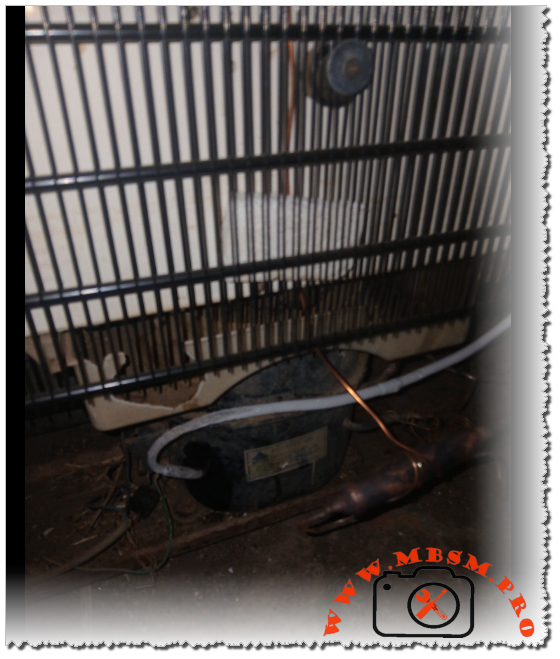
I installed a 2-meter capillary tube. Is this a reason for ice buildup on the suction line?


Focus Keyphrase: Refrigerator Suction Line Frost and Capillary Tube Length Optimization
SEO Title: Mbsm.pro, Impact of Capillary Tube Length on Suction Line Frosting
Meta Description: Is a 2-meter capillary tube causing ice on your suction line? Learn how capillary length, diameter, and refrigerant charge affect compressor health and cooling efficiency.
Slug: refrigerator-capillary-tube-length-frost-suction-line
Tags: Mbsmgroup, Mbsm.pro, mbsmpro.com, mbsm, Capillary Tube, Refrigeration Repair, Suction Line Frost, Compressor Maintenance, R134a, R600a, HVAC Technician Tips
Excerpt: Troubleshooting frost on a refrigerator’s suction line requires a deep understanding of pressure drops. If a 2-meter capillary tube was recently installed, it might be the primary culprit behind liquid floodback. This article explores the technical relationship between expansion device length, refrigerant flow, and the critical balance needed to protect the compressor from terminal damage.
Mbsm.pro, Refrigeration, Capillary Tube, 2 Meters, Suction Line Frost, R134a, R600a, Compressor Protection
In the world of field refrigeration, precision is the difference between a long-lasting appliance and a catastrophic compressor failure. One of the most common issues encountered after a capillary tube replacement is the appearance of <u>heavy frost or ice on the suction (return) line</u>. While many technicians immediately jump to the conclusion of an overcharge, the physical dimensions of the capillary tube—specifically a length of 2 meters—often play a more significant role than realized.
The Physics of Restriction: Why Length Matters
The capillary tube acts as the fixed orifice expansion device. Its job is to create a specific “restriction” or pressure drop between the high-pressure condenser side and the low-pressure evaporator side. This restriction is governed by three variables: <u>Internal Diameter (ID)</u>, <u>Total Length</u>, and the <u>Friction Factor</u> of the refrigerant.
When a technician installs a capillary tube that is too short (such as 2 meters for a system designed for 3 meters), the following sequence occurs:
- Reduced Resistance: The shorter path offers less friction.
- Increased Mass Flow: More liquid refrigerant enters the evaporator than the system can effectively boil off.
- Liquid Floodback: Because the evaporator cannot convert all the liquid to gas, the “excess” liquid refrigerant exits the evaporator and enters the suction line.
- Frost Formation: The liquid refrigerant continues to boil inside the suction pipe, absorbing heat from the ambient air and causing moisture to freeze instantly on the exterior of the pipe.
Technical Comparison: Capillary Requirements by Compressor Capacity
To understand why 2 meters might be insufficient, let us look at standard industry benchmarks for R134a systems (the most common domestic setup).
| Compressor Horsepower (HP) | Recommended Length (Meters) | Standard Diameter (Inches) | Typical Result of 2m Length |
| 1/10 HP to 1/8 HP | 3.0m – 3.5m | 0.026 – 0.028 | Severe Frost / Slugging |
| 1/6 HP to 1/5 HP | 2.8m – 3.2m | 0.031 | Moderate Frost on Return |
| 1/4 HP to 1/3 HP | 2.5m – 3.0m | 0.036 | Marginal Balance |
Analysis of the 2-Meter Installation
If you have utilized a 2-meter capillary, you are likely operating at a length that is 20% to 40% shorter than the engineering specifications for most domestic refrigerators.
- Scenario A: If the diameter is wide (e.g., 0.036″), 2 meters will almost certainly cause ice on the suction line because the “restriction” is too weak.
- Scenario B: If the diameter is very narrow (e.g., 0.026″), 2 meters might work, but it is still risky as it leaves no room for error in the refrigerant charge.
The “Overcharge” Illusion
A significant trap for field workers is attempting to “fix” the suction line frost by removing refrigerant. While this may clear the frost, it often results in an <u>underfed evaporator</u>, meaning the freezer will not reach the desired -18°C or -24°C. The system becomes inefficient, and the compressor runs longer, increasing electricity consumption.
Comparative Symptoms: Capillary Length vs. Refrigerant Overcharge
| Symptom | Short Capillary (2m) | Refrigerant Overcharge |
| Suction Line | Frosted / Icy | Sweating or Icy |
| Condenser Temp | Lower than normal | Extremely Hot |
| Evaporator Pattern | Partial Frosting / Uneven | Full Frosting |
| Amperage Draw | Higher than nominal | Significantly High |
| Cooling Speed | Slow pull-down | Rapid but unstable |
Expert Engineering Notice and Advice
As an expert who has spent years diagnosing these cycles, I strongly advise the following “Rule of Thumb” for field repairs:
- <u>Always Match the Original:</u> If the original capillary was 3 meters, do not settle for 2 meters. The extra length provides the necessary “buffer” to ensure only superheated vapor reaches the compressor.
- <u>The Suction-Capillary Heat Exchanger:</u> Ensure that the capillary tube is soldered or wrapped tightly around the suction line for at least 1 meter. This sub-cools the liquid and helps evaporate any liquid returning in the suction line, preventing frost.
- <u>Vacuum is King:</u> When changing a capillary, a deep vacuum (below 500 microns) is mandatory. Any moisture left in the system will freeze at the exit of your new 2-meter tube, causing a partial blockage that mimics a “short capillary” symptom.
Final Engineering Verdict
A 2-meter capillary tube is generally too short for standard 1/6 to 1/4 HP domestic refrigerators using R134a. This lack of length reduces the pressure drop, leading to liquid refrigerant exiting the evaporator. To resolve this without replacing the tube again, you can try:
- Adding a “pigtail” or extension to the capillary to reach at least 3 meters.
- Ensuring maximum thermal contact between the capillary and the suction line.
- Precisely weighing the charge according to the manufacturer’s nameplate (grams/ounces) rather than relying on pressure gauges alone.