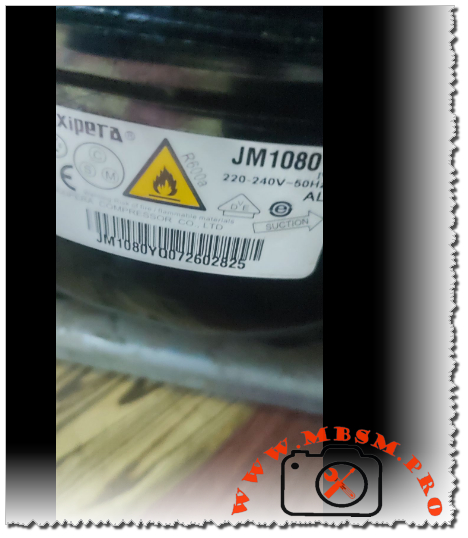
I installed a 2-meter capillary tube. Is this a reason for ice buildup on the suction line?
I installed a 2-meter capillary tube. Is this a reason for ice buildup on the suction line? mbsmpro

Focus Keyphrase: Refrigerator Suction Line Frost and Capillary Tube Length Optimization

SEO Title: Mbsm.pro, Impact of Capillary Tube Length on Suction Line Frosting

Meta Description: Is a 2-meter capillary tube causing ice on your suction line? Learn how capillary length, diameter, and refrigerant charge affect compressor health and cooling efficiency.

Slug: refrigerator-capillary-tube-length-frost-suction-line

Tags: Mbsmgroup, Mbsm.pro, mbsmpro.com, mbsm, Capillary Tube, Refrigeration Repair, Suction Line Frost, Compressor Maintenance, R134a, R600a, HVAC Technician Tips

Excerpt: Troubleshooting frost on a refrigerator’s suction line requires a deep understanding of pressure drops. If a 2-meter capillary tube was recently installed, it might be the primary culprit behind liquid floodback. This article explores the technical relationship between expansion device length, refrigerant flow, and the critical balance needed to protect the compressor from terminal damage.


Mbsm.pro, Refrigeration, Capillary Tube, 2 Meters, Suction Line Frost, R134a, R600a, Compressor Protection

In the world of field refrigeration, precision is the difference between a long-lasting appliance and a catastrophic compressor failure. One of the most common issues encountered after a capillary tube replacement is the appearance of <u>heavy frost or ice on the suction (return) line</u>. While many technicians immediately jump to the conclusion of an overcharge, the physical dimensions of the capillary tube—specifically a length of 2 meters—often play a more significant role than realized.

The Physics of Restriction: Why Length Matters

The capillary tube acts as the fixed orifice expansion device. Its job is to create a specific “restriction” or pressure drop between the high-pressure condenser side and the low-pressure evaporator side. This restriction is governed by three variables: <u>Internal Diameter (ID)</u><u>Total Length</u>, and the <u>Friction Factor</u> of the refrigerant.

When a technician installs a capillary tube that is too short (such as 2 meters for a system designed for 3 meters), the following sequence occurs:

  1. Reduced Resistance: The shorter path offers less friction.
  2. Increased Mass Flow: More liquid refrigerant enters the evaporator than the system can effectively boil off.
  3. Liquid Floodback: Because the evaporator cannot convert all the liquid to gas, the “excess” liquid refrigerant exits the evaporator and enters the suction line.
  4. Frost Formation: The liquid refrigerant continues to boil inside the suction pipe, absorbing heat from the ambient air and causing moisture to freeze instantly on the exterior of the pipe.

Technical Comparison: Capillary Requirements by Compressor Capacity

To understand why 2 meters might be insufficient, let us look at standard industry benchmarks for R134a systems (the most common domestic setup).

Compressor Horsepower (HP) Recommended Length (Meters) Standard Diameter (Inches) Typical Result of 2m Length
1/10 HP to 1/8 HP 3.0m – 3.5m 0.026 – 0.028 Severe Frost / Slugging
1/6 HP to 1/5 HP 2.8m – 3.2m 0.031 Moderate Frost on Return
1/4 HP to 1/3 HP 2.5m – 3.0m 0.036 Marginal Balance

Analysis of the 2-Meter Installation

If you have utilized a 2-meter capillary, you are likely operating at a length that is 20% to 40% shorter than the engineering specifications for most domestic refrigerators.

  • Scenario A: If the diameter is wide (e.g., 0.036″), 2 meters will almost certainly cause ice on the suction line because the “restriction” is too weak.
  • Scenario B: If the diameter is very narrow (e.g., 0.026″), 2 meters might work, but it is still risky as it leaves no room for error in the refrigerant charge.

The “Overcharge” Illusion

A significant trap for field workers is attempting to “fix” the suction line frost by removing refrigerant. While this may clear the frost, it often results in an <u>underfed evaporator</u>, meaning the freezer will not reach the desired -18°C or -24°C. The system becomes inefficient, and the compressor runs longer, increasing electricity consumption.

Comparative Symptoms: Capillary Length vs. Refrigerant Overcharge

Symptom Short Capillary (2m) Refrigerant Overcharge
Suction Line Frosted / Icy Sweating or Icy
Condenser Temp Lower than normal Extremely Hot
Evaporator Pattern Partial Frosting / Uneven Full Frosting
Amperage Draw Higher than nominal Significantly High
Cooling Speed Slow pull-down Rapid but unstable

Expert Engineering Notice and Advice

As an expert who has spent years diagnosing these cycles, I strongly advise the following “Rule of Thumb” for field repairs:

  1. <u>Always Match the Original:</u> If the original capillary was 3 meters, do not settle for 2 meters. The extra length provides the necessary “buffer” to ensure only superheated vapor reaches the compressor.
  2. <u>The Suction-Capillary Heat Exchanger:</u> Ensure that the capillary tube is soldered or wrapped tightly around the suction line for at least 1 meter. This sub-cools the liquid and helps evaporate any liquid returning in the suction line, preventing frost.
  3. <u>Vacuum is King:</u> When changing a capillary, a deep vacuum (below 500 microns) is mandatory. Any moisture left in the system will freeze at the exit of your new 2-meter tube, causing a partial blockage that mimics a “short capillary” symptom.

Final Engineering Verdict

2-meter capillary tube is generally too short for standard 1/6 to 1/4 HP domestic refrigerators using R134a. This lack of length reduces the pressure drop, leading to liquid refrigerant exiting the evaporator. To resolve this without replacing the tube again, you can try:

  • Adding a “pigtail” or extension to the capillary to reach at least 3 meters.
  • Ensuring maximum thermal contact between the capillary and the suction line.
  • Precisely weighing the charge according to the manufacturer’s nameplate (grams/ounces) rather than relying on pressure gauges alone.
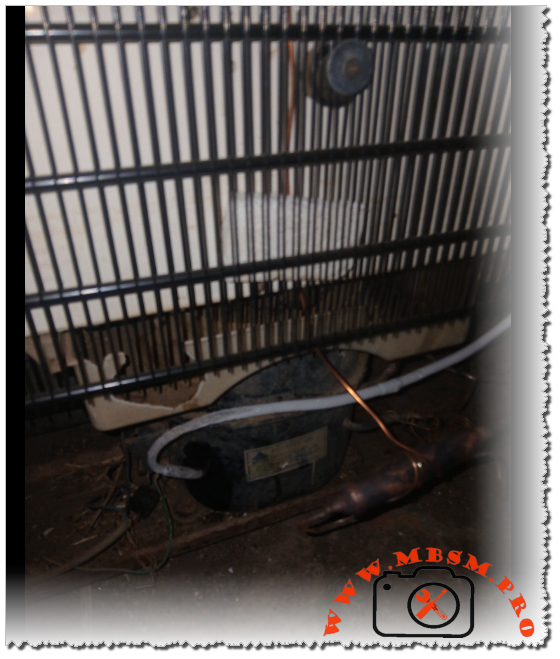

I installed a 2-meter capillary tube. Is this a reason for ice buildup on the suction line? mbsmpro
Capillary Tube, Compressor Maintenance, mbsm, mbsm.pro, mbsmgroup, mbsmpro.com, R134a, R600a, Refrigeration Repair, Suction Line Frost


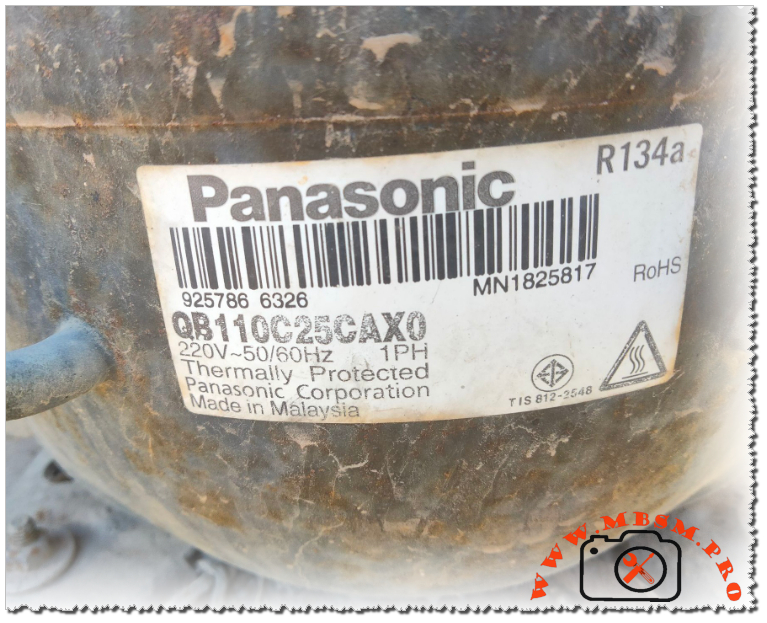
Panasonic QB110C25CAX0 1/3 HP Compressor Specifications and Replacement

mbsmgroup2026-02-06_233320-mbsmpro mbsmpro

Mbsmpro.com, Compressor, QB110C25CAX0, 1/3 hp, Panasonic, R134a, 220V, LBP, Refrigerator, Freezer

The Panasonic QB110C25CAX0 stands as a heavyweight in the world of domestic and light commercial refrigeration. Specifically engineered for Low Back Pressure (LBP) applications, this reciprocating compressor is the heart of many high-capacity household refrigerators and deep freezers. Operating on R134a refrigerant, it balances environmental standards with the robust cooling performance required for tropical climates.

The “QB” series by Panasonic is renowned for its durability. With a displacement of 11.0 cm³, this model provides the necessary “punch” to pull down temperatures quickly in units ranging from 400 to 600 liters. Its design focuses on thermal protection and energy efficiency, ensuring that the motor remains cool even during extended run cycles in demanding environments.


Technical Specifications and Performance Data

Feature Specification
Model QB110C25CAX0
Utilization LBP (Low Back Pressure)
Application Domain Freezing / Cooling
Cooling Wattage (-23.3°C) 280 W
Cubic Feet Capacity 18 – 22 cu.ft
Liters Capacity 500 – 620 L
Cooling Capacity (Kcal/h) 241 Kcal/h
Oil Type & Quantity POE or Mineral (250ml – 280ml)
Horsepower (HP) 1/3 HP
Refrigerant Type R134a
Power Supply 220V-240V / 50-60Hz / 1PH
Cooling Capacity (BTU/h) 955 BTU/h
Motor Type RSIR (Resistive Start-Inductive Run)
Displacement 11.0 cm³
Winding Material Copper
Amperage (RLA) 1.4 A – 1.6 A
LRA (Locked Rotor Amps) 12.0 A
Relay Type PTC / Electromagnetic
Capacitor Generally not required (RSIR), optional for CSIR
Fan Requirement Static cooling (Natural) / Fan cooling recommended for tropics
Commercial Status Semi-Commercial / Heavy Domestic
Country of Origin Malaysia

Efficiency Metrics (COP) & Performance Curve

Evaporating Temp (°C) Cooling Capacity (Watts) Power Consumption (Watts) COP (W/W)
-30 185 170 1.09
-25 255 195 1.31
-23.3 (Standard) 280 205 1.37
-20 340 225 1.51
-15 445 250 1.78
-10 570 280 2.04

Replacement Cross-Reference

1. Same Refrigerant (R134a) – 1/3 HP Substitutes

  • Embraco: FFI10HBX or FG100HAK
  • Secop (Danfoss): TLES10KK.3
  • Tecumseh: AE1390Y / AE4440Y
  • LG: MA110LBJG
  • Jiaxipera: N1114GZ

2. Alternative Refrigerant (R600a/R12/R22 Conversions)

  • Embraco (R600a): VEMZ 9C (Inverter tech required)
  • Panasonic (R600a): QB110G Series (Check displacement compatibility)
  • Secop (R600a): BD110F
  • Tecumseh (R12 Old): AE1390AS (Requires system flush)
  • Samsung (R134a): MK190C-L2U

Engineering Insight: Why Choose the QB110?

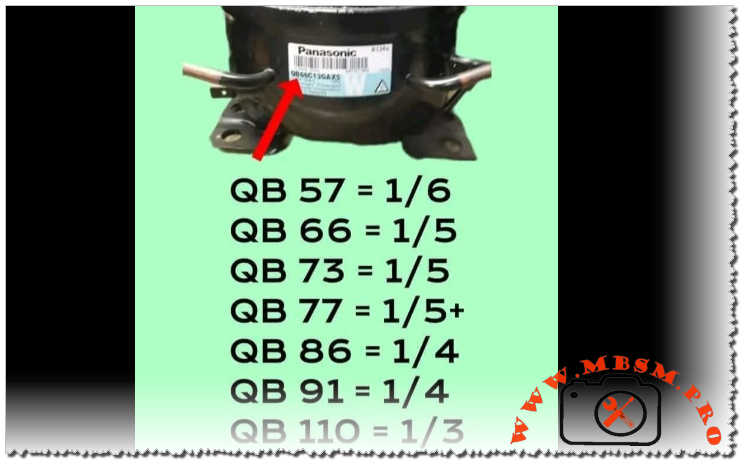
When comparing the QB110 (1/3 HP) to its smaller sibling, the QB77 (1/5+ HP), the difference in volumetric efficiency is striking. While the QB77 is perfect for standard kitchen fridges, the QB110 is designed for “chest” freezers or large side-by-side units.

Pro Tip for Technicians:

Always ensure the capillary tube is sized correctly for a 1/3 HP load. For an LBP R134a setup with this compressor, a capillary of 0.036 ID is generally the starting point. Using a 1/5 HP capillary on this motor will cause high head pressure and premature compressor failure.

Maintenance Notice: Since this is an R134a system, moisture is your greatest enemy. Always replace the filter drier and pull a vacuum below 500 microns before charging.


Focus Keyphrase: Panasonic QB110C25CAX0 1/3 HP Compressor Specifications and Replacement

SEO Title: Mbsmpro.com | Panasonic QB110C25CAX0 Compressor | 1/3 HP R134a LBP Review

Meta Description: Discover the full technical specifications of the Panasonic QB110C25CAX0 1/3 HP compressor. Includes cooling capacity, COP tables, wiring details, and a comprehensive replacement guide for R134a refrigeration systems.

Slug: panasonic-qb110c25cax0-1-3-hp-compressor-specs

Tags: Mbsmgroup, Mbsm.pro, mbsmpro.com, mbsm, Panasonic, QB110C25CAX0, 1/3 HP Compressor, R134a, LBP, Refrigeration Parts, Embraco FFI10HBX, Secop TLES10KK, LG MA110, Compressor Cross Reference.

Excerpt: The Panasonic QB110C25CAX0 is a high-performance 1/3 HP reciprocating compressor designed for Low Back Pressure (LBP) applications. Operating on R134a refrigerant, it delivers 280W of cooling capacity at -23.3°C, making it ideal for large domestic freezers and commercial coolers. This guide provides technical data, COP efficiency tables, and compatible replacement models for technicians.

mbsmgroup2026-02-06_233312-mbsmpro mbsmpro
mbsmgroup2026-02-06_233320-mbsmpro mbsmpro


What is the best type of washing machine available on the market in terms of cleaning performance, easy maintenance, and long lifespan?

What is the best type of washing machine available on the market in terms of cleaning performance, easy maintenance, and long lifespan? mbsmpro

Focus Keyphrase

Best Washing Machines for Cleaning Performance Maintenance and Longevity 2026


SEO Title

Mbsmpro.com, Best Washing Machines, LG, Bosch, Samsung, Longevity, Maintenance, Cleaning Performance, 2026 Guide


Meta Description

Discover the top-rated washing machines for 2026. Expert analysis on LG, Bosch, and Samsung focusing on mechanical durability, easy maintenance, and superior cleaning. Learn how to choose a machine that lasts 15+ years.


Slug

best-washing-machines-cleaning-maintenance-longevity


Add Tags

Mbsmgroup, Mbsm.pro, mbsmpro.com, mbsm, Home Appliances, Washing Machine Review, LG Direct Drive, Bosch Series 6, Samsung EcoBubble, Appliance Maintenance, Reliability 2026


Excerpt

Selecting a washing machine in 2026 requires balancing advanced technology with mechanical endurance. This professional guide evaluates the market’s leading brands—LG, Bosch, and Samsung—based on cleaning efficiency, ease of repair, and structural longevity. We break down the engineering behind Direct Drive motors and high-build quality chassis to help you make an investment that lasts.


The Ultimate Guide to High-Endurance Washing Machines: Performance and Engineering

In the modern household, a washing machine is more than an appliance; it is a long-term investment. As an engineer who has spent years on the field analyzing mechanical wear and electronic failures, I can tell you that the “best” machine isn’t just the one with the most buttons. It is the one with the highest structural integrity and serviceable components.

1. The Engineering Leaders: LG vs. Bosch vs. Samsung

When evaluating a machine for Longevity, we look at the drive system. When evaluating for Cleaning, we look at drum agitation patterns. When evaluating for Maintenance, we look at the accessibility of the pump and the availability of spare parts.

LG: The King of Stability (Direct Drive)

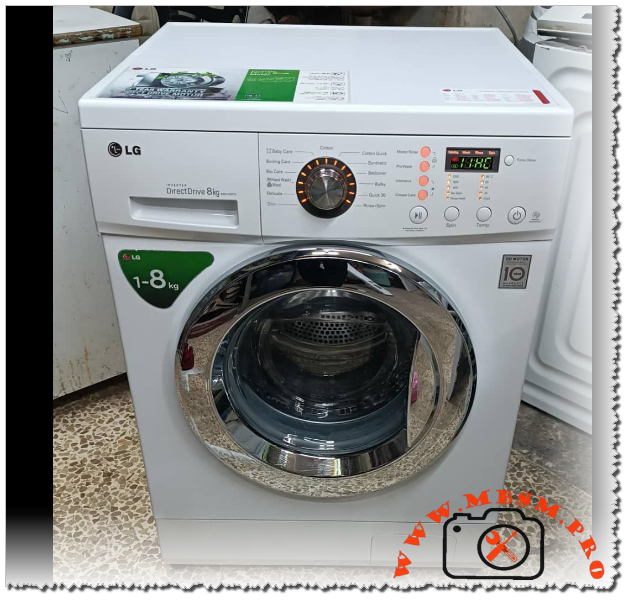
LG revolutionized the market with the Inverter Direct Drive motor. By eliminating the belt and pulley system, they removed the most common point of mechanical failure.

  • Cleaning: Uses 6 Motion technology to simulate hand-washing.
  • Maintenance: Exceptionally easy to service. The motor is mounted directly to the back of the drum.

Bosch: The German Standard for Durability

Bosch, particularly the Series 6 and 8, remains the benchmark for build quality. Their AntiVibration side walls are not just for aesthetics; they reduce the centrifugal stress on the internal bearings.

  • Cleaning: Precise sensor-controlled washing (ActiveWater Plus).
  • Maintenance: Higher quality parts, though internal access requires more precision.

Samsung: The Innovation Powerhouse

Samsung focuses on the chemical efficiency of the wash through EcoBubble technology, which allows for deep cleaning at lower temperatures, preserving the life of both the clothes and the heating element.


2. Technical Comparison Table

Characteristic LG (V-Series) Bosch (Series 6/8) Samsung (AddWash)
Motor Type Inverter Direct Drive EcoSilence Drive (BLDC) Digital Inverter
Transmission Gearless / No Belt Belt Driven (High Torque) Belt Driven
Chassis Stability High (AI DD) Extreme (AntiVibration) High
Cleaning Tech TurboWash 360 4D Wash System EcoBubble / AI Wash
Spare Parts Widely Available Specialized / Premium Widely Available

3. Maintenance Accessibility and Longevity Metrics

A machine that cannot be repaired is a liability. In the field, we categorize machines by their “Repairability Score.”

Comparison of Life-Cycle Factors

Brand Bearing Durability Control Board Reliability Pump Accessibility
LG 9/10 8/10 Front-Access Filter
Bosch 10/10 9/10 Bottom-Front Access
Samsung 8/10 7/10 Easy Access

4. Engineering Advice: Professional Tips for Users

  • The Leveling Rule: 90% of bearing failures are caused by improper leveling. Use a spirit level to ensure all four feet are perfectly balanced.
  • Detergent Discipline: Excessive foam (from using too much detergent) acts as a brake on the motor and can leak into the electronics.
  • The “Hand” Space: Never pack the drum. You must be able to fit a vertical palm between the top of the laundry and the drum ceiling to protect the suspension springs.

5. Electrical Protection Schema

For areas with unstable power grids, protecting the PCBA (Printed Circuit Board Assembly) is vital. Below is the conceptual protection layout:

  • Input (220V 50Hz)Surge Protector (External)Internal Noise FilterMain PCBInverter BoardMotor.

Always ensure the outlet is grounded to prevent static buildup on the stainless steel drum.

What is the best type of washing machine available on the market in terms of cleaning performance, easy maintenance, and long lifespan? mbsmpro


Jiaxipera JM1080Y Compressor 1/8 hp R600a, capillary 0.028 2.5m

Jiaxipera JM1080y, 1/6 hp+, 143w, r600a, capillary 0.028 inch diameter with a length of 2.5 meters mbsmpro

Mbsmpro.com, Compressor, JM1080Y, 1/8 hp, Jiaxipera, Cooling, R600a, 100 W, 0.6 A, 1Ph 220–240V 50Hz, LBP, RSCR, -35°C to -10°C, cooling or freezing

Jiaxipera JM1080Y Technical Specifications

This compressor is a high-efficiency model designed for R600a refrigerant and Low Back Pressure (LBP) applications.

Compressor Performance Data

  • Horsepower (HP): Rated at approximately 1/8 HP (or 1/8+ HP).
  • Cooling Capacity: Reaches up to 100 Watts (approximately 341 BTU/h) according to ASHRAE standards.
  • Displacement: 6.0 $cm^3$.
  • Refrigerant Type: R600a (Isobutane).

Recommended Capillary Tube Sizes

To achieve the best performance in domestic refrigeration units, use the following specifications:

  • Primary Option: 0.031 inch (0.8 mm) diameter with a length of 3 meters.
  • Secondary Option: 0.028 inch (0.7 mm) diameter with a length of 2.5 meters.

Technical Installation Notes

  • Precision Charging: Because R600a is used, the system must be charged strictly by weight (in grams) as indicated on the appliance’s data plate.
  • Sensitivity: This refrigerant is highly sensitive to even minor deviations in gas volume.
  • Vacuum Process: A thorough vacuum (20–30 minutes) is mandatory to ensure the system is completely free of air and moisture before charging.

The refrigeration industry relies on precision components to maintain efficiency and food safety. Among these, the Jiaxipera JM1080Y stands out as a high-performance, hermetic reciprocating compressor engineered for modern domestic appliances. Designed for low-back-pressure (LBP) applications, this unit is commonly found in energy-efficient refrigerators and freezers where quiet operation and low energy consumption are paramount.

Operating on R600a (Isobutane), the JM1080Y reflects the global shift toward environmentally friendly refrigerants with low global warming potential. Its design incorporates a robust motor and optimized internal mechanics to ensure longevity and consistent cooling capacity even under varying thermal loads.


Technical Specifications: Jiaxipera JM1080Y

Feature Specification
Model JM1080Y
Utilisation (mbp/hbp/lbp) LBP (Low Back Pressure)
Domaine (Freezing/Cooling) Freezing and Cooling
Cooling wattage at -23.3°C 100 W
Cubic feet (approx. cooling capacity) 6.5 to 8.5 cu. ft.
Litres (approx. cooling capacity) 185 to 240 Liters
Kcal/h 86 Kcal/h
Oil Type and Quantity Mineral Oil / 180 ml
Horsepower (HP) 1/8 hp
Refrigerant Type R600a
Power Supply 220–240V / 50Hz
Cooling Capacity BTU/h 341 BTU/h
Motor Type RSCR (Resistance Start – Capacitor Run)
Displacement 6.2 cm³
Winding Material Copper
Pression Charge Low Pressure
Capillary (Suggested) 0.026″ – 0.031″
Refrigerator Models Bosch, Haier, Samsung, Beko, Hisense
Temperature Function -35°C to -10°C
With fan or no Static (Natural cooling)
Commercial or no No (Domestic / Household)
Amperage in function 0.55 A – 0.6 A
LRA (Locked Rotor Amps) 4.6 A
Type of relay PTC Starter
Capacitor Value 2.5 µF / 450V
Country of Origin China

Efficiency Metrics (COP) & Performance Data

The coefficient of performance (COP) is a critical indicator of how much cooling work the compressor does relative to the electrical energy it consumes.

Evaporating Temp (°C) Cooling Capacity (Watts) Power Consumption (Watts) COP (W/W)
-35 58 51 1.14
-30 76 60 1.27
-23.3 (Standard) 100 68 1.47
-20 118 74 1.59
-15 146 82 1.78
-10 180 92 1.96

Comparison: JM1080Y vs. Industry Standard 1/10 HP Units

While many 1080 models are rated at 1/10 HP, the JM1080Y is frequently categorized as a 1/8 HP unit due to its higher displacement (6.2 cm³) compared to the standard 5.5 cm³ found in models like the NE1080Y. This extra displacement provides a higher cooling reserve, making it more resilient in high-ambient temperature conditions.


Replacement Cross-Reference

5 Replacements (Same Gas: R600a)

  • Embraco: EMX32CLC
  • Secop (Danfoss): TLES5.7KK.3
  • Huayi: HYE55Y
  • Donper: A90CY
  • LG: CMA057LBJH

5 Replacements (Other Gas: R134a)

Note: Converting systems between refrigerants requires a total oil flush and system cleaning.

  • Jiaxipera: ND1080Y
  • Embraco: EMT32HLP
  • Secop: TLS5F
  • Cubigel: GL45AA
  • Tecumseh: THG1335YS

Expert Engineering Advice & Notice

  1. Refrigerant Safety: R600a is highly flammable. Always ensure there are no ignition sources in the work area and use a vacuum pump specifically rated for hydrocarbons.
  2. Vacuum & Moisture: A deep vacuum of 500 microns or less is mandatory. Mineral oil in R600a systems is sensitive to moisture, which can cause internal acid formation.
  3. Capillary Selection: If replacing a compressor with a different brand, always verify the capillary tube size. A mismatch can lead to liquid slugging or poor evaporator utilization.
  4. Static Cooling: This compressor is designed for static cooling. Do not enclose it in a tight space without adequate airflow, as overheating will drastically reduce the lifespan of the motor windings.

Focus Keyphrase: Jiaxipera JM1080Y Compressor 1/8 hp R600a

SEO Title: Mbsmpro.com, Jiaxipera JM1080Y, 1/8 HP, R600a Refrigerator Compressor

Meta Description: Detailed technical data for the Jiaxipera JM1080Y compressor. 1/8 HP, 100W cooling capacity, R600a refrigerant. Includes wiring, COP tables, and compatible replacements for LBP applications.

Slug: jiaxipera-jm1080y-compressor-1-8-hp-r600a-specs

Add Tags: Mbsmgroup, Mbsm.pro, mbsmpro.com, mbsm, Jiaxipera, JM1080Y, R600a Compressor, 1/8 HP Compressor, Refrigerator Repair, EMX32CLC replacement, TLES5.7KK.3, HYE55Y, LBP Compressor, Cooling Capacity 100W.

Excerpt: The Jiaxipera JM1080Y is a high-performance 1/8 hp compressor specifically designed for R600a refrigerant in domestic LBP applications. With a cooling capacity of 100W and a displacement of 6.2 cm³, it provides a quiet, energy-efficient solution for modern refrigerators. This guide covers technical data, performance metrics, and professional field advice for technicians.

Jiaxipera JM1080y, 1/6 hp+, 143w, r600a, capillary 0.028 inch diameter with a length of 2.5 meters mbsmpro