The Engineering Standard: Technical Analysis of the Jiaxipera TT1113GY Compressor
In the modern refrigeration landscape, precision engineering and environmental sustainability are no longer optional—they are foundational. The Jiaxipera TT1113GY stands at the forefront of this evolution, serving as a high-performance <u>Low Back Pressure (LBP)</u> compressor optimized for the eco-friendly R600a refrigerant. Designed for residential refrigerators and high-efficiency chest freezers, this unit exemplifies the shift toward high volumetric efficiency and low acoustic impact.
Technical Specifications and Thermodynamic Characteristics
The TT1113GY is built on a robust platform that balances power density with thermal stability. Below are the definitive parameters for technicians and refrigeration engineers:
Feature
Detailed Specification
Manufacturer
Jiaxipera Compressor Co., Ltd
Model
TT1113GY
Horsepower (HP)
1/5 HP
Refrigerant Type
R600a (Isobutane)
Cooling Capacity (-23.3°C ASHRAE)
183 Watts (624 BTU/h)
Displacement
11.3 cm³
Power Supply
220-240V ~ 50Hz (Single Phase)
Motor Type
RSCR / RSIR (Dependent on Start Device)
Cooling Type
Static Cooling (S)
Application Range
LBP (-35°C to -15°C)
Oil Charge
180 ml (Mineral / Alkylbenzene)
Comparative Analysis: Displacement vs. Cooling Efficiency
When evaluating the <u>TT1113GY</u> against legacy R134a systems, the difference in displacement volume is striking. R600a compressors require larger cylinders to achieve the same cooling capacity due to the lower gas density of isobutane.
Standard R134a Equivalent: A similar capacity often requires only 7.0 – 8.5 cm³.
This increase in displacement is countered by a significantly higher COP (Coefficient of Performance). While older R134a models might operate at a COP of 1.15 W/W, the Jiaxipera TT1113GY typically achieves values between 1.35 and 1.50 W/W, drastically reducing electricity consumption in domestic applications.
Electrical Schema and Connection Protocols
For professionals in the field, understanding the electrical architecture is vital for system safety. The unit employs a single-phase induction motor with a split-phase winding.
Main Winding (M): Low resistance, carries the running load.
Start Winding (S): Higher resistance, used during the initial acceleration.
Safety Tip: The use of a PTC (Positive Temperature Coefficient) starter is standard. When upgrading to RSCR (Resistance Start Capacitor Run) mode, a run capacitor (usually 4µf – 5µf) must be integrated across the ‘S’ and ‘R’ terminals to further improve electrical efficiency and lower the running amperage.
Comparison with Competitive LBP Models
Brand & Model
Gas
HP
Displacement
Output (Watts)
Jiaxipera TT1113GY
R600a
1/5
11.3 cc
183 W
Secop NLE11KK.4
R600a
1/4
11.1 cc
191 W
Embraco EMX70CLC
R600a
1/5+
11.1 cc
182 W
Huayi HYB11.5
R600a
1/4
11.5 cc
188 W
Engineering Best Practices: Advice and Benefits
Operating with <u>R600a (Isobutane)</u> requires a heightened level of awareness due to its flammability (A3 safety classification).
Vacuum Procedure: Always pull a vacuum down to 200 microns. Moisture in an R600a system with mineral oil can cause rapid mechanical acidification.
Copper-Aluminum Joints: Ensure vibration dampeners are secure. The 11.3cc stroke creates significant torque oscillation; poorly brazed joints will leak over time.
Filtration: Utilize a filter drier specifically labeled for XH-9 molecular sieves to maintain refrigerant purity.
No Flame Braze: In field repair environments, ultrasonic welding or Lokring technology is preferred for sealing R600a process tubes to eliminate the risk of explosion.
Meta description: Professional technical guide for the Jiaxipera TT1113GY compressor. 1/4 HP, R600a, 183W capacity at 50Hz. Ideal for high-efficiency LBP cooling and freezing systems.
Excerpt: The Jiaxipera TT1113GY is a high-performance hermetic compressor engineered for Low Back Pressure applications using R600a (Isobutane). Featuring a 11.3 cm³ displacement and a cooling capacity of 183 Watts, it represents the gold standard for modern energy-efficient refrigeration, offering exceptional reliability and reduced acoustic emissions in the domestic market.
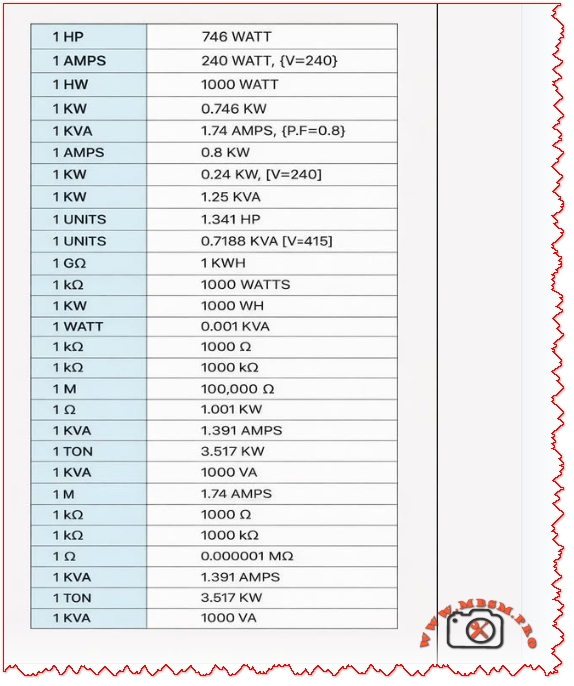
Electrical unit conversion reference table: HP to watts, KVA to amps, tons refrigeration to kW
Category: Global Electric
written by www.mbsmpro.com | January 13, 2026
COMPREHENSIVE ELECTRICAL AND REFRIGERATION UNIT CONVERSION GUIDE: Complete Reference for HVAC Professionals and Engineers
SEO METADATA
Focus Keyphrase (191 characters max): Electrical unit conversion reference table: HP to watts, KVA to amps, tons refrigeration to kW, HVAC technical specifications and engineering calculations guide
SEO Title (59 characters, optimal for Google): Electrical Unit Conversion Chart: HVAC Refrigeration Reference
Meta Description (160 characters): Complete electrical and refrigeration unit conversion tables for HVAC technicians. Convert HP to watts, KVA to amps, cooling tons to kW. Essential engineering reference guide.
Tags: Electrical conversions, HVAC unit conversion, refrigeration engineering, KVA to amps conversion, HP to watts conversion, cooling capacity converter, HVAC technical reference, electrical specifications, compressor ratings, engineering calculations, Mbsmgroup, Mbsm.pro, mbsmpro.com, mbsm, refrigeration equipment
Excerpt (55 words): Electrical unit conversions are essential knowledge for HVAC technicians and refrigeration engineers. This comprehensive reference guide provides quick access to conversion formulas, technical specifications, and practical examples for comparing power ratings, calculating system requirements, and optimizing equipment selection across different measurement standards.
COMPREHENSIVE ARTICLE
Electrical Unit Conversion Reference: The Complete HVAC and Refrigeration Engineering Guide for 2026
Understanding electrical unit conversions is fundamental for any HVAC professional, refrigeration technician, or electrical engineer. Whether you’re comparing compressor specifications, calculating power requirements, or evaluating equipment across different measurement standards, having an accurate conversion reference is non-negotiable. This comprehensive guide provides the practical knowledge you need to work confidently with various electrical measurement units in real-world applications.
Why Electrical Unit Conversions Matter in HVAC and Refrigeration
The HVAC and refrigeration industry uses multiple measurement systems simultaneously. A compressor might be rated in horsepower (HP) from an older manufacturer, but your electrical system speaks in watts or kilowatts (kW). Modern European equipment uses kilovolt-amperes (kVA), while cooling capacity appears in tons of refrigeration. Without proper conversion understanding, you risk:
Undersizing or oversizing equipment, leading to operational inefficiency
Electrical system failures from mismatched power requirements
Safety hazards from incorrect circuit breaker sizing
Expensive project delays due to specification confusion
Warranty issues from non-compliant equipment installation
This is why Mbsmgroup and Mbsm.pro emphasize technical accuracy in all equipment recommendations and calculations.
Power Conversion: Mechanical to Electrical Energy
Understanding Horsepower vs. Watts
The most fundamental conversion in HVAC work is transforming horsepower (HP) to watts. These units measure the same physical property—power—but from different perspectives.
Unit
Definition
Primary Use
1 HP
745.7 watts (mechanical) or 746 watts (electrical)
Older equipment, machinery, motors
1 Watt
1 joule per second
Electrical appliances, modern equipment
1 Kilowatt (kW)
1,000 watts
Commercial HVAC systems
1 Megawatt (MW)
1,000,000 watts
Industrial facilities
Conversion Formula:
textWatts = HP × 746
HP = Watts ÷ 745.7
Practical Examples: HP to Watts Conversions
Horsepower
Watts
Kilowatts
Common Application
0.5 HP
373 W
0.373 kW
Residential AC units, small pumps
1 HP
746 W
0.746 kW
Compressor motors, medium capacity units
1.5 HP
1,119 W
1.119 kW
Commercial cooling systems
2 HP
1,492 W
1.492 kW
Industrial refrigeration
3 HP
2,238 W
2.238 kW
Large commercial systems
5 HP
3,730 W
3.730 kW
Heavy-duty industrial applications
Engineer’s Note: The difference between 745.7 W and 746 W is negligible in practical applications. Use 745.7 for mechanical conversions and 746 for electrical motors. This small variation rarely exceeds ±0.1% error in system calculations.
Current Conversion: Amperage and Electrical Load Calculations
Understanding Amps, Volts, and Power Factor
Amperage (AMPS) represents electrical current flow. Calculating amperage correctly is critical for:
Selecting proper circuit breaker sizes
Determining wire gauge requirements
Assessing electrical system capacity
Preventing overload conditions
The relationship between watts (W), volts (V), and amperes (A) depends on your electrical system configuration:
This is where many technicians make costly mistakes. kVA and kW are NOT the same thing:
kW (kilowatts) = Real power actually used by equipment
kVA (kilovolt-amperes) = Apparent power (total electrical capacity)
The relationship between them depends on power factor:
textkW = kVA × Power Factor (PF)
kVA = kW ÷ Power Factor (PF)
kVA to Amperage Conversion
Single-Phase System:
textAmps = (kVA × 1000) ÷ Volts
Three-Phase System:
textAmps = (kVA × 1000) ÷ (Volts × 1.732)
kVA Rating
System
Voltage
Amperage
1 kVA
Single Phase
240V
4.17 A
1.74 kVA
Single Phase
240V
7.25 A
1.391 kVA
Three Phase
240V (line-to-line)
3.35 A
1 kVA
Three Phase
415V (line-to-line)
1.4 A
Real Application Example: A refrigeration compressor is rated 1 kVA at 240V (single phase):
Amperage = (1 × 1000) ÷ 240 = 4.17 amps
If power factor = 0.8, then kW = 1 × 0.8 = 0.8 kW = 800 watts
Refrigeration Cooling Capacity Conversions
Understanding Cooling Tons in HVAC Systems
One of the most confusing measurements in HVAC is the ton of refrigeration (TR). This is NOT a weight measurement—it’s a cooling capacity unit defined historically as:
1 Ton of Refrigeration = 12,000 BTU/hour = 3.517 kW
This specific value comes from the heat required to melt one ton of ice in 24 hours, which became the standard refrigeration capacity unit.
Important: A metric tonne of refrigeration (often used in Europe) is slightly different:
1 Metric Tonne of Refrigeration ≈ 3.861 kW (10% larger)
1 Refrigeration Ton (US) = 3.517 kW
Always verify which standard your equipment uses before ordering or calculating capacity.
Resistance Conversion: Ohms, Kiloohms, Megaohms, and Gigaohms
Electrical Resistance Measurement Scale
Resistance measurements span enormous ranges in electrical systems. Understanding the conversion hierarchy is essential for proper diagnostics and troubleshooting:
Diagnostic Rule: Use megaohm scale (insulation resistance testers) for safety-critical motor testing. A healthy motor should show >100 MΩ insulation resistance.
Power Conversion Relationships: Comprehensive Reference Table
This consolidated table shows the relationships between all major electrical units in a single HVAC calculation context:
HP
Watts
kW
kVA (PF=0.8)
kVA (PF=0.9)
Refrigeration Tons
0.5
373
0.373
0.466
0.415
0.106
1
746
0.746
0.933
0.829
0.212
1.5
1,119
1.119
1.399
1.243
0.318
2
1,492
1.492
1.865
1.658
0.424
3
2,238
2.238
2.798
2.487
0.636
5
3,730
3.730
4.663
4.145
1.060
Real-World Application Scenarios
Scenario 1: Compressor Selection and Electrical Planning
You’re specifying a refrigeration compressor for a medium-sized cooling room. The equipment datasheet lists:
Rating: 1 HP motor
Available Supply: 240V, single-phase
Calculations Needed:
Convert to watts: 1 HP × 746 = 746 watts = 0.746 kW
Calculate amperage (assuming PF = 0.85):
Amps = 746 ÷ (240 × 0.85) = 746 ÷ 204 = 3.66 amps
Circuit breaker sizing (standard practice: 125% of running current):
Wire gauge selection (based on amperage and distance from panel):
For 3.66 amps over moderate distance → 10 AWG wire minimum
Decision: This 1 HP compressor is suitable for your 240V system with standard residential electrical configuration.
Scenario 2: Comparing International Equipment Specifications
You have two compressor options:
Option A (US manufacturer): 3 HP, R-134a, 1Ph 240V
Option B (European manufacturer): 2.2 kW, R-134a, 1Ph 240V
Which is more powerful?
Convert Option A to metric:
3 HP × 746 = 2,238 watts = 2.238 kW
Result: Option A (2.238 kW) is slightly more powerful than Option B (2.2 kW)—essentially equivalent performance.
Scenario 3: Cooling Capacity Planning
A facility requires cooling capacity assessment:
Current System: 2 Tons of refrigeration
Future Requirement: 10 kW cooling capacity
Are they compatible?
Convert 2 TR to kW:
2 TR × 3.517 = 7.034 kW
Answer: Your current system provides 7.034 kW, but you need 10 kW. You require approximately 0.85 additional tons (3 TR total) of refrigeration capacity.
Essential Conversion Formulas for Quick Reference
Power Conversions
text• Watts = HP × 746
• HP = Watts ÷ 745.7
• kW = Watts ÷ 1000
• kVA = kW ÷ Power Factor
ASHRAE (American Society of Heating, Refrigerating and Air-Conditioning Engineers): Establishes HVAC standards including measurement units
IEEE (Institute of Electrical and Electronics Engineers): Defines electrical conversion standards
IEC (International Electrotechnical Commission): Global standard for electrical units
NEMA (National Electrical Manufacturers Association): US motor and equipment standards
Regional Measurement Preferences
Region
Preferred Units
Voltage Standards
Frequency
United States
HP, Watts, Tons, 240V/480V
120V/240V (residential)
60 Hz
European Union
kW, Watts, Metric Tonnes, 380V/400V
230V/400V standard
50 Hz
Asia-Pacific
Mixed (HP and kW), 380V/415V
Varies by country
50 Hz typical
Middle East/Africa
Increasingly metric (kW), 380V/400V
230V/380V common
50 Hz
Professional Note: Always verify local electrical codes before installation. Equipment must comply with regional voltage standards and frequency requirements.
Conclusion: Mastery of Unit Conversions Ensures Project Success
Understanding electrical and refrigeration unit conversions is not merely academic—it’s practical knowledge that prevents costly mistakes, ensures safety, and optimizes system performance. Whether you’re selecting a compressor, calculating electrical loads, or diagnosing operational problems, these conversion formulas and reference tables will serve you reliably.
The key principles:
Know your source data (always convert from verified specifications)
Document your calculations (maintain audit trail of all conversions)
Apply safety factors (always round up for circuit breaker sizing)
Cross-reference conversions (verify using multiple methods when critical)
Maintain current reference materials (standards evolve; stay informed)
Mbsm.pro and Mbsmgroup recommend bookmarking this conversion guide and maintaining printed copies in your field toolkit. When precision matters—and in refrigeration and HVAC, it always does—having immediate access to accurate conversion data eliminates guesswork and prevents operational failures.
For specialized equipment specifications, technical datasheets, or installation support, refer to manufacturer documentation and consult with qualified HVAC professionals in your region.
About the Author’s Expertise
This comprehensive guide reflects years of practical HVAC and refrigeration experience. Mbsm.pro specializes in detailed technical documentation for refrigeration equipment, creating resources that bridge the gap between manufacturer specifications and field application. Our content serves HVAC professionals, refrigeration engineers, and technical students who demand accuracy and practical applicability.
KEY TAKEAWAYS
✓ 1 HP = 746 watts (fundamental conversion for all HVAC work) ✓ 1 Ton of Refrigeration = 3.517 kW (cooling capacity standard) ✓ kW ≠ kVA (always account for power factor in electrical calculations) ✓ Power Factor matters (typically 0.8-0.95 in HVAC equipment) ✓ Verify voltage and phase before every installation (240V single-phase vs. 380V three-phase) ✓ Use proper wire sizing (undersized wiring creates fire hazards) ✓ Document all conversions (maintain specifications for future reference)
Electrical unit conversion reference table: HP to watts, KVA to amps, tons refrigeration to kW mbsmpro