Copeland ZB50KCE Scroll Compressor 
Copeland ZB50KCE Scroll Compressor  mbsmpro

Copeland ZB50KCE Scroll Compressor Nameplate: How to Read the Label and Choose the Right Polyester Oil

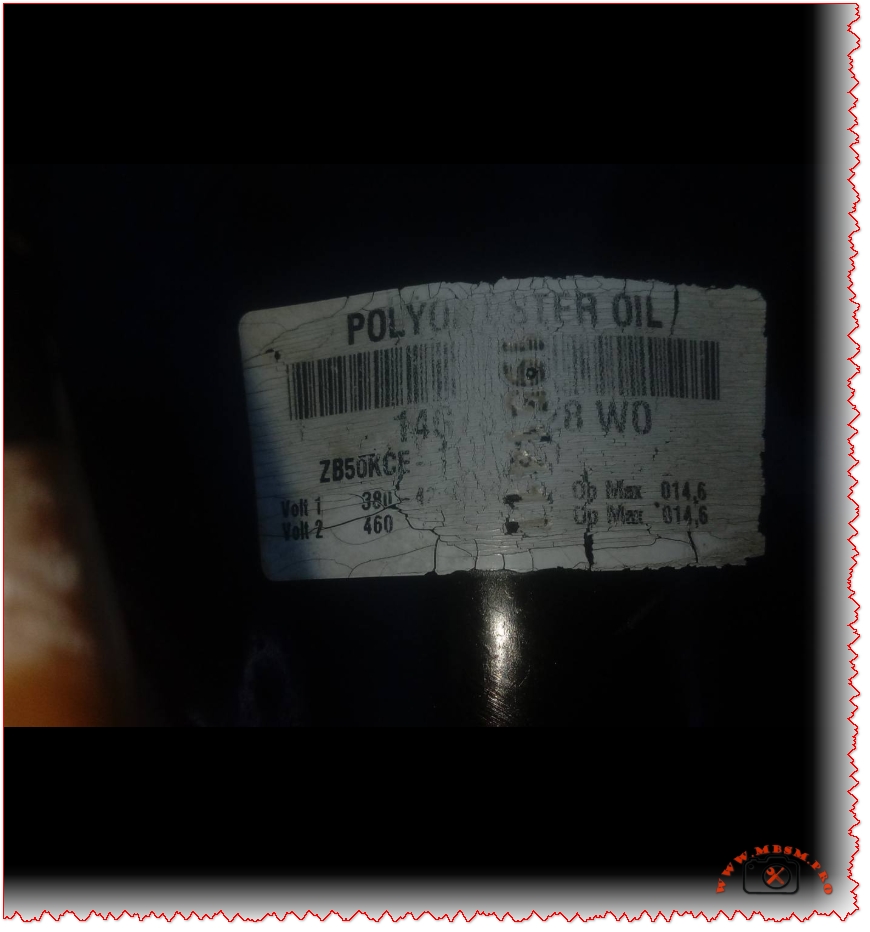
The photo shows the damaged nameplate of a Copeland ZB50KCE scroll compressor, factory‑charged with polyester (POE) oil for medium‑temperature refrigeration. Correctly interpreting this label helps technicians confirm oil, power, voltage and safety limits during service or replacement.

Compressor identification

The model belongs to the Copeland ZB series, used in commercial cold rooms and process cooling for refrigerants such as R404A, R134a and R22 alternatives. Depending on voltage code (TFD‑551, TFD‑950, etc.), it is sold as a 7 hp medium‑temperature compressor with around 11.9 kW nominal capacity.

  • Model code example: ZB50KCE‑TFD‑551 or ZB50KCE‑TFD‑950.
  • Technology: Hermetic scroll, part of the Summit series designed for higher seasonal efficiency.

Polyester oil (POE) on the label

The upper part of the label still shows POLYESTER OIL, confirming that the compressor is charged with POE lubricant. Catalogues list oil charges of about 2.6–2.7 l using approved POE types such as RL32‑3MAF or Mobil EAL Arctic 22 CC, depending on the variant.

  • POE oil absorbs moisture quickly, so systems must be evacuated deeply and fitted with quality filter‑driers.
  • Only compatible POE grades should be added; mixing with mineral or alkylbenzene oil is not permitted.

Technical data with hp and W

The following table compiles typical data for a Copeland ZB50KCE‑TFD‑551 running as a medium‑temperature refrigeration compressor; values may vary slightly by refrigerant and exact model.

Parameter Typical value for ZB50KCE*
Nominal power 7 hp
Nominal capacity 11.9 kW cooling (≈11 900 W)
Electrical power input ≈7.5–7.9 kW depending on conditions
Displacement 19.8 m³/h
Supply voltage 380–420 V/3/50 Hz and 460 V/3/60 Hz (TFD code)
Maximum operating current 14.6 A
Locked‑rotor current ≈100 A
Oil type POE (e.g. RL32‑3MAF)
Oil quantity 2.6–2.7 l
Sound level ≈64 dBA at 1 m
Net weight ≈59 kg (TFD‑551)

*Always confirm with the exact data sheet for your compressor code.

Voltage and operating limits on the sticker

On the lower part of the photographed label, remnants of “Volt 1 380 … Volt 2 460” can be identified, matching the dual‑voltage three‑phase motor used in TFD models. Another line mentions maximum current around 14.6 A, which is the value used to size breakers, contactors and cables.

  • The TFD motor code indicates 380–420 V/3/50 Hz and 460 V/3/60 Hz with internal motor protection.
  • Respecting these limits and using proper overload protection prevents overheating and nuisance trips in commercial installations.

Practical maintenance notes

For technicians such as those in Mbsmgroup and Mbsm.pro, a faded nameplate is common on older units, but the combination of model code and official catalogue restores all critical information. Creating a new service label with hp, kW, voltage, POE oil type and charge simplifies future troubleshooting and reduces the risk of mistakes during oil changes or retrofits.

  • When replacing or topping up oil, always isolate the compressor, recover refrigerant and work under clean, dry conditions.
  • If in doubt about capacity or application limits, refer to the Copeland ZB range catalogue and selection software before approving a replacement.
Copeland ZB50KCE Scroll Compressor  mbsmpro


 Copeland-15hp

Copeland condensing unit for cold room – features, applications and installation tips

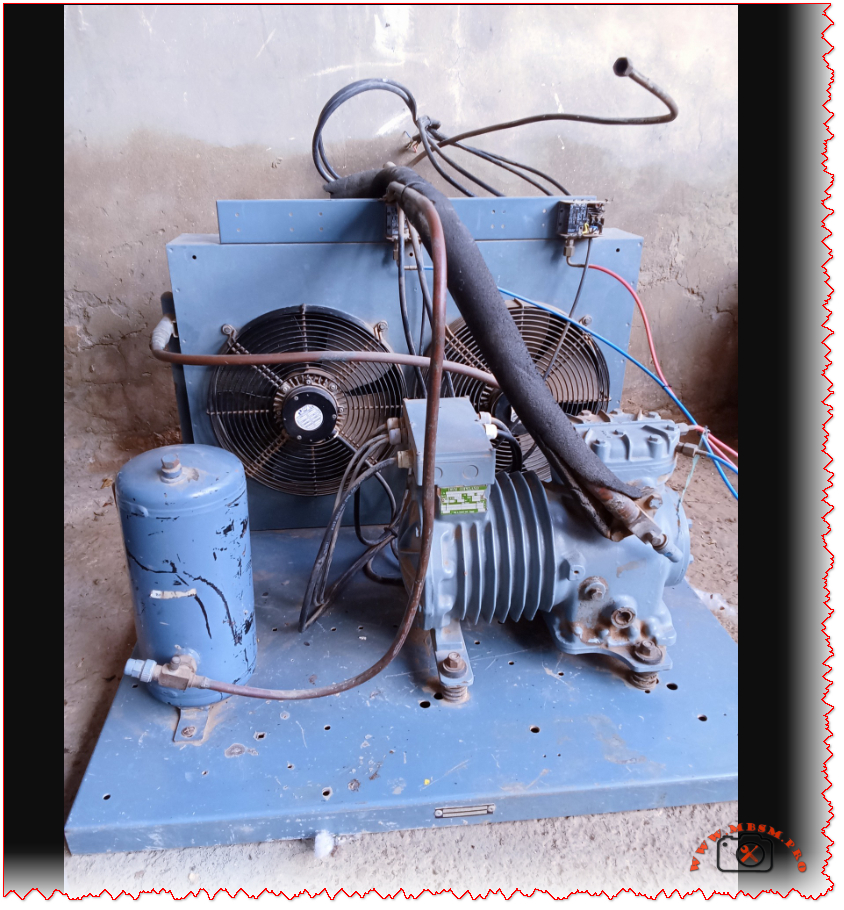
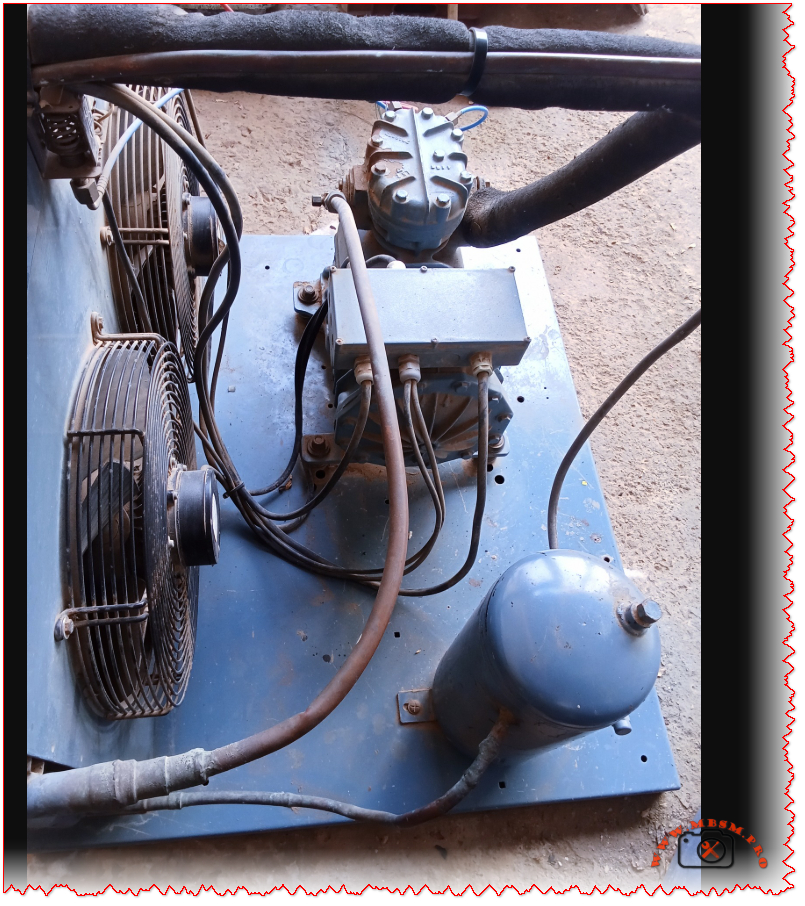
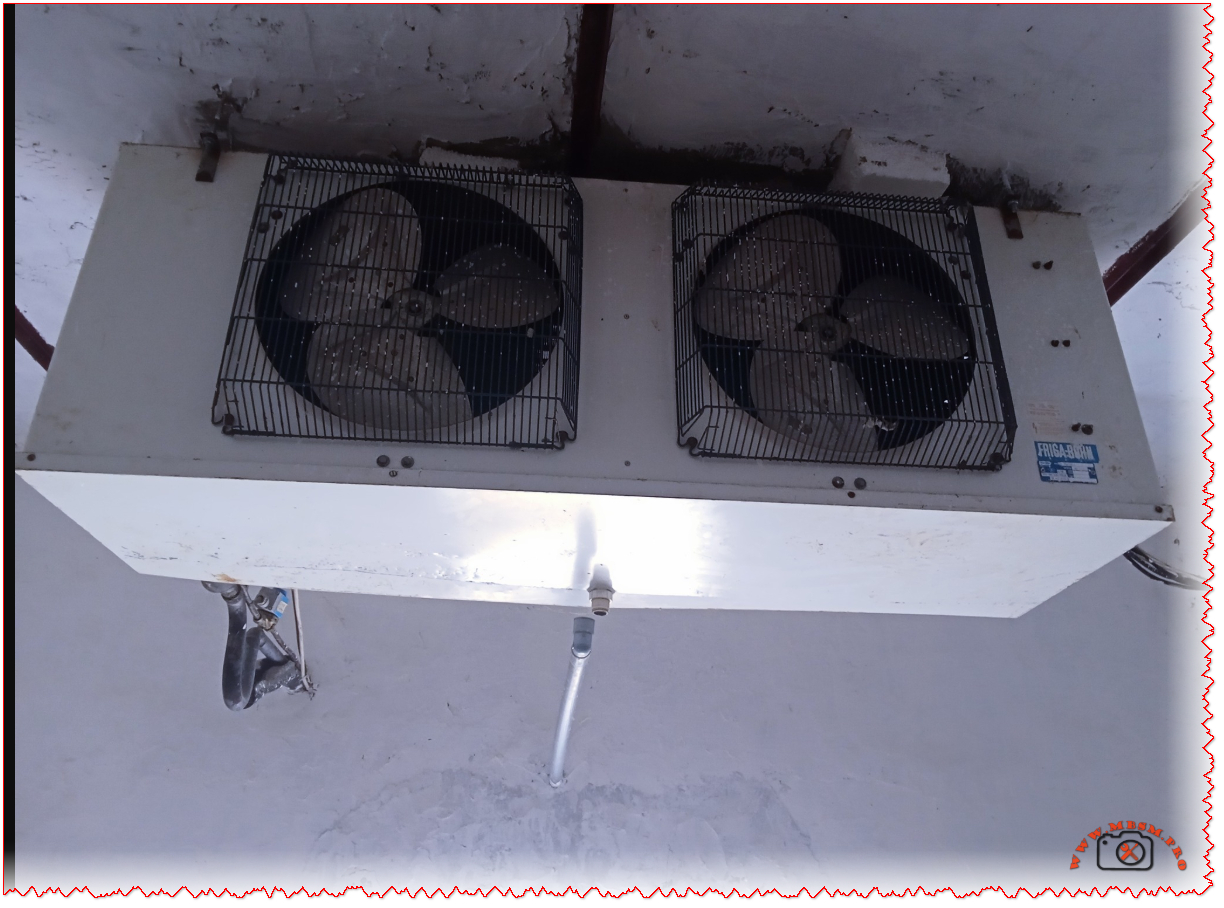
The condensing unit (group) is an original Copeland brand motor rated at 15 horsepower (15 HP), while the evaporator fans are Friga‑Bohn brand (two fans), both in good working condition

Equipment description

The images show a Copeland condensing unit on a steel base, with a semi‑hermetic refrigeration compressor, air‑cooled condenser with dual fans and a vertical liquid receiver, designed for a cold room at positive or low temperature. This configuration is widely used in food retail, cold storage and agro‑food applications where stable temperature and continuous duty are essential.​​

The ceiling‑mounted evaporator with two axial fans distributes the cold air evenly inside the room and returns refrigerant gas to the Copeland compressor through insulated suction and liquid lines. Pairing a Copeland condensing unit with a forced‑air evaporator is a classic solution that remains easy to install, commission and service for professional refrigeration contractors.​​

Copeland brand and technology

Copeland is a global reference in refrigeration compressors, offering scroll, semi‑hermetic and hermetic models with high energy efficiency and broad operating envelopes. Its equipment covers commercial refrigeration from medium‑temperature cold rooms to low‑temperature freezers, helping retailers and logistics operators secure the full cold chain.

Modern Copeland systems often integrate advanced protections, electronic controls and, on some ranges, Digital Scroll technology for capacity modulation, which improves temperature stability and reduces electrical consumption. For installers and companies such as Mbsmgroup or Mbsm.pro, this means more reliable systems, fewer service calls and better seasonal efficiency.

Typical features of Copeland condensing units

Although the exact nameplate of the photographed unit is not readable, Copeland catalogues describe the main features of their condensing unit ranges. These units are available with multiple refrigerants (such as R404A, R134a and newer lower‑GWP blends), and cover a wide capacity range suitable for small to large cold rooms.

Key technical characteristics (catalog examples)

Item Typical Copeland data
Compressor type Scroll or semi‑hermetic reciprocating, multi‑refrigerant, high efficiency. 
Application range Medium and low temperature, roughly from +12 °C down to around −40 °C depending on model. 
Capacity range Models sized for commercial cold rooms, freezers and display cases of various volumes. 
Condenser Quiet axial fans, available in standard or high‑ambient “tropical” versions. 
Options Digital Scroll capacity modulation, electronic controls, liquid line components and safety devices pre‑assembled. 

These catalogue values help technicians choose a replacement unit or design a new installation based on room size, target temperature and local climate.

Installation and maintenance recommendations

When installing or refurbishing a Copeland condensing unit like the one shown, technicians should:

  • Inspect the compressor, liquid receiver and all brazed joints for signs of damage or leaks before charging with refrigerant.
  • Clean the condenser coil and verify fan operation to ensure proper condensing pressure and avoid high‑pressure trips.

It is also important to select a refrigerant approved for the specific Copeland model (as listed in the product catalogue) and to follow the prescribed oil type and charge. Adding appropriate protections – high/low pressure switches, crankcase heater, motor protection and an electronic temperature controller – increases system reliability and extends the service life of the equipment.