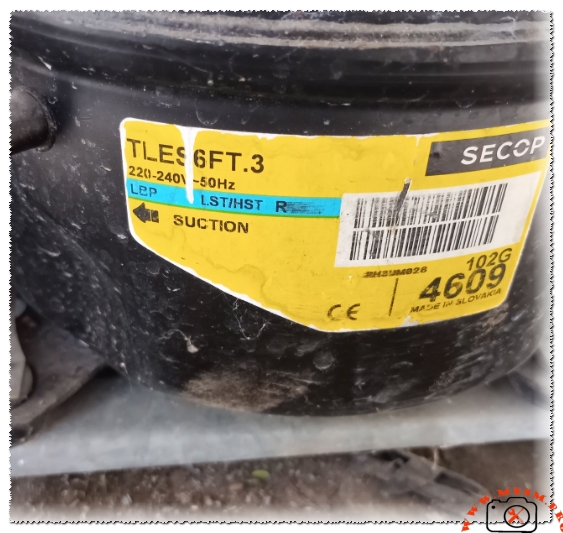
Secop TLES6FT.3 Compressor Technical Specifications, Cooling Capacity, and R134a Replacement Guide for Refrigeration Professionals
Focus Keyphrase
Secop TLES6FT.3 Compressor Technical Specifications, Cooling Capacity, and R134a Replacement Guide for Refrigeration Professionals
SEO Title
Mbsmpro.com, Compressor, Secop, TLES6FT.3, 1/6 hp, R134a, LBP, 220-240V 50Hz, Technical Data and Replacements
Meta Description
Technical deep dive into the Secop TLES6FT.3 compressor. Explore cooling capacity, 1/6 HP performance, R134a specs, and a comprehensive replacement guide for HVAC technicians.
Slug
secop-tles6ft3-compressor-specifications-replacement-guide
Tags
Mbsmgroup, Mbsm.pro, mbsmpro.com, mbsm, Secop, TLES6FT.3, Compressor, R134a, 1/6 HP, LBP, Refrigeration, Embraco EMT55HLP, Danfoss TL5G, ACC GVY57AA, Jiaxipera ND1112Y, Cubigel GL60AA, R600a Conversion, HVAC Technical Data
Excerpt
The Secop TLES6FT.3 is a high-efficiency hermetic reciprocating compressor designed specifically for Low Back Pressure (LBP) applications. Operating on R134a refrigerant, this 1/6 HP powerhouse is a staple in domestic refrigeration. This guide breaks down its technical performance, electrical characteristics, and provides reliable replacement options for field workers and engineers looking for precision.
The Heart of the Cold: A Deep Dive into the Secop TLES6FT.3
In the world of professional refrigeration, the compressor is the undisputed champion of the cooling cycle. Among the reliable workhorses found in modern households, the Secop TLES6FT.3 stands out as a precision-engineered component. Manufactured in Slovakia, this unit is built for longevity and steady performance in Low Back Pressure (LBP) environments, such as household refrigerators and small freezers.
Understanding this compressor isn’t just about reading a label; it’s about knowing how it interacts with the entire thermal system. Whether you are a field technician performing a swap or an engineer designing a cooling solution, the technical nuances of the TLES6FT.3 are vital.
Technical Profile: Secop TLES6FT.3
| Feature | Specification |
| Model | TLES6FT.3 (102G 4609) |
| Utilization | LBP (Low Back Pressure) |
| Domaine | Freezing / Cooling |
| Horsepower (HP) | 1/6 HP |
| Refrigerant Type | R134a |
| Displacement | 6.00 cm³ |
| Cooling Capacity (-23.3°C ASHRAE) | 156 Watts (Approx. 532 BTU/h) |
| Power Supply | 220-240V / 50Hz / 1 Phase |
| Motor Type | RSIR/CSIR (LST/HST compatible) |
| Oil Type and Quantity | POE (Polyolester) / 180 ml |
| Winding Material | Copper |
| Amperage (Rated) | 1.1 A |
| LRA (Locked Rotor Amperage) | 7.5 A |
| Type of Relay | PTC or Current Relay |
| Capacitor | Optional (6 µF or 80 µF for HST) |
| Country of Origin | Slovakia |
Efficiency Metrics (COP) and Performance Data
Efficiency in a compressor is defined by the Coefficient of Performance (COP). For the TLES6FT.3, the relationship between evaporating temperature and energy consumption is crucial for maintaining energy ratings.
| Evaporating Temp (°C) | Cooling Capacity (Watts) | Power Consumption (Watts) | COP (W/W) |
| -35 | 82 | 98 | 0.84 |
| -30 | 112 | 114 | 0.98 |
| -25 | 148 | 131 | 1.13 |
| -23.3 | 156 | 138 | 1.14 |
| -20 | 188 | 150 | 1.25 |
| -15 | 240 | 170 | 1.41 |
| -10 | 295 | 192 | 1.54 |
Note: The COP is calculated using the formula: $COP = \frac{Q_c}{P}$, where $Q_c$ is the cooling capacity and $P$ is the power input.
Application and Capability
This compressor is typically found in medium-sized domestic refrigerators.
- Cooling Capacity in Liters: It can efficiently handle cooling for units between 250 to 350 Liters.
- Cubic Feet: Approximately 8.8 to 12.3 cubic feet.
- Capillary Tube Suggestion: For LBP R134a systems, a capillary of 0.031 inches (0.78 mm) with a length adjusted to the specific cabinet load is standard.
Comparison: Secop TLES6FT.3 vs. Competitors
When looking at the market, the TLES6FT.3 competes directly with brands like Embraco and ACC. While it offers a very stable 6.0 cc displacement, some competitors might vary slightly in their start torque performance.
| Brand | Model | HP | Displacement | Gas |
| Secop | TLES6FT.3 | 1/6 HP | 6.00 cc | R134a |
| Embraco | EMT55HLP | 1/6 HP | 5.19 cc | R134a |
| Jiaxipera | ND1112Y | 1/6 HP | 5.80 cc | R134a |
| ACC/Seko | GVY57AA | 1/6 HP | 5.73 cc | R134a |
Replacement Guide
If you are in the field and cannot find the exact TLES6FT.3, here are the professional-grade alternatives.
5 Direct Replacements (Same Gas: R134a)
- Embraco EMT55HLP: Very common, slightly higher efficiency.
- Danfoss TL5G: The classic predecessor, extremely durable.
- ACC / Cubigel GVY57AA: A direct fit for many European cabinets.
- Jiaxipera ND1112Y: Often used in Bosch and Siemens units.
- Tecumseh THG1358YKS: A robust alternative with similar mounting.
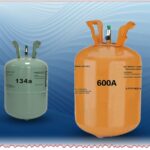
5 Indirect Replacements (Alternative Gas: R600a)
Caution: Gas conversion requires a complete system flush, different oil, and a specific R600a charging procedure.
- Secop TLES6.5KK.3: The natural R600a evolution of this frame.
- Embraco EMX55CLC: High efficiency R600a model.
- Jiaxipera NT1113Y: Standard R600a replacement.
- ACC HXK95AA: Known for very low noise levels.
- Wanbao ATA72XL: Budget-friendly R600a alternative for 1/6 HP range.
Professional Advice & Field Tips
- Oil Management: The TLES6FT.3 uses POE oil. This oil is highly hygroscopic (absorbs moisture quickly). Never leave the compressor open to the atmosphere for more than 15 minutes.
- System Cleanliness: When replacing a burnt-out compressor, always replace the filter drier and perform a nitrogen purge to ensure no acid remains in the lines.
- Starting Device: This model supports both LST (Low Starting Torque) and HST (High Starting Torque). If you are working in an area with unstable voltage, adding a start capacitor (HST kit) can significantly extend the motor’s life.
Troubleshooting the TLES6FT.3
| Problem | Potential Cause | Action |
| Compressor runs but no cold | Gas leak or partial blockage | Check high-side pressure and capillary. |
| Clicking sound (Thermal Protector) | Faulty relay or seized piston | Check LRA and relay resistance. |
| High vibration | Worn internal springs | Ensure the external rubber grommets are intact. |