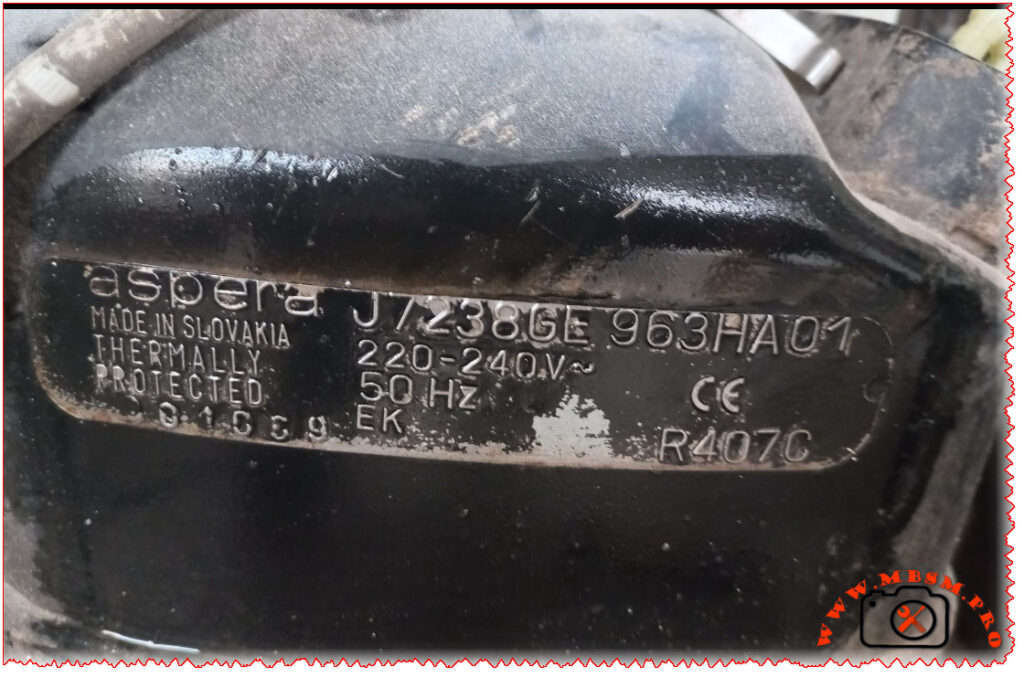
spera J7238GE Compressor 1.5 HP R407C HBP Technical Specifications and Performance Data
spera J7238GE Compressor 1.5 HP R407C HBP Technical Specifications and Performance Data mbsmpro

Mbsmpro.com, Compressor, Aspera, J7238GE, 1.5 HP, Embraco, Cooling, R407C, 3800 W, 7.5 A, 1Ph 220-240V 50Hz, HBP, CSR, 0°C to +15°C, Commercial Cooling


Technical Specifications: Aspera J7238GE

Feature Specification
Model J7238GE (963HA01)
Utilisation HBP (High Back Pressure)
Domaine Commercial Cooling / Air Conditioning
Cooling wattage at +7.2°C 3,845 W
Cubic feet can this compressor cool? Approx. 180 – 250 cu. ft (Application dependent)
Litres can this compressor cool? Approx. 5,000 – 7,000 Liters
Kcal/h 3,306 Kcal/h
TON (Refrigeration) 1.1 Ton
Oil Type and Quantity POE 22 (Polyolester) / 887 ml
Horsepower (HP) 1.5 HP
Refrigerant Type R407C
Power Supply 220-240V / 50Hz / 1 Phase
Cooling Capacity BTU 13,119 BTU/h
Motor Type CSR (Capacitor Start – Run)
Displacement 32.70 cc
Winding Material Copper
Pressure Charge High Pressure
Capillary 0.070″ to 0.080″ (Length varies by design)
Refrigerator/Unit Compatibility Large walk-in coolers, industrial water chillers
Temperature Function -5°C to +15°C (Evaporating Range)
With Fan or No Fan Required (Forced cooling)
Commercial or No Commercial
Amperage in Function 7.4 A
LRA (Locked Rotor Amps) 38.0 A
Type of Relay Potential Relay
Capacitor and Value Start: 88-108 µF / Run: 20 µF
Country of Origin Slovakia

Compressor Replacements (Same Refrigerant: R407C)

  1. Embraco NJ7240E
  2. Tecumseh CAJ4511Z
  3. Danfoss MTZ22-4VI (With slight modification)
  4. Bristol H23A353DBEA
  5. Copeland ZP31KSE-PFV

Compressor Replacements (Other Refrigerant: R404A/R134a)

  1. Embraco NJ9238GK (R404A – HBP)
  2. Tecumseh TAG4546Z (R404A)
  3. Aspera NJ6226Z (R134a – requires larger displacement)
  4. Danfoss SC18G (R134a – lower capacity)
  5. Copeland ZB15KCE-TFD (R404A – Scroll version)

Mastering High-Performance Cooling: The Aspera J7238GE Professional Overview

In the world of commercial refrigeration and industrial climate control, the Aspera J7238GE stands as a testament to Slovakian engineering precision. This 1.5 HP powerhouse is specifically designed for High Back Pressure (HBP) applications, making it a “go-to” choice for engineers managing large-scale walk-in coolers, industrial water chillers, and specialized air conditioning units.

Operating on R407C, an environmentally conscious HFC blend, the J7238GE provides a robust cooling capacity exceeding 13,000 BTU/h. Unlike standard household compressors, this unit utilizes a CSR (Capacitor Start – Run) motor configuration. This ensures high starting torque, allowing the compressor to kick in even under heavy thermal loads without tripping the thermal protection.

For the field worker, the reliability of the Slovakia-made Embraco/Aspera line is legendary. It handles the stresses of fluctuating ambient temperatures with grace, provided the maintenance of the forced-air cooling system is kept in check.

Efficiency Metrics (COP) & Performance Curve

The efficiency of the J7238GE is highly dependent on the evaporating temperature. Below is the performance data for R407C at a standard Condensing Temperature of 45°C.

Evaporating Temp (°C) Cooling Capacity (Watts) Power Consumption (Watts) COP (W/W)
-10 1,950 1,210 1.61
-5 2,480 1,350 1.84
0 3,110 1,480 2.10
+5 3,845 1,620 2.37
+7.2 4,200 1,680 2.50
+10 4,680 1,750 2.67

Engineering Insight: R407C vs. R22 and R404A

When comparing the J7238GE to older R22 models or newer R404A units, several factors emerge:

  • Glide: R407C has a significant temperature glide. As an engineer, you must ensure the system is charged in the liquid phase to maintain the correct blend ratio.
  • Heat Transfer: R407C offers excellent heat transfer coefficients in HBP ranges, often outperforming R134a in similar physical footprints.
  • Displacement: With a 32.7 cc displacement, the J7238GE moves a significant volume of gas, making it far more efficient for medium-to-large commercial cabinets than the standard NJ series used in smaller retail fridges.

Maintenance and Field Advice

  1. Oil Management: This compressor uses POE oil. It is extremely hygroscopic (absorbs moisture quickly). Never leave the system open to the atmosphere for more than 15 minutes.
  2. Start Components: Always check the potential relay and capacitors if the compressor hums but fails to start. A weakened 20µF run capacitor is often the silent killer of these motors.
  3. Vibration: Ensure the mounting grommets are secure. The J7238GE is a heavy-duty reciprocating model; excessive vibration can lead to copper fatigue and subsequent leaks.

Focus Keyphrase: Aspera J7238GE Compressor 1.5 HP R407C HBP Technical Specifications and Performance Data

SEO Title: Mbsm.pro – Aspera J7238GE Compressor | 1.5 HP | R407C | HBP Expert Guide

Meta Description: Discover the full technical specs of the Aspera J7238GE 1.5 HP compressor. Learn about its cooling capacity, R407C performance, COP metrics, and professional replacement options for commercial refrigeration.

Slug: aspera-j7238ge-compressor-1-5-hp-r407c-hbp-specs

Tags: Mbsmgroup, Mbsm.pro, mbsmpro.com, mbsm, Aspera, Embraco, J7238GE, 963HA01, R407C, 1.5HP, HBP, Commercial Cooling, NJ7240E, CAJ4511Z, MTZ22, NJ9238GK, Refrigeration Repair, HVAC Engineering.

Excerpt: The Aspera J7238GE is a powerhouse in the commercial cooling sector. Delivering 1.5 HP of performance using R407C refrigerant, this Slovakia-built compressor is designed for High Back Pressure applications. With a 32.7 cc displacement and a robust CSR motor, it provides reliable cooling for large-scale industrial chillers and commercial walk-in refrigeration systems worldwide.

spera J7238GE Compressor 1.5 HP R407C HBP Technical Specifications and Performance Data mbsmpro
1.5HP, 963HA01, Aspera, CAJ4511Z, Commercial Cooling, Embraco, HBP, J7238GE, mbsm, mbsm.pro, mbsmgroup, mbsmpro.com, MTZ22, NJ7240E, NJ9238GK, R407C, Refrigeration Repair


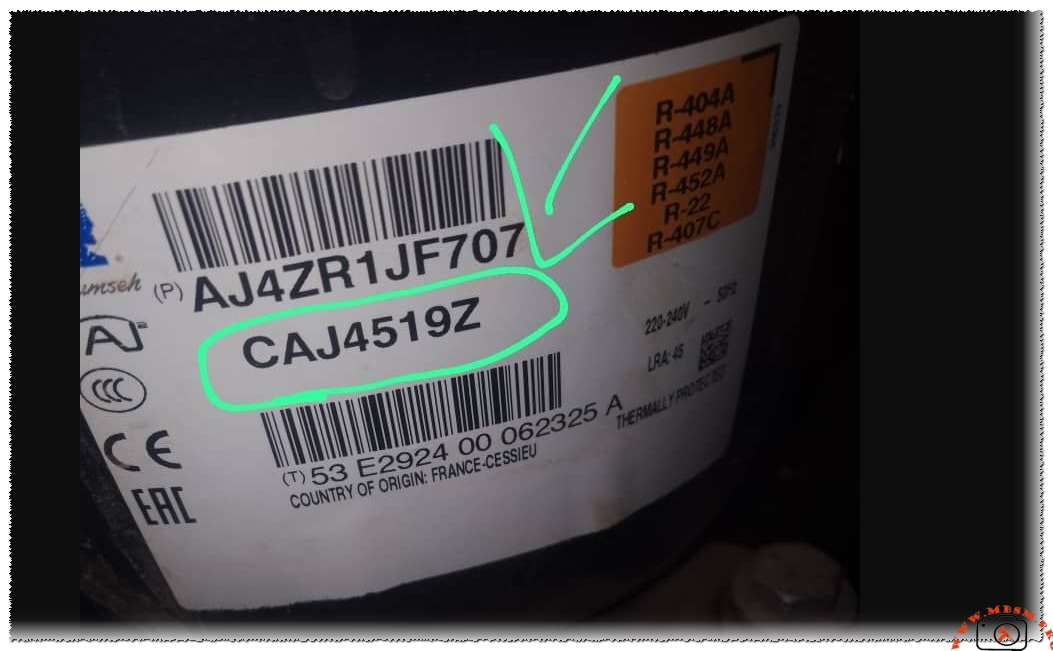
I charged the compressor CAJ4519Z with R407 gas, and upon startup, some frost appeared on the return line and expansion valve, even though the cooling was fine. Is this normal? Note that it’s a refrigeration room, not a freezer.

I charged the compressor CAJ4519Z with R407 gas, and upon startup, some frost appeared on the return line and expansion valve, even though the cooling was fine. Is this normal? Note that it's a refrigeration room, not a freezer. mbsmpro

Regarding the compressor in the photo (Tecumseh CAJ4519Z) used in a cold room (chilling/positive temperature) with R-407C gas, finding frost on the suction line and the expansion valve is not normal for this type of application.

While the cooling might seem “good” now, frost on the suction line indicates that liquid refrigerant is not fully evaporating in the evaporator and is returning to the compressor.

Here is a technical breakdown of why this is happening and how to fix it:

1. Low Superheat (Expansion Valve Adjustment)

This is the most common cause. If the expansion valve is open too wide, it allows too much liquid into the evaporator.

  • The Risk: Liquid refrigerant can reach the compressor (Liquid Slugging), which can break the internal valves of the CAJ4519Z compressor.
  • The Fix: You need to adjust the Superheat. For a positive temperature cold room, the superheat should be between 5°C and 8°C. If it is lower, slightly close the expansion valve (turn the adjustment screw clockwise) in half-turn increments and wait 15–20 minutes to see the effect.

2. Overcharging the System

If you added too much R-407C, the excess refrigerant stays in the evaporator and suction line as a liquid/gas mix, causing frosting.

  • Note on R-407C: This is a “blend” refrigerant. It must always be charged in the liquid state (tank upside down). If you charged it as a vapor, the mixture ratio might be wrong, affecting performance.
  • The Fix: Check the sight glass (if available) and monitor the pressures. For R-407C in a cold room at 0°C to +4°C, your suction pressure should typically be around 45 to 55 PSI.

3. Poor Airflow at the Evaporator

If the heat exchange is poor, the refrigerant won’t boil off into a gas.

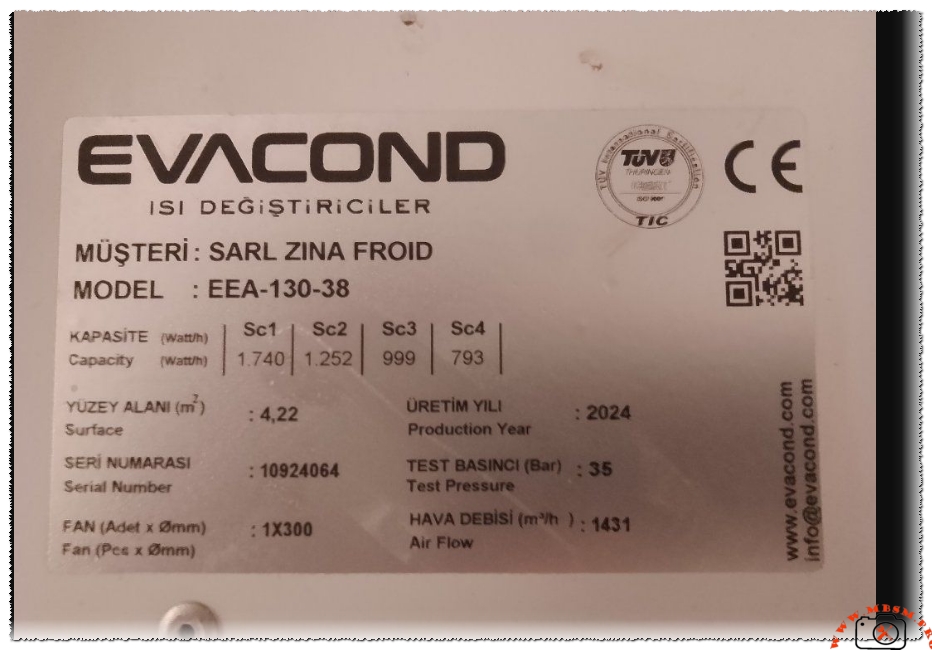
  • Check the Evaporator (EVACOND unit in your photo):

    • Are the fans spinning at the correct speed?
    • Are the fins dirty or clogged?
    • Is there already an ice buildup on the evaporator coils blocking the air?

4. Expansion Valve Sensing Bulb

Check the location of the expansion valve’s sensing bulb.

  • If the bulb is loose or not insulated properly, it “thinks” the pipe is warm and opens the valve too much, flooding the suction line.
  • The Fix: Ensure the bulb is tightly clamped to the suction pipe (at the 2 o’clock or 10 o’clock position) and well-insulated.

Summary Recommendation:

Frost should generally stop at the outlet of the expansion valve or the very beginning of the evaporator. If the frost is traveling all the way back to the compressor:

  1. Slightly close the expansion valve.
  2. Verify the airflow over the evaporator.
  3. Ensure you haven’t overcharged the system.

Allowing frost to reach the compressor will eventually lead to mechanical failure or “slugging,” which will destroy the compressor.


Focus Keyphrase:
 Comprehensive Technical Guide for Tecumseh CAJ4519Z Compressor Performance in R407C and R404A Medium High Back Pressure Refrigeration Systems

SEO Title: Mbsmpro.com, Compressor, CAJ4519Z, 1 HP, Tecumseh, Cooling, R404A, R407C, 220-240V, MHBP, Hermetic Reciprocating

Meta Description: Explore the professional specifications of the Tecumseh CAJ4519Z compressor. Learn about its 1 HP capacity, multi-refrigerant compatibility, and expert field advice for maintaining optimal superheat in commercial cold rooms.

Slug: tecumseh-caj4519z-compressor-technical-specifications-guide

Tags: Mbsmgroup, Mbsm.pro, mbsmpro.com, mbsm, Tecumseh, CAJ4519Z, AJ4ZR1JF707, R404A, R407C, R448A, R449A, R452A, Replacement Compressor, Commercial Refrigeration, Cold Room Compressor, Danfoss MTZ22, Embraco NEK6217GK, Copeland ZB15KCE, Bitzer 2KES-05, Bristol H23A383DBL

Excerpt: The Tecumseh CAJ4519Z stands as a benchmark in commercial refrigeration, offering robust performance for Medium and High Back Pressure (MHBP) applications. Engineered for versatility, it supports a wide array of refrigerants including R404A and R407C. This professional analysis covers technical data, wiring configurations, and essential maintenance practices for field engineers working on refrigeration units.


Mbsmpro.com, Compressor, CAJ4519Z, 1 HP, Tecumseh, Cooling, R404A, R407C, 220-240V 50Hz, MHBP, CSR, 34.4 cm³

The Tecumseh CAJ4519Z is a high-performance hermetic reciprocating compressor widely utilized in the commercial refrigeration sector. Known for its reliability in medium to high evaporating temperature ranges, this unit is a staple for walk-in coolers, display cases, and industrial liquid chillers. Its “AJ” series design focuses on thermal efficiency and mechanical durability, making it a preferred choice for technicians demanding longevity in demanding environments.

Technical Specification Table

Attribute Specification Details
Model CAJ4519Z
Utilisation MHBP (Medium/High Back Pressure)
Domaine Cooling / Air Conditioning / Commercial Chilling
Oil Type and Quantity POE (Polyolester) / 887 ml
Horsepower (HP) 1 HP (Nominal)
Refrigerant Type R404A, R448A, R449A, R452A, R22, R407C
Power Supply 220-240V ~ 50Hz
Cooling Capacity BTU ~15,500 BTU/h (at +7.2°C Evaporating Temp)
Motor Type CSR (Capacitor Start – Run)
Displacement 34.4 cm³
Winding Material High-Grade Copper
Pressure Charge High Pressure (Nitrogen Holding Charge)
Capillary / Expansion Expansion Valve (TXV) Recommended
Compatible Equipment Cold Rooms, Bottle Coolers, Industrial Chillers
Temperature Function -15°C to +15°C (Evaporating Range)
Fan Requirement Forced Air Cooling Required (350 m³/h minimum)
Commercial Use Yes, Heavy-Duty Commercial Grade
Amperage (RLA) 6.5 A
LRA (Locked Rotor Amps) 45 A
Type of Relay Potential Relay
Start/Run Capacitor Start: 88-108µF / Run: 20µF

Comparison with Peer Models

When evaluating the CAJ4519Z, it is helpful to compare its displacement and capacity against other industry standards in the 1 HP range.

Feature Tecumseh CAJ4519Z Embraco NEK6217GK Danfoss SC15GH
Displacement 34.4 cm³ 14.3 cm³ (LBP/HBP Mix) 15.28 cm³
Cooling Power High (Multi-Ref) Medium (R404A) Medium (R134a)
System Design CSR CSIR CSIR/CSR
Oil Compatibility Multi-Refrigerant POE POE Only POE/PAG

Engineering Insights: Managing Frost and Superheat

In field operations, specifically when retrofitting or charging systems with R407C, technicians may encounter frost on the suction line. From an engineering perspective, frost migrating toward the compressor crankcase is a critical warning sign.

Diagnostic Checkpoint:

  1. Superheat Calibration: For a positive temperature cold room, the target superheat at the evaporator outlet should be between 5K and 8K. If frost reaches the suction service valve, the superheat is likely near zero, risking liquid slugging.
  2. R407C Glide: Unlike R404A, R407C has a significant temperature glide. Charging must be performed in the liquid phase to maintain the correct blend ratio.
  3. Expansion Valve Tuning: If the cooling is effective but frosting occurs, the Thermostatic Expansion Valve (TXV) may be adjusted too “open.” Closing the valve (clockwise) increases superheat and retreats the frost line.

Potential Replacements

5 Replacements (Same Refrigerant – R404A/R407C)

  1. Danfoss: MTZ22-4VI (Slightly larger, very robust)
  2. Copeland: ZB15KCE-TFD (Scroll alternative)
  3. L’Unite Hermetique: CAJ4517Z (Slightly lower capacity)
  4. Embraco: NT6222GK
  5. Bitzer: 2KES-05 (Semi-hermetic equivalent)

5 Replacements (Alternative Refrigerants)

  1. Tecumseh CAJ4492Y: (R134a variant)
  2. Danfoss SC18G: (R134a high capacity)
  3. Tecumseh CAJ4511P: (R290 Natural Refrigerant)
  4. Embraco NEK6213GK: (R404A – slightly smaller)
  5. Bristol H23A383DBL: (R22/R407C specific)

Electrical Wiring Diagram (CSR Logic)

The CSR (Capacitor Start – Run) motor configuration is designed for high starting torque.

  • Common (C): Connected to the Overload Protector.
  • Start (S): Connected to the Potential Relay (Terminal 2) and Start Capacitor.
  • Run (R): Connected to the Main Power and Run Capacitor.
  • Potential Relay: Terminals 1 and 2 disconnect the start capacitor once the motor reaches ~75% speed.

Expert Advice and Notice

  • Notice: Always use a filter drier compatible with POE oil. POE is highly hygroscopic (absorbs moisture rapidly).
  • Benefit: The CAJ4519Z features an internal pressure relief valve, providing an extra layer of safety against system over-pressurization.
  • Engineering Tip: When using R407C, ensure the condenser is sized for the additional heat rejection requirements compared to R22. Failure to do so will result in high head pressures and reduced compressor lifespan.
I charged the compressor CAJ4519Z with R407 gas, and upon startup, some frost appeared on the return line and expansion valve, even though the cooling was fine. Is this normal? Note that it's a refrigeration room, not a freezer. mbsmpro


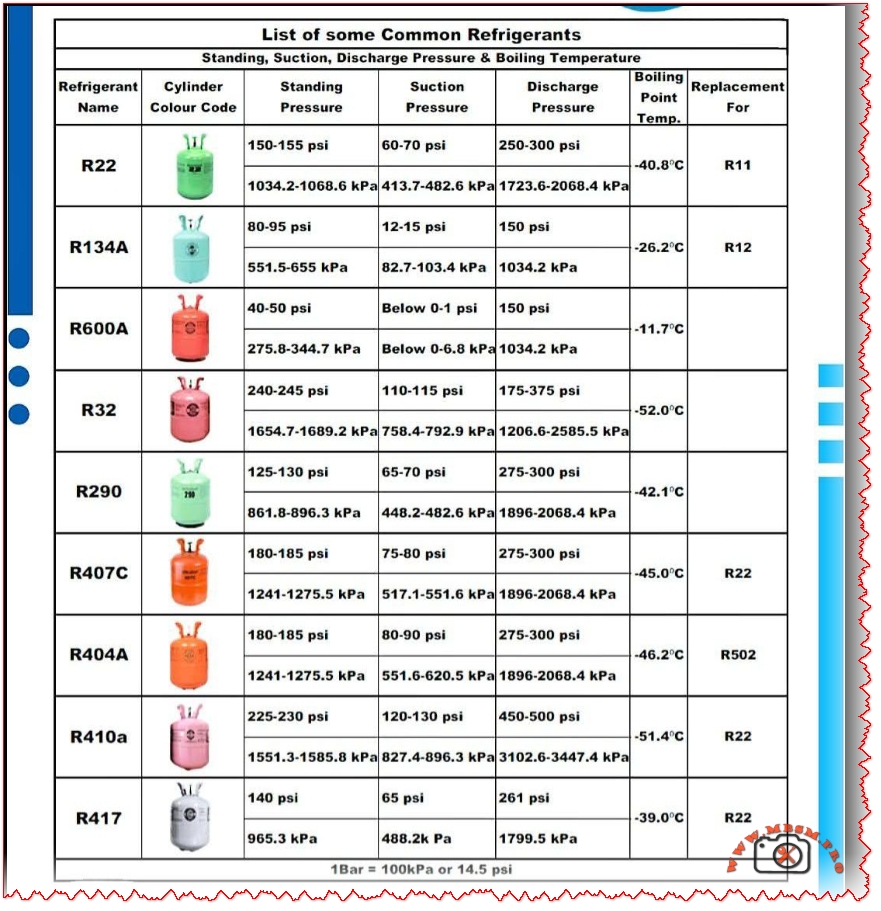
Refrigerants, Standing, Suction and Discharge Pressures for Modern HVAC Systems

Refrigerants, Standing, Suction and Discharge Pressures for Modern HVAC Systems mbsmpro

Guide to Common Refrigerants: Standing, Suction and Discharge Pressures for Modern HVAC Systems

Refrigeration technicians today work with a mix of legacy and new-generation refrigerants, each with its own safe pressure range and boiling temperature. Understanding these values is essential for accurate diagnostics, safe charging and long compressor life in air‑conditioning and commercial refrigeration.


Key role of pressure charts

Pressure–temperature charts and standing/suction/discharge tables give technicians a fast reference for what a system “should” be doing at a given ambient or evaporating temperature.
Using wrong reference values can lead to over‑charging, overheating, liquid slugging or misdiagnosis of a healthy system as faulty.


Overview of common refrigerants

The image groups the most used refrigerants in residential and light commercial systems: R22, R134a, R600a, R32, R290, R407C, R404A, R410A and R417 (R417A).
Each gas has a typical standing pressure (static pressure at rest), an evaporating suction pressure, a condensing discharge pressure and a characteristic boiling point at atmospheric pressure.


Typical pressure ranges from the chart

The following table summarises the indicative values shown in the chart (all pressures are approximate, for normally loaded systems at typical comfort‑cooling conditions).

Indicative pressures and boiling points

Refrigerant Approx. standing pressure Approx. suction pressure Approx. discharge pressure Boiling point (°C) Typical replacement for
R22 150–155 psi / 1034–1069 kPa  60–70 psi / 413–483 kPa  250–300 psi / 1724–2069 kPa  −40.8 °C  R11 / legacy R22 AC 
R134a 80–95 psi / 552–655 kPa  12–15 psi / 83–103 kPa  ~150 psi / 1034 kPa  −26.2 °C  R12 in domestic & auto 
R600a 40–50 psi / 276–345 kPa  ≈0–1 psi / 0–7 kPa  ~150 psi / 1034 kPa  −11.7 °C  Low‑charge fridges, R12 
R32 240–245 psi / 1655–1689 kPa  110–115 psi / 758–793 kPa  175–375 psi / 1207–2586 kPa  −52.0 °C  High‑efficiency R410A/R22 
R290 125–130 psi / 862–896 kPa  65–70 psi / 448–483 kPa  275–300 psi / 1896–2069 kPa  −42.1 °C  R22 in some systems 
R407C 180–185 psi / 1241–1276 kPa  75–80 psi / 517–552 kPa  275–300 psi / 1896–2069 kPa  −45.0 °C (bubble)  R22 retrofits 
R404A 180–185 psi / 1241–1276 kPa  80–90 psi / 552–621 kPa  275–300 psi / 1896–2069 kPa  −46.2 °C  R502 low‑temp systems 
R410A 225–230 psi / 1551–1586 kPa  120–130 psi / 828–896 kPa  450–500 psi / 3103–3447 kPa  −51.4 °C  Modern R22 AC 
R417A ~140 psi / 965 kPa standing  ~65 psi / 448 kPa suction  ~261 psi / 1796 kPa discharge  −39.0 °C  R22 service blend 

These figures are not universal “set‑points”, but practical targets that help technicians decide whether a system is under‑charged, over‑charged or suffering airflow or mechanical problems.


Safety, cylinder colours and replacements

Many countries use conventional cylinder colour codes to identify refrigerants quickly on site, although some regions are migrating to neutral colours with clear labelling.
Hydrocarbons such as R290 and R600a are flammable, so working pressures must always be combined with strict leak‑prevention, ventilation and ignition‑control procedures.

When phasing out ozone‑depleting R22, blends like R407C or R417A are often used in retrofit projects, while new high‑efficiency equipment typically relies on R410A or R32 with different design pressures.
Comparing the standing and operating pressures during commissioning helps ensure that a replacement refrigerant is compatible with existing components such as compressors, valves and heat‑exchangers.


Practical use for technicians and trainers

  • Technicians can laminate similar tables and keep them in the toolbox or on the workshop wall as a quick‑reference during charging and troubleshooting.
  • Training centres and HVAC content creators like Mbsmgroup and Mbsm.pro can turn these values into interactive quizzes, infographics or mobile‑friendly charts for students and new technicians.​
Refrigerants, Standing, Suction and Discharge Pressures for Modern HVAC Systems mbsmpro