Mbsmpro.com, Compressor Spare Parts, Relays, Thermal Overload Protectors, 1/2 hp to 1/6 hp, Start and Protection Stems, Characteristic Tables
Selecting the right electrical components is the heartbeat of refrigeration maintenance. When a compressor fails to start or constantly trips, the culprit is often a mismatched Current Relay or a fatigued Thermal Overload Protector. Ensuring these parts align perfectly with the compressor’s horsepower (HP) and amperage rating is not just about repair—it is about system longevity.
The Role of Current Relays in Compressor Ignition
Current relays are electromagnetic switches that momentarily engage the start winding of a compressor. Once the motor reaches approximately 75% of its rated speed, the relay disconnects the start winding, allowing the motor to run on its main winding.
Technical Specifications for Standard Current Relays
Model
Compressor Power (HP)
Terminal Pin
Applied Current (A)
117U 2010
1/3 HP
5
4.5 A
117U 2100
1/4 HP
6
3.6 A
117U 2104
1/5 HP
4
6.5 A
117U 2050
1/2 HP
1
1.4 A
Thermal Overload Protectors: The Safety Net
Thermal Overload Protectors (TOP) act as a bimetallic fuse. They monitor both the heat generated by the compressor and the current flowing through it. If the compressor stalls (locked rotor) or overheats due to a refrigerant leak, the TOP breaks the circuit to prevent the motor windings from melting.
Performance Benchmarks for Overload Protectors
Compressor Power (HP)
Max Connect Current (A)
Release Current (A)
1/2 HP
12.5 A
5.0 A
1/3 HP
9.0 A
4.75 A
1/4 HP
8.0 A
4.0 A
1/5 HP
7.5 A
3.5 A
1/6 HP
7.0 A
3.0 A
Comparison: Mechanical Relays vs. PTC Starters
While the technical data above focuses on mechanical current relays, modern systems often use PTC (Positive Temperature Coefficient) starters.
Mechanical Relays (117U Series): Highly reliable for heavy-duty applications. They provide a “snap” action that is better for high-torque starts.
PTC Starters: Use a solid-state disk that increases resistance as it heats up. They are quieter but require a cool-down period before the compressor can restart.
Engineering Advice for Field Technicians
Never Oversize the Protector: If you install a 1/2 HP protector on a 1/6 HP compressor, the protector will not trip during a fault, leading to a burnt-out compressor.
Check the Return Temperature: Thermal caps must operate within a return temperature range of 60 ± 10°C. Anything higher indicates a system restriction or lack of airflow over the condenser.
Terminal Integrity: Ensure terminals are tight. A loose connection creates resistance, which generates heat and causes “nuisance tripping” of the overload.
Focus Keyphrase: Compressor Current Relay and Thermal Overload Protector Characteristic Tables for 1/2 to 1/6 HP
Meta Description: Comprehensive guide to compressor start and protection stems. Technical tables for 117U relays and thermal overload protectors from 1/2 HP to 1/6 HP. Essential data for HVAC engineers.
Excerpt: Selecting the right electrical components is the heartbeat of refrigeration maintenance. When a compressor fails to start or constantly trips, the culprit is often a mismatched Current Relay or a fatigued Thermal Overload Protector. Ensuring these parts align perfectly with the compressor’s horsepower (HP) and amperage rating is vital for long-term system reliability.
Role of Current Relays in Compressor Ignition mbsmpro
The MAQ QD168H is a high-efficiency hermetic reciprocating compressor specifically engineered for low back pressure (LBP) applications. As an industry-standard power unit for domestic refrigeration, it is the ideal choice for large double-door refrigerators and deep freezers. Its design prioritizes thermal stability and energy conservation, making it a reliable workhorse for technicians and manufacturers alike.
Technical Specifications Data Sheet
Model
MAQ QD168H
Utilization
LBP (Low Back Pressure)
Domaine
Freezing / Cooling
Oil Type and Quantity
POE / Mineral – 220ml
Horsepower (HP)
1/4 HP
Refrigerant Type
R134a
Power Supply
220-240V / 50Hz
Cooling Capacity
665 BTU/h (Approx. 195W)
Motor Type
RSIR (Remote Start Induction Run)
Displacement
6.8 cm³
Winding Material
Copper
Pression Charge (Suction)
0.5 to 1.2 Bar
Capillary Recommendation
0.031″ to 0.036″
Compatible Appliance
Double door fridge (1.5m) / Chest Freezer
Temperature Function
-35°C to -15°C
Cooling Method
Static (Natural Convection)
Commercial Use
Light Commercial / Domestic
Amperage (RLA)
1.1A – 1.3A
LRA (Locked Rotor Amps)
7.5A
Type of Relay
PTC Relay
Capacitor
N/A (Optional 4-5µF for RSCR conversion)
Engineering Insights: Performance and Application
From a field perspective, the QD168H is recognized for its robust starting torque. When installed in a 1.5-meter double-door refrigerator, it provides sufficient mass flow to ensure the evaporator reaches sub-zero temperatures quickly. Because it uses Copper Windings, it handles the heat of continuous operation much better than cheaper aluminum-clad alternatives, leading to a significantly longer lifespan.
Comparative Performance Analysis
Below is a comparison of the MAQ QD168H against other global standards in the 1/4 HP category.
Brand/Model
Refrigerant
HP
Cooling Power (W)
COP (W/W)
MAQ QD168H
R134a
1/4 HP
195 W
1.25
Embraco FFI 7.5HAK
R134a
1/4 HP
202 W
1.29
Huayi QD75H
R134a
1/4 HP
190 W
1.22
Samsung SD162
R134a
1/5+ HP
175 W
1.20
Professional Replacement Guide
If you cannot find the MAQ QD168H, use these cross-references. Ensure you verify the physical dimensions and mounting base before installation.
5 Compressor Replacements (Same Gas – R134a):
Embraco: FFI 7.5HAK / EMI 70HER
Secop: TLES7.5FT.3
Huayi: QD75H
ZEL: GQD75Y
Jiaxipera: N1113GZ
5 Compressor Replacements (Other Gas – R600a):
Note: R600a requires a complete vacuum, different oil compatibility checks, and a specific charging scale.
Embraco: EMX70CLC
Wanbao: HMK95AA
Donper: KKL70CY
Secop: TLES7.5KK.3
Jiaxipera: NT1114Y
Installation Notice and Benefits
Optimal Performance: Always replace the Filter Drier when installing this compressor.
System Integrity: Use a vacuum pump for at least 20 minutes to eliminate non-condensables.
Voltage Guard: It is highly recommended to use a voltage protector to shield the PTC relay and motor from spikes.
Focus Keyphrase: MAQ QD168H Compressor 1/4 HP R134a Specifications
SEO Title: Mbsmpro.com | MAQ QD168H Compressor 1/4 HP R134a LBP Technical Review
Meta Description: Detailed technical specifications for the MAQ QD168H 1/4 HP compressor. Learn about its cooling capacity, R134a compatibility, and 1.5m refrigerator suitability. Includes cross-reference guides and pro installation tips.
Excerpt: The MAQ QD168H is a high-performance 1/4 HP hermetic compressor designed for R134a refrigerant systems. Ideal for domestic refrigerators and freezers, it offers a cooling capacity of approximately 195W. This article provides a deep dive into its electrical characteristics, displacement, and compatible replacements to ensure a professional and efficient cooling system repair or build.
MAQ QD168H, Can this compressor be installed in a 1.5-meter two-door refrigerator? mbsmpro
The Technician’s Take on the Matsushita QA77C17GAX5
Category: Refrigeration
written by www.mbsmpro.com | January 29, 2026
Focus Keyphrase: Matsushita Panasonic QA77C17GAX5 Refrigerator Compressor 1/4 HP R134a Specs and Cross-Reference
SEO Title: Mbsm.pro, Compressor, QA77C17GAX5, 1/4 hp, Matsushita, Cooling, R134a, 180 W, 1.2 A, 1Ph 220-240V 50Hz, LBP, RSIR
Meta Description: Full technical breakdown of the Matsushita QA77C17GAX5 compressor. Learn about its 1/4 HP capacity, R134a requirements, and the best replacement models for fridge repairs.
Excerpt: The Matsushita QA77C17GAX5 is a workhorse in the refrigeration world. This 1/4 HP R134a compressor is a go-to for many household fridges and freezers. In this guide, we break down the technical specs, electrical wiring, and the most reliable replacement options to help you get your cooling system back up and running fast.
The Technician’s Take on the Matsushita QA77C17GAX5
When you spend enough time in the field, you start to recognize certain parts that just don’t quit. The Matsushita QA77C17GAX5 is one of those units. Produced by Panasonic, this compressor has been a standard in residential cooling for years. It’s a 1/4 HP unit designed for Low Back Pressure (LBP) applications, meaning it’s built to reach and hold those deep-freeze temperatures.
What makes this model interesting is its balance. It has a 7.7cc displacement, which is a sweet spot for R134a systems. It’s powerful enough for a full-sized family refrigerator but efficient enough that it doesn’t hammer the electric bill. From an engineering perspective, the RSIR motor is simple and reliable—fewer components like capacitors mean fewer things to fail in the heat of summer.
Real-World Performance
I’ve noticed that these compressors handle voltage dips better than many modern counterparts. While some high-efficiency units are sensitive to “dirty” power, the QA77 series is built like a tank. It delivers about 180 Watts of cooling power at standard ASHRAE conditions, making it a versatile choice for a wide range of kitchen appliances.
Complete Technical Data Table
Data Point
Technical Specification
Model
QA77C17GAX5
Utilisation
LBP (Low Back Pressure)
Domaine
Freezing / Cooling
Oil Type and Quantity
POE (Polyolester) / 230ml
Horsepower (HP)
1/4 HP
Refrigerant Type
R134a
Power Supply
220V – 240V / 50Hz / 1 Phase
Cooling Capacity
614 BTU/h (180 Watts)
Motor Type
RSIR
Displacement
7.7 cm³
Winding Material
Copper
Typical Pressure
Suction: ~1 PSI / Discharge: ~140 PSI
Capillary Tube
0.031″ Internal Diameter
Common Usage
Household Fridges, Chest Freezers
Temp Range
-35°C to -10°C
Fan Requirement
Static Cooling (Natural Convection)
Type
Domestic / Light Commercial
Amperage
1.1A to 1.3A
LRA (Locked Rotor)
14.5 Amps
Relay Type
PTC
Capacitor
None (Standard configuration)
Wiring and Electrical Logic
Working with the electrics on this unit is straightforward. It uses a three-pin terminal setup.
Top Pin (Common): This is where your Overload Protector (OLP) sits. It’s the safety gate that shuts the compressor down if it gets too hot.
Bottom Left/Right (Start & Run): The PTC relay slides onto these. When you power it up, the relay gives a quick “kick” to the Start winding and then lets the Run winding take over once the motor is spinning.
Pro Tip: If the compressor won’t start but it’s humming, check the PTC relay first. They often burn out before the motor does. Shake it—if it rattles like broken glass, it’s shot.
How it Compares to Other Brands
Manufacturer
Competitor Model
Refrigerant
Capacity (Watts)
Matsushita
QA77C17GAX5
R134a
180 W
Embraco
FFI7.5HAK
R134a
193 W
Danfoss/Secop
TLS7FT
R134a
175 W
LG
MA72LCEP
R134a
185 W
Compared to the Embraco FFI7.5HAK, the Matsushita is slightly quieter but offers almost the same cooling torque. The Embraco might pull a vacuum a bit faster, but the Matsushita generally has a longer lifespan in high-ambient environments.
Expert Maintenance Notice
Vacuum is Non-Negotiable: Because this unit uses POE oil, moisture is the enemy. POE oil absorbs water from the air, which creates acid inside the system. You must pull a deep vacuum before charging.
Filter Drier: Don’t be lazy—always swap the filter drier when you open the system. It’s the cheapest insurance policy you can buy for a new compressor.
Oil Warning: Never add mineral oil to this system. It will not mix with R134a and will eventually cause a blockage or mechanical failure.
Recommended Replacements
If you can’t find the exact QA77C17GAX5, these models are the closest matches in terms of performance and fit.
Note: These require a full system flush and oil check.
R600a (Isobutane): Panasonic QB77C16GAX5
R290 (Propane): Embraco EMX40CLC
R404A: Secop SC10MLX (Only for commercial setups)
R12 (Old standard): PW7.5K14 (Hard to find now)
R1234yf: Secop YF7.5FT (New eco-friendly standard)
The Bottom Line: The Matsushita QA77C17GAX5 is a reliable, “old-school” quality compressor. Whether you are repairing an existing fridge or designing a small cooling system, it’s a solid choice that has proven itself in the field for decades. Keep it clean, keep the system dry, and it’ll run for years.
The Technician’s Take on the Matsushita QA77C17GAX5 mbsmpro
Technical Deep Dive: The LG FMA102NAMA Inverter Compressor
Category: Refrigeration
written by www.mbsmpro.com | January 29, 2026
Focus Keyphrase: LG FMA102NAMA Inverter Compressor R600a Specifications and Professional Replacement Guide
SEO Title: Mbsmpro.com, Compressor, FMA102NAMA, 1/4 HP, LG, R600a, Inverter, 0-220V 60Hz, LBP, China
Meta Description: Get the definitive technical profile for the LG FMA102NAMA Inverter Compressor. Explore R600a efficiency, BLDC motor specs, and a complete cross-reference list for professional refrigerator repairs.
Excerpt: The LG FMA102NAMA is a sophisticated inverter compressor engineered for modern energy-efficient refrigeration systems. Utilizing R600a refrigerant and a variable frequency BLDC motor, this unit provides precise cooling for Low Back Pressure (LBP) applications. Manufactured by Taizhou LG Electronics in China, it features advanced thermal protection and a robust 0-220V 60Hz operating range.
Technical Deep Dive: The LG FMA102NAMA Inverter Compressor
In the high-stakes world of modern appliance repair, the LG FMA102NAMA represents a significant shift toward intelligent cooling. This isn’t just a pump; it’s a variable-speed component designed to communicate directly with the refrigerator’s main control board. As an expert in the field, I’ve seen how these BLDC (Brushless DC) units revolutionize energy consumption by ditching the old “all-or-nothing” cycle of traditional compressors.
Produced by Taizhou LG Electronics in China, the FMA102NAMA is optimized for R600a (Isobutane), a refrigerant that demands precision. Below is the technical breakdown you need for your next diagnostic or replacement job.
Essential Specifications: LG FMA102NAMA Table
Feature
Technical Specification
Model
FMA102NAMA
Utilisation
LBP (Low Back Pressure)
Domaine
Freezing / Cooling
Oil Type and Quantity
BR1MOIL / Approx. 200cc
Horsepower (HP)
~1/4 HP (Variable Capacity)
Refrigerant Type
R600a (Isobutane)
Power Supply
Inverter 0-220V 60Hz
Cooling Capacity (BTU/h)
~350 – 1000 BTU/h (Modulating)
Motor Type
BLDC Inverter (LG Drive Only)
Displacement
10.2 cc
Winding Material
High-Efficiency Copper
Pressure Charge
Low-Side Suction
Appliance Compatibility
LG Linear/Inverter Style Refrigerators
Temperature Function
-35°C to -10°C
With Fan or No
Static or Forced Air (Application specific)
Commercial or No
Residential / Light Commercial
Amperage (Running)
0.9A to 1.7A (Variable)
Type of Relay
Electronic Inverter Controller
Capacitor
Integrated into Inverter Module
Inverter Technology: A Comparative Perspective
The FMA102NAMA stands apart from standard induction compressors through its “LG Drive Only” logic. While a standard compressor hits the system with a massive amperage spike during startup, this inverter unit utilizes a soft-start approach, ramping up frequency based on real-time thermal load.
Performance Comparison Table
Feature
Standard Induction (RSIR)
LG FMA102NAMA Inverter
Starting Current
6x – 8x Running Amps
Controlled Ramp-up
Voltage Range
Narrow (e.g., 198-242V)
Broad (0-220V Variable)
Efficiency
Moderate
Very High (Energy Star Grade)
Wear & Tear
High (On/Off Cycles)
Low (Constant Operation)
Professional Replacement & Cross-Referencing
Finding a replacement for an inverter unit requires matching the displacement and the inverter board’s drive signal.
5 Compressor Replacements (Same Gas: R600a)
LG BSA075NHMV: A common alternative within the LG ecosystem.
Samsung MSV4A1A-L1B: A very close match in displacement and performance.
Embraco FMXA9C: High-end variable speed unit for R600a.
Secop NLE11KK: Known for durability in LBP applications.
Jiaxipera VNX1113Y: Often found as an OEM replacement for modern fridges.
Embraco VCC3: A versatile inverter-driven R134a option.
Panasonic QB77C16GPX5: Highly reliable for LBP R134a systems.
Embraco EMY70HLC: A standard LBP alternative (requires inverter-to-standard conversion).
Engineering Insights & Safety Guidelines
R600a Safety: Because R600a is flammable, always use a dedicated recovery machine and avoid open flames. I recommend using the braze-free “Lokring” method for connections to maintain safety in residential environments.
The “LG Drive Only” Warning: This compressor is strictly designed for LG’s specific inverter drive logic. Attempting to power this with a standard 220V AC source will immediately destroy the internal BLDC windings.
Winding Integrity: When testing, measure resistance across the three terminals (U, V, W). You should see balanced resistance. Any “Open” or “Short” indicates a terminal failure.
Oil Management: The BR1MOIL is highly sensitive to moisture. Ensure the system is under vacuum for at least 30 minutes before charging to remove all non-condensables.
Final Maintenance Advice
To get the most out of the LG FMA102NAMA, keep the condenser coils free of dust. Inverter compressors work harder when they can’t shed heat, leading the controller to “throttle” the speed, which results in poor cooling despite the compressor technically running.
The Bottom Line: The LG FMA102NAMA is a precision instrument. Treat it with the technical respect it deserves, and it will provide years of silent, efficient service.
echnical Deep Dive: The LG FMA102NAMA Inverter Compressor mbsmpro
Over my decades in the refrigeration trenches, I have seen the industry shift from robust, “clunky” fixed-speed pumps to the sophisticated whispering of variable-capacity units. When I walk up to a modern high-end residential refrigerator and hear that signature high-pitched ramp-up, I know I am likely dealing with an Embraco FMXY9C. These “Fullmotion” inverter compressors are the gold standard for energy efficiency today, but for many technicians, they remain a “black box” of mystery. If the cabinet is warm and you don’t hear that specific harmonic hum, you are likely looking at a complex dance between the inverter control board and the compressor windings.
Mastering the FMXY9C: The Engineer’s Technical Breakdown
The FMXY9C is not your grandfather’s compressor. As a Senior Engineer, I categorize this as a Variable Capacity Compressor (VCC). Unlike standard units that are either “On” or “Off,” this unit varies its speed between 43Hz and 134Hz. This allows the refrigerator to maintain a near-constant temperature without the massive energy spikes associated with traditional startup cycles.
Feature
Technical Specification
Model
FMXY9C
Utilisation (MBP/HBP/LBP)
LBP (Low Back Pressure)
Domaine (Freezing/Cooling)
Domestic Freezing & Cooling
Oil Type and Quantity
Alkylbenzene (AB) / 180 ml
Horsepower (HP)
1/5 HP (Equivalent at 3000 RPM)
Refrigerant Type
R600a (Isobutane)
Power Supply
230V (3-Phase output from Inverter)
Frequency Range
43 Hz to 134 Hz
Cooling Capacity (BTU/h)
280 – 850 BTU/h (Variable)
Motor Type
BPM (Brushless Permanent Magnet)
Displacement
8.74 cm³
Winding Material
Copper
Pressure Charge (Low Side)
0.5 to 1.5 psi (Running)
Capillary Tube Size
0.026″ or 0.031″ (Application dependent)
Refrigerator Compatibility
High-end Samsung, LG, Whirlpool, Bosch
Temperature Function
-35°C to -10°C (-31°F to 14°F)
Fan Requirement
No (Static) or Yes (Enclosed cabinet)
Commercial Application
No (Domestic Only)
Amperage (Running)
0.4A to 1.5A (Varies by speed)
LRA (Locked Rotor Amps)
N/A (Electronically limited)
Relay Type
None (Direct Inverter Control)
Capacitor
None (Handled by Inverter Board)
The Engineer’s Secret: Diagnostic Logic for Inverter Systems
In my experience, the most common mistake field workers make is trying to “jump-start” this compressor directly from a wall outlet. Do not do this. You will instantly destroy the permanent magnet motor.
To diagnose a suspected FMXY9C failure, I follow this non-negotiable protocol:
The Resistance Equilibrium: Disconnect the three-pin plug. Measure the resistance between all three pins (U, V, W). You should find near-identical readings (typically between 10 to 16 ohms depending on ambient temp). If one leg is “open” or significantly higher, the compressor is dead.
The Inverter Signal Test: If the windings are balanced, the fault usually lies in the Embraco Control Unit. Check for the DC signal from the main logic board to the inverter. If the control board isn’t sending the “frequency command,” the compressor will never ramp up.
The R600a Warning: This unit uses Isobutane. I always use a “No-Flame” approach (Locring or high-quality compression fittings) unless I have a fully purged environment. Isobutane is highly flammable, and safety is paramount when opening these systems.
Comparison: FMXY9C vs. Standard Fixed-Speed Compressors
Feature
FMXY9C (Inverter)
EMY70CLP (Fixed Speed)
Energy Efficiency
Up to 40% Higher
Baseline
Temperature Swing
±0.5°C
±2.0°C
Noise Levels
32-34 dBA
38-42 dBA
Start-up Stress
Soft-start (Low stress)
High Torque (High stress)
Repair Complexity
High (Requires Electronics expertise)
Low (Mechanical/Relay focus)
Professional Replacement Guide
When replacing an FMXY9C, you must stay within the inverter family. You cannot replace this with a standard R134a or R600a fixed-speed motor without replacing the entire control system of the refrigerator.
5 Direct Replacements (R600a Inverter Series)
Embraco VEMZ 9C: The high-efficiency sibling, often a drop-in replacement.
Secop (Danfoss) DLX7.0KK: A robust European alternative with similar displacement.
Jiaxipera VNT1113Y: Frequently found in Chinese-manufactured high-end units.
LG BSA075NHMV: Excellent reliability if mounting brackets align.
Panasonic CBE series (Inverter): High-end Japanese alternative, very quiet.
5 Technical Alternatives (Different Gas/Type – Major Retrofit Required)
Warning: These require changing the control board and refrigerant circuit.
Embraco VEGY 8H (R134a Inverter)
Secop NLE15KTK (R290 – High efficiency but different pressure)
Vacuum Depth: Because R600a systems use very small charges (often less than 60g), moisture is a system-killer. I never stop until my micron gauge hits 250 microns.
Filter Drier: Always use a drier specifically rated for R600a. Standard R134a driers may have desiccant that reacts poorly with isobutane over long periods.
Charging Precision: Do not charge by pressure. You must use a digital scale accurate to 1 gram. A 5-gram error is enough to cause evaporator flood-back or poor cooling performance.
Question: Can I use a regular start relay on the FMXY9C for testing? Answer: Absolutely not. This compressor requires a pulsed 3-phase signal generated by the inverter control unit. Applying 230V AC directly to the pins will result in permanent internal damage to the windings and the magnetic rotor.
Meta Description: Expert guide for the Embraco FMXY9C Inverter Compressor. Technical specs, R600a safety, 1/5 HP equivalent, LBP diagnostic tips, and professional replacement options for HVAC technicians.
Excerpt: The Embraco FMXY9C is a high-efficiency inverter compressor designed for modern R600a refrigeration systems. Operating at variable speeds between 43Hz and 134Hz, this unit offers superior energy savings. This guide provides technical specifications, diagnostic protocols for technicians, and a list of compatible replacements to ensure a professional-grade repair every single time.
not recommended to replace compressor (Jiaxipera N1113Y) with (ACC HTK70AA).
Category: Refrigeration
written by www.mbsmpro.com | January 29, 2026
Based on the technical specifications of both compressors, it is not recommended to replace the burnt-out compressor (Jiaxipera N1113Y) with the second one (ACC HTK70AA).
Here is the technical comparison:
1. The Original Compressor (Jiaxipera N1113Y)
Displacement: 8.9 cm³
Cooling Capacity: Approximately 154 Watts
Horsepower Equivalent: Roughly 1/6 HP
Gas Type: R600a
2. The Replacement Compressor (ACC HTK70AA)
Displacement: 6.64 cm³
Cooling Capacity: Approximately 117 Watts
Horsepower Equivalent: Roughly 1/8 HP
Gas Type: R600a
Why this is a bad match:
While both compressors use the same refrigerant (R600a) and voltage (220-240V), the ACC HTK70AA is significantly weaker than the original Jiaxipera.
If you install it, the following problems will occur:
Poor Cooling: The fridge will take a very long time to get cold, and it may never reach the desired temperature, especially in hot weather.
Continuous Running: Because the compressor is undersized, it will stay “on” almost all the time to try to cool the unit.
Short Lifespan: Working continuously will cause the replacement compressor to overheat, leading to a very short life before it burns out as well.
Conclusion:
You should look for a replacement compressor that has a cooling capacity of around 150–160 Watts or a displacement of 8.9 cm³ (equivalent to 1/6 HP). Using the 1/8 HP compressor (the ACC model) will likely result in a failed repair.
Focus Keyphrase: Technical analysis of Jiaxipera N1113Y and ACC HTK70AA compressor replacement compatibility
Meta Description: Detailed technical review of the Jiaxipera N1113Y and ACC HTK70AA compressors. Learn why cooling capacity and displacement matter more than just the refrigerant type when performing a replacement.
Excerpt: Selecting the right compressor for a refrigeration system is critical for long-term performance and energy efficiency. When replacing a Jiaxipera N1113Y, simply matching the refrigerant type is not enough. This guide breaks down the technical differences between the N1113Y and the ACC HTK70AA, providing the essential data for professional technicians and refrigeration engineers.
Technical Article: The Engineering Reality of Compressor Sizing
In the field of refrigeration, a compressor is the heart of the system. For an expert technician, replacing a unit isn’t just about finding a motor that fits the mounting bracket; it is a calculation of thermal dynamics. A common question arises when a Jiaxipera N1113Y fails: Can an ACC HTK70AA serve as a reliable substitute?
The short answer is no. To understand why, we must look at the displacement and the cooling capacity (Watts). The Jiaxipera N1113Y is a powerhouse in its class, designed for medium-to-large domestic refrigerators. It features a displacement of 8.9 cm³ and delivers approximately 154 Watts of cooling at Low Back Pressure (LBP) conditions.
In contrast, the ACC HTK70AA is a smaller unit. With a displacement of only 6.64 cm³, it produces around 117 Watts. When an undersized compressor like the HTK70AA is installed in a system designed for a 154W load, the compressor will run continuously, overheat, and eventually experience mechanical failure or winding burnout.
Comparative Analysis Table
Feature
Jiaxipera N1113Y
ACC HTK70AA
Impact of Difference
Displacement
8.9 cm³
6.64 cm³
Lower volume per stroke
Cooling Capacity
154 W (~1/6 HP)
117 W (~1/8 HP)
24% loss in cooling power
Current (LRA)
~7.5 A
~6.1 A
Different torque characteristics
Efficiency (COP)
High Efficiency
Standard Efficiency
Increased energy consumption
Why “Close Enough” Isn’t Good Enough
When you install a 1/8 HP compressor where a 1/6 HP unit is required, the internal pressures of the refrigeration cycle change. The suction pressure will remain higher than intended because the smaller piston cannot evacuate the evaporator quickly enough. This leads to poor frost patterns and higher cabinet temperatures, especially during high ambient summer conditions.
Technical Specifications Table (Jiaxipera N1113Y)
Model
Jiaxipera N1113Y
Utilisation (mbp/hbp/lbp)
LBP (Low Back Pressure)
Domaine (Freezing/Cooling)
Freezing and Deep Cooling
Oil Type and quantity
Mineral/PAG (check label) 180ml
Horsepower (HP)
1/6 HP
Refrigerant Type
R600a (Isobutane)
Power Supply
220-240V ~ 50Hz
Cooling Capacity BTU
~525 BTU/h
Motor Type
RSIR / RSCR
Displacement
8.9 cm³
Winding Material
Copper/Aluminum Alloy (Model Dependent)
Pression Charge
Low Pressure Side
Capillary
0.026 to 0.031 inch (standard)
Refrigerator Type
No-Frost / Double Door 300L-400L
Temperature Function
-35°C to -15°C
With fan or no
Usually Static (No fan required)
Commercial or no
Domestic / Light Commercial
Amperage in function
0.7 A – 0.9 A
LRA (Locked Rotor Amps)
7.5 A
Type of relay
PTC Relay
Capacitor
4µF to 5µF (Optional for RSCR)
Replacement Options for Jiaxipera N1113Y
5 Recommended Replacements (Same Gas: R600a)
ACC HTK80AA: A closer match with 8.1 cm³ displacement.
Secop NLE11KK: High-efficiency replacement for 1/6 HP+ applications.
Embraco EMT43HDP: Robust performance for R600a systems.
Wanbao ETB80Y: Reliable Asian-market equivalent.
Jiaxipera N1112Y: Slightly lower power but within tolerance levels.
5 Recommended Replacements (Other Gas: R134a – Requires System Flush)
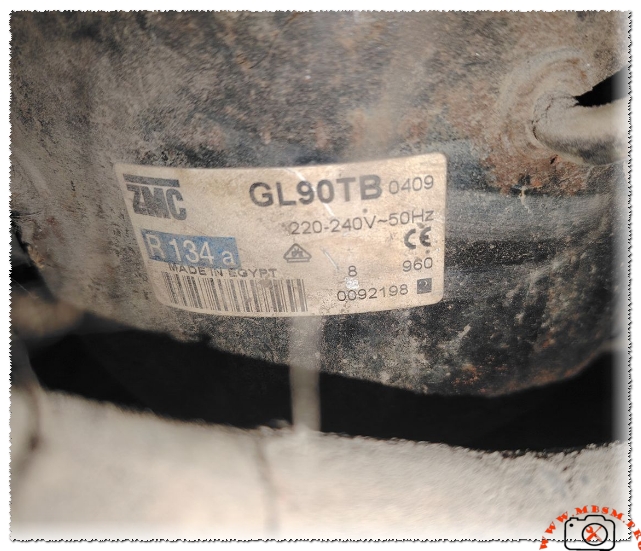
ZMC GL90AA: The industry standard for 1/6 HP R134a.
Embraco GVY66AA: High-performance LBP unit.
Donper QP91Y: Reliable 1/6 HP displacement equivalent.
Secop TLES7.5KK.3: Equivalent displacement for R134a conversion.
Professional Engineering Advice
Cleanliness is Key: When a compressor burns out, it releases acid into the oil. Always replace the filter drier and perform a nitrogen flush.
Match the Displacement: Never go more than 10% lower in cm³ displacement.
Vacuuming: R600a systems are extremely sensitive to moisture. A deep vacuum (below 500 microns) is mandatory.
Safety First: R600a is flammable. Ensure no open flames or sparks are present during the charging process.
Question: If I have a 350-liter fridge, will the ACC HTK70AA work? Answer: No. A 350-liter refrigerator typically requires the 154W capacity of the Jiaxipera N1113Y (1/6 HP). The ACC HTK70AA (1/8 HP) is designed for smaller units (around 150-220 liters). Using it will lead to continuous running and premature failure.
our decision to stay away from these four brands (Kriazi, Candy, GMC, White Whale) may be based on past experiences or technical advice related to the availability of spare parts, the quality of after-sales service, or the lifespan of electronic components.
In the professional appliance sector, choosing a washing machine is an engineering audit, not a simple shopping trip. As a field expert who has dismantled thousands of units and performed rigorous stress tests on drive systems, I look beyond the digital displays to the mechanical heart of the machine: the drum bearings, the motor windings, and the electrolytic capacitors on the control board.
Technical data from the field indicates a significant divergence in quality. While some brands focus on high-turnover consumer goods, others invest in Structural Integrity. If you are being advised to “stay away” from Kiryazi, Candy, GMC, and White Whale, it is not a matter of brand bias—it is a matter of documented mechanical fatigue and specialized component scarcity.
Technical Breakdown: Identifying the Structural Bottlenecks
When an appliance fails, it is usually due to a “weakest link” in its design. Here is the professional technical breakdown of why these four brands often face professional criticism from repair engineers:
Kiryazi (Structural Oxidation): The primary issue lies in the galvanization process of the outer cabinet. In many models, the steel gauge is insufficient, leading to premature rust around the detergent drawer and base, which eventually compromises the machine’s balance during high-RPM cycles.
Candy (Electronic Volatility): Candy machines often feature highly sophisticated integrated circuits. However, the PCB (Printed Circuit Board) lacks robust thermal shielding. In environments with fluctuating voltage, the microprocessor is prone to “logic hanging” or total failure.
GMC (Mechanical Friction): Many GMC models rely on traditional Universal Brush Motors. These motors generate significant carbon dust and heat, leading to shorter lifespans for the drive belt and much higher decibel levels during the spin cycle.
White Whale (Component Inconsistency): The “Spider” assembly (the three-arm support for the drum) in these units is frequently made of a low-grade Zinc-Aluminum alloy. This material reacts chemically with liquid detergents, leading to “pitting corrosion” and eventual drum detachment.
Engineering Comparison: High-Tier vs. Standard Tier
To make an informed decision, we must compare the Material Science and Drive Systems of industry leaders against standard budget models.
Technical Component
Standard Group (Avoid)
LG (Direct Drive)
Samsung (Inverter)
Bosch (Series 6/8)
Motor Tech
Universal Carbon Brush
Brushless DC (BLDC)
Digital Inverter
EcoSilence Drive
Drive Logic
Mechanical Pulley
Direct Coupling
Reinforced Ribbed Belt
High-Torque Belt
Bearing Seal
Single Lip
Double-Lip / Viton
High-Temp Synthetic
Industrial Grade
PCB Protection
Basic Varnish
Resin Encapsulation
Moisture Shield
Thermal Management
Vibration Control
Standard Springs
6-Motion AI
VRT Plus (Ball Balance)
AntiVibration Walls
The Inverter Logic: Electronic Schematic of Superiority
For the technician, the shift to Inverter Technology (found in LG, Samsung, and Bosch) is the greatest leap in reliability. Unlike the simple “On/Off” relay logic of older GMC or Kiryazi units, modern systems utilize a Variable Frequency Drive (VFD) logic path:
Rectification Stage: Incoming AC is converted to stable DC power.
IGBT Switching: (Insulated Gate Bipolar Transistors) pulse the power to the motor windings.
Frequency Modulation: By changing the electrical frequency, the machine controls torque and speed with extreme precision, without mechanical stress.
Result: This eliminates the Carbon Brushes, which are the primary wear-and-tear component in traditional washing machines.
Field Values: Performance Comparison Metrics
Performance Feature
Budget Brands (Kiryazi/GMC)
Premium Engineering (LG/Bosch)
Spin Decibels
76 dB – 82 dB
48 dB – 54 dB
Thermal Cut-out
Frequent (friction-based heat)
Rare (active cooling logic)
Drum Balance
Passive (Weight-based)
Active (Sensor-based)
Parts Availability
Fragmented / Generic
Serialized / Global
Professional Councils and Maintenance Protocols
Advice on Installation: Never place a washing machine on a wooden floor or an unlevel surface. For Bosch and LG units, precision leveling is required to allow the internal accelerometers to calibrate the “Zero-Point” vibration correctly.
Notice on Detergent: Excessive use of “Soap Powder” causes a buildup known as “Scrud.” In White Whale and Candy models, this acidic sludge accelerates the decay of the drum seal.
The Benefit of Direct Drive: By removing the belt, LG has eliminated a major friction point, significantly reducing energy loss and increasing the motor’s life expectancy to over a decade.
Final Technical Verdict
The recommendation to avoid Kiryazi, Candy, GMC, and White Whale is based on the Mean Time Between Failures (MTBF) observed in the field. As an engineer, I recommend prioritizing brands that utilize Resin-Encapsulated Electronics and Brushless Motors. LG, Samsung, and Bosch provide the necessary Mechanical Tolerance to handle the stresses of modern laundry requirements.
Focus keyphrase: Technical engineering review of washing machine brands explaining why LG Samsung and Bosch are superior to Kiryazi Candy GMC and White Whale for long-term durability.
Meta description: Expert engineering analysis on washing machine durability. Discover why technicians recommend LG, Samsung, and Bosch over Kiryazi, Candy, GMC, and White Whale for long-term use.
Tags: Mbsmgroup, Mbsm.pro, mbsmpro.com, mbsm, Washing Machine Repair, LG Direct Drive, Bosch EcoSilence, Samsung Inverter, Appliance Engineering, Inverter Motor Schematic, Drum Bearing Failure.
Excerpt:A washing machine is a long-term engineering investment. From a field technician’s perspective, choosing the right brand depends on mechanical durability and electronic stability. While brands like Kiryazi, Candy, GMC, and White Whale are popular, they often face structural oxidation and PCB failures. This article analyzes why LG, Samsung, and Bosch are technically superior.
Stay away from 4 washing machines: Kiriazi, Candy, GMC, White Whale mbsmpro
I charged the compressor CAJ4519Z with R407 gas, and upon startup, some frost appeared on the return line and expansion valve, even though the cooling was fine. Is this normal? Note that it’s a refrigeration room, not a freezer.
Category: Refrigeration
written by www.mbsmpro.com | January 29, 2026
Regarding the compressor in the photo (Tecumseh CAJ4519Z) used in a cold room (chilling/positive temperature) with R-407C gas, finding frost on the suction line and the expansion valve is not normal for this type of application.
While the cooling might seem “good” now, frost on the suction line indicates that liquid refrigerant is not fully evaporating in the evaporator and is returning to the compressor.
Here is a technical breakdown of why this is happening and how to fix it:
1. Low Superheat (Expansion Valve Adjustment)
This is the most common cause. If the expansion valve is open too wide, it allows too much liquid into the evaporator.
The Risk: Liquid refrigerant can reach the compressor (Liquid Slugging), which can break the internal valves of the CAJ4519Z compressor.
The Fix: You need to adjust the Superheat. For a positive temperature cold room, the superheat should be between 5°C and 8°C. If it is lower, slightly close the expansion valve (turn the adjustment screw clockwise) in half-turn increments and wait 15–20 minutes to see the effect.
2. Overcharging the System
If you added too much R-407C, the excess refrigerant stays in the evaporator and suction line as a liquid/gas mix, causing frosting.
Note on R-407C: This is a “blend” refrigerant. It must always be charged in the liquid state (tank upside down). If you charged it as a vapor, the mixture ratio might be wrong, affecting performance.
The Fix: Check the sight glass (if available) and monitor the pressures. For R-407C in a cold room at 0°C to +4°C, your suction pressure should typically be around 45 to 55 PSI.
3. Poor Airflow at the Evaporator
If the heat exchange is poor, the refrigerant won’t boil off into a gas.
Check the Evaporator (EVACOND unit in your photo):
Are the fans spinning at the correct speed?
Are the fins dirty or clogged?
Is there already an ice buildup on the evaporator coils blocking the air?
4. Expansion Valve Sensing Bulb
Check the location of the expansion valve’s sensing bulb.
If the bulb is loose or not insulated properly, it “thinks” the pipe is warm and opens the valve too much, flooding the suction line.
The Fix: Ensure the bulb is tightly clamped to the suction pipe (at the 2 o’clock or 10 o’clock position) and well-insulated.
Summary Recommendation:
Frost should generally stop at the outlet of the expansion valve or the very beginning of the evaporator. If the frost is traveling all the way back to the compressor:
Slightly close the expansion valve.
Verify the airflow over the evaporator.
Ensure you haven’t overcharged the system.
Allowing frost to reach the compressor will eventually lead to mechanical failure or “slugging,” which will destroy the compressor.
Focus Keyphrase: Comprehensive Technical Guide for Tecumseh CAJ4519Z Compressor Performance in R407C and R404A Medium High Back Pressure Refrigeration Systems
Meta Description: Explore the professional specifications of the Tecumseh CAJ4519Z compressor. Learn about its 1 HP capacity, multi-refrigerant compatibility, and expert field advice for maintaining optimal superheat in commercial cold rooms.
Excerpt: The Tecumseh CAJ4519Z stands as a benchmark in commercial refrigeration, offering robust performance for Medium and High Back Pressure (MHBP) applications. Engineered for versatility, it supports a wide array of refrigerants including R404A and R407C. This professional analysis covers technical data, wiring configurations, and essential maintenance practices for field engineers working on refrigeration units.
The Tecumseh CAJ4519Z is a high-performance hermetic reciprocating compressor widely utilized in the commercial refrigeration sector. Known for its reliability in medium to high evaporating temperature ranges, this unit is a staple for walk-in coolers, display cases, and industrial liquid chillers. Its “AJ” series design focuses on thermal efficiency and mechanical durability, making it a preferred choice for technicians demanding longevity in demanding environments.
Technical Specification Table
Attribute
Specification Details
Model
CAJ4519Z
Utilisation
MHBP (Medium/High Back Pressure)
Domaine
Cooling / Air Conditioning / Commercial Chilling
Oil Type and Quantity
POE (Polyolester) / 887 ml
Horsepower (HP)
1 HP (Nominal)
Refrigerant Type
R404A, R448A, R449A, R452A, R22, R407C
Power Supply
220-240V ~ 50Hz
Cooling Capacity BTU
~15,500 BTU/h (at +7.2°C Evaporating Temp)
Motor Type
CSR (Capacitor Start – Run)
Displacement
34.4 cm³
Winding Material
High-Grade Copper
Pressure Charge
High Pressure (Nitrogen Holding Charge)
Capillary / Expansion
Expansion Valve (TXV) Recommended
Compatible Equipment
Cold Rooms, Bottle Coolers, Industrial Chillers
Temperature Function
-15°C to +15°C (Evaporating Range)
Fan Requirement
Forced Air Cooling Required (350 m³/h minimum)
Commercial Use
Yes, Heavy-Duty Commercial Grade
Amperage (RLA)
6.5 A
LRA (Locked Rotor Amps)
45 A
Type of Relay
Potential Relay
Start/Run Capacitor
Start: 88-108µF / Run: 20µF
Comparison with Peer Models
When evaluating the CAJ4519Z, it is helpful to compare its displacement and capacity against other industry standards in the 1 HP range.
Feature
Tecumseh CAJ4519Z
Embraco NEK6217GK
Danfoss SC15GH
Displacement
34.4 cm³
14.3 cm³ (LBP/HBP Mix)
15.28 cm³
Cooling Power
High (Multi-Ref)
Medium (R404A)
Medium (R134a)
System Design
CSR
CSIR
CSIR/CSR
Oil Compatibility
Multi-Refrigerant POE
POE Only
POE/PAG
Engineering Insights: Managing Frost and Superheat
In field operations, specifically when retrofitting or charging systems with R407C, technicians may encounter frost on the suction line. From an engineering perspective, frost migrating toward the compressor crankcase is a critical warning sign.
Diagnostic Checkpoint:
Superheat Calibration: For a positive temperature cold room, the target superheat at the evaporator outlet should be between 5K and 8K. If frost reaches the suction service valve, the superheat is likely near zero, risking liquid slugging.
R407C Glide: Unlike R404A, R407C has a significant temperature glide. Charging must be performed in the liquid phase to maintain the correct blend ratio.
Expansion Valve Tuning: If the cooling is effective but frosting occurs, the Thermostatic Expansion Valve (TXV) may be adjusted too “open.” Closing the valve (clockwise) increases superheat and retreats the frost line.
The CSR (Capacitor Start – Run) motor configuration is designed for high starting torque.
Common (C): Connected to the Overload Protector.
Start (S): Connected to the Potential Relay (Terminal 2) and Start Capacitor.
Run (R): Connected to the Main Power and Run Capacitor.
Potential Relay: Terminals 1 and 2 disconnect the start capacitor once the motor reaches ~75% speed.
Expert Advice and Notice
Notice: Always use a filter drier compatible with POE oil. POE is highly hygroscopic (absorbs moisture rapidly).
Benefit: The CAJ4519Z features an internal pressure relief valve, providing an extra layer of safety against system over-pressurization.
Engineering Tip: When using R407C, ensure the condenser is sized for the additional heat rejection requirements compared to R22. Failure to do so will result in high head pressures and reduced compressor lifespan.
The ZMC EGM60AF compressor can be installed on a Toshiba 14-inch refrigerator
Category: Refrigeration
written by www.mbsmpro.com | January 29, 2026
Mbsmpro, Compressor, EGM60AF, 1/6 hp, ZMC, Cooling, R134a, 155 W, 1.1 A, 1Ph 220-240V 50Hz, LBP, RSIR, -35°C to -10°C, Cooling and Freezing
From our professional experience, the compressor is small and has a maximum length of 10 feet.
In the specialized world of HVAC and domestic refrigeration, selecting the correct compressor is the difference between a long-lasting appliance and a premature mechanical failure. The ZMC EGM60AF stands out as a reliable workhorse in the Low Back Pressure (LBP) category. This hermetic reciprocating compressor is frequently utilized by major appliance manufacturers for its thermal efficiency and robust construction under varying environmental conditions.
Technical Engineering Analysis
The EGM60AF is a 1/6 HP unit optimized for R134a refrigerant. In my years as a field engineer, I have observed that this specific model strikes a balance between energy consumption and torque. Utilizing a Resistive Start Induction Run (RSIR) motor, it is designed for simplicity and durability. With a displacement of approximately 6.00 cc, it provides sufficient mass flow for standard household refrigerators ranging from 8 to 11 cubic feet.
Application and Sizing Logic
When retrofitting or repairing, field workers must exercise caution regarding cabinet size. While the EGM60AF is highly efficient, installing it in a large 14-cubic-foot unit—which typically demands a 1/5 or 1/4 HP motor—can lead to “short-cycling” or continuous operation. This results in overheating the motor windings and eventual mechanical seizure. For optimal performance, this compressor should be paired with a correctly sized capillary tube to ensure the evaporation temperature remains within the -30°C to -10°C range.
Complete Technical Data Table
Feature
Specification
Model
ZMC EGM60AF
Utilization
LBP (Low Back Pressure)
Domaine
Freezing / Cooling
Oil Type and Quantity
Ester (POE) – 180ml to 200ml
Horsepower (HP)
1/6 HP
Refrigerant Type
R134a
Power Supply
220-240V ~ 50Hz / 1 Phase
Cooling Capacity BTU
Approx. 528 BTU/h (at ASHRAE)
Motor Type
RSIR (Resistive Start Induction Run)
Displacement
6.00 cc
Winding Material
High-Grade Copper
Pression Charge
Low side (typical): 0 to 5 PSI
Capillary Tube Recommendation
0.031″ ID x 3 meters (approx.)
Compatible Models
Small-Medium Fridges (Sharp, Beko, Ideal)
Temperature Function
-35°C to -10°C
Cooling System
Static Cooling (Natural Convection)
Commercial Use
Domestic / Light Commercial
Amperage (FLA)
0.9A – 1.1A
LRA (Locked Rotor Amps)
6.5A – 7.5A
Relay Type
PTC Relay
Capacitor Requirement
Not required (RSIR), optional run cap for RSCR
Electrical Schema (Wiring Diagram)
For the RSIR configuration of the EGM60AF:
Common (C): Connected to the Overload Protector (OLP).
Main/Run (M/R): Connected to the Neutral line and the PTC Relay.
Start (S): Connected to the PTC Relay. The PTC relay provides a high resistance to the start winding once the motor reaches roughly 75% of its speed, effectively dropping the start winding out of the circuit.
Comparative Analysis: EGM60AF vs. EGL70AA
When comparing the 1/6 HP EGM60AF with the slightly larger 1/5 HP EGL70AA:
Cooling Power: The EGL70AA offers roughly 25% more BTU capacity, making it suitable for 14-foot fridges where the EGM60AF would struggle.
Energy Efficiency: The EGM60AF is superior in smaller cabinets due to lower wattage draw (approx. 110W vs 145W during stable run time).
Replacement Reference Guide
5 Compressors: Same Value / Same Gas (R134a)
Embraco: EM65HHR (High efficiency alternative)
Danfoss/Secop: TLES5.7FT.3
Cubigel: GL60AA
ACC / Wanbao: GVM66AA
Huayi: HYE60MTU
5 Compressors: Same Value / Other Gas (R600a)
Note: Requires complete system flushing and oil change or capillary adjustment.
Secop: TLES6.5KK.3
Embraco: EMX46CLC
Jiaxipera: T1112Y
Donper: L65CZ1
ACC: HMK80AA
Engineering Advice and Field Notices
Vacuuming: Always pull a vacuum down to 500 microns. Moisture in R134a systems reacts with Ester oil to form acid, which will corrode the motor windings.
Filter Drier: Never reuse a filter drier. Always replace with a new 15g or 20g molecular sieve drier when opening the system.
Heat Dissipation: Ensure the condenser coils are clean. The EGM60AF is designed for static cooling, but if the fridge is located in a high-ambient area (above 40°C), adding a small auxiliary fan near the compressor can significantly extend its life.
Conclusion: The ZMC EGM60AF remains a top choice for technicians looking for a reliable, “Made in Egypt” solution for standard household repairs. Its compatibility with R134a makes it a straightforward replacement for millions of units currently in service across the Middle East and Africa.
Focus Keyphrase: ZMC EGM60AF compressor 1/6 HP R134a specifications and technical data
Meta Description: Technical guide for the ZMC EGM60AF 1/6 HP compressor. Includes cooling capacity, wiring diagrams, displacement data, and cross-reference replacements for R134a and R600a systems.
Excerpt: The ZMC EGM60AF is a high-performance hermetic compressor designed for low back pressure applications in domestic refrigeration. Engineered with precision in Egypt, this 1/6 HP unit operates on R134a refrigerant and is tailored for 220-240V 50Hz power systems. It offers a reliable cooling solution for small to medium household refrigerators and upright freezers worldwide.
In the demanding world of domestic refrigeration, the choice of a compressor determines the longevity and efficiency of the appliance. Two of the most prominent contenders for the 14-foot Kiriazi and similar medium-sized refrigerators are the Huayi HYE55YL63 and the ZMC EGM60AF. Both are engineered for Low Back Pressure (LBP) applications using R134a gas, but they offer distinct technical nuances that every field technician and engineer should understand.
The Huayi HYE55YL63 is a compact powerhouse with a 5.5cc displacement, optimized for balanced energy consumption. In contrast, the ZMC EGM60AF is often viewed as a slightly more robust alternative, providing a higher cooling capacity and a larger oil reservoir, which can be advantageous in high-ambient temperature environments. Understanding the intersection of these two models is essential for achieving “first-time-right” repairs.
Comprehensive Technical Comparison Table
Feature
Huayi HYE55YL63
ZMC EGM60AF
Model
HYE55YL63
EGM60AF
Utilisation (LBP)
LBP (Low Back Pressure)
Horsepower (HP)
1/5 HP
1/5 HP (High Efficiency)
Refrigerant Type
R134a
R134a
Cooling Capacity (-23.3°C)
155 W (529 BTU/h)
182 W (621 BTU/h)
Displacement
5.5 cm³
6.0 cm³
Oil Type and Quantity
POE / 200 cm³
Ester / 270 cm³
Motor Type
RSCR
RSIR / RSCR
Power Supply
220-240V / 50Hz
220-240V / 50Hz
LRA (Locked Rotor Amps)
6.5 A
11.72 A
Weight
7.9 kg
8.58 kg
Winding Material
Copper
Copper
Performance Dynamics: Why the EGM60AF Packs a Punch
While both compressors are rated at 1/5 HP, the ZMC EGM60AF features a larger cylinder volume of 6.0cc compared to the 5.5cc of the Huayi model. This translates directly into a higher mass flow of refrigerant.
Key Differences in Field Performance:
Pull-Down Time: The EGM60AF typically achieves the set-point temperature faster in a 14-foot cabinet due to its higher BTU/h output.
Thermal Stability: With a 270 cm³ oil charge, the ZMC model offers superior lubrication and cooling for the internal mechanical parts, making it more resilient during long run cycles in summer.
Efficiency: The Huayi HYE55YL63 often runs at a lower amperage (approx. 0.7A) compared to the EGM60AF, making it the preferred choice for energy-sensitive applications where a lighter load is sufficient.
Compressor Cross-Reference & Replacement Guide
For professionals looking to swap these units, the following models provide compatible cooling curves and physical footprints.
Top 5 Replacements (R134a Gas)
Embraco: EMT55HLP (1/5 HP – Standard)
Secop / Danfoss: TLES5.7FT.3 (High efficiency)
Jiaxipera: N1112GZ (Standard Chinese replacement)
Cubigel: GL60AA (Direct equivalent to EGM60AF)
Tecumseh: THB1350YS (Reliable performance)
Top 5 Replacements (Alternative R600a Gas)
Important: Only use these if converting the entire system including capillary and dryer.
Huayi: HYE60MT
Embraco: EMX55CLC
ZMC: EGL60AF (R600a version)
Secop: TLES5.7KK.3
Donper: S65CY
Expert Recommendations for the Field
As a field engineer who has handled hundreds of Kiriazi 14-foot units, I strongly advise the following during installation:
Capillary Matching: If upgrading from a 5.5cc to a 6.0cc compressor, ensure your capillary tube is not restricted. A slight increase in capacity may lead to higher discharge pressures if the condenser is not kept clean.
Capacitor Utility: The Huayi model performs best with a 3µF to 5µF run capacitor. This stabilizes the motor torque and protects the windings from “stalling” during hot restarts.
The Vacuum Rule: R134a systems are highly sensitive to moisture. Always pull a vacuum below 500 microns to prevent the POE/Ester oil from turning acidic, which will eventually eat through the copper windings.
Focus Keyphrase: Huayi HYE55YL63 vs ZMC EGM60AF Compressor Review
SEO Title: Huayi HYE55YL63 vs ZMC EGM60AF: 1/5 HP Compressor Technical Battle
Meta Description: Compare technical specs of Huayi HYE55YL63 and ZMC EGM60AF compressors. Find cooling capacity, displacement, and the best choice for Kiriazi 14-foot refrigerators.
Excerpt: The Huayi HYE55YL63 and ZMC EGM60AF are two industry-standard 1/5 HP compressors used in domestic refrigerators. While both utilize R134a refrigerant, they differ in displacement and oil capacity. This technical review compares their performance curves and cooling capacities to help technicians select the ideal replacement for Kiriazi and other 14-foot refrigerators.