Compressor Windings, CSR Terminals
Compressor Windings, CSR Terminals mbsmpro

Mbsmpro.com, Compressor, CSR terminals, Common Start Run, PTC relay, overload, start and run capacitor wiring, PSC CSIR CSR motors, multimeter ohm testing

Compressor Windings, CSR Terminals, and Start Devices: Practical Guide for Technicians

Single‑phase hermetic compressors use three terminals – Common (C), Start (S), and Run (R) – and a combination of overload, relay, and capacitor to start and run safely. Correctly interpreting CSR pin configuration and wiring the starting devices is critical for reliable refrigeration service work and for avoiding repeated compressor burn‑outs.


Understanding C, S, and R terminals

On most refrigeration compressors, the three pins form either a triangle or a straight line, and each pin connects to one or both motor windings inside the shell. When the original diagram is missing, technicians can still identify each terminal by measuring resistance with a digital multimeter.

Typical resistance relationships

Measurement pair Identification rule Typical range*
C–R Run winding (lowest resistance) About 1–5 Ω on small fractional‑HP units. 
C–S Start winding (medium resistance) Usually 3–11 Ω, often 3–5 times C–R. 
S–R Start + run (highest resistance) Equals C–S + C–R by ohm’s law. 

*Values vary by model; always compare with the manufacturer’s data sheet when available.

To confirm readings, many trainers recommend writing each resistance value on a sketch of the pin layout and checking that the highest reading equals the sum of the other two. If the numbers do not add up, the compressor may have an open winding or internal damage.​


CSR, RSIR, CSIR and PSC motor concepts

Single‑phase hermetic motors are classified by how capacitors and relays are used with start and run windings. The most common arrangements in light commercial refrigeration are RSIRPSCCSIR and CSR, each with different starting torque and component requirements.

Motor types and starting characteristics

Motor type Components Typical use case Starting torque
RSIR (Resistance Start Induction Run) Start relay + start winding, no capacitor Small domestic refrigerators, low starting torque.  Low
PSC (Permanent Split Capacitor) Run capacitor in series with start winding Smooth, efficient operation, good for low starting load. ​ Low–medium
CSIR (Capacitor Start Induction Run) Start capacitor + relay, start winding only during start Higher torque for larger compressors up to ≈ 3/4 HP.  High
CSR (Capacitor Start Capacitor Run) Start capacitor + run capacitor + potential or current relay Very high starting torque for hard‑start conditions.  Very high

CSR systems keep a smaller run capacitor in the circuit after startup to improve power factor and running efficiency while the start capacitor is removed by the relay. These motors are common in high‑starting‑torque (HST) versions of commercial compressors where frequent cycling and high condensing pressures are expected.


Overload, PTC relay, and run capacitor wiring

The start device assembly brings together three safety‑critical components: thermal overload, relay (or PTC), and capacitor. Correct wiring ensures that line voltage reaches the run winding continuously, energizes the start winding only during startup, and disconnects the compressor when overcurrent or overheating occurs.

Typical PTC / solid‑state relay and overload wiring (120–240 V)

Step Connection Function
1 Line (L) feeds the overload protector, which then connects to C Overload opens on excessive current or shell temperature. 
2 Solid‑state relay/PTC connects between C and S with start capacitor in series if CSIR/CSR Provides high initial current to start winding, then increases resistance and drops out. 
3 Line (L) also connects directly to R through the control circuit (thermostat, contactor) Supplies continuous voltage to run winding during operation. 
4 Run capacitor connects between S and R in PSC and CSR systems Improves running efficiency and torque. ​

Before wiring, technicians should verify that the overload has less than 1 Ω resistance when cold and that the relay coil or PTC element shows the manufacturer’s specified resistance range. Any signs of arcing, discoloration or cracked housings are reasons to replace the start device rather than re‑use it.


Multimeter checks and safety best practices

Accurate ohm measurements and ground tests are indispensable when diagnosing compressor failures or confirming correct CSR identification. At the same time, technicians must follow lock‑out/tag‑out procedures and respect the refrigeration system’s pressure hazards.​​

Recommended testing workflow

  1. Isolate and discharge

    • Disconnect power, verify zero voltage, and discharge capacitors before touching any terminals.

  2. Ohm the windings

    • Measure all three combinations (C–R, C–S, S–R), verify the add‑up rule, and compare with catalog ohm ranges when available.

  3. Check for shorts to ground

    • Use the highest megohm setting to test between each terminal and the shell; any measurable continuity usually means the compressor is grounded and must be replaced.

  4. Verify start components

    • Measure overload resistance (<1 Ω closed) and relay / PTC resistance (3–26 Ω typical on many plug‑in designs), and confirm capacitors with a capacitance meter.

  5. Monitor running amperage

    • After re‑wiring, compare running current with the nameplate RLA or data‑sheet values; high amps may signal improper capacitor size, high head pressure or internal mechanical problems.

Compressor Windings, CSR Terminals mbsmpro

Andrea Julia configuration

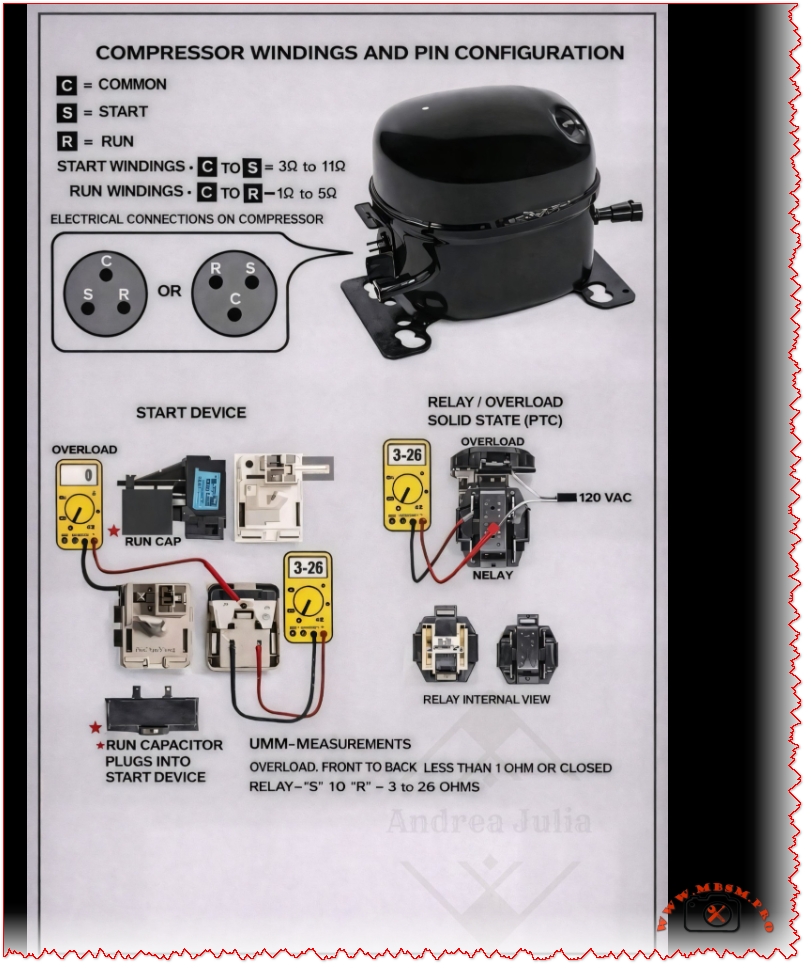
Compressor windings, terminal pin configuration, and the start components used in a refrigerator or air-conditioning compressor.

1. Compressor Windings and Terminals

A single-phase compressor has three terminals:
• C (Common)
• S (Start)
• R (Run)
These three pins can be arranged in different physical positions, but their electrical function is the same.

Winding Resistance Values (Typical)

Measured using a multimeter (Ohms Ω):
• C to S (Start winding): 3 Ω – 11 Ω
• C to R (Run winding): 1 Ω – 5 Ω
• S to R = Start + Run (highest resistance)
👉 The Start winding always has higher resistance than the Run winding.

2. Electrical Connection on the Compressor

The diagram shows two possible layouts of the compressor pins.
Even if the position changes, the labels C, S, and R must be identified correctly before wiring.

3. Start Device Assembly

The start system usually consists of:
• PTC Relay (Solid State Relay)
• Overload Protector
• Run Capacitor (if used)

Functions:
• PTC Relay:
– Temporarily connects the Start winding during startup.
– Disconnects it automatically once the compressor is running.

• Overload Protector:
– Protects the compressor from overheating or overcurrent.
– Opens the circuit if temperature or current is too high.

• Run Capacitor (optional on some models):
– Improves efficiency and torque during operation.

4. Multimeter Testing (Shown in Image)

Overload Test:
• Measure front to back
• Reading should be less than 1 Ω (closed circuit)

Relay Test:
• Measure between S and R
• Normal reading: 3 Ω – 26 Ω

Abnormal readings indicate a faulty relay or overload.

5. Power Supply
• The diagram shows 120 VAC input going through:
– Overload → Relay → Compressor terminals

6. Internal Relay View

The bottom-right images show the internal structure of the relay, helping identify contacts and working condition. 

See less


Fresh SFW13C1P‑B Split Air Conditioner

Fresh SFW13C1P‑B Split Air Conditioner mbsmpro

Fresh SFW13C1P-B Split Air Conditioner: Technical Label, Specifications, and Error 11.1 Guide

The Fresh SFW13C1P-B split air conditioner is a 1.5 HP cooling‑only indoor unit designed for 220–240 V residential applications, with a cooling capacity around 12,000 BTU/h and R22 refrigerant. Its nameplate also references the diagnostic code ERR 11.1, which technicians commonly associate with serial communication faults between indoor and outdoor units on similar split systems.


Nameplate data overview

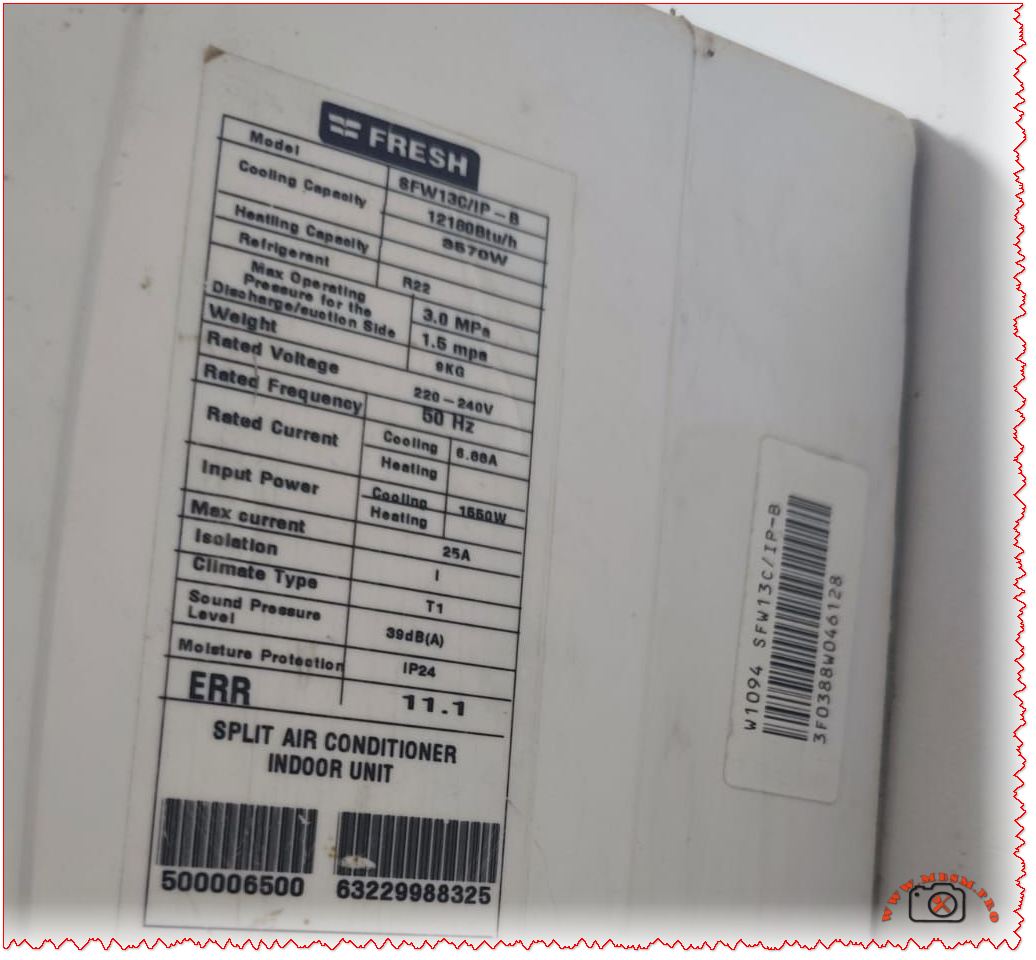
The identification label on the Fresh SFW13C1P-B indoor unit groups the key electrical and operating data needed for installation, commissioning, and service.

  • Model family: SFW13C series, 1.5 HP, cooling‑only split air conditioner.
  • Typical application: Small to medium rooms (about 12–18 m² depending on climate and insulation).
  • Refrigerant: R22 on legacy units in this series, with specified maximum operating pressures for high and low sides.

Fresh SFW13C1P-B basic specifications

Parameter Typical value / range Notes
Series / model SFW13C / SFW13C1P-B Smart digital wall‑mounted split. 
Type Split air conditioner, indoor unit Wall hi‑wall design. 
Nominal horsepower 1.5 HP Residential/light‑commercial class. 
Cooling capacity ≈ 12,000 BTU/h Catalog values for 1.5 HP Fresh SFW13C. 
Function Cooling only No heat pump on this variant. 
Refrigerant R22 On older SFW13C inverter range. 
Voltage 220–240 V Single‑phase supply. 
Frequency 50 Hz MEA / Africa grid standard. 
Moisture protection IP24 (indoor casing) Splash‑resistant enclosure category on label. 
Sound pressure level ≈ 39 dB(A) indoor Quiet residential operation. 

Electrical and operating characteristics

The label on the SFW13C1P‑B provides detailed electrical data that help installers size breakers, cables, and protection devices correctly.

  • Rated voltage 220–240 V, 50 Hz single‑phase with electronic inverter control on associated outdoor units in the SIFW/SFW families.
  • Rated and maximum currents are specified (often around 6–8 A running and 20–25 A max), guiding breaker choice and cable sizing.
  • Input power on cooling is in the 1.5 kW class for a 1.5 HP Fresh split, which matches catalog data for SIFW13C‑IP and SFW13C series.

Indicative electrical table for 1.5 HP Fresh SFW13C series

Item Typical value Practical implication
Rated current (cooling) ≈ 6–7 A Used to check running load. 
Maximum current ≈ 25 A Used for MCB / fuse rating margin. 
Rated input power ≈ 1,560 W Helps estimate energy consumption. 
Isolation / protection 25 A marking, IP24 Indoor unit protection coordination. 

ERR 11.1 on Fresh SFW13C1P-B

The nameplate of this indoor unit explicitly lists “ERR 11.1”, indicating that self‑diagnostic communication is part of the design.

  • On many inverter split systems, error 11 or 11.1 corresponds to a serial communication error between indoor and outdoor units (loss or corruption of signal on the interconnecting terminals).
  • Service manuals for comparable brands describe error 11 as forward or reverse transfer serial communication failure, often triggered when the outdoor PCB does not properly receive the indoor control signal for 10 seconds or more.

Typical causes associated with error 11 / 11.1

Possible cause Description Reference behavior
Loose or oxidized interconnecting terminals Poor contact on indoor–outdoor signal cable can interrupt data communication. 
Wrong wiring sequence Reversed communication cores (e.g., terminals 2–3 swapped) lead to serial transfer errors. 
Damaged communication cable Mechanical damage or moisture ingress causes intermittent signal loss. 
PCB failure Indoor or outdoor main board cannot generate or read serial signal. 
External electrical noise Strong interference, bad earthing or voltage dips disturb the serial bus. 

Professional troubleshooting approach

Professional technicians treating a Fresh SFW13C1P‑B that displays ERR 11.1 can follow a methodical process inspired by standard inverter AC service instructions.

  1. Reset and verify supply

    • Isolate power for several minutes, then re‑energize and confirm that error 11.1 reappears under normal load, ruling out a temporary voltage dip.
    • Check mains voltage within 220–240 V and verify correct earthing to reduce electrical noise on the serial line.

  2. Inspect communication wiring

    • Confirm that the communication terminals on indoor and outdoor units are tightened, corrosion‑free, and wired in the manufacturer’s order.
    • Trace the cable path for cuts, joints, or water ingress, replacing suspect lengths with shielded cable where specified.

  3. Measure serial signal

    • Service documentation for similar systems specifies that the AC serial signal between designated terminals should swing within an expected voltage window (for example, 30–130 V AC) during operation; abnormal readings indicate PCB or wiring faults.
    • During measurement, verify that fan motors and relays do not induce excessive noise on the same harness.

  4. Evaluate PCBs and external causes

    • When wiring and supply are correct, error 11.1 persisting usually points to indoor or outdoor controller PCB failure.
    • Before replacing boards, technicians should rule out external causes such as unstable power feeders, undersized generators, or nearby heavy electrical machinery.


User‑oriented best practices

End users operating a Fresh SFW13C1P‑B split unit can reduce the risk of error codes and extend system life by following a few simple best practices derived from documentation of modern Fresh air conditioners.

  • Maintain clean indoor filters to preserve airflow and reduce strain on the refrigeration circuit and electronics.
  • Avoid repeatedly cycling power from the main breaker, as frequent restarts stress inverter components and communication circuits; instead use the remote control for routine on–off operations.
  • If error 11.1 appears repeatedly after a full power reset, contact qualified HVAC service instead of attempting to rewire the communication cable.
Fresh SFW13C1P‑B Split Air Conditioner mbsmpro


White Whale WR‑5395 HBX, 540L

White Whale WR‑5395 HBX, 540L mbsmpro

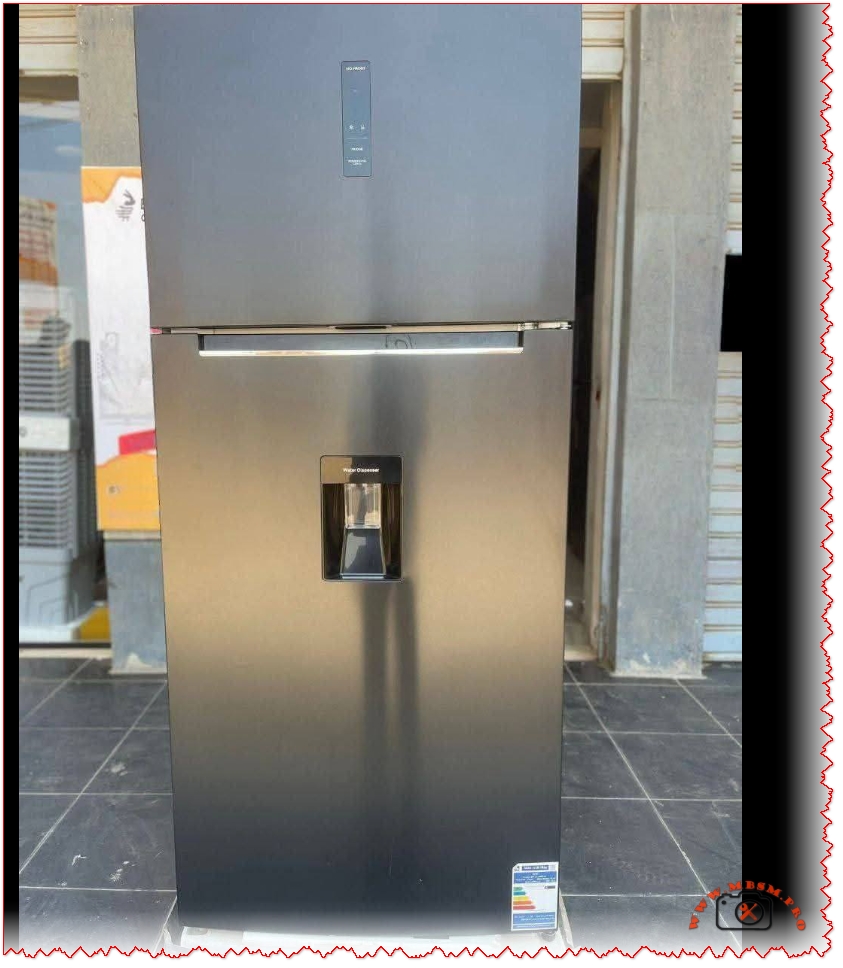
White Whale 540L Black No Frost Refrigerator with Water Dispenser – Full Technical Look with Compressor Power

Reference model and compressor power

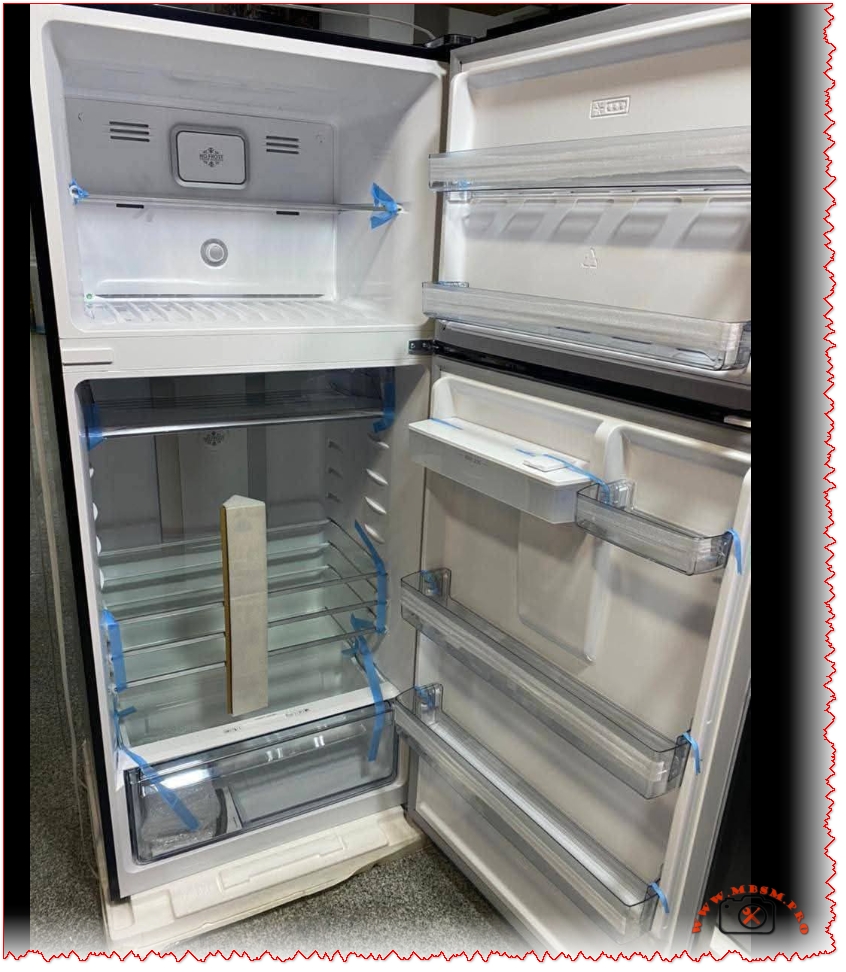
The refrigerator in your photos corresponds to the top‑mount White Whale WR‑5395 HBX: a 540‑liter, black, No Frost, 2‑door model with water dispenser and inverter compressor.
Official and retailer specification pages list the capacity, dimensions, features, and inverter motor, but they do not publish compressor horsepower (HP) or input wattage (W) for this model; only general “energy‑saving inverter motor” information is provided.

From similar 540L top‑mount inverter refrigerators, the compressor input is typically in the 180–260 W range, which corresponds to approximately 1/4 to 1/3 HP in residential R600a systems, but this is an engineering estimate, not an official White Whale figure.
For an exact HP or watt rating you would need either the compressor nameplate (inside or on the back of the unit) or a factory data sheet from White Whale’s technical support, because public catalogues for WR‑5395 HBX only state “inverter compressor / energy‑saving motor” without power numbers.


Updated article with explicit reference

White Whale 540L Black No Frost Refrigerator WR‑5395 HBX with Inverter Compressor and Water Dispenser

The White Whale WR‑5395 HBX is a 540‑liter black top‑mount refrigerator aimed at families who need generous storage, efficient cooling, and a modern look in one appliance.
It combines a full No Frost system, inverter compressor, digital control and a built‑in water dispenser, making it one of the most attractive options in White Whale’s large‑capacity range.

Design and layout

  • Sleek black or black‑glass door finish with a slim horizontal handle and integrated dispenser on the refrigerator door.
  • Inside, the cabinet offers adjustable tempered‑glass shelves, large vegetable drawer, multiple door balconies and bright LED interior lighting for clear visibility.

Cooling system and compressor

  • The WR‑5395 HBX uses a No Frost, multi‑airflow cooling system that keeps a stable temperature and prevents ice build‑up in both freezer and fridge compartments.
  • An inverter compressor modulates its speed according to cooling demand, cutting energy consumption and noise while maintaining fast pull‑down and a quick‑freeze mode in the top freezer.
  • Public datasheets do not disclose the exact compressor HP or watt input, but White Whale and retailer pages only describe it as an “energy‑saving inverter motor” without numeric power ratings.

Typical power range (engineering estimate)

  • Comparable 540L, No Frost, inverter top‑mount refrigerators with R600a usually run compressors rated between 180 W and 260 W, which equates to roughly 1/4–1/3 HP under nominal conditions.
  • This range is offered as a technical approximation based on similar‑size inverter models; for installation, warranty or spare‑part selection, always rely on the actual compressor label or an official White Whale technical sheet for WR‑5395 HBX.

Main technical specifications

Item Specification
Reference model White Whale WR‑5395 HBX.
Type Top‑mount, 2‑door refrigerator with freezer on top.
Capacity 540 liters net (family‑size cabinet).
Cooling system Full No Frost, multi‑airflow.
Compressor Inverter compressor (power not stated in public catalogues).
Estimated compressor range Around 180–260 W, approx. 1/4–1/3 HP (non‑official engineering estimate based on similar 540L inverters).
Color Black / black stainless, with matching handle line.
Water dispenser Built‑in cold‑water dispenser in fridge door.
Digital display Digital control for cooling and quick‑freeze functions.
Dimensions About 184 × 80 × 71 cm (H × W × D).
Doors 2 doors; the 540L family also includes 4‑door inverter black model WR‑9399AB‑INV.
Interior lighting Internal LED lighting.

Practical buying notes

This refrigerator suits users who want a large, family‑size fridge with No Frost convenience, inverter efficiency and a black, contemporary finish.
If you need exact compressor HP or wattage—for example, to size an inverter, voltage stabiliser or replacement compressor—check the compressor nameplate on the back of the unit or request a detailed technical datasheet from White Whale service using the WR‑5395 HBX model code.


Ariston AB 636 T EX

Ariston AB 636 T EX mbsmpro

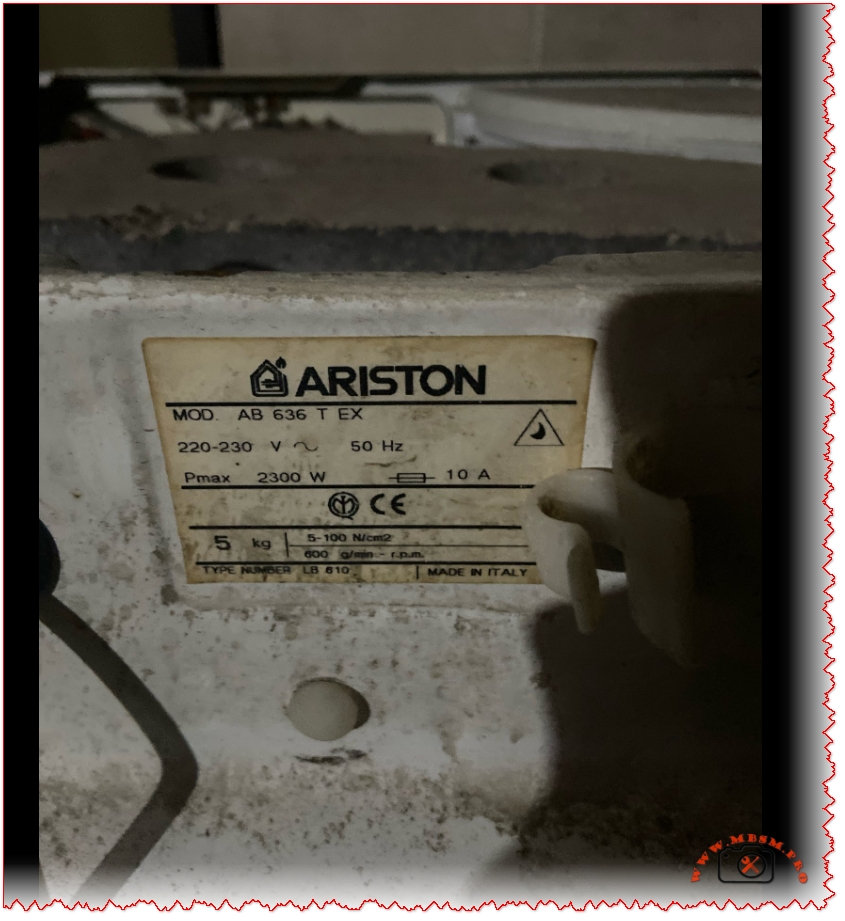
Ariston AB 636 T EX: Technical Identification Plate Guide for Repair and Maintenance

Overview of the Ariston AB 636 T EX Plate

The image shows the rating plate of an Ariston AB 636 T EX front‑loading washing machine, a classic European model widely sold in the late 1990s and early 2000s. This metal label concentrates the essential electrical and mechanical data needed for correct installation, troubleshooting, and ordering spare parts.

Decoding the Electrical Specifications

The plate confirms that the machine operates on 220–230 V, 50 Hz single‑phase power, drawing a maximum power of 2300 W and a nominal current of 10 A. These values indicate that the washer is designed for typical European domestic circuits and must be connected to a properly grounded outlet protected by a 10–16 A breaker.

Technicians use the Pmax 2300 W figure to size wiring, check energy consumption, and verify heater and motor performance during diagnostics. Overheating, tripped breakers, or burned connectors often result from ignoring these limits during installation or repair.

Mechanical Data and Pressure Switch Range

On the lower part of the label, the plate lists maximum load 5 kg and a spin speed of about 600 rpm, which class the AB 636 T EX as an entry‑level to mid‑range washer by today’s standards. This moderate spin speed explains why these machines often require longer drying times compared with newer 1000–1400 rpm units.

The marking 5–100 N/cm² refers to the water pressure range for the pressure switch and hydraulic system, compatible with standard domestic water supplies. Maintaining this range is crucial for correct filling, level detection, and safe operation of the heating element.

Why the Rating Plate Matters for Technicians

For repair professionals and advanced DIY users, the rating plate is the identity card of the washing machine. It provides the exact model (AB 636 T EX) and type number LB 610, data that spare‑parts catalogues and service manuals use to match compatible components. Without these references, ordering parts like bearings (6203‑2Z), pressure switches, or door locks risks costly mistakes.

The “Made in Italy” indication helps trace manufacturing standards and sometimes the availability of regional variants sharing similar mechanical parts but different decorative panels or program boards.

Key Technical Data Table

Parameter Value on Plate Practical Use in Service
Supply voltage 220–230 V, 50 Hz Verifies compatibility with local mains and UPS/inverter use.
Maximum power (Pmax) 2300 W Used to size wiring, breakers, and estimate energy draw.
Nominal current 10 A Confirms circuit protection rating and plug type.
Maximum load washing machine 5 kg Helps avoid overloading and drum/bearing damage.
Spin speed Approx. 600 rpm Indicates residual moisture and cycle performance.
Water‑pressure range 5–100 N/cm² (pressure switch) Guides diagnostics for fill and level faults.
Type / code AB 636 T EX – Type LB 610 Essential for parts catalogues and service documentation.

Useful Resources: Images and Documentation

Several specialised websites still provide visual references and spare‑parts diagrams for the AB 636 T EX. High‑resolution product photos and exploded views can help confirm component positions before disassembly. These resources are particularly useful when documenting repairs or creating training content on platforms such as Mbsmgroup and Mbsm.pro.

For deeper technical information, technicians can consult multi‑page PDF manuals and parts lists for the Ariston AB 636 T family, which cover installation, wiring diagrams, and troubleshooting charts. Such documents detail bearing codes, seal dimensions, and pressure‑switch compatibility for AB 636 T EX and its derivatives.


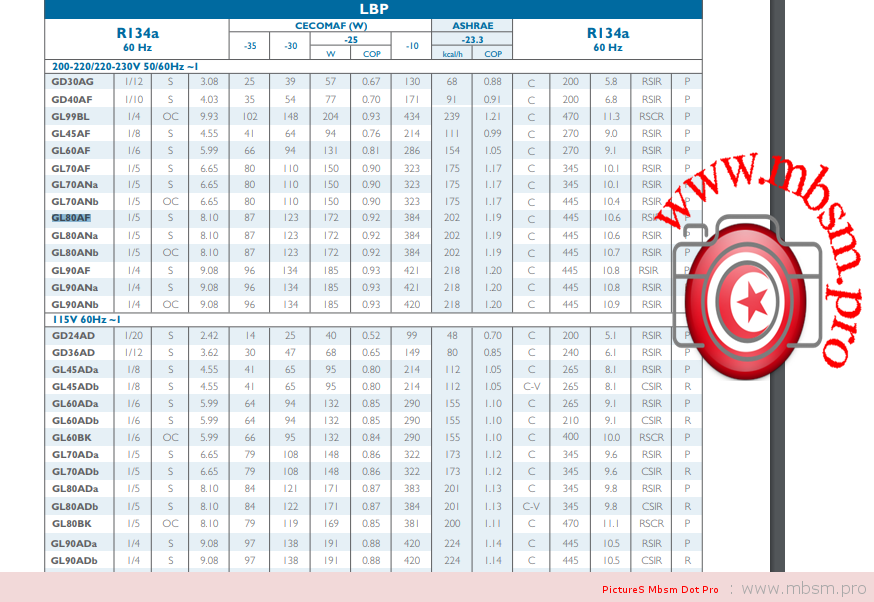
ZMC GL80AF R134a Hermetic Compressor

ZMC GL80AF R134a Hermetic Compressor mbsmpro

ZMC GL80AF R134a Hermetic Compressor: Technical Profile, Applications and Professional Opinion

The image shows a ZMC GL80AF hermetic compressor designed for domestic refrigeration using refrigerant R134a, manufactured in Egypt and widely used as a 1/5 HP replacement in household refrigerators and coolers. This model belongs to the GL‑AF family of ZMC low‑back‑pressure compressors, optimized for energy‑efficient operation on 220–230 V, 50/60 Hz single‑phase supply in warm climates such as North Africa and the Middle East.


Main identification

The label in the photo clearly indicates the marking GL80AF, the brand ZMC / ZEM, the refrigerant R134a and the supply range 200–220 V / 220–230 V at 50/60 Hz, with manufacture noted as “Made in Egypt”. In ZMC’s catalog, GL‑series compressors in the 80 class are rated around 1/5 HP, with displacement close to 8 cm³ and low‑back‑pressure duty for freezer and refrigerator applications using capillary tubes.

Table – ZMC GL80AF key data (typical catalog values for GL80 R134a series)

Item Value (typical) Note
Compressor family GL80AF ZMC hermetic piston, household/commercial use.
Nominal power ≈ 1/5 HP LBP R134a rating from GL80 family table.
Refrigerant R134a For CFC‑free domestic refrigeration.
Application LBP (freezer/fridge) Designed for evaporating temps down to about −23 °C.
Voltage / frequency 220–230 V, 50/60 Hz Single‑phase, wide operating range.
Motor type RSIR / RSCR Standard ZMC design for this family.
Country of origin Egypt ZMC plant in 10th of Ramadan City.

Technical context and typical uses

Within ZMC’s R134a range, the GL80AF is positioned between smaller GD40/GL45 units and larger GL90 models, offering a balance between cooling capacity and electrical consumption for medium‑size domestic refrigerators and small commercial coolers. Installers commonly use it as a service replacement for 1/5 HP R134a compressors in brands such as Electrolux, Zanussi and regional OEM manufacturers, particularly where a robust compressor is needed for high‑ambient conditions up to 43 °C.

The GL80AF is designed for use with capillary expansion devices, mineral‑free ester oil compatible with R134a and standard household line voltages, making it straightforward to integrate into existing systems that originally used CFC‑12 or early R134a units of similar capacity. For correct operation, technicians must respect ZMC’s recommendations regarding oil type, charge amount, airflow around the compressor shell and proper matching between evaporator, condenser and capillary tube dimensions.


Installation, replacement and troubleshooting notes

When replacing a failed compressor with a GL80AF, professionals typically verify that the original unit had a similar displacement and LBP duty rating and then adapt mounting springs, suction and discharge connection diameters if needed. Attention to cleanliness of the refrigeration circuit—nitrogen purging during brazing, filter‑drier replacement and precise R134a charging—is essential to guarantee reliability and avoid lubricant breakdown or acid formation inside the hermetic shell.

Electrical checks before start‑up usually include measuring winding resistances, confirming the correct RSIR/RSCR starting components (start relay, overload protector and capacitor if required) and ensuring that the supply voltage at the compressor terminals stays within the 187–264 V working range specified for ZMC R134a models. Because GL80‑class compressors are optimized for low back‑pressure, using them outside their intended evaporating temperature range (for example in high‑back‑pressure air‑conditioning duty) can lead to overheating, high current draw and premature mechanical failure.


Reference images and documentation

Technicians and buyers seeking more visuals can consult ZMC’s official product pages and specialist refrigeration catalogs, which show close‑up images of GL‑series compressors, terminals and mounting hardware. In addition, Mbsmgroup maintains its own photographic documentation and comparison articles featuring the GL80AF in real workshop conditions, including the same type of label as seen in the attached image.

Several reliable PDF resources provide detailed performance data, cooling‑capacity curves and application limits for ZMC R134a compressors, including GL80‑family models. These catalogs list parameters such as displacement, current, COP, recommended capillary tube sizes and wiring diagrams, giving professionals the information they need to design or repair systems around the GL80AF platform.

ZMC GL80AF R134a Hermetic Compressor mbsmpro


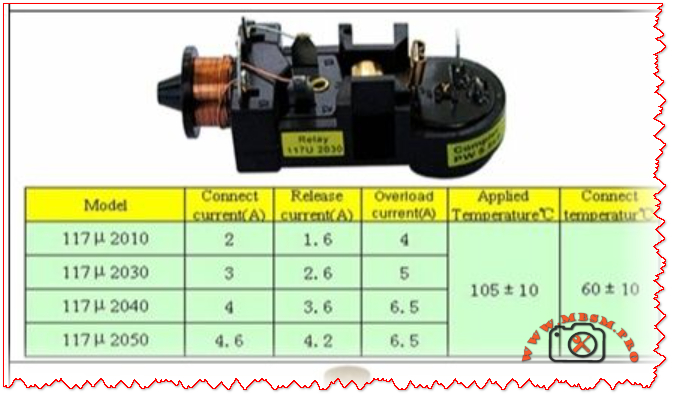
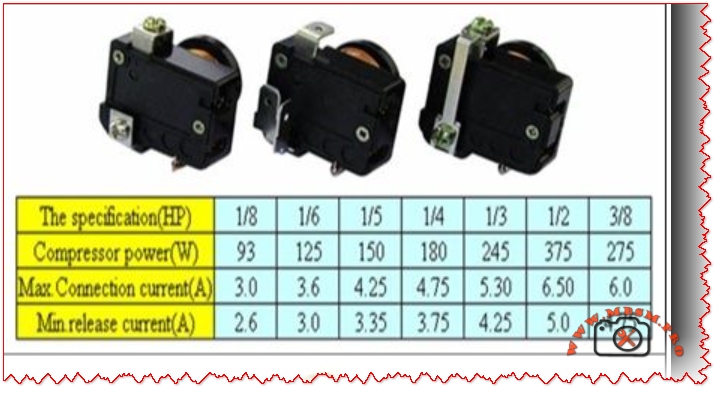
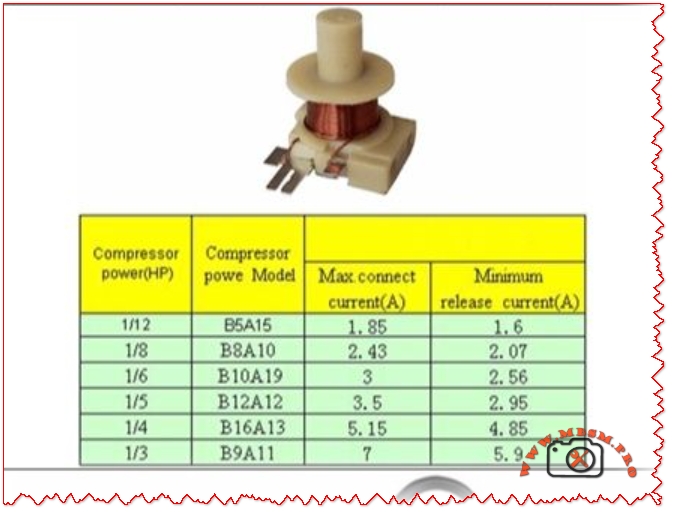
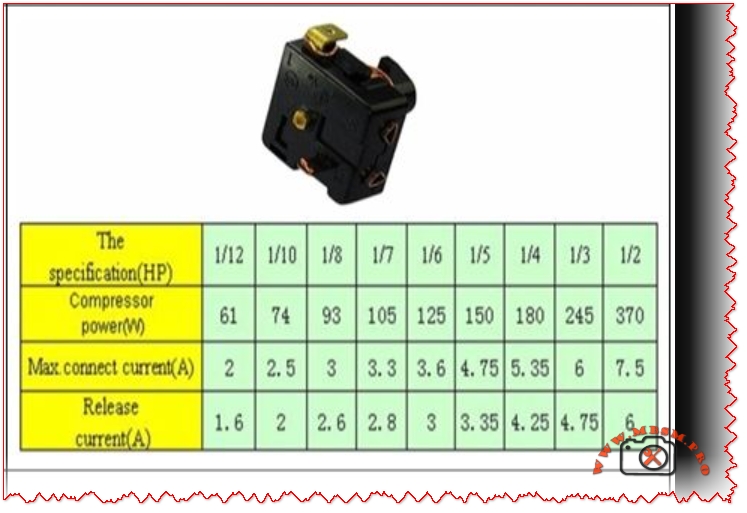
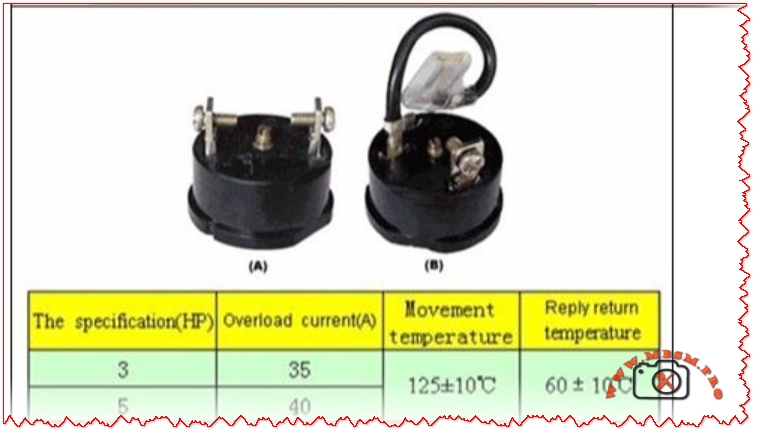
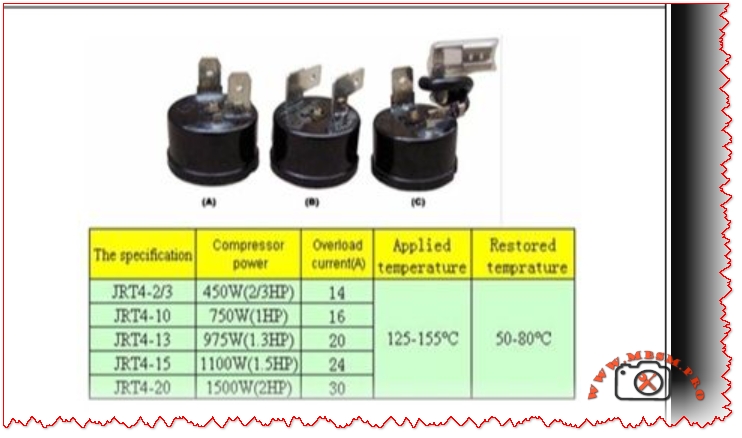
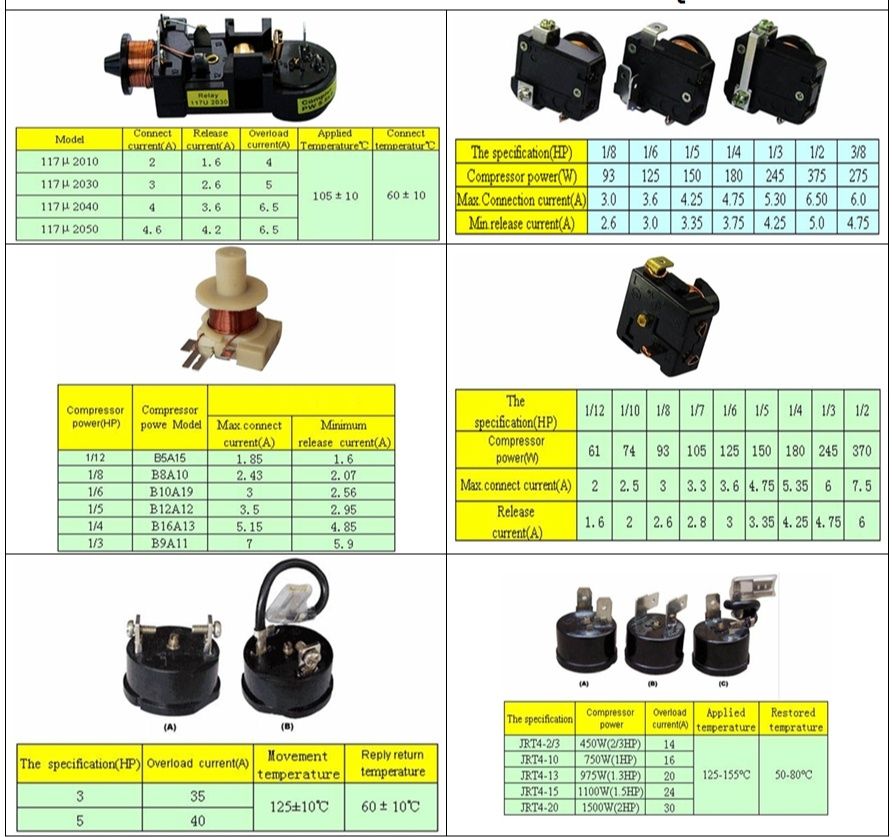
Compressor database chart Relay Olp 

Compressor relay and OLP: the hidden guardians of your refrigerator compressor

Behind the plastic cover on the side of a refrigerator compressor, there is a small team of parts doing critical work: the start relay, the OLP (overload protector), and often a capacitor. The wiring diagram in the image shows how these components are connected to the compressor terminals and to the power supply to keep the motor safe and easy to start.​

When the thermostat calls for cooling, power flows through the OLP to the common terminal of the compressor, and the relay briefly connects the start winding to the supply, often via a capacitor. Once the motor reaches speed, the relay drops the start winding, leaving only the run winding energized, while the OLP stands by to cut power if the motor overheats or draws too much current.​


Key components in the wiring diagram

  • Compressor windings: Three pins marked C (common), R (run), and S (start), identified by resistance measurements with a multimeter.​
  • Relay (PTC or current/voltage relay): Connects the start winding during startup, then automatically disconnects it when current or voltage conditions change.​
  • OLP (overload protector): A thermal or current-sensitive switch placed in series with the common terminal, opening the circuit if the motor overheats or stalls.
  • Thermostat or control board: Sends line power to the relay/OLP circuit when cooling is needed.
  • Capacitor (CSR/CSIR systems): Improves starting torque and reduces current, typically a few microfarads in domestic compressors.​

Typical wiring logic in refrigerator diagrams

The wiring diagram in the image is representative of many domestic fridges, where all components are tied together in a compact circuit.

  • Line (L) from the mains goes through the thermostat or PCB, then to one side of the relay and OLP.
  • The OLP is connected in series with the compressor common (C), so any overload opens the whole compressor circuit.
  • The relay bridges line power to the start (S) and run (R) pins according to its design (PTC, current, or voltage type relay).​
  • Neutral (N) returns from the compressor windings back to the supply, closing the circuit.

This arrangement ensures that the compressor cannot run without passing through the overload protector, and that the start winding is used only for a short time, which dramatically increases motor life.


Table: Typical compressor relay–OLP connections

Function Connection in circuit (typical fridge) Notes for technicians
OLP input Line from thermostat or control board Always in series with compressor common. 
OLP output Compressor C terminal Opens on overload/overheat. 
Relay common terminal Line or OLP output (depending on design) Feeds S and R during start. ​
Relay output to start (S) Compressor start pin via PTC or coil contact Energized only at startup. ​
Relay output to run (R) Compressor run pin, sometimes via capacitor Stays energized in running mode. ​
Capacitor connection Between S and R (CSR) or between line and auxiliary winding Improves torque and reduces current. ​

Testing relay and OLP safely

Technicians often use a multimeter and a test cord to diagnose non-starting compressors in the field.​

  • Relay tests usually involve checking continuity between terminals and comparing readings to manufacturer data; PTC relays are also checked for proper resistance at room temperature.​​
  • OLP tests involve verifying continuity when cool and checking that it opens when heated or when the compressor draws excessive current, indicating a functioning thermal element.

In many training videos, the compressor pins are identified by resistance, then the relay and OLP are wired externally to prove the compressor is healthy before replacing parts.​


Why this diagram matters for Mbsmgroup, Mbsm.pro, and mbsmpro.com

For platforms like Mbsmgroup and Mbsm.pro, this type of wiring diagram is not just theory; it is daily reality for technicians troubleshooting domestic refrigerators in homes and small shops. Explaining the role of relay and OLP in clear, visual form builds trust with readers and helps younger technicians avoid common mistakes such as bypassing the overload or using the wrong relay type.​

Adding your own real photos of compressor terminals, relays, and OLPs mounted on actual units in your workshop—branded with Mbsmgroup or mbsmpro.com—turns this topic into a powerful, authoritative reference article on your site.​

Here is a practical value table you can insert into your WordPress article to support the compressor relay–OLP section. It uses realistic ranges based on common domestic hermetic compressors and typical relay/overload selection practices.


Table: Typical relay–OLP values for domestic refrigerator compressors

Approx. HP Supply (V/Hz) Typical FLA (A) Typical LRA (A) Recommended relay type OLP trip current range (A) Typical application
1/12 HP 220–240 V / 50 0.6–0.9 6–10 Small PTC relay module 1.2–1.6 Mini bar, very small refrigerator 
1/10 HP 220–240 V / 50 0.8–1.1 8–14 PTC or solid-state relay 1.6–2.0 Single-door compact fridge 
1/8 HP 220–240 V / 50 1.0–1.4 10–18 PTC / current relay 2.0–2.5 Small domestic fridge–freezer 
1/6 HP 220–240 V / 50 1.3–1.8 14–24 PTC or CSR relay with capacitor 2.5–3.2 Standard top-freezer refrigerator 
1/5 HP 220–240 V / 50 1.5–2.2 18–30 CSR relay (start capacitor + PTC/current) 3.0–3.8 Larger domestic fridge, small showcase 
1/4 HP 220–240 V / 50 1.8–2.6 22–35 CSR relay with start capacitor 3.5–4.5 Large refrigerator / light commercial 
1/3 HP 220–240 V / 50 2.3–3.5 30–50 High-torque CSR relay module 4.5–6.0 Commercial display, glass-door cooler 

  • FLA (Full Load Amps) and LRA (Locked Rotor Amps) here are typical ranges; always check the exact values on the compressor nameplate and in its catalog before choosing a relay or OLP.
  • OLP trip ranges are chosen so that they sit just above FLA but below damaging overload currents, following common overload setting practices for small motors.​​

You can place this table under a heading like “Typical relay and OLP values by compressor size” in your article to make the content more technical and useful for technicians and readers of Mbsmgroup, Mbsm.pro, and mbsmpro.com.


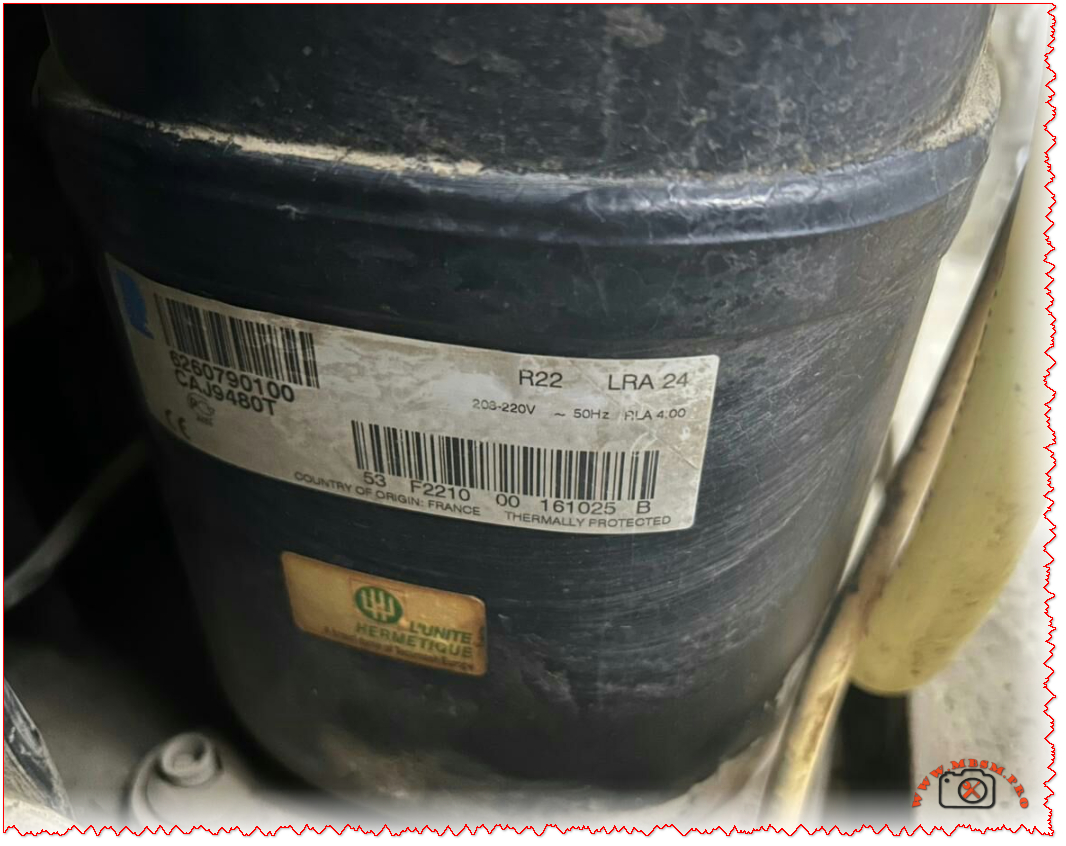
Tecumseh CAJ9480T R22 Hermetic Compressor: Complete Technical Guide for Professionals

Tecumseh CAJ9480T R22 Hermetic Compressor: Complete Technical Guide for Professionals

The Tecumseh / L’Unité Hermetique CAJ9480T is a fully hermetic reciprocating compressor designed for commercial refrigeration systems operating with R22 and compatible retrofit refrigerants. Widely used in small cold rooms, display cabinets and compact condensing units, it runs on 220–240 V single‑phase, 50 Hz power and delivers 5/8 HP with around 1.97 kW of cooling capacity at EN12900 conditions.

General description

This model belongs to the CAJ family, Tecumseh’s workhorse range for medium and high back‑pressure refrigeration applications such as positive‑temperature cold rooms and commercial coolers. It is a hermetic piston compressor using a CSR motor (capacitor start, capacitor run), giving high starting torque and stable operation on standard single‑phase networks.

Manufactured in France under the L’Unité Hermetique brand, the CAJ9480T combines compact size, good efficiency and a robust mechanical design, which explains its popularity among installers and service companies like Mbsmgroup, Mbsm.pro and mbsmpro.com.

Main technical specifications (with HP and W)

The table below consolidates key data from Tecumseh specification sheets and trusted distributors.

Specification CAJ9480T value (R22, 50 Hz)
Refrigerant R22 (and some approved retrofits such as R438A on specific codes)
Application range Medium / high back pressure (commercial refrigeration)
Nominal horsepower (HP) 5/8 HP (0.625 HP)
Nominal cooling capacity (W) ≈ 1 968 W at EN12900: 220 V, 50 Hz, +5 °C evap / +50 °C cond
Input electrical power (W) ≈ 780–800 W at the same EN12900 rating point
Displacement 15.2 cm³/rev
Supply voltage 220–240 V, 1‑phase, 50 Hz
Voltage range 187–242 V (50 Hz)
Rated load amps (RLA, 50 Hz) ≈ 4 A
Locked rotor amps (LRA) ≈ 24 A
Oil type / quantity Synthetic alkylate or mineral, approx. 475–887 cm³ depending on version
Net weight ≈ 19–22 kg

The nameplate visible in your photo shows “R22 – LRA 24 – 203–220 V – 50 Hz – RLA 4.00”, matching these published values and confirming a single‑phase CAJ9480T produced in France.

Typical applications and field use

Because of its capacity, voltage and starting characteristics, the CAJ9480T fits many everyday refrigeration jobs.

  • Small cold rooms for butchers, restaurants, bakeries and mini‑markets originally charged with R22.
  • Vertical display cabinets, reach‑in fridges and refrigerated counters using factory‑built condensing units.
  • Custom‑built condensing units and mini‑packs produced by specialists such as Mbsmgroup, Mbsm.pro and mbsmpro.com, especially where reliable 5/8 HP performance is required on 230 V single‑phase.

Its CSR motor and high starting torque help the compressor start under tougher conditions, such as long pipe runs or marginal supply voltage.

Installation and maintenance best practices

Correct installation and servicing are essential to protect this compressor and keep systems efficient.

  • Flush and evacuate the circuit carefully, and always install a new filter‑drier when replacing a failed R22 compressor.
  • Use the start and run capacitors and potential relay recommended by Tecumseh (for example, 88 µF start and 15 µF run on the CAJ9480T‑FZ code) and follow the official wiring diagram.
  • Verify charge, suction superheat and condensing temperature so operation stays within Tecumseh’s performance envelope.
  • For R22 retrofit projects, respect manufacturer guidance on compatible replacement refrigerants and oil changes to avoid lubrication and overheating issues.

Working with trusted suppliers such as Mbsmgroup and its online platforms helps ensure genuine Tecumseh parts, correct electrical components and updated technical information.


Replacing Unionaire Sensors with Kiriazi Deep Freezer Probes: What Technicians Must Check First

Replacing Unionaire Sensors with Kiriazi Deep Freezer Probes: What Technicians Must Check First

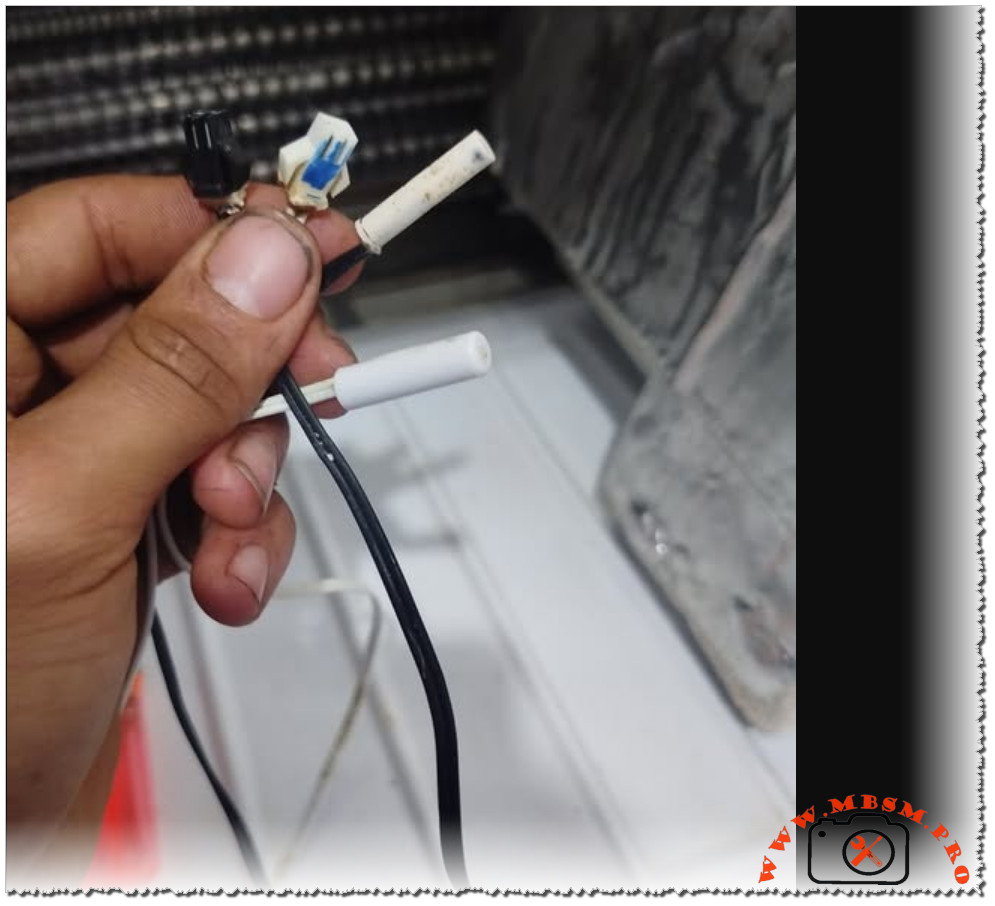
The picture shows a refrigeration technician holding several tubular temperature probes and a small white connector in front of a heavily frosted evaporator, a very typical scene when diagnosing a sensor fault in a no‑frost fridge or deep freezer. This raises the key question many technicians ask: can a Union Air (Unionaire) refrigerator or freezer sensor be safely replaced with a sensor taken from a Kiriazi deep freezer, without compromising performance or safety?


Understanding the Type of Sensors in Modern Fridges

  • Most Unionaire and Kiriazi appliances use NTC thermistor sensors whose resistance changes with temperature, commonly 5 kΩ or 10 kΩ at 25 °C for domestic refrigeration.
  • The probe is encapsulated in a plastic or metal tube, just like the white tubes visible in the image, and is fixed on the evaporator or in the air duct to measure cabinet or coil temperature accurately.​
  • The electronic control board reads the NTC value and converts it into on/off commands for the compressor and defrost heater, so any mismatch in sensor value directly alters the unit’s cooling and defrost behaviour.​

When Can a Kiriazi Sensor Replace a Unionaire Sensor?

  • A Kiriazi deep freezer probe can be used as a substitute for a Unionaire sensor only if the sensor type (NTC) and the nominal resistance (for example 5 kΩ or 10 kΩ at 25 °C) are the same, which is true for many domestic fridge and freezer models.
  • Before installing, measure the resistance of both the old Unionaire sensor and the Kiriazi sensor with a multimeter at room temperature and again in ice water; if values are very close (within roughly 5–10%), the replacement will usually work without noticeable set‑point error.​
  • You also need to confirm wire length and connector type; some Kiriazi probes come with a connector that matches Unionaire, while in other cases you must move the original plug onto the new leads or use well‑insulated crimp joints, as the hand‑held bundle in the photo suggests.​

Practical Replacement Steps for Field Technicians

  • Always disconnect mains power before touching sensors or the control board to avoid electric shock and prevent damage to the PCB.​
  • Gently remove the faulty sensor from its clip on the evaporator or from the air channel, then measure its resistance at ambient and at approximately 0 °C in a cup of ice water to compare with the new Kiriazi probe.​
  • Install the new probe exactly where the original was, making sure it has good thermal contact with the evaporator surface or sits correctly in the airflow path, then secure it using clips or cable ties as is common in no‑frost cabinets.​​

Risks If the Sensor Specifications Do Not Match

  • If the substitute sensor has a significantly different resistance curve, the fridge may run for too long, creating heavy ice build‑up like that visible in the background of the image, or may cut off early and never reach proper freezing temperature, leading to “not freezing enough” complaints.​​
  • A mismatched NTC curve can confuse the automatic defrost cycle, causing recurrent issues such as blocked drain channels, solid ice around the evaporator, and poor air circulation inside the freezer compartment.
  • On some digital Unionaire models, using the wrong sensor value can trigger repeated error codes or short cycling of the compressor, which shortens compressor life and annoys the customer with noisy, frequent starts.​​

Key Comparison Points Between Typical Unionaire and Kiriazi Probes

Item Unionaire digital fridge sensor Kiriazi domestic deep freezer sensor
Sensor type NTC thermistor NTC thermistor
Typical nominal value About 5 kΩ or 10 kΩ at 25 °C About 5 kΩ or 10 kΩ at 25 °C
Encapsulation style White/transparent plastic tube White plastic or metal tube
Common mounting location On evaporator or in air channel On evaporator or clipped to coil​
Connector style 2‑wire, small rectangular plug 2‑wire plug or bare leads​
Use as replacement Accepts equivalent NTC values Can act as substitute when values match

Pro Tips for Mbsmgroup and Mbsmpro Technicians

  • Keep a stock of universal NTC probes (5 kΩ and 10 kΩ) plus resistance charts; this makes it easier to service Unionaire, Kiriazi, and other brands with one organized sensor kit.
  • Before handing the appliance back to the customer, monitor freezer temperature for about 24 hours; ideally the internal thermometer should stabilise around −18 °C to −22 °C under normal conditions, and the defrost cycle should run without excessive ice accumulation.


Frascold D2‑15Y / D2‑15.1Y ​

Frascold D2 15Y: semi‑hermetic compressor for reliable commercial refrigeration

General overview

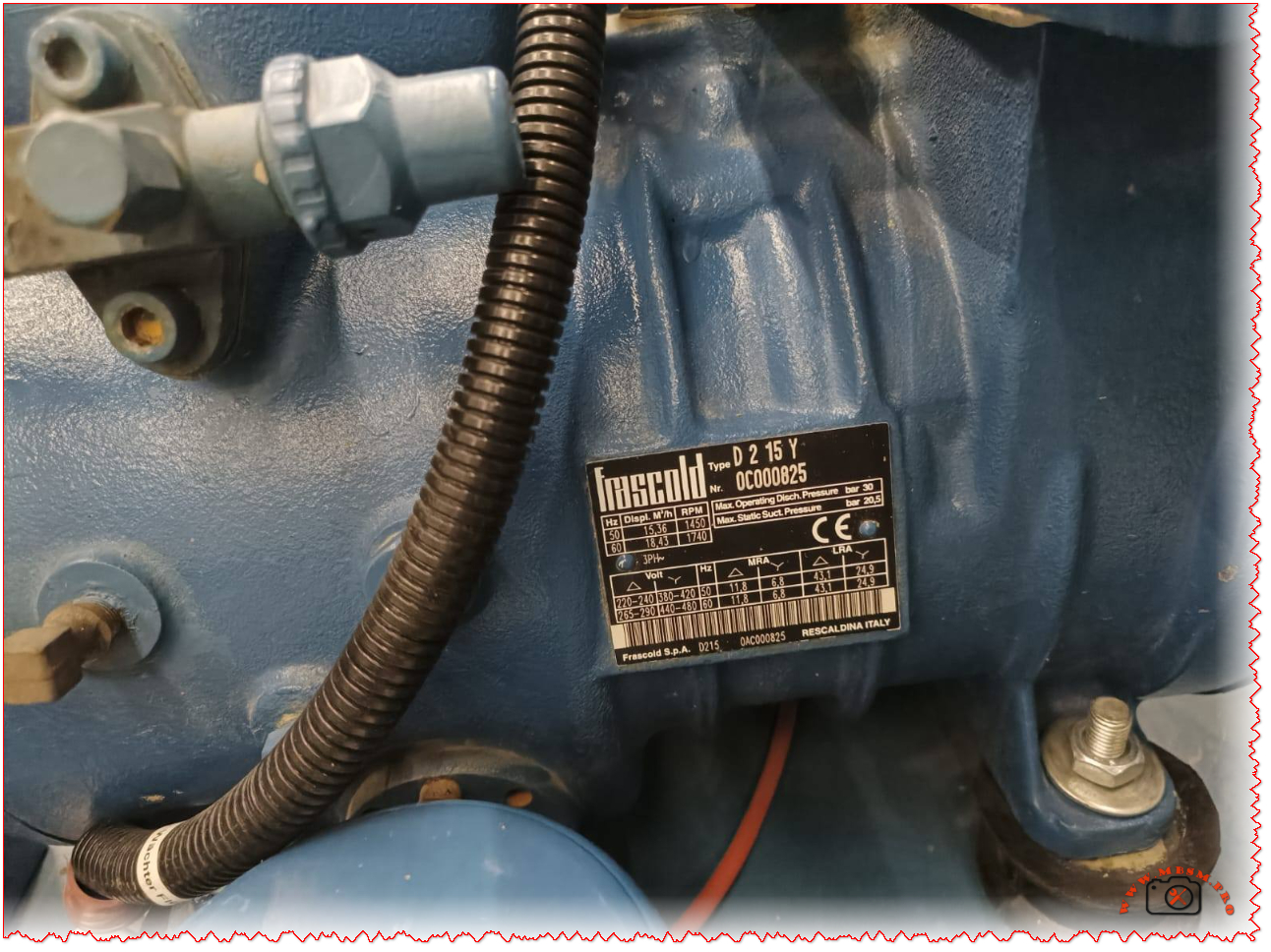
The Frascold D2 15Y is a two‑cylinder, semi‑hermetic reciprocating compressor designed for low‑ and medium‑temperature commercial and industrial refrigeration duties. With a displacement of about 15.4 m³/h at 50 Hz and a nominal motor power of 1.5 kW (2 HP), it fits perfectly in small to medium cold rooms, display cabinets and process coolers.

This model belongs to Frascold’s D series, known for compact cast‑iron bodies, quiet operation and high energy efficiency under EN12900 test conditions. The D2 15Y can be supplied as a bare compressor or integrated into silent condensing units, giving installers flexibility in plant design.

Key technical features

Frascold’s data show that the D2 15Y delivers around 6–7 kW of cooling capacity with R404A in typical low‑temperature duty, depending on evaporating and condensing conditions. The compressor is charged with POE oil (approx. 1.1 L) and uses robust suction and discharge service valves to facilitate commissioning and service.

Electrical supply options usually cover 220–240 V/3/50 Hz and 380–420 V/3/50 Hz (with corresponding 60 Hz variants), allowing use across most European three‑phase networks. The unit is compatible with multiple refrigerants, including R22, R134a, R404A, R507A, R407A/F, and new lower‑GWP blends such as R448A and R449A.

Table – Main data for Frascold D2 15Y

Parameter Typical value
Model D2‑15Y / D2‑15.1Y 
Technology Semi‑hermetic reciprocating, 2 cylinders 
Displacement (50 Hz) 15.36 m³/h 
Nominal motor power 1.5 kW – 2 HP 
Oil charge ≈ 1.1 L POE oil 
Typical cooling capacity ≈ 6.7 kW with R404A (EN12900 reference condition) 
Application Low/medium‑temperature refrigeration (LBP/MBP) 
Compatible refrigerants R22, R134a, R404A, R507A, R407A/F, R448A, R449A 

Benefits for HVACR professionals

Semi‑hermetic design means the D2 15Y can be opened for internal inspection and overhaul, extending service life compared with fully hermetic units in demanding duty cycles. The compressor is also suitable for operation with variable‑frequency drives, enabling smooth capacity modulation from part‑load to peak demand while improving seasonal efficiency.

For contractors and wholesalers, the D2 15Y’s widespread availability and clear documentation (including a dedicated PDF datasheet and full catalog) simplify selection, replacement of legacy units and stocking of spare parts. Its broad refrigerant approval list helps systems transition towards lower‑GWP blends without changing the compressor platform.


 Copeland-15hp

Copeland condensing unit for cold room – features, applications and installation tips

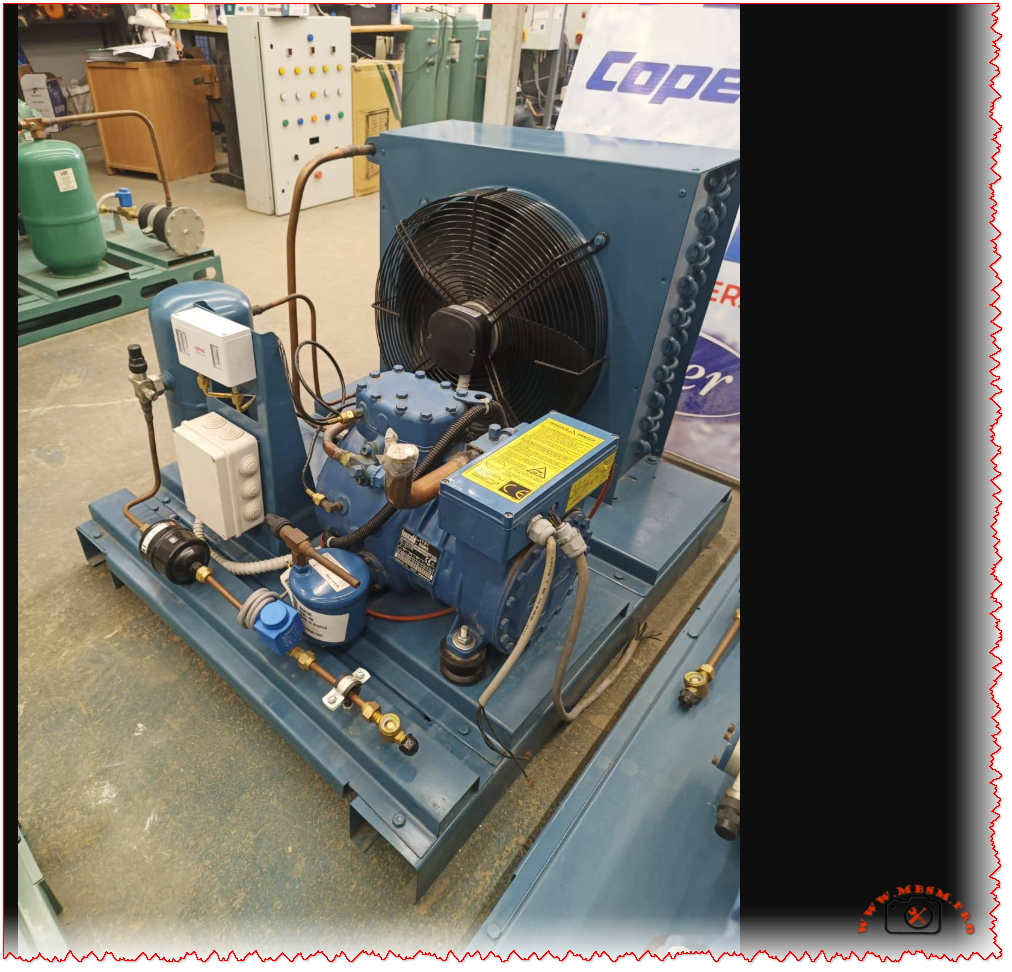
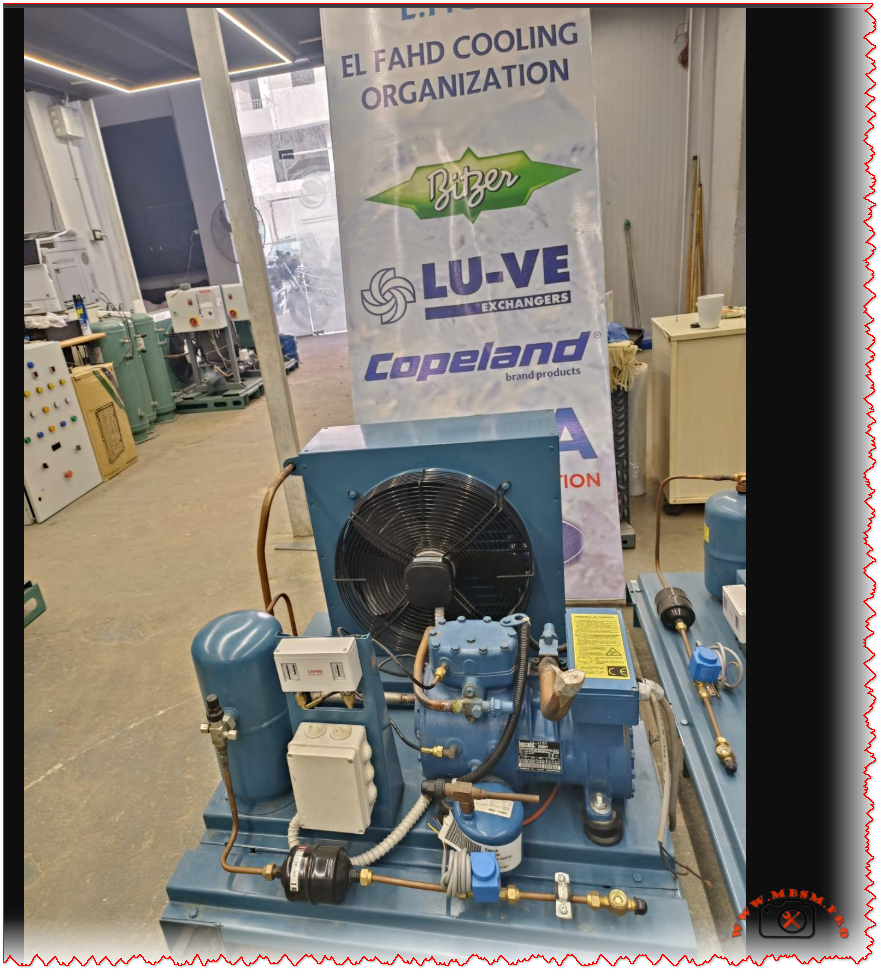
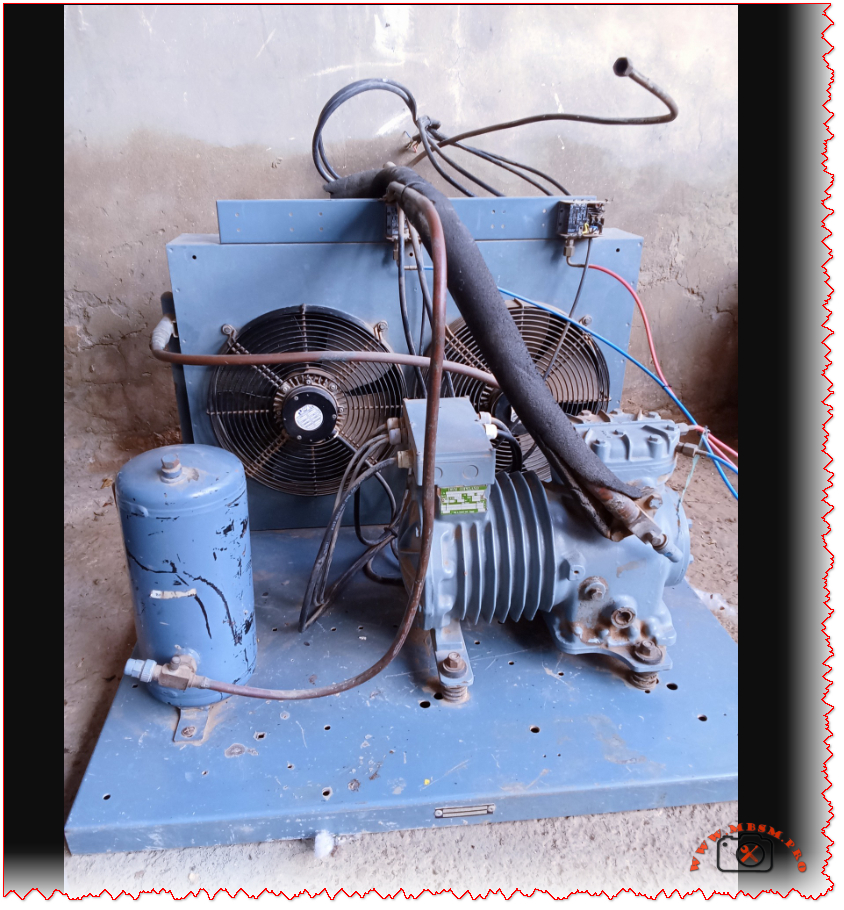
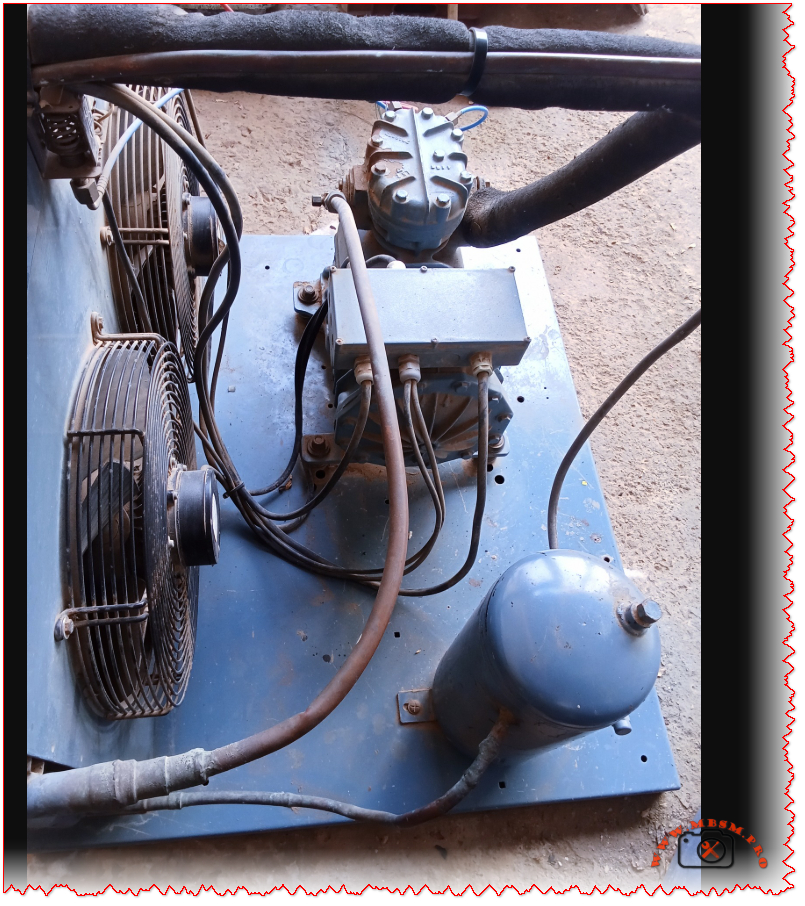
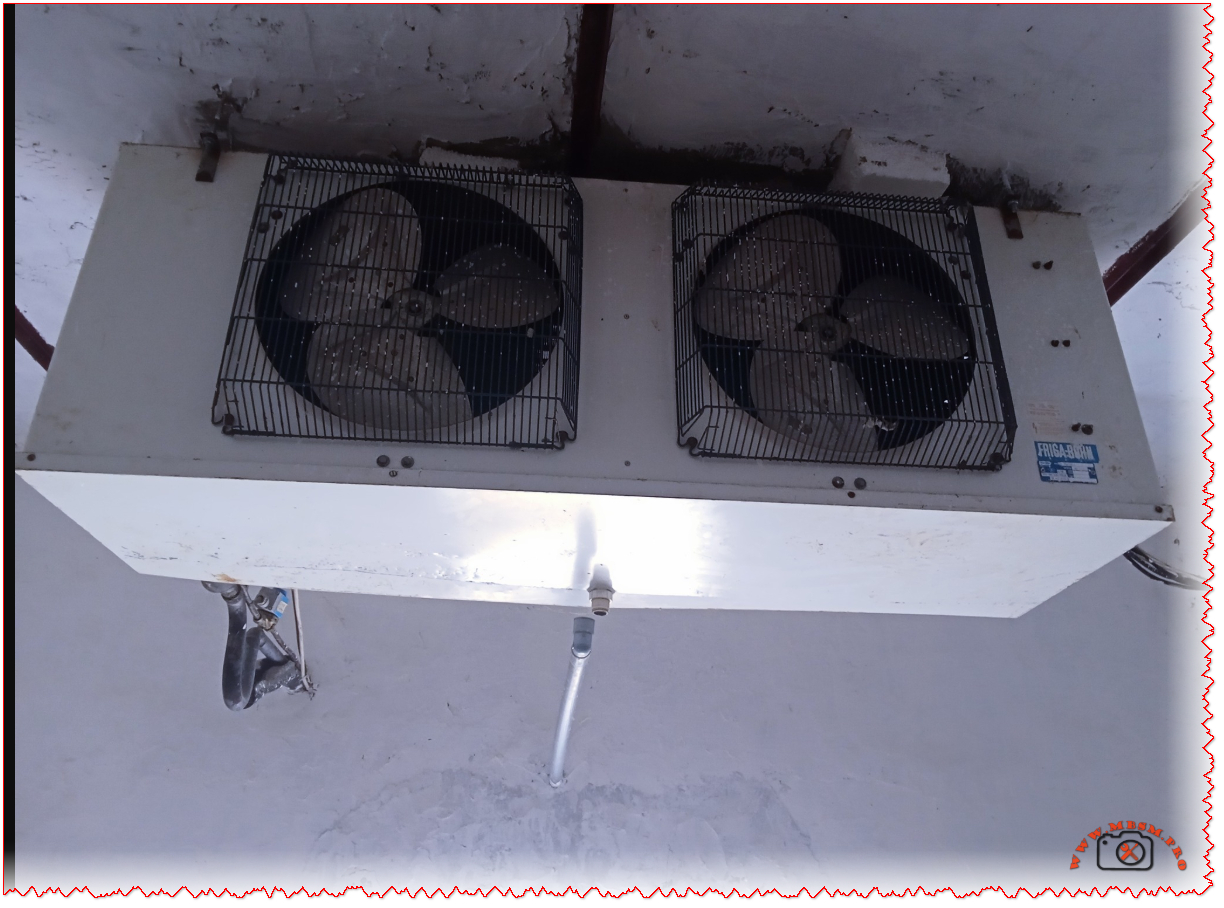
The condensing unit (group) is an original Copeland brand motor rated at 15 horsepower (15 HP), while the evaporator fans are Friga‑Bohn brand (two fans), both in good working condition

Equipment description

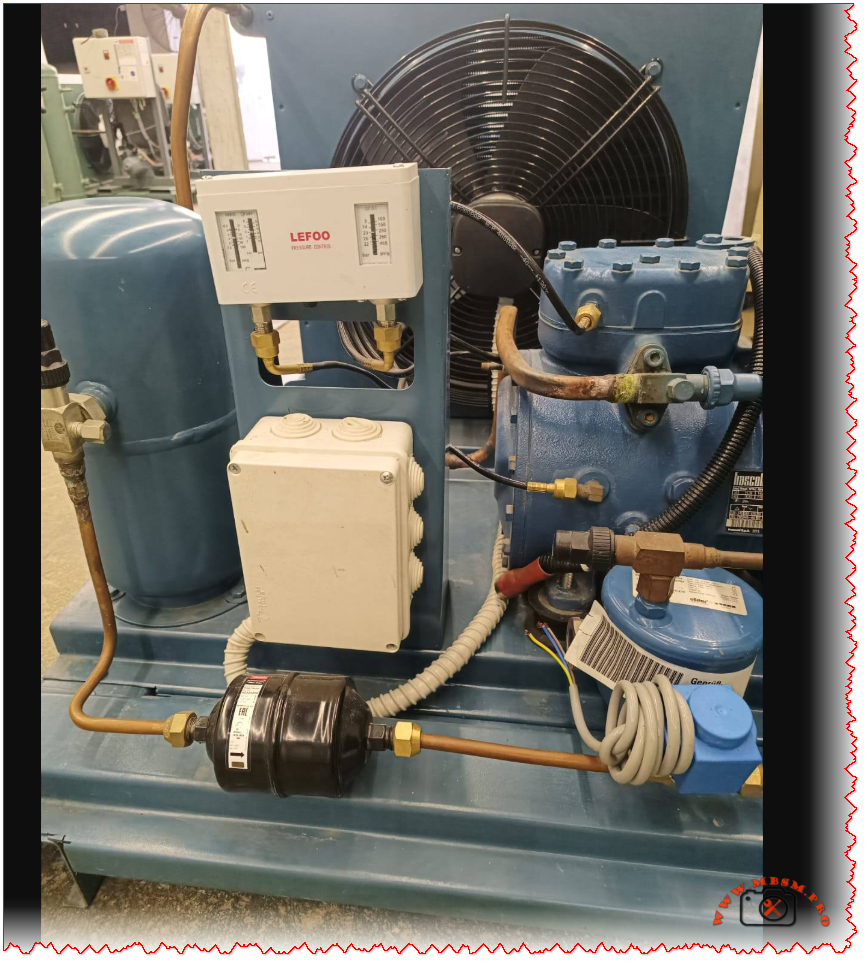
The images show a Copeland condensing unit on a steel base, with a semi‑hermetic refrigeration compressor, air‑cooled condenser with dual fans and a vertical liquid receiver, designed for a cold room at positive or low temperature. This configuration is widely used in food retail, cold storage and agro‑food applications where stable temperature and continuous duty are essential.​​

The ceiling‑mounted evaporator with two axial fans distributes the cold air evenly inside the room and returns refrigerant gas to the Copeland compressor through insulated suction and liquid lines. Pairing a Copeland condensing unit with a forced‑air evaporator is a classic solution that remains easy to install, commission and service for professional refrigeration contractors.​​

Copeland brand and technology

Copeland is a global reference in refrigeration compressors, offering scroll, semi‑hermetic and hermetic models with high energy efficiency and broad operating envelopes. Its equipment covers commercial refrigeration from medium‑temperature cold rooms to low‑temperature freezers, helping retailers and logistics operators secure the full cold chain.

Modern Copeland systems often integrate advanced protections, electronic controls and, on some ranges, Digital Scroll technology for capacity modulation, which improves temperature stability and reduces electrical consumption. For installers and companies such as Mbsmgroup or Mbsm.pro, this means more reliable systems, fewer service calls and better seasonal efficiency.

Typical features of Copeland condensing units

Although the exact nameplate of the photographed unit is not readable, Copeland catalogues describe the main features of their condensing unit ranges. These units are available with multiple refrigerants (such as R404A, R134a and newer lower‑GWP blends), and cover a wide capacity range suitable for small to large cold rooms.

Key technical characteristics (catalog examples)

Item Typical Copeland data
Compressor type Scroll or semi‑hermetic reciprocating, multi‑refrigerant, high efficiency. 
Application range Medium and low temperature, roughly from +12 °C down to around −40 °C depending on model. 
Capacity range Models sized for commercial cold rooms, freezers and display cases of various volumes. 
Condenser Quiet axial fans, available in standard or high‑ambient “tropical” versions. 
Options Digital Scroll capacity modulation, electronic controls, liquid line components and safety devices pre‑assembled. 

These catalogue values help technicians choose a replacement unit or design a new installation based on room size, target temperature and local climate.

Installation and maintenance recommendations

When installing or refurbishing a Copeland condensing unit like the one shown, technicians should:

  • Inspect the compressor, liquid receiver and all brazed joints for signs of damage or leaks before charging with refrigerant.
  • Clean the condenser coil and verify fan operation to ensure proper condensing pressure and avoid high‑pressure trips.

It is also important to select a refrigerant approved for the specific Copeland model (as listed in the product catalogue) and to follow the prescribed oil type and charge. Adding appropriate protections – high/low pressure switches, crankcase heater, motor protection and an electronic temperature controller – increases system reliability and extends the service life of the equipment.