Electrostatic Paint Sprayer: Precision Coating for Modern Workshops

Electrostatic Paint Sprayer: Precision Coating for Modern Workshops

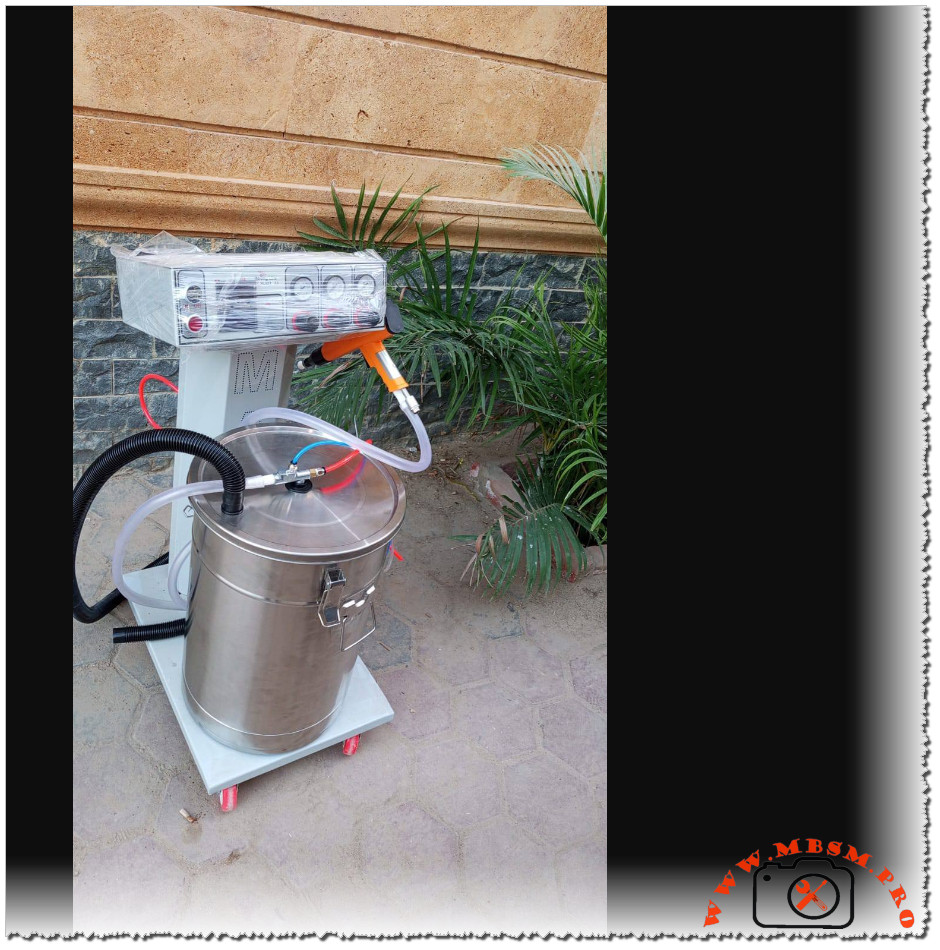
In many metalworking, HVAC and automotive workshops, an electrostatic paint sprayer has quietly become the secret weapon for achieving premium finishes with less paint and less mess. This compact system, often mounted on a mobile trolley with an integrated paint tank and control cabinet, charges each droplet of paint so it is strongly attracted to grounded metal parts. The result is a smooth, uniform coat that wraps around complex shapes while cutting material waste and spray‑booth pollution.

How an electrostatic sprayer works

At the heart of the system is a high‑voltage power supply that charges the paint as it leaves the spray gun nozzle. Charged particles repel each other, creating a fine, even mist that spreads uniformly across the target surface. When the workpiece is correctly grounded, those same particles are pulled in like iron filings to a magnet, covering corners, tubes and hidden edges that are often missed with conventional guns.

A typical workshop installation includes:

  • A stainless‑steel paint tank with secure lid and fittings for circulation and flushing.
  • A control column housing electrical and pneumatic controls, often shielded under a clear cover for safety.
  • Flexible hoses supplying paint and air to the gun, plus return lines for cleaning and color change.
  • A wheeled base, allowing the whole unit to move between production lines, vehicles or HVAC modules on site.

Key advantages for professional finishers

The biggest reason technicians move to electrostatic spraying is transfer efficiency. Because so much of the paint lands on the part instead of drifting away as overspray, manufacturers report efficiencies up to around 90%, compared with much lower figures for traditional air spray or HVLP equipment. That efficiency translates directly into cost savings on coatings, thinner layers of hazardous waste, and shorter booth cleaning cycles after each job.

Beyond savings, electrostatic systems deliver a noticeably better finish. The wrap‑around effect and consistent atomization create a smooth, uniform film even on complex geometries like compressor bodies, fan housings and tubular frames. This often means fewer passes, reduced risk of runs and sags, and less rework on high‑value components. For businesses like Mbsmgroup that work across HVAC, refrigeration and light industrial applications, that combination of quality and efficiency can be a significant competitive advantage.

Typical applications in metal, HVAC and automotive work

Electrostatic liquid systems are widely used wherever metal parts need durable, professional coatings. In HVAC and refrigeration workshops they are ideal for repainting cabinets, condensers, brackets and custom fabricated parts after repair or modification. In automotive environments, they are used on frames, panels, wheels and accessories where consistent film build is critical. They also appear in general manufacturing, coating everything from furniture frames to machinery guards.

Because the technology works with both solvent‑based and water‑based paints when the right gun and isolation strategy are used, one machine can often serve several product lines. Compact, mobile units – like the one pictured – make it possible for small and medium firms to benefit from the same technology used by large paint shops, without investing in a full robotic or conveyorized system.

Safety, maintenance and best practice

Electrostatic equipment concentrates energy and chemicals in one place, so good practice is essential. All workpieces and hangers must be well grounded for the charge to work and to avoid dangerous sparking; operators should regularly clean hooks, clamps and racks so insulation from dried paint does not build up. Personal protective equipment – mask or respirator, gloves and coveralls – remains mandatory because the process still uses fine aerosols and potentially volatile solvents.

Routine maintenance tasks include flushing paint hoses and the stainless‑steel tank between colors, checking filters, and inspecting the high‑voltage cable and gun body for damage. A simple maintenance log helps track nozzle changes, pump service and safety checks, improving uptime and extending the life of the system in demanding workshop conditions.


Technical overview table

Feature Typical specification / description
Application method High‑voltage electrostatic liquid spray gun with adjustable voltage and paint flow.
Transfer efficiency Often up to about 90% in optimized conditions, reducing overspray and material waste.
Compatible coatings Solvent‑based and water‑based paints when used with appropriate isolation and hardware.
Ideal use cases Metal cabinets, frames, HVAC units, machinery, automotive parts and complex geometries.
Mobility and layout Mobile trolley with stainless tank, control cabinet and hoses for flexible positioning in the shop.


Carel DN33V9MR20 Universal Controller: Reliable DIN-Rail Control For Modern HVAC Systems

Carel DN33V9MR20 Universal Controller: Reliable DIN-Rail Control For Modern HVAC Systems

The Carel DN33V9MR20 is a compact universal electronic controller designed for DIN‑rail mounting, widely used in refrigeration, air‑conditioning and process cooling where accurate temperature and universal input management are required. Its robust construction, broad power‑supply range and flexible I/O configuration make it a trusted choice for OEMs and technicians looking for stable control with a small footprint.

Key technical overview

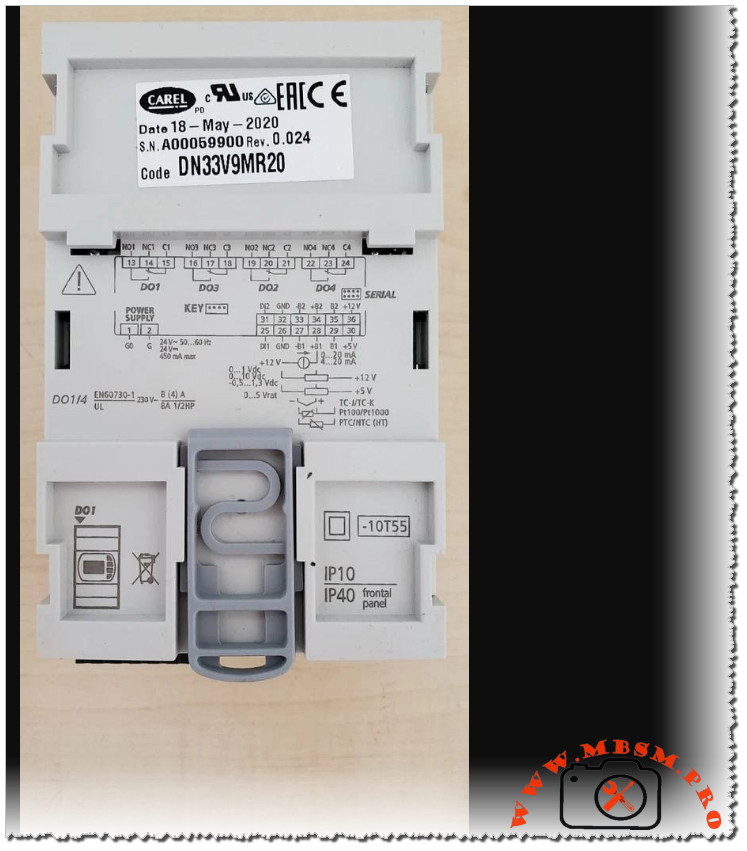
The DN33V9MR20 belongs to Carel’s IR33/DN33 “Universale” family, supporting multiple sensor types and control strategies in a single platform. It is supplied for DIN‑rail mounting, with front‑panel protection rated IP40 and overall device protection IP10, matching the markings visible on the housing.

  • Power supply: 12–24 Vac or 12–30 Vdc, allowing integration in low‑voltage cabinets and retrofit projects.
  • Inputs: 2 analogue inputs (2AI) and 2 digital inputs (2DI), suitable for NTC/PTC probes, Pt1000, 0–5 V or 0–20 mA depending on configuration.
  • Outputs: 1 relay / digital output (1DO) with buzzer and infrared receiver (BUZ, IR) for local and remote interaction.

Main functions and applications

Carel designed the DN33 line to manage temperature but also humidity, pressure and other signals when paired with compatible sensors, giving OEMs a single platform for various units. The controller can operate in “direct” or “reverse” mode, meaning it can drive cooling or heating stages depending on how the measured value must react to set‑point deviations.

  • Typical applications include refrigerated cabinets, small chillers, air‑handling units and process cooling panels where space is limited but high functionality is required.
  • Two independent control loops are available in the IR33/DN33 architecture, enabling simultaneous management of, for example, temperature and defrost or auxiliary outputs when used with multistage variants.

Installation and wiring highlights

The body of the DN33V9MR20, as seen in the image, shows clearly printed terminal numbers and internal diagrams that simplify cabinet work for technicians. DIN‑rail mounting speeds up installation while the plug‑in terminals, shared with the IR33 series, help reduce downtime during replacement or servicing.

  • The front label identifies the product code DN33V9MR20, manufacturing date and revision, which technicians should record for maintenance history and firmware compatibility.
  • Wiring diagrams on the housing indicate the correct connection of power supply, analogue probes, digital inputs and relay output, minimising wiring errors in the field.

User interface and integration

Although the DN33V9MR20 is a DIN‑rail model without an integrated front keypad, it is compatible with Carel’s external user interfaces and programming key, allowing quick parameter upload and cloning across multiple controllers. Infrared reception and an acoustic buzzer provide simple local feedback for alarms and set‑point adjustments when used with the appropriate accessories.

  • The series supports RS‑485 networking on selected variants, enabling connection to supervisory systems for remote monitoring and data logging in supermarkets or industrial plants.
  • Standard Carel parameter maps give installers access to control modes, sensor calibration, alarm thresholds and defrost strategies, ensuring the DN33V9MR20 can be tuned precisely to each HVAC or refrigeration application.

Technical data table

Feature DN33V9MR20 specification
Mounting DIN‑rail, compact housing DN33 series
Power supply 12–24 Vac, 12–30 Vdc (multi‑voltage)
Analogue inputs 2 AI (NTC/PTC, Pt1000, 0–5 V, 0–20 mA, depending on configuration)
Digital inputs 2 DI for door switches, compressor status or alarms
Outputs 1 relay / digital output with buzzer and IR receiver
Protection Front panel IP40, complete controller IP10
Typical uses Refrigerated cabinets, small chillers, HVAC units, process temperature control


Tecumseh CAJ9480T: The French‑Made Heart of Legacy R22 Cold Rooms

Tecumseh CAJ9480T: The French‑Made Heart of Legacy R22 Cold Rooms

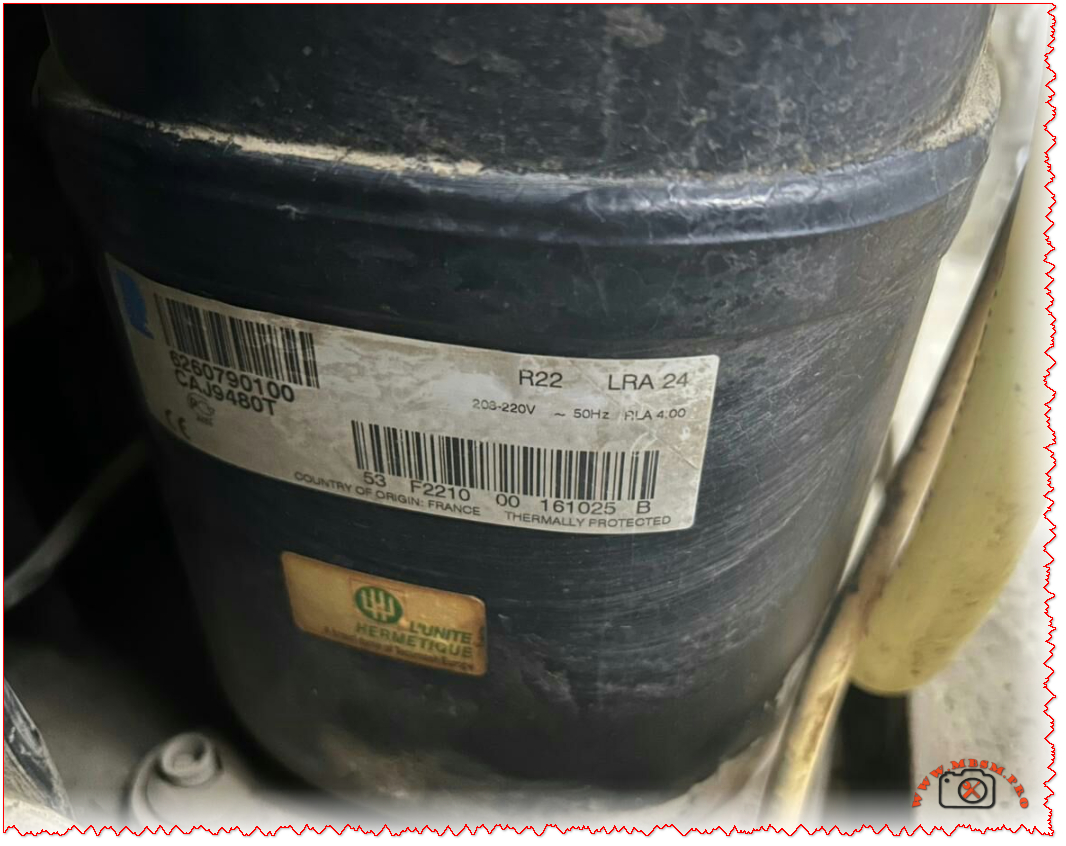
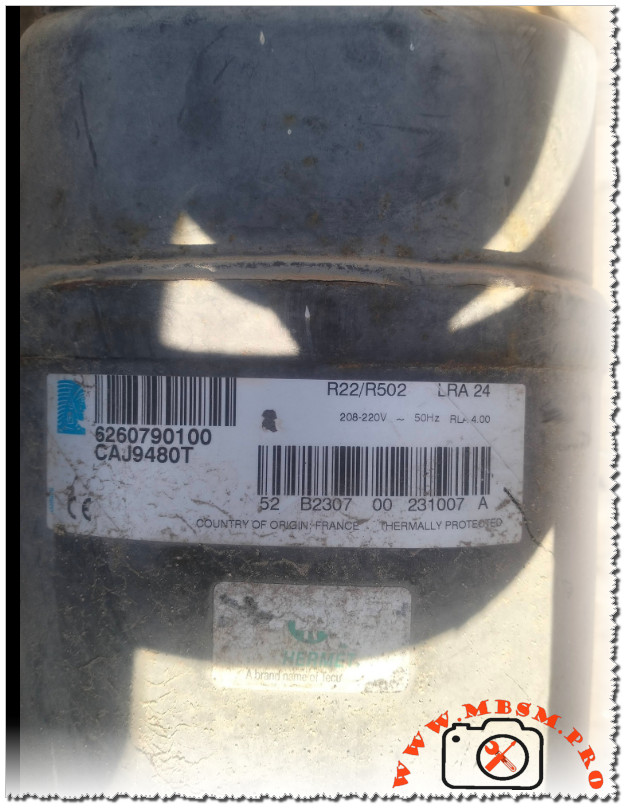
On the faded nameplate of this weathered compressor shell, one line stands out with absolute clarity: CAJ9480T – R22/R502 – Made in France. It is the unmistakable signature of a Tecumseh L’Unité Hermétique fully hermetic compressor, a workhorse still beating quietly inside thousands of small cold rooms and refrigerated cabinets around the world.


Identifying the CAJ9480T from the label

The image shows a classic welded‑shell compressor with a rectangular white label fixed on the body and a smaller green Tecumseh/L’Unité sticker below it.
Printed on the label, the model CAJ9480T appears alongside the refrigerant family R22/R502, the voltage range 208–220 V – 50 Hz, and the note THERMALLY PROTECTED, confirming an internally protected single‑phase motor.
The mention Country of origin: France links this unit to Tecumseh’s European manufacturing line, known under the historic L’Unité Hermétique brand, widely used in commercial refrigeration.


Technical profile of the CAJ9480T

Behind this modest steel shell lies a carefully engineered medium‑temperature compressor designed for reliability more than show.

  • It is a fully hermetic reciprocating compressor, meaning the electric motor and pistons are sealed in the same welded housing, minimizing leaks and simplifying service on the field.
  • In most data sheets the CAJ9480T is rated around 5/8 HP for R22 at 230 V, 50 Hz, suitable for small cold rooms, counters and display cases working in positive temperatures.
  • Typical electrical figures published for this model include a Rated Load Amps (RLA) close to 4 A and a Locked Rotor Amps (LRA) around 24 A, values that match the LRA 24 marking on many factory labels.

The following table summarises the key technical characteristics generally associated with a Tecumseh CAJ9480T in R22 applications.

Parameter Typical CAJ9480T value
Compressor type Fully hermetic reciprocating piston
Nominal horsepower Approx. 5/8 HP (medium temperature)
Refrigerant R22 (older labels may mention R22/R502; some variants accept R438A)
Voltage / frequency 220–240 V, single phase, 50 Hz (voltage code F/FZ)
Displacement About 15.2 cm³/rev
Rated Load Amps (RLA) ≈ 3.9–4.0 A at 50 Hz
Locked Rotor Amps (LRA) ≈ 24 A
Motor type CSR, high‑start torque with start and run capacitor
Oil charge Around 475–780 ml, mineral or alkylbenzene depending on version
Origin Tecumseh / L’Unité Hermétique, France

These values are essential for technicians who want to cross‑check compatibility when replacing a damaged unit or when sizing contactors, cables and protections.


Real‑world applications and typical uses

For many shop owners, the CAJ9480T is not a product code but “the compressor in the cold room that never stops”.

  • It is widely installed in small walk‑in cold rooms, butcher counters, beverage coolers and positive‑temperature cabinets where cooling capacity around 2 kW at medium evaporating temperatures is sufficient.
  • The evaporating temperature envelope usually runs from roughly –23 °C up to +12 °C, allowing the same base model to work in both cooler and slightly higher temperature applications when correctly selected.
  • Because R22 has been phased down in many markets, the CAJ9480T often appears in maintenance and retrofit projects: technicians may replace the original compressor with the same reference, or move to compatible alternative refrigerants when regulations and Tecumseh documentation allow it.

In all cases, checking the exact family (CAJ9480T‑FZ, CAJ9480T‑AJ2, etc.) is crucial, as each variant is optimized for specific refrigerants, voltages and accessories.


Installation notes from the field

Even the best compressor will not forgive poor installation. Technicians who work daily with CAJ‑series models usually insist on a few practical rules:

  • Clean piping and proper brazing: use nitrogen during brazing, replace the filter drier, and avoid introducing scale or moisture, which can quickly degrade the oil and shorten compressor life.
  • Accurate vacuum and charge: a deep vacuum combined with a charge adjusted to sight glass, superheat and manufacturer charts protects the compressor from liquid slugging and overheating.
  • Respect of operating envelope: the Tecumseh performance sheets show clear limits for high condensing temperatures and low evaporating pressures; staying inside this window prevents excessive motor current and thermal overload trips.
  • Correct starting equipment: since the CAJ9480T uses a CSR motor, the correct run capacitor, start capacitor and potential relay must be installed and wired following the original schematic to avoid hard starts and nuisance tripping.

For older R22 equipment, technicians also need to keep an eye on evolving regulations and encourage owners to plan long‑term upgrades towards more sustainable refrigerants and systems.


Replacing Unionaire Sensors with Kiriazi Deep Freezer Probes: What Technicians Must Check First

Replacing Unionaire Sensors with Kiriazi Deep Freezer Probes: What Technicians Must Check First

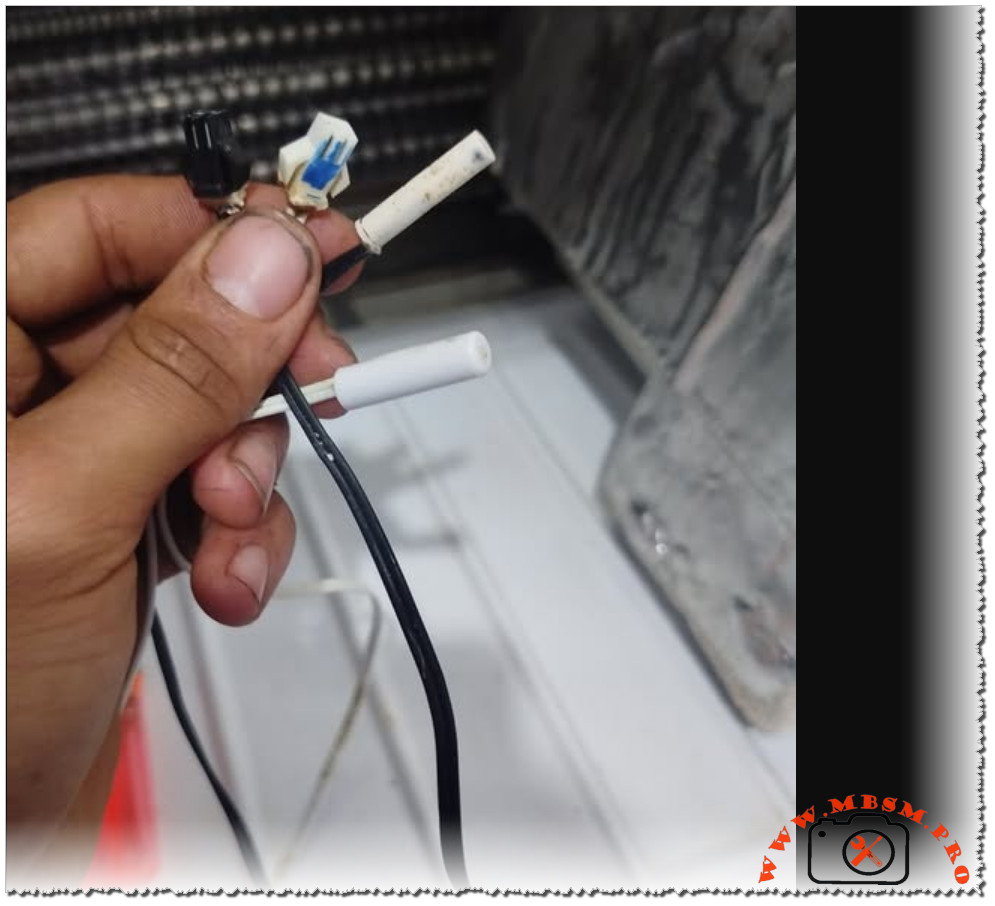
The picture shows a refrigeration technician holding several tubular temperature probes and a small white connector in front of a heavily frosted evaporator, a very typical scene when diagnosing a sensor fault in a no‑frost fridge or deep freezer. This raises the key question many technicians ask: can a Union Air (Unionaire) refrigerator or freezer sensor be safely replaced with a sensor taken from a Kiriazi deep freezer, without compromising performance or safety?


Understanding the Type of Sensors in Modern Fridges

  • Most Unionaire and Kiriazi appliances use NTC thermistor sensors whose resistance changes with temperature, commonly 5 kΩ or 10 kΩ at 25 °C for domestic refrigeration.
  • The probe is encapsulated in a plastic or metal tube, just like the white tubes visible in the image, and is fixed on the evaporator or in the air duct to measure cabinet or coil temperature accurately.​
  • The electronic control board reads the NTC value and converts it into on/off commands for the compressor and defrost heater, so any mismatch in sensor value directly alters the unit’s cooling and defrost behaviour.​

When Can a Kiriazi Sensor Replace a Unionaire Sensor?

  • A Kiriazi deep freezer probe can be used as a substitute for a Unionaire sensor only if the sensor type (NTC) and the nominal resistance (for example 5 kΩ or 10 kΩ at 25 °C) are the same, which is true for many domestic fridge and freezer models.
  • Before installing, measure the resistance of both the old Unionaire sensor and the Kiriazi sensor with a multimeter at room temperature and again in ice water; if values are very close (within roughly 5–10%), the replacement will usually work without noticeable set‑point error.​
  • You also need to confirm wire length and connector type; some Kiriazi probes come with a connector that matches Unionaire, while in other cases you must move the original plug onto the new leads or use well‑insulated crimp joints, as the hand‑held bundle in the photo suggests.​

Practical Replacement Steps for Field Technicians

  • Always disconnect mains power before touching sensors or the control board to avoid electric shock and prevent damage to the PCB.​
  • Gently remove the faulty sensor from its clip on the evaporator or from the air channel, then measure its resistance at ambient and at approximately 0 °C in a cup of ice water to compare with the new Kiriazi probe.​
  • Install the new probe exactly where the original was, making sure it has good thermal contact with the evaporator surface or sits correctly in the airflow path, then secure it using clips or cable ties as is common in no‑frost cabinets.​​

Risks If the Sensor Specifications Do Not Match

  • If the substitute sensor has a significantly different resistance curve, the fridge may run for too long, creating heavy ice build‑up like that visible in the background of the image, or may cut off early and never reach proper freezing temperature, leading to “not freezing enough” complaints.​​
  • A mismatched NTC curve can confuse the automatic defrost cycle, causing recurrent issues such as blocked drain channels, solid ice around the evaporator, and poor air circulation inside the freezer compartment.
  • On some digital Unionaire models, using the wrong sensor value can trigger repeated error codes or short cycling of the compressor, which shortens compressor life and annoys the customer with noisy, frequent starts.​​

Key Comparison Points Between Typical Unionaire and Kiriazi Probes

Item Unionaire digital fridge sensor Kiriazi domestic deep freezer sensor
Sensor type NTC thermistor NTC thermistor
Typical nominal value About 5 kΩ or 10 kΩ at 25 °C About 5 kΩ or 10 kΩ at 25 °C
Encapsulation style White/transparent plastic tube White plastic or metal tube
Common mounting location On evaporator or in air channel On evaporator or clipped to coil​
Connector style 2‑wire, small rectangular plug 2‑wire plug or bare leads​
Use as replacement Accepts equivalent NTC values Can act as substitute when values match

Pro Tips for Mbsmgroup and Mbsmpro Technicians

  • Keep a stock of universal NTC probes (5 kΩ and 10 kΩ) plus resistance charts; this makes it easier to service Unionaire, Kiriazi, and other brands with one organized sensor kit.
  • Before handing the appliance back to the customer, monitor freezer temperature for about 24 hours; ideally the internal thermometer should stabilise around −18 °C to −22 °C under normal conditions, and the defrost cycle should run without excessive ice accumulation.


DC05CDNC1C 48V DC Cabinet Air Conditioner

DC05CDNC1C 48V DC Cabinet Air Conditioner: Technical Overview and Practical Guide

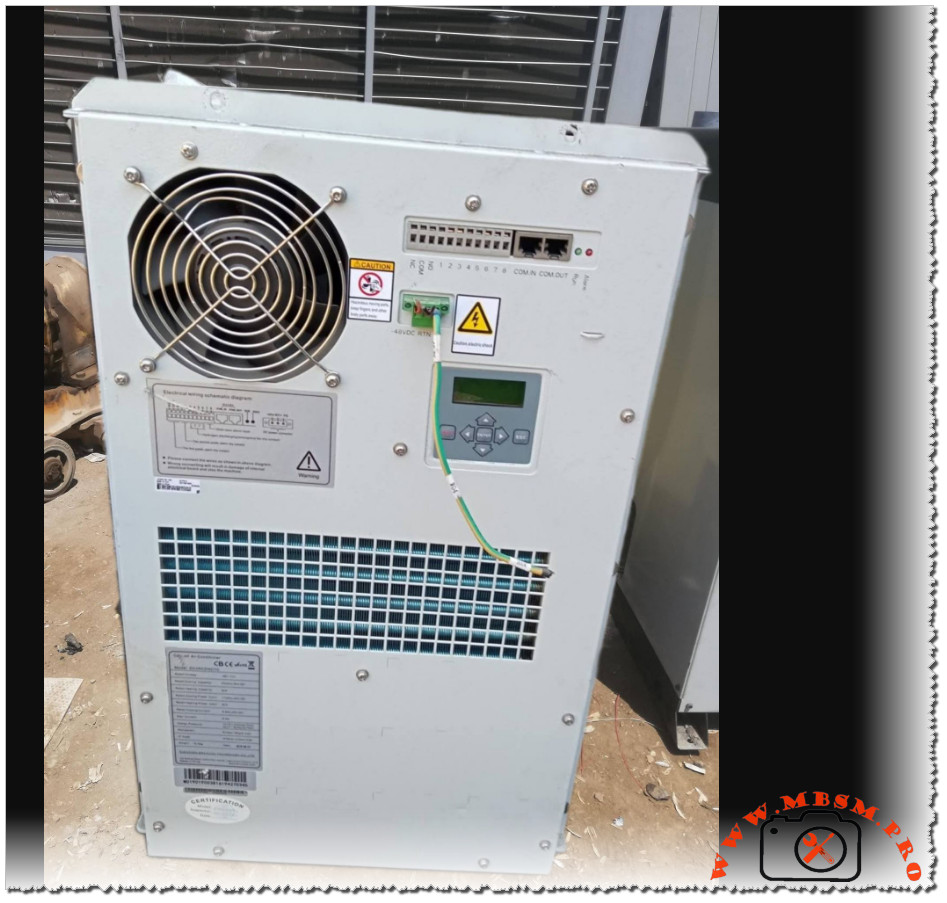
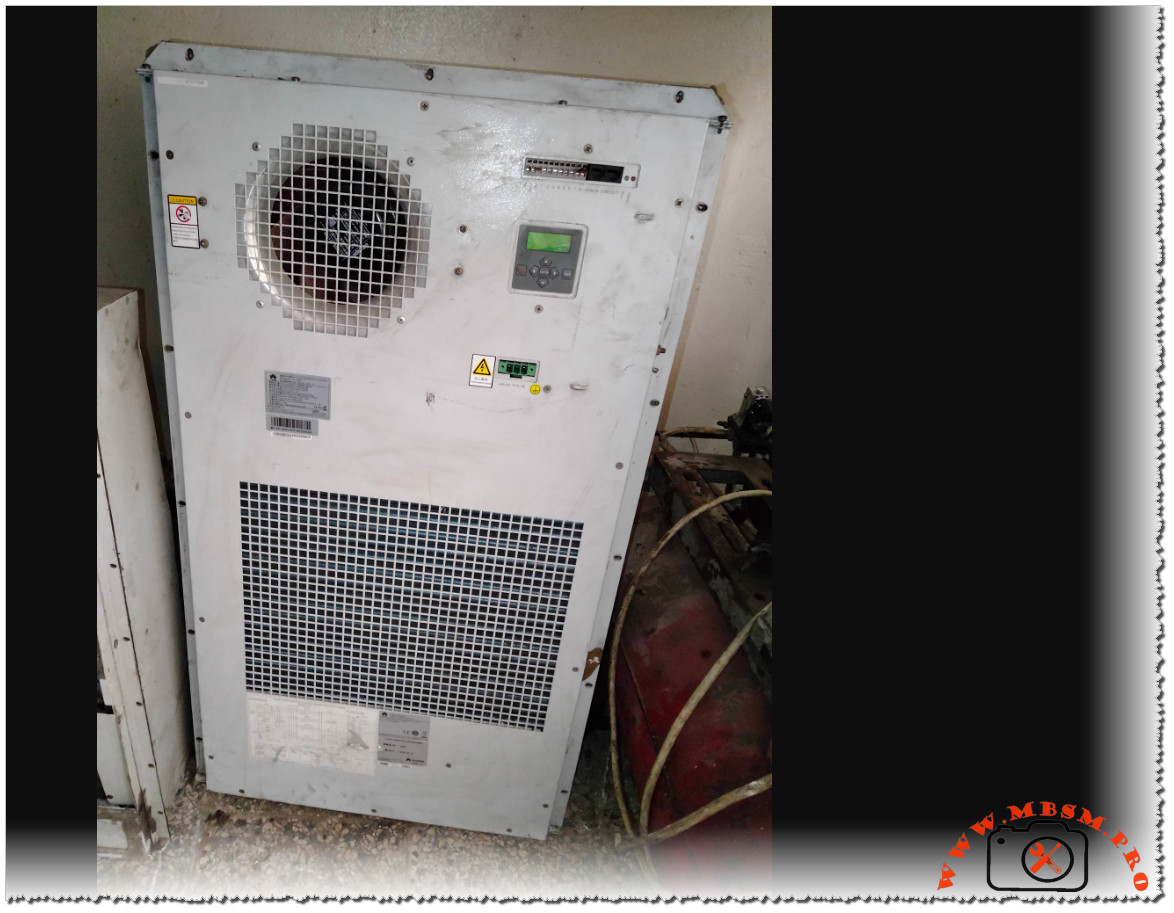
Outdoor telecom cabinets, base stations and industrial enclosures rely on compact DC air conditioners to keep sensitive electronics within a safe temperature range. The Envicool DC05CDNC1C 48V DC cabinet air conditioner is one of these dedicated solutions, delivering 550 W of cooling capacity in a sealed IP65 housing for harsh outdoor environments.

Product identification

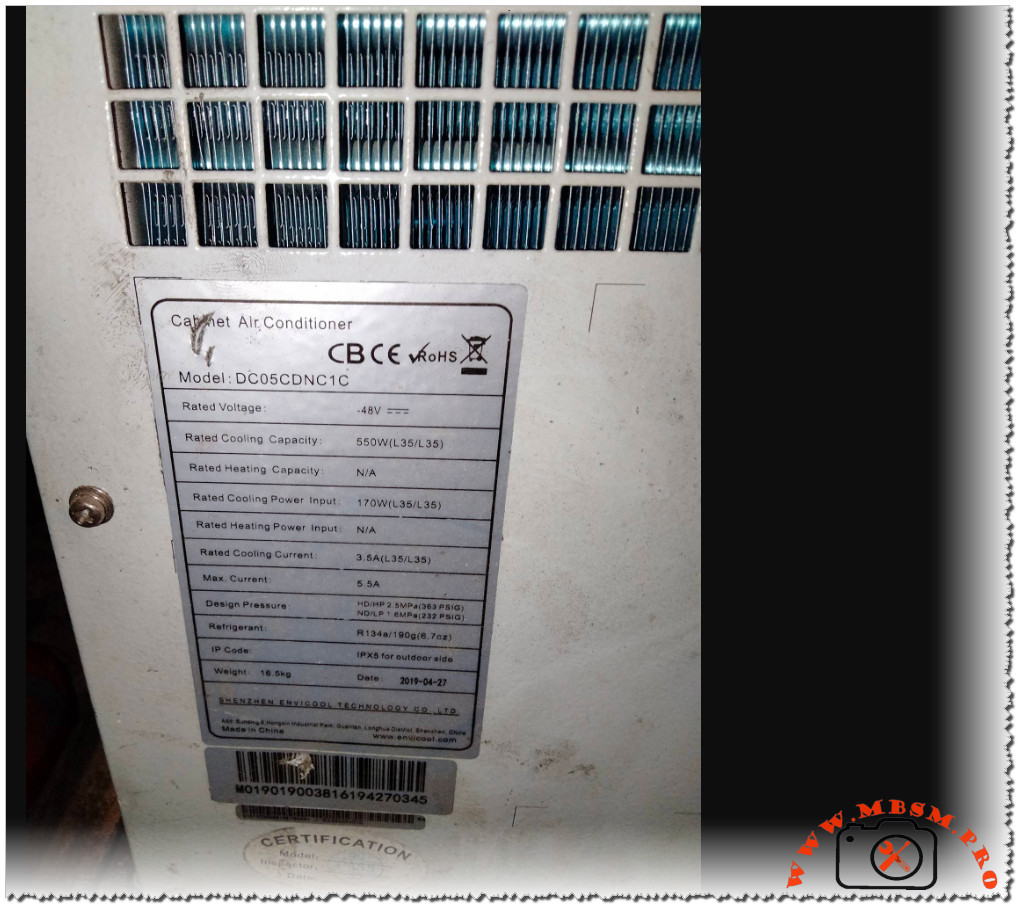
The nameplate in the photo clearly identifies the unit as a Cabinet Air Conditioner – Model DC05CDNC1C manufactured by Shenzhen Envicool Technology Co., Ltd.
It is a 48 VDC powered system using refrigerant R134a, designed specifically for outdoor telecom and electronics cabinets rather than for human comfort cooling.

Main technical specifications

From the label and available product listings, the DC05CDNC1C offers 550 W (≈1700 BTU/h) of rated cooling capacity at test conditions L35/L35, with a rated cooling power input of 170 W, which indicates a high-efficiency DC compressor.
The unit works on –48 V DC, draws a rated current around 3.6 A and a maximum current of 5.5 A, and uses R134a refrigerant within an IP65 enclosure suitable for dusty or rainy outdoor sites.

Key data table

Specification Value
Model DC05CDNC1C cabinet air conditioner
Power supply –48 V DC nominal
Rated cooling capacity 550 W at L35/L35 (≈1700 BTU/h)
Rated cooling input 170 W at L35/L35
Refrigerant R134a
Cooling function Cooling only or cooling + heating (depending on configuration)
Working temperature Approximately –40 °C to +55 °C (typical for this model range)
Protection rating IP65 for outdoor installation
Approx. dimensions 315 × 170 × 545 mm (W×D×H)

Typical applications and installation

This compact DC air conditioner is used on outdoor telecom cabinets, wireless base stations, battery cabinets and other critical enclosures where grid AC power is limited but –48 V DC is available from telecom power systems or solar-hybrid supplies.
Installers mount the unit directly on the cabinet wall, ensuring correct cut-out size, gasket sealing for IP65, and proper connection to the DC power and control terminals according to Envicool’s cabinet air-conditioner manuals.

Advantages for telecom and industrial users

The DC05CDNC1C offers several operational advantages: it reduces energy consumption by using DC power directly without an AC/DC conversion stage, keeps electronics within their design temperature for higher reliability, and protects against dust and moisture thanks to its sealed IP65 construction.
For operators of remote sites, the 48 V DC architecture integrates smoothly with solar and battery systems, helping to maintain cooling even during AC grid outages and extending equipment life in severe climates.


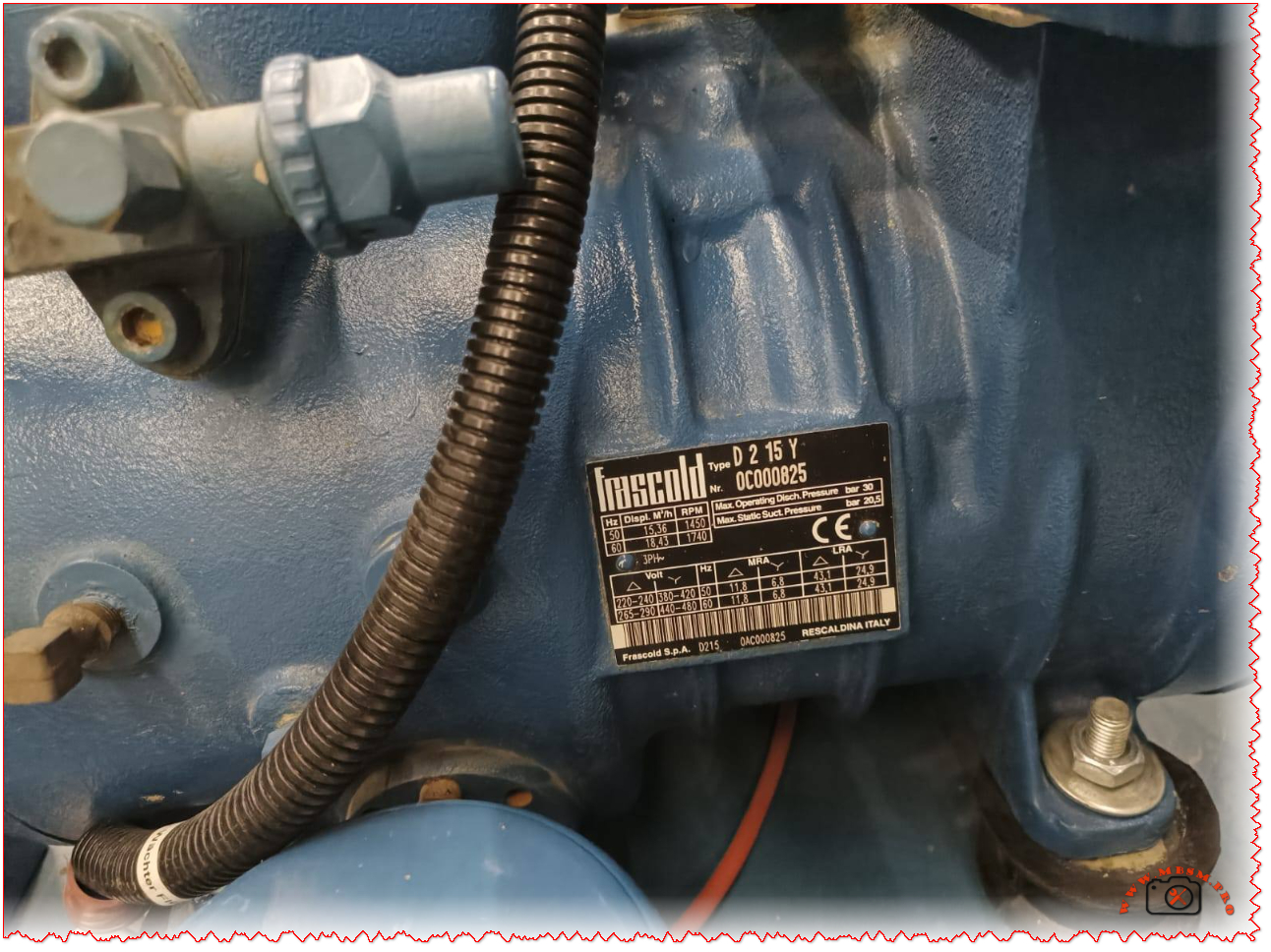
Frascold D2‑15Y / D2‑15.1Y ​

Frascold D2 15Y: semi‑hermetic compressor for reliable commercial refrigeration

General overview

The Frascold D2 15Y is a two‑cylinder, semi‑hermetic reciprocating compressor designed for low‑ and medium‑temperature commercial and industrial refrigeration duties. With a displacement of about 15.4 m³/h at 50 Hz and a nominal motor power of 1.5 kW (2 HP), it fits perfectly in small to medium cold rooms, display cabinets and process coolers.

This model belongs to Frascold’s D series, known for compact cast‑iron bodies, quiet operation and high energy efficiency under EN12900 test conditions. The D2 15Y can be supplied as a bare compressor or integrated into silent condensing units, giving installers flexibility in plant design.

Key technical features

Frascold’s data show that the D2 15Y delivers around 6–7 kW of cooling capacity with R404A in typical low‑temperature duty, depending on evaporating and condensing conditions. The compressor is charged with POE oil (approx. 1.1 L) and uses robust suction and discharge service valves to facilitate commissioning and service.

Electrical supply options usually cover 220–240 V/3/50 Hz and 380–420 V/3/50 Hz (with corresponding 60 Hz variants), allowing use across most European three‑phase networks. The unit is compatible with multiple refrigerants, including R22, R134a, R404A, R507A, R407A/F, and new lower‑GWP blends such as R448A and R449A.

Table – Main data for Frascold D2 15Y

Parameter Typical value
Model D2‑15Y / D2‑15.1Y 
Technology Semi‑hermetic reciprocating, 2 cylinders 
Displacement (50 Hz) 15.36 m³/h 
Nominal motor power 1.5 kW – 2 HP 
Oil charge ≈ 1.1 L POE oil 
Typical cooling capacity ≈ 6.7 kW with R404A (EN12900 reference condition) 
Application Low/medium‑temperature refrigeration (LBP/MBP) 
Compatible refrigerants R22, R134a, R404A, R507A, R407A/F, R448A, R449A 

Benefits for HVACR professionals

Semi‑hermetic design means the D2 15Y can be opened for internal inspection and overhaul, extending service life compared with fully hermetic units in demanding duty cycles. The compressor is also suitable for operation with variable‑frequency drives, enabling smooth capacity modulation from part‑load to peak demand while improving seasonal efficiency.

For contractors and wholesalers, the D2 15Y’s widespread availability and clear documentation (including a dedicated PDF datasheet and full catalog) simplify selection, replacement of legacy units and stocking of spare parts. Its broad refrigerant approval list helps systems transition towards lower‑GWP blends without changing the compressor platform.


Frascold Z40‑154Y

Frascold Z40-154Y is a semi-hermetic reciprocating compressor from Italy, rated at 40 horsepower for refrigeration applications with a displacement of 154 m³/h

Frascold Z40‑154Y 40 HP Italian Freezer Compressor: Full Technical Overview

The photos show a heavy‑duty Frascold semi‑hermetic reciprocating compressor, type Z 40 154 Y, made in Rescaldina, Italy, prepared on pallets and ready for reuse in industrial cold rooms and freezer applications. The metal nameplate is clearly visible, which allows accurate identification of the model, displacement and electrical data, exactly what technicians look for when buying a second‑hand compressor in the field.

Main technical data from the nameplate

On the front plate, the compressor is marked Type Z 40 154 Y, Nr 3B000095, with the manufacturer line “Frascold S.p.A. – Rescaldina Italy”. The first line shows the displacement in cubic metres per hour and the nominal rpm at different frequencies. At 50 Hz, the displacement is listed around 154 m³/h with a speed close to 1450 rpm, while at 60 Hz it rises with a higher rpm figure. The label also shows maximum operating discharge pressure of 30 bar and maximum static suction pressure of 20.5 bar, indicating a machine designed for tough low‑temperature duty in modern refrigerants.​

In the lower section, the electrical box data indicate three‑phase power supply options. Voltages are shown as 380–420 V for 50 Hz and 440–480 V for 60 Hz, with typical MRA and LRA values that help size magnetic contactors and protection devices. This combination of mechanical and electrical information on the nameplate allows installers to check compatibility with existing plants before making any connection on site.​

Construction and visual condition of the compressor

The images reveal a robust cast‑iron body with multiple cylinder heads and a large suction side assembly, typical of Frascold’s Z‑series semi‑hermetic line used in commercial and industrial refrigeration. The compressor sits on a steel base and is coupled to an integrated oil sump, showing the familiar blue Frascold paint, even if dust and minor oxidation are visible after years of service and storage.​

Several units are shown together on wooden pallets, some with pressure switches and control accessories still mounted on the discharge line. This suggests the compressors were removed as complete condensing sets from operating plants, which is often appreciated by technicians who want to reuse existing safety controls, crankcase heaters and connection fittings. The general structure appears intact, without obvious cracks in the casting or broken mounting feet, a key point when evaluating second‑hand equipment.​

Typical applications and performance context

With its 40 HP rating and high volumetric displacement, the Frascold Z40‑154Y is usually selected for low‑temperature freezer rooms, blast freezers and industrial cold storage where evaporating temperatures can reach well below zero and the refrigeration load is very demanding. In many markets around the Mediterranean and Middle East, such compressors are widely used with refrigerants like R404A or direct alternatives specified in Frascold’s official catalogues, always respecting the authorised pressure limits and oil type recommendations.

The multi‑cylinder semi‑hermetic design offers easier maintenance than hermetic units because the heads and valve plates can be opened for inspection, valve replacement or piston work without cutting any welded shell. For owners of older plants, buying a used Italian compressor in good mechanical condition can be an economical way to extend the life of a cold room while still benefiting from European build quality.

Practical buying tips for used Frascold compressors

Before installing a second‑hand Z40‑154Y, technicians usually perform a sequence of standard checks. These include measuring insulation resistance on the motor windings, verifying that the crankshaft turns smoothly by hand, and inspecting for oil leaks around shaft seals and service valves. If the compressor passed a nitrogen pressure test and the oil is reasonably clean, the chances of successful commissioning are significantly higher.

It is also recommended to recover and replace the oil according to Frascold’s documentation and to install new filter‑driers in the system to protect the machine from moisture and acids. Finally, using the exact nameplate data for voltage, frequency and MRA/LRA, the electrician can correctly size breakers, contactors and cables, avoiding nuisance tripping and overheating during the first start‑ups of the refurbished refrigeration unit.


Technical data table (indicative values for Z40‑154Y)

Specification Value / Description
Compressor type Semi‑hermetic reciprocating, Frascold Z40‑154Y
Nominal power Approx. 40 HP
Displacement at 50 Hz About 154 m³/h (nameplate value)
Nominal speed at 50 Hz Around 1450 rpm (nameplate value)
Supply voltage (50 Hz) 380–420 V, 3‑phase
Supply voltage (60 Hz) 440–480 V, 3‑phase
Max operating discharge pressure 30 bar (nameplate)
Max static suction pressure 20.5 bar (nameplate)
Country of manufacture Rescaldina, Italy


 Copeland-15hp

Copeland condensing unit for cold room – features, applications and installation tips

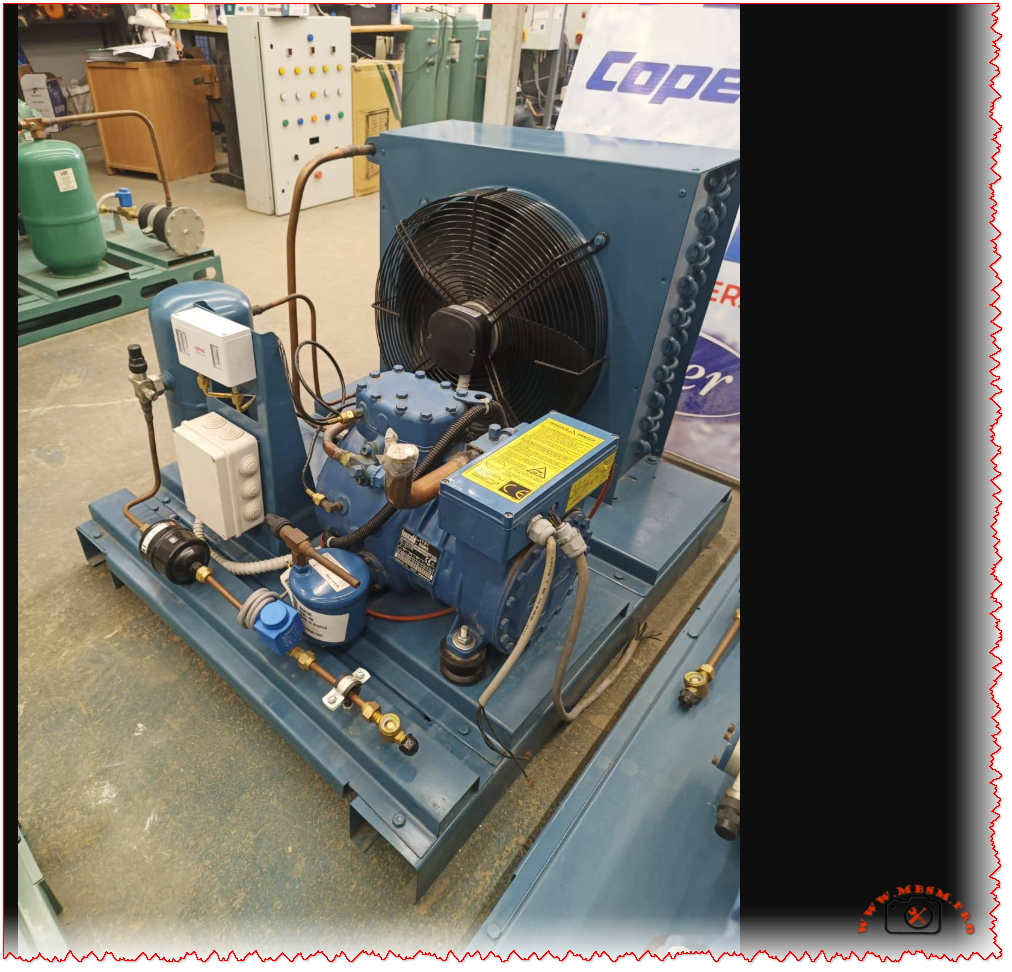
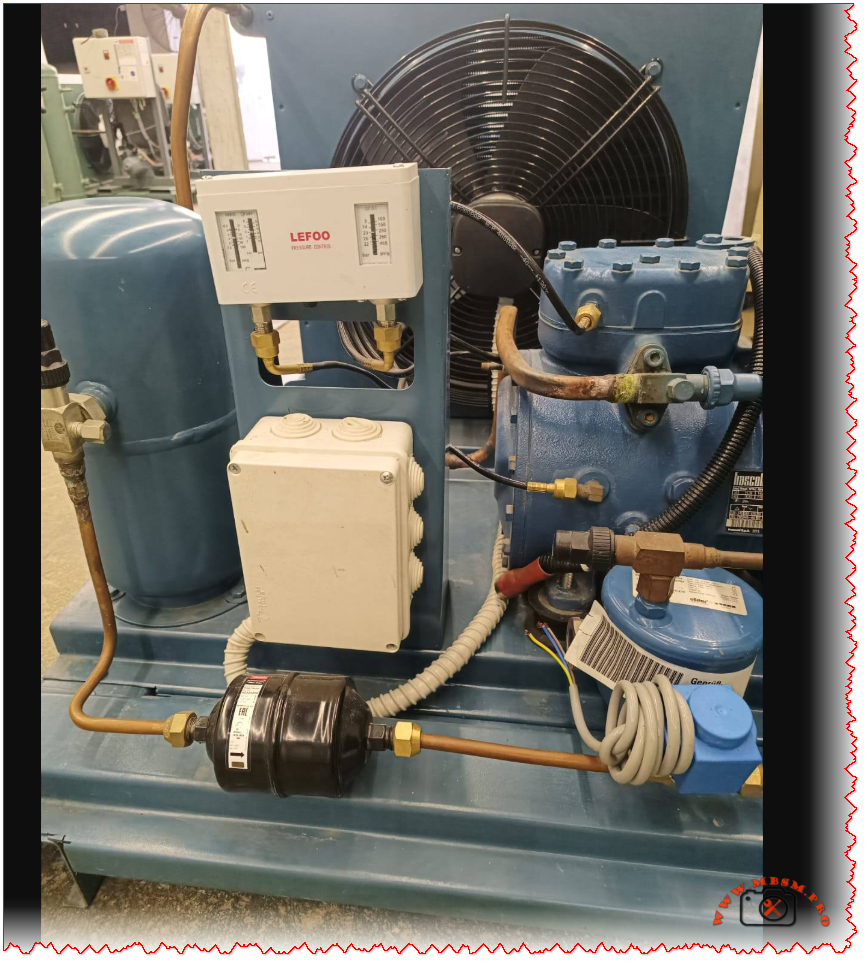
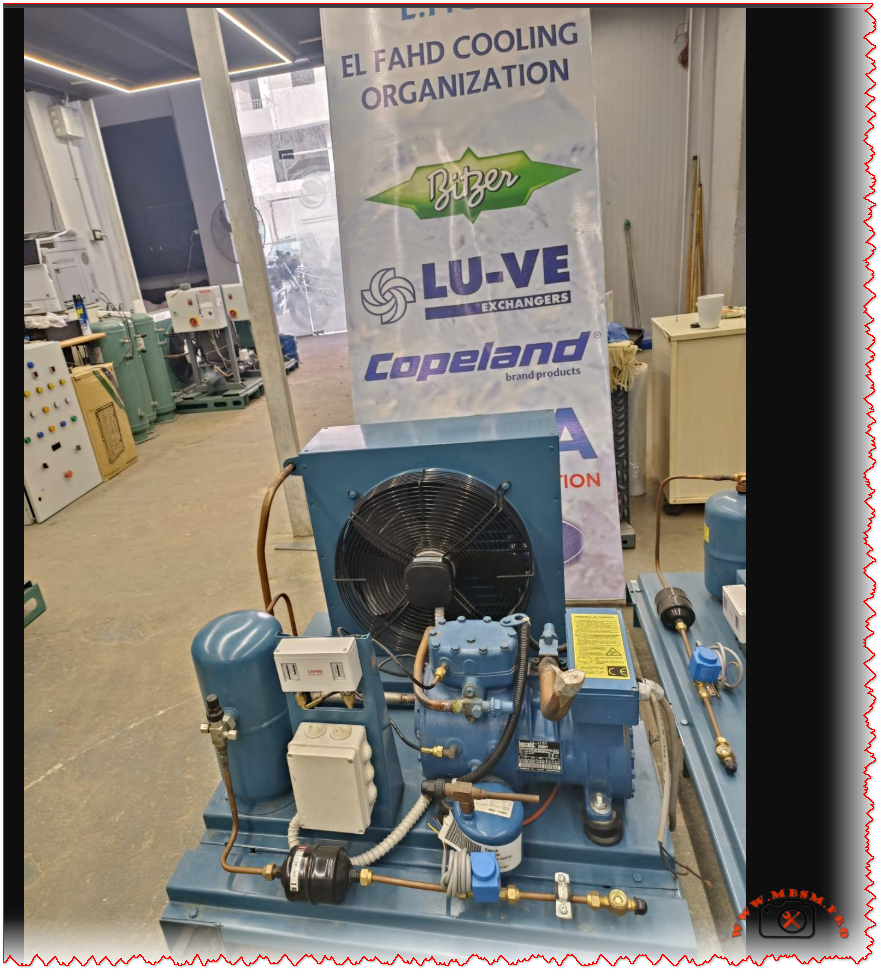
The condensing unit (group) is an original Copeland brand motor rated at 15 horsepower (15 HP), while the evaporator fans are Friga‑Bohn brand (two fans), both in good working condition

Equipment description

The images show a Copeland condensing unit on a steel base, with a semi‑hermetic refrigeration compressor, air‑cooled condenser with dual fans and a vertical liquid receiver, designed for a cold room at positive or low temperature. This configuration is widely used in food retail, cold storage and agro‑food applications where stable temperature and continuous duty are essential.​​

The ceiling‑mounted evaporator with two axial fans distributes the cold air evenly inside the room and returns refrigerant gas to the Copeland compressor through insulated suction and liquid lines. Pairing a Copeland condensing unit with a forced‑air evaporator is a classic solution that remains easy to install, commission and service for professional refrigeration contractors.​​

Copeland brand and technology

Copeland is a global reference in refrigeration compressors, offering scroll, semi‑hermetic and hermetic models with high energy efficiency and broad operating envelopes. Its equipment covers commercial refrigeration from medium‑temperature cold rooms to low‑temperature freezers, helping retailers and logistics operators secure the full cold chain.

Modern Copeland systems often integrate advanced protections, electronic controls and, on some ranges, Digital Scroll technology for capacity modulation, which improves temperature stability and reduces electrical consumption. For installers and companies such as Mbsmgroup or Mbsm.pro, this means more reliable systems, fewer service calls and better seasonal efficiency.

Typical features of Copeland condensing units

Although the exact nameplate of the photographed unit is not readable, Copeland catalogues describe the main features of their condensing unit ranges. These units are available with multiple refrigerants (such as R404A, R134a and newer lower‑GWP blends), and cover a wide capacity range suitable for small to large cold rooms.

Key technical characteristics (catalog examples)

Item Typical Copeland data
Compressor type Scroll or semi‑hermetic reciprocating, multi‑refrigerant, high efficiency. 
Application range Medium and low temperature, roughly from +12 °C down to around −40 °C depending on model. 
Capacity range Models sized for commercial cold rooms, freezers and display cases of various volumes. 
Condenser Quiet axial fans, available in standard or high‑ambient “tropical” versions. 
Options Digital Scroll capacity modulation, electronic controls, liquid line components and safety devices pre‑assembled. 

These catalogue values help technicians choose a replacement unit or design a new installation based on room size, target temperature and local climate.

Installation and maintenance recommendations

When installing or refurbishing a Copeland condensing unit like the one shown, technicians should:

  • Inspect the compressor, liquid receiver and all brazed joints for signs of damage or leaks before charging with refrigerant.
  • Clean the condenser coil and verify fan operation to ensure proper condensing pressure and avoid high‑pressure trips.

It is also important to select a refrigerant approved for the specific Copeland model (as listed in the product catalogue) and to follow the prescribed oil type and charge. Adding appropriate protections – high/low pressure switches, crankcase heater, motor protection and an electronic temperature controller – increases system reliability and extends the service life of the equipment.


FFI10HAK-FFI10HAKW

Embraco FFI10HAKW compressor nameplate: key data and professional overview

The Embraco FFI 10HAKW is a hermetic reciprocating compressor, 220–230 V single‑phase, designed for low and medium back pressure refrigeration systems using R134a. It delivers around 1/3 HP with a 9.04 cm³ displacement, fitting many small commercial cabinets, coolers, and display fridges.​​

Main technical specifications

The nameplate in the image shows model FFI 10HAKW, voltage 220–230 V~ and frequency 50–60 Hz, which allows operation on most European and international single‑phase networks. It is thermally protected and approved for refrigerant R134a, with locked‑rotor current around 17–18 A, and is manufactured in Brazil for the Embraco/Nidec APA family.​​

Technical data table

Specification Value (typical)
Model FFI10HAK / FFI10HAKW ​
Compressor type Hermetic reciprocating, on‑off 
Displacement 9.04 cm³ 
Voltage / phase / freq. 220–230 V, 1~, 50/60 Hz ​
Refrigerant R134a ​
Application range L/MBP (Low & Medium Back Pressure) 
Motor type RSIR/CSIR, LST starting torque 
Nominal motor power ≃ 1/3 HP 
Cooling capacity at −10 °C evap., +45 °C cond. ≃ 401–510 W (EN12900) 

Typical applications in commercial refrigeration

This compressor is commonly used in upright beverage coolers, refrigerated counters, pastry displays and small commercial freezers where compact size and efficient R134a performance are critical. Thanks to its L/MBP envelope and moderate displacement, it suits positive‑temperature cabinets and light low‑temperature duties, such as small freezers or ice‑cream displays.

Selection and replacement guidelines

When replacing an FFI10HAKW, technicians should match displacement, voltage, application range (L/MBP) and refrigerant to ensure similar cooling capacity and reliability. It is good practice to consult the official Embraco datasheet for operating envelopes, oil charge and performance curves, and to respect EN12900/ASHRAE test conditions when comparing with alternative models.


Zener Diode Series 1N746 to 1N5369 Overview

The Ultimate Guide to Zener Diode Series: From 1N746 to 1N5369

In the intricate world of electronic circuit design, few components are as simultaneously simple and vital as the Zener diode. Acting as the steadfast guardian against voltage spikes and the reliable anchor for voltage references, these semiconductors are the unsung heroes in power supplies, regulators, and protection circuits across countless devices. Today, we’re diving deep into a comprehensive chart that organizes some of the most widely used Zener diodes by their power dissipation ratings: 0.5 Watt, 1 Watt, and 5 Watt.

Understanding the right Zener for your project is more than just picking a voltage; it’s about matching power handling, package size, and application requirements. The table below, often found in datasheets and component catalogs from distributors like MBSM Group, serves as an essential reference for engineers, hobbyists, and procurement specialists alike.

Zener Diode Voltage & Part Number Reference Chart

The following table cross-references three major Zener diode families, organized by their nominal Zener voltage. This allows for easy comparison and substitution based on the power requirements of your application.

0.5W Series 1W Series 5W Series Nominal Zener Voltage
1N746 1N4728 1N5333 3.3V
1N747 1N4729 1N5334 3.6V
1N748 1N4730 1N5335 3.9V
1N749 1N4731 1N5336 4.3V
1N750 1N4732 1N5337 4.7V
1N751 1N4733 1N5338 5.1V
1N752 1N4734 1N5339 5.6V
1N753 1N4735 1N5340 6.0V / 6.2V*
1N754 1N4736 1N5341 6.8V
1N755 1N4737 1N5342 7.5V
… (and so on, up to 100V)

*Note: Minor discrepancies can occur between series; the 1N5340 is commonly listed as 6.0V, while the 0.5W/1W equivalents are 6.2V. Always consult the specific datasheet.*

Decoding the Ratings: 0.5W vs. 1W vs. 5W

So, what’s the real-world difference between these series? It boils down to power dissipation and physical size.

  • 0.5W Series (e.g., 1N746-1N985): These are typically housed in small glass DO-35 packages. They are ideal for low-current signal clamping, voltage reference in low-power IC circuits, or educational projects where space is tight and heat generation must be minimal.
  • 1W Series (e.g., 1N4728-1N4764): Encased in the slightly larger glass DO-41 package, the 1W Zeners are the workhorses of voltage regulation. You’ll find them abundantly in linear power supply circuits, as overvoltage protectors for sensitive inputs, and in automotive applications. They offer a robust balance of capability and size.
  • 5W Series (e.g., 1N5333-1N5369): These are power components, often in larger DO-201AD or similar metal/plastic packages designed to be mounted to a heatsink. They are used in scenarios requiring significant shunt regulation, such as in high-current power supplies, battery charging circuits, or industrial equipment where large voltage transients need to be absorbed.

Choosing the correct series is critical. Using a 0.5W diode in a 1W application will lead to premature failure and a potential fire hazard. Conversely, using a 5W diode where a 0.5W would suffice is an inefficient use of board space and budget.

Practical Applications in Circuit Design

How are these components used? Let’s look at two classic examples:

  1. Voltage Regulation: A 1N4733A (5.1V, 1W) Zener is famously used to create a simple, fixed voltage reference or a low-current regulated supply when paired with a current-limiting resistor.
  2. Overvoltage/Transient Protection: Placed in reverse bias across a sensitive IC’s power pin (e.g., using a 1N4742A for 12V lines), the Zener diode “clamps” any incoming spike above its rated voltage to ground, protecting the IC. The higher-power 5W series excel in protecting entire power rails.

Sourcing and Reliable Information

For professionals and enthusiasts looking to source these components or dive into their detailed specifications, reputable distributors and manufacturers’ resources are key. Here are some valuable links:

  • Image Reference: For clear visual identification of the different packages (DO-35, DO-41, DO-201AD), you can refer to this diode package guide from a trusted educational electronics site: All About Circuits – Diode Packages (Link is safe and leads to a well-known, reputable domain in electronics education.)
  • Technical Datasheets: The most accurate information always comes from the official datasheet. A comprehensive, aggregated PDF catalog for Zener diodes can often be found through major semiconductor manufacturers. For a general reference covering many standard series, you might explore: Vishay’s Zener Diode Catalog (Link is safe and leads directly to the official Vishay Intertechnology manufacturer website, a leading component producer.) Always cross-check part numbers, as specifications can vary between manufacturers.

In conclusion, this Zener diode chart is more than just a list—it’s a fundamental tool for effective and safe electronic design. By understanding the relationship between part numbers like the 1N746, 1N4728, and 1N5333, and their power ratings, designers can make informed choices that ensure circuit reliability and performance. Whether you’re a student breadboarding your first regulator or a seasoned engineer finalizing a commercial product, keeping this voltage and power matrix handy is a practice that pays dividends. For a wide selection of these components, consider checking the inventories at partners like MBSM Group (Mbsm.pro).