AC vs DC Refrigerator Compressors

AC vs DC Refrigerator Compressors mbsmpro

Mbsmpro.com, Refrigerator Compressors, AC vs DC, Digital Inverter, Energy Saving, Low Noise, Precise Temperature Control, Home and Commercial Cooling

AC vs DC Refrigerator Compressors: The New Battle Inside Your Fridge

Refrigerator compressors are moving from simple AC motors to sophisticated DC inverter technology that promises lower bills, less noise, and tighter temperature control. DC inverter compressors now dominate premium refrigerators, while classic AC units remain attractive where upfront cost is critical.​

Core Principles of AC and DC Compressors

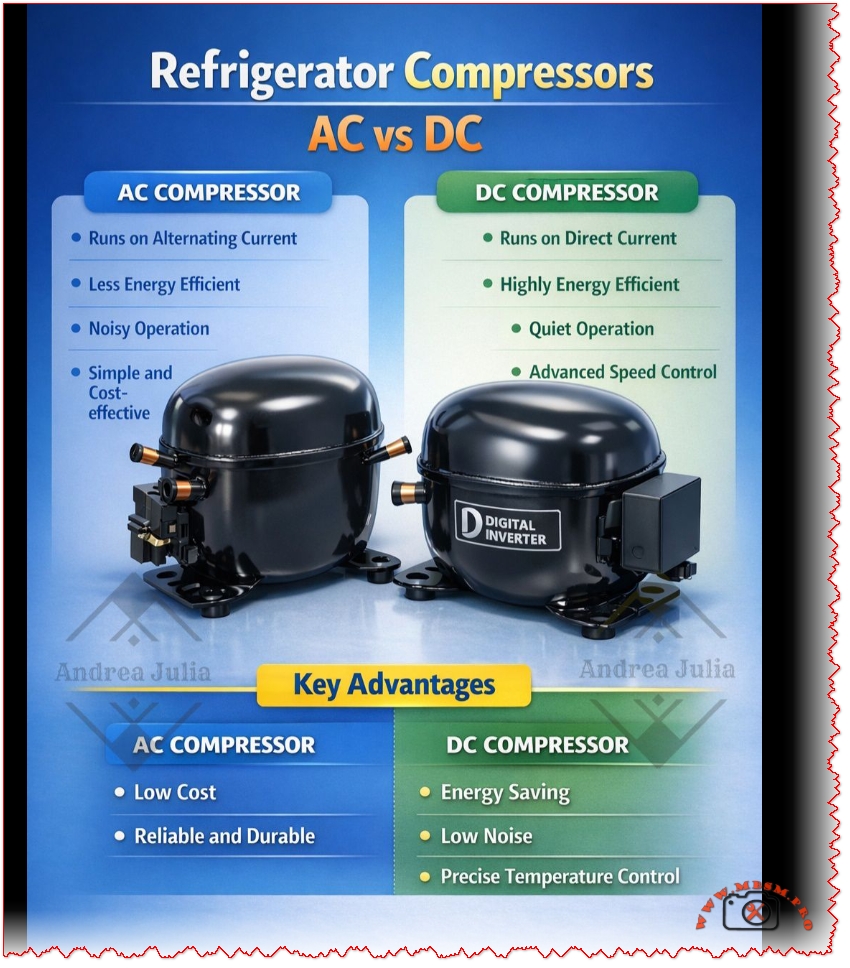
  • AC refrigerator compressors use alternating current and usually work ON/OFF at fixed speed; the thermostat starts and stops the motor when cabinet temperature crosses the set point, which wastes energy in frequent restarts.​
  • DC inverter compressors run on direct current and adjust speed continuously by changing voltage and frequency, matching cooling capacity to real load instead of cycling at full power.​​
  • This variable‑speed strategy cuts start‑up current peaks, improves part‑load efficiency, and keeps evaporator temperature more stable than fixed‑speed AC designs.​​

Technical Comparison: AC vs DC Compressors

Operating characteristics

  • AC compressors behave like a binary switch: either maximum capacity or stopped, which increases mechanical stress and temperature swings inside the refrigerator compartment.​
  • DC compressors modulate rotation speed; at light load they run slowly, reducing compression ratio and internal losses while still maintaining required suction pressure.​​
  • Inverter control electronics rectify the AC mains, then generate controlled DC power for the brushless motor so the system can follow fine temperature commands from the controller.

Energy and performance

  • Tests on household units show DC inverter refrigerator compressors can cut electricity use by around 20–30 % compared with equivalent fixed‑speed AC models, especially in part‑load operation.​​
  • More precise temperature control improves food quality and reduces frost build‑up, which further improves long‑term efficiency by keeping heat‑exchange surfaces cleaner.​​

Performance Table: AC vs DC Refrigerator Compressors

Criterion AC Compressor (Fixed‑Speed) DC Inverter Compressor
Power supply 1‑phase AC mains, typically 220–240 V 50 Hz in domestic fridges Rectified to DC, controlled by inverter electronics ​
Control mode ON/OFF cycling at single speed Variable‑speed, continuous modulation ​
Typical energy use Baseline; higher at part‑load due to frequent starts About 20–30 % lower consumption in comparable fridges ​
Noise level Noticeable start/stop clicks and vibration Significantly quieter; soft start and smoother rotation ​
Temperature stability Wider swings around set point Tight, stable cabinet temperature, better food preservation ​
Purchase cost Lower compressor and control cost Higher due to inverter electronics and BLDC motor ​
Best use cases Budget fridges, simple commercial units, robust environments Premium domestic fridges, solar/off‑grid systems, medical and high‑value storage ​

Economic and Practical Trade‑Offs

  • In many markets, the added cost of a DC inverter refrigerator can be recovered in a few years purely through lower electricity bills, especially where tariffs are high or usage is continuous.​​
  • AC compressors remain competitive in low‑cost appliances and in regions with unstable power quality, because they use simpler starting gear and cheaper spare parts.​
  • For OEMs, copper windings, precision machining, and control electronics are key cost drivers; optimizing these elements can cut compressor manufacturing cost by about 10 % without sacrificing performance.

Application Comparisons Beyond Domestic Refrigeration

1. Solar and mobile refrigeration

  • DC compressors powered directly from 12 V or 24 V battery systems avoid inverter losses and are now common in RVs, boats, telecom shelters, and off‑grid vaccine coolers.
  • Their compact form factor and high part‑load efficiency make them ideal for portable coolers and mini freezers where every amp‑hour matters.

2. Air conditioning and heat pumps

  • In AC and heat‑pump systems, inverter compressors use the same DC modulation principle to deliver faster pull‑down and quieter operation while reducing energy use and vibration.
  • Variable‑speed technology combined with economizer or vapor‑injection circuits further boosts heating capacity at low ambient temperature, as seen in modern R410A DC EVI compressors.​

3. Commercial refrigeration

  • Conventional fixed‑speed hermetic AC compressors still dominate walk‑in coolers and supermarket cases because of their low cost and well‑known service procedures.​
  • However, new digital inverter and scroll solutions can provide up to 40 % better energy efficiency and noticeably lower greenhouse‑gas emissions compared with legacy constant‑speed compressors.

Extended Specification Table: AC, DC Inverter, and Inverter Scroll

Feature Classic AC Hermetic DC Inverter Hermetic Digital/Inverter Scroll
Motor type Induction, fixed‑speed Brushless DC with inverter AC or BLDC with digital/inverter control ​
Typical capacity control 0 or 100 % 20–120 % continuous modulation 10–100 % through digital or speed modulation ​
Start current 4–8× running current (needs PTC or relay) Soft‑start; close to running current Soft‑start via inverter; reduced grid impact ​
COP at part‑load Drops sharply High COP due to optimized speed High, especially in comfort AC 
Maintenance Simple, widely available spares Electronics sensitive to surge and moisture Requires trained technicians and diagnostics ​
Typical noise Higher cycling noise Very low continuous hum Low; suited for residential AC 

Choosing Between AC and DC Compressors

  • For home refrigerators, DC inverter models are now the best choice when long‑term energy savings, low noise, and food quality are priorities, even if initial price is higher.​​
  • For entry‑level appliances or harsh workshop environments, robust AC compressors remain relevant thanks to their simplicity and lower replacement cost.​​
  • In specialized segments such as medical cold chains, telecom shelters, and high‑end commercial cabinets, DC and inverter compressors offer clear advantages in reliability, temperature accuracy, and total cost of ownership.​​
AC vs DC Refrigerator Compressors mbsmpro


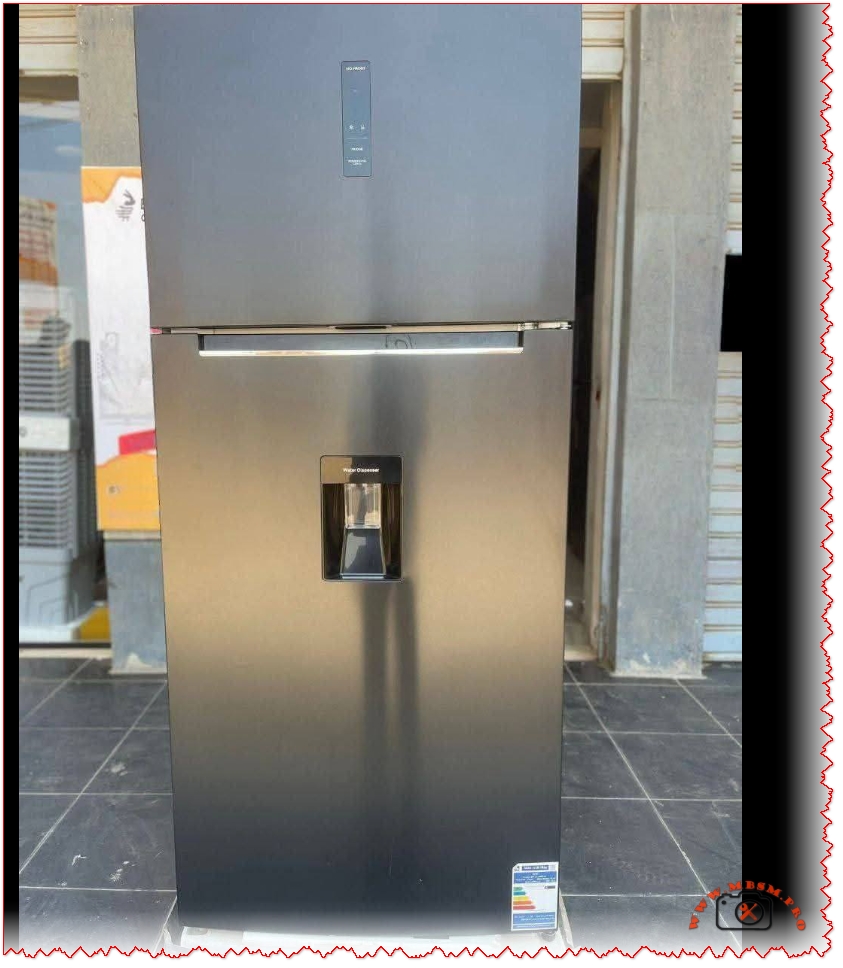
White Whale WR‑5395 HBX, 540L

White Whale WR‑5395 HBX, 540L mbsmpro

White Whale 540L Black No Frost Refrigerator with Water Dispenser – Full Technical Look with Compressor Power

Reference model and compressor power

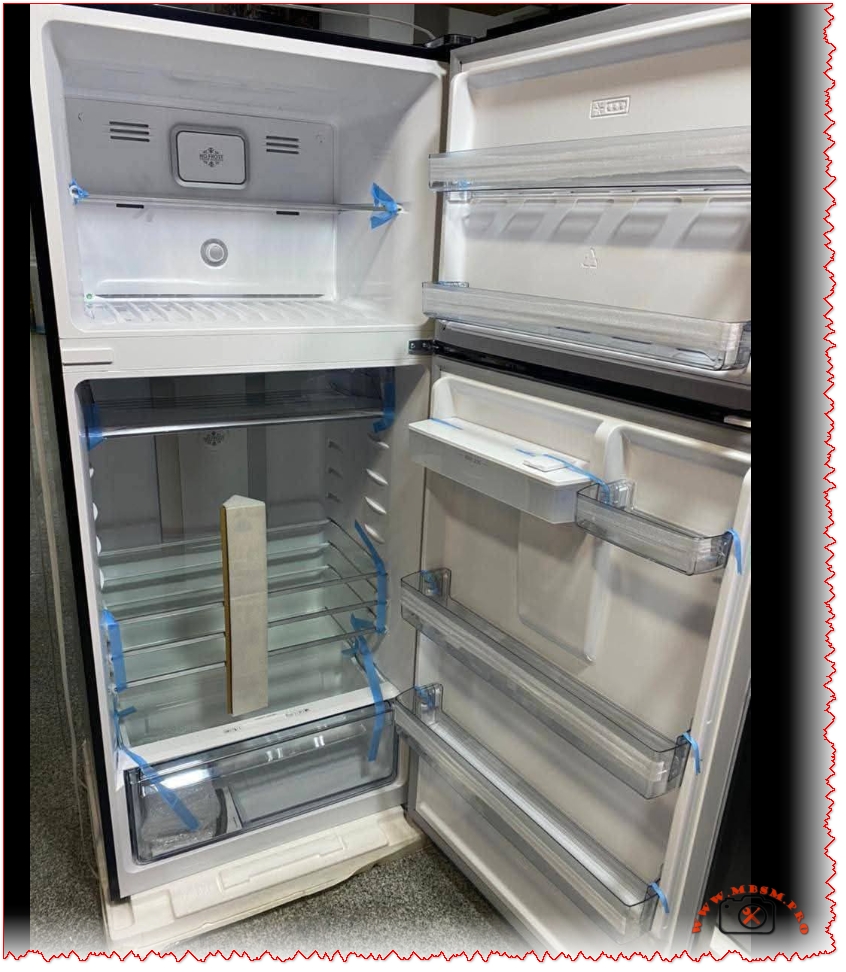
The refrigerator in your photos corresponds to the top‑mount White Whale WR‑5395 HBX: a 540‑liter, black, No Frost, 2‑door model with water dispenser and inverter compressor.
Official and retailer specification pages list the capacity, dimensions, features, and inverter motor, but they do not publish compressor horsepower (HP) or input wattage (W) for this model; only general “energy‑saving inverter motor” information is provided.

From similar 540L top‑mount inverter refrigerators, the compressor input is typically in the 180–260 W range, which corresponds to approximately 1/4 to 1/3 HP in residential R600a systems, but this is an engineering estimate, not an official White Whale figure.
For an exact HP or watt rating you would need either the compressor nameplate (inside or on the back of the unit) or a factory data sheet from White Whale’s technical support, because public catalogues for WR‑5395 HBX only state “inverter compressor / energy‑saving motor” without power numbers.


Updated article with explicit reference

White Whale 540L Black No Frost Refrigerator WR‑5395 HBX with Inverter Compressor and Water Dispenser

The White Whale WR‑5395 HBX is a 540‑liter black top‑mount refrigerator aimed at families who need generous storage, efficient cooling, and a modern look in one appliance.
It combines a full No Frost system, inverter compressor, digital control and a built‑in water dispenser, making it one of the most attractive options in White Whale’s large‑capacity range.

Design and layout

  • Sleek black or black‑glass door finish with a slim horizontal handle and integrated dispenser on the refrigerator door.
  • Inside, the cabinet offers adjustable tempered‑glass shelves, large vegetable drawer, multiple door balconies and bright LED interior lighting for clear visibility.

Cooling system and compressor

  • The WR‑5395 HBX uses a No Frost, multi‑airflow cooling system that keeps a stable temperature and prevents ice build‑up in both freezer and fridge compartments.
  • An inverter compressor modulates its speed according to cooling demand, cutting energy consumption and noise while maintaining fast pull‑down and a quick‑freeze mode in the top freezer.
  • Public datasheets do not disclose the exact compressor HP or watt input, but White Whale and retailer pages only describe it as an “energy‑saving inverter motor” without numeric power ratings.

Typical power range (engineering estimate)

  • Comparable 540L, No Frost, inverter top‑mount refrigerators with R600a usually run compressors rated between 180 W and 260 W, which equates to roughly 1/4–1/3 HP under nominal conditions.
  • This range is offered as a technical approximation based on similar‑size inverter models; for installation, warranty or spare‑part selection, always rely on the actual compressor label or an official White Whale technical sheet for WR‑5395 HBX.

Main technical specifications

Item Specification
Reference model White Whale WR‑5395 HBX.
Type Top‑mount, 2‑door refrigerator with freezer on top.
Capacity 540 liters net (family‑size cabinet).
Cooling system Full No Frost, multi‑airflow.
Compressor Inverter compressor (power not stated in public catalogues).
Estimated compressor range Around 180–260 W, approx. 1/4–1/3 HP (non‑official engineering estimate based on similar 540L inverters).
Color Black / black stainless, with matching handle line.
Water dispenser Built‑in cold‑water dispenser in fridge door.
Digital display Digital control for cooling and quick‑freeze functions.
Dimensions About 184 × 80 × 71 cm (H × W × D).
Doors 2 doors; the 540L family also includes 4‑door inverter black model WR‑9399AB‑INV.
Interior lighting Internal LED lighting.

Practical buying notes

This refrigerator suits users who want a large, family‑size fridge with No Frost convenience, inverter efficiency and a black, contemporary finish.
If you need exact compressor HP or wattage—for example, to size an inverter, voltage stabiliser or replacement compressor—check the compressor nameplate on the back of the unit or request a detailed technical datasheet from White Whale service using the WR‑5395 HBX model code.