Role of Current Relays in Compressor Ignition
Role of Current Relays in Compressor Ignition mbsmpro

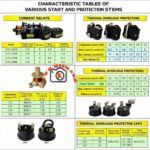
Mbsmpro.com, Compressor Spare Parts, Relays, Thermal Overload Protectors, 1/2 hp to 1/6 hp, Start and Protection Stems, Characteristic Tables

Selecting the right electrical components is the heartbeat of refrigeration maintenance. When a compressor fails to start or constantly trips, the culprit is often a mismatched Current Relay or a fatigued Thermal Overload Protector. Ensuring these parts align perfectly with the compressor’s horsepower (HP) and amperage rating is not just about repair—it is about system longevity.

The Role of Current Relays in Compressor Ignition

Current relays are electromagnetic switches that momentarily engage the start winding of a compressor. Once the motor reaches approximately 75% of its rated speed, the relay disconnects the start winding, allowing the motor to run on its main winding.

Technical Specifications for Standard Current Relays

Model Compressor Power (HP) Terminal Pin Applied Current (A)
117U 2010 1/3 HP 5 4.5 A
117U 2100 1/4 HP 6 3.6 A
117U 2104 1/5 HP 4 6.5 A
117U 2050 1/2 HP 1 1.4 A

Thermal Overload Protectors: The Safety Net

Thermal Overload Protectors (TOP) act as a bimetallic fuse. They monitor both the heat generated by the compressor and the current flowing through it. If the compressor stalls (locked rotor) or overheats due to a refrigerant leak, the TOP breaks the circuit to prevent the motor windings from melting.

Performance Benchmarks for Overload Protectors

Compressor Power (HP) Max Connect Current (A) Release Current (A)
1/2 HP 12.5 A 5.0 A
1/3 HP 9.0 A 4.75 A
1/4 HP 8.0 A 4.0 A
1/5 HP 7.5 A 3.5 A
1/6 HP 7.0 A 3.0 A

Comparison: Mechanical Relays vs. PTC Starters

While the technical data above focuses on mechanical current relays, modern systems often use PTC (Positive Temperature Coefficient) starters.

  • Mechanical Relays (117U Series): Highly reliable for heavy-duty applications. They provide a “snap” action that is better for high-torque starts.
  • PTC Starters: Use a solid-state disk that increases resistance as it heats up. They are quieter but require a cool-down period before the compressor can restart.

Engineering Advice for Field Technicians

  1. Never Oversize the Protector: If you install a 1/2 HP protector on a 1/6 HP compressor, the protector will not trip during a fault, leading to a burnt-out compressor.
  2. Check the Return Temperature: Thermal caps must operate within a return temperature range of 60 ± 10°C. Anything higher indicates a system restriction or lack of airflow over the condenser.
  3. Terminal Integrity: Ensure terminals are tight. A loose connection creates resistance, which generates heat and causes “nuisance tripping” of the overload.

Focus Keyphrase: Compressor Current Relay and Thermal Overload Protector Characteristic Tables for 1/2 to 1/6 HP

SEO Title: Mbsmpro.com | Compressor Start Relays & Thermal Overload Tables

Meta Description: Comprehensive guide to compressor start and protection stems. Technical tables for 117U relays and thermal overload protectors from 1/2 HP to 1/6 HP. Essential data for HVAC engineers.

Slug: compressor-relay-thermal-overload-characteristic-tables

Tags: Mbsmgroup, Mbsm.pro, mbsmpro.com, mbsm, Compressor Parts, Start Relay, Thermal Overload, Refrigeration Repair, 117U Relay, HVAC Engineering, Compressor Protection.

Excerpt: Selecting the right electrical components is the heartbeat of refrigeration maintenance. When a compressor fails to start or constantly trips, the culprit is often a mismatched Current Relay or a fatigued Thermal Overload Protector. Ensuring these parts align perfectly with the compressor’s horsepower (HP) and amperage rating is vital for long-term system reliability.
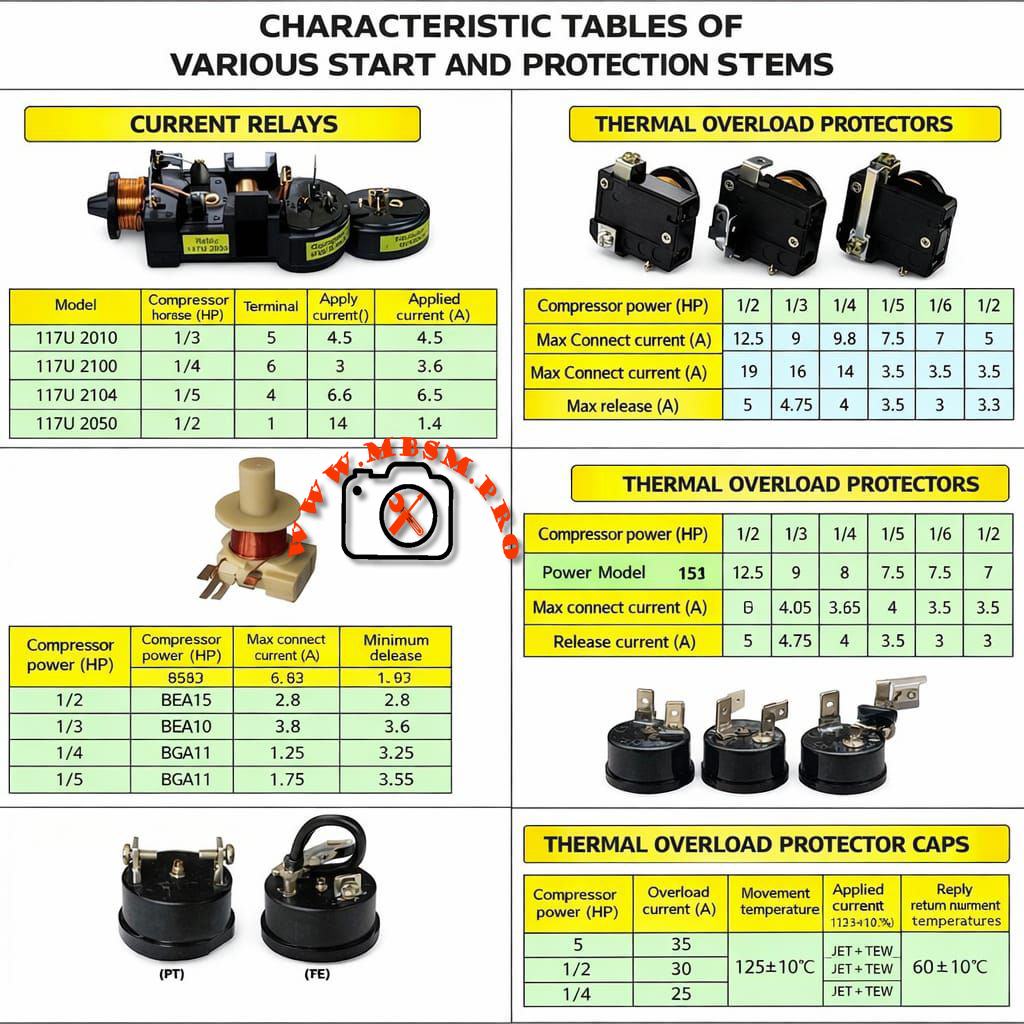

Role of Current Relays in Compressor Ignition mbsmpro


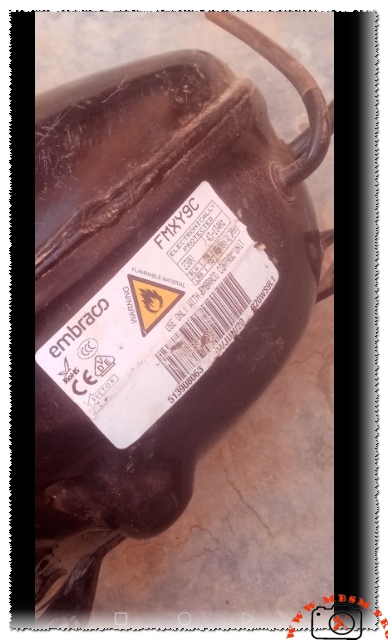
Mbsmpro.com, Compressor, FMXY9C, 1/5 hp, Inverter, Fullmotion, R600a, 230V 43-134Hz, LBP, Variable Speed, High Efficiency

Mbsmpro.com, Compressor, FMXY9C, 1/5 hp, Inverter, Fullmotion, R600a, 230V 43-134Hz, LBP, Variable Speed, High Efficiency mbsmpro

Over my decades in the refrigeration trenches, I have seen the industry shift from robust, “clunky” fixed-speed pumps to the sophisticated whispering of variable-capacity units. When I walk up to a modern high-end residential refrigerator and hear that signature high-pitched ramp-up, I know I am likely dealing with an Embraco FMXY9C. These “Fullmotion” inverter compressors are the gold standard for energy efficiency today, but for many technicians, they remain a “black box” of mystery. If the cabinet is warm and you don’t hear that specific harmonic hum, you are likely looking at a complex dance between the inverter control board and the compressor windings.

Mastering the FMXY9C: The Engineer’s Technical Breakdown

The FMXY9C is not your grandfather’s compressor. As a Senior Engineer, I categorize this as a Variable Capacity Compressor (VCC). Unlike standard units that are either “On” or “Off,” this unit varies its speed between 43Hz and 134Hz. This allows the refrigerator to maintain a near-constant temperature without the massive energy spikes associated with traditional startup cycles.

Feature Technical Specification
Model FMXY9C
Utilisation (MBP/HBP/LBP) LBP (Low Back Pressure)
Domaine (Freezing/Cooling) Domestic Freezing & Cooling
Oil Type and Quantity Alkylbenzene (AB) / 180 ml
Horsepower (HP) 1/5 HP (Equivalent at 3000 RPM)
Refrigerant Type R600a (Isobutane)
Power Supply 230V (3-Phase output from Inverter)
Frequency Range 43 Hz to 134 Hz
Cooling Capacity (BTU/h) 280 – 850 BTU/h (Variable)
Motor Type BPM (Brushless Permanent Magnet)
Displacement 8.74 cm³
Winding Material Copper
Pressure Charge (Low Side) 0.5 to 1.5 psi (Running)
Capillary Tube Size 0.026″ or 0.031″ (Application dependent)
Refrigerator Compatibility High-end Samsung, LG, Whirlpool, Bosch
Temperature Function -35°C to -10°C (-31°F to 14°F)
Fan Requirement No (Static) or Yes (Enclosed cabinet)
Commercial Application No (Domestic Only)
Amperage (Running) 0.4A to 1.5A (Varies by speed)
LRA (Locked Rotor Amps) N/A (Electronically limited)
Relay Type None (Direct Inverter Control)
Capacitor None (Handled by Inverter Board)

The Engineer’s Secret: Diagnostic Logic for Inverter Systems

In my experience, the most common mistake field workers make is trying to “jump-start” this compressor directly from a wall outlet. Do not do this. You will instantly destroy the permanent magnet motor.

To diagnose a suspected FMXY9C failure, I follow this non-negotiable protocol:

  1. The Resistance Equilibrium: Disconnect the three-pin plug. Measure the resistance between all three pins (U, V, W). You should find near-identical readings (typically between 10 to 16 ohms depending on ambient temp). If one leg is “open” or significantly higher, the compressor is dead.
  2. The Inverter Signal Test: If the windings are balanced, the fault usually lies in the Embraco Control Unit. Check for the DC signal from the main logic board to the inverter. If the control board isn’t sending the “frequency command,” the compressor will never ramp up.
  3. The R600a Warning: This unit uses Isobutane. I always use a “No-Flame” approach (Locring or high-quality compression fittings) unless I have a fully purged environment. Isobutane is highly flammable, and safety is paramount when opening these systems.

Comparison: FMXY9C vs. Standard Fixed-Speed Compressors

Feature FMXY9C (Inverter) EMY70CLP (Fixed Speed)
Energy Efficiency Up to 40% Higher Baseline
Temperature Swing ±0.5°C ±2.0°C
Noise Levels 32-34 dBA 38-42 dBA
Start-up Stress Soft-start (Low stress) High Torque (High stress)
Repair Complexity High (Requires Electronics expertise) Low (Mechanical/Relay focus)

Professional Replacement Guide

When replacing an FMXY9C, you must stay within the inverter family. You cannot replace this with a standard R134a or R600a fixed-speed motor without replacing the entire control system of the refrigerator.

5 Direct Replacements (R600a Inverter Series)

  1. Embraco VEMZ 9C: The high-efficiency sibling, often a drop-in replacement.
  2. Secop (Danfoss) DLX7.0KK: A robust European alternative with similar displacement.
  3. Jiaxipera VNT1113Y: Frequently found in Chinese-manufactured high-end units.
  4. LG BSA075NHMV: Excellent reliability if mounting brackets align.
  5. Panasonic CBE series (Inverter): High-end Japanese alternative, very quiet.

5 Technical Alternatives (Different Gas/Type – Major Retrofit Required)

Warning: These require changing the control board and refrigerant circuit.

  1. Embraco VEGY 8H (R134a Inverter)
  2. Secop NLE15KTK (R290 – High efficiency but different pressure)
  3. Embraco FFI 10HBK (Fixed Speed R134a – Requires “Hardwire” hack)
  4. Tecumseh AE4440Y (Fixed Speed – Commercial grade)
  5. Danfoss FR10G (Heavy duty domestic)

Installation Masterclass & Pro Tips

  • Vacuum Depth: Because R600a systems use very small charges (often less than 60g), moisture is a system-killer. I never stop until my micron gauge hits 250 microns.
  • Filter Drier: Always use a drier specifically rated for R600a. Standard R134a driers may have desiccant that reacts poorly with isobutane over long periods.
  • Charging Precision: Do not charge by pressure. You must use a digital scale accurate to 1 gram. A 5-gram error is enough to cause evaporator flood-back or poor cooling performance.

Question: Can I use a regular start relay on the FMXY9C for testing?
Answer: Absolutely not. This compressor requires a pulsed 3-phase signal generated by the inverter control unit. Applying 230V AC directly to the pins will result in permanent internal damage to the windings and the magnetic rotor.


Focus Keyphrase: Embraco FMXY9C Inverter Compressor Technical Guide

SEO Title: Mbsmpro.com, Compressor, FMXY9C, 1/5 hp, Inverter, R600a, 230V 43-134Hz

Meta Description: Expert guide for the Embraco FMXY9C Inverter Compressor. Technical specs, R600a safety, 1/5 HP equivalent, LBP diagnostic tips, and professional replacement options for HVAC technicians.

Slug: mbsmpro-embraco-fmxy9c-inverter-compressor-guide

Tags: Mbsmgroup, Mbsm.pro, mbsmpro.com, mbsm, FMXY9C, Embraco Fullmotion, R600a Inverter Compressor, 1/5 HP Compressor, VCC Troubleshooting, Refrigerator Repair, Secop DLX7.0KK, Jiaxipera VNT1113Y, LG BSA075NHMV, Inverter Board Diagnosis, HVAC Engineering, Refrigeration Pro Tips.

Excerpt: The Embraco FMXY9C is a high-efficiency inverter compressor designed for modern R600a refrigeration systems. Operating at variable speeds between 43Hz and 134Hz, this unit offers superior energy savings. This guide provides technical specifications, diagnostic protocols for technicians, and a list of compatible replacements to ensure a professional-grade repair every single time.

Mbsmpro.com, Compressor, FMXY9C, 1/5 hp, Inverter, Fullmotion, R600a, 230V 43-134Hz, LBP, Variable Speed, High Efficiency mbsmpro


Defrost Timer Module

Defrost Timer Module mbsmpro

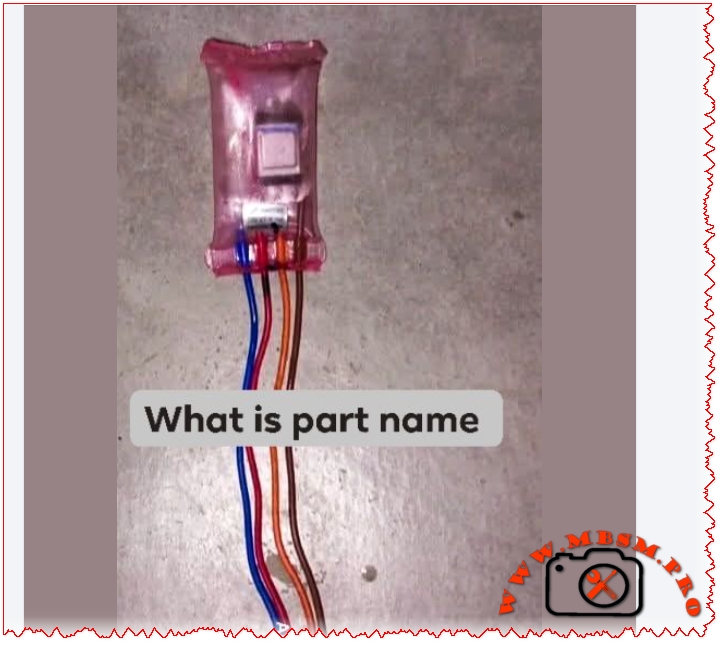
Mbsmpro.com, Universal Electronic Defrost Timer Module, Refrigerator Control, 220-240V, 50/60Hz, 10A, Compressor Control, Defrost Cycle, Wiring Schematic, HVAC Repair

The Ultimate Guide to the Universal Electronic Defrost Timer Module: Engineering and Field Application

In the demanding world of professional refrigeration repair, adaptability is the hallmark of a master technician. When high-end electronic control boards fail and original replacements are obsolete or unavailable, the Universal Electronic Defrost Timer Module emerges as the definitive solution. This solid-state powerhouse is designed to bypass complex circuitry, providing a reliable, long-term fix for domestic and commercial cooling systems.

Technical Characteristics and Operating Principles

Unlike traditional mechanical timers that rely on a motorized gear train, this electronic module utilizes a microchip to manage timing cycles. This eliminates the risk of mechanical wear and “stuck” gears, which are the primary causes of evaporator freeze-ups.

Specification Detail / Value
Input Voltage 220V – 240V AC
Frequency 50 / 60 Hz
Maximum Current (Compressor) 10 Amps (Inductive)
Maximum Current (Defrost) 5 Amps (Resistive)
Defrost Interval Fixed 6 or 8 Hours (Model Dependent)
Defrost Duration Fixed 20 to 25 Minutes
Housing High-Insulation Heat-Shrink Polymer
Operating Temperature -10°C to +55°C

Comparison: Mechanical vs. Electronic Defrost Timers

Understanding the shift from mechanical to electronic components is vital for modernizing older units.

Feature Mechanical Timer Electronic Module
Reliability Prone to gear failure High (No moving parts)
Noise Level Audible clicking/humming Completely silent
Accuracy Varies with motor wear Digital precision
Vibration Resistance Low (Internal pins can shift) High (Solid-state encapsulation)
Size Bulky, requires mounting bracket Compact, fits inside wire looms

Advanced Wiring Schematic for Technicians

To successfully integrate this module into a refrigerator, one must identify the primary power feeds and load lines. Below is the standard industrial wiring configuration for these four-wire universal modules:

  • Line 1 (Phase): Usually connected to the Brown or Black wire.
  • Neutral (N): Connected to the Blue wire.
  • Compressor Output (Terminal 4 equivalent): Connected to the Red wire.
  • Defrost Heater Output (Terminal 2 equivalent): Connected to the Orange wire.

Engineer’s Note: Always verify the color coding with a multimeter before final soldering, as some manufacturers may swap the Orange and Red functions depending on the production batch.

Installation Strategy and Field Advice

When performing a “board bypass,” the objective is to restore the basic cooling logic: Compressor Run -> Accumulated Time -> Defrost Cycle -> Repeat.

  1. Thermal Protection: Ensure the defrost heater circuit remains in series with the original Bimetal Thermostat and Thermal Fuse. Never bypass safety components.
  2. Placement: Although encapsulated, avoid placing the module in areas prone to direct moisture or heavy vibration from the compressor.
  3. Connection Integrity: Use high-quality crimp connectors or solder with heat-shrink tubing to prevent oxidation in high-humidity environments.

Benefits of Using the Universal Electronic Module

  • Versatility: Compatible with almost all non-inverter brands including LG, Samsung, Whirlpool, and Daewoo.
  • Durability: The solid-state design handles voltage fluctuations better than traditional mechanical motors.
  • Compact Design: Its slim profile allows it to be tucked away inside the compressor compartment or the rear wiring panel.

Focus Keyphrase: Mbsmpro.com Universal Electronic Defrost Timer Module Wiring Schematic and Refrigerator Repair Guide for Technicians

SEO Title: Mbsmpro.com | Universal Electronic Defrost Timer | Wiring & Specs

Meta Description: Master the installation of the Universal Electronic Defrost Timer Module. Includes wiring schematics, technical specs, and professional HVAC repair advice.

Slug: universal-electronic-defrost-timer-wiring-schematic-mbsmpro

Tags: Mbsmgroup, Mbsm.pro, mbsmpro.com, mbsm, Refrigerator Repair, Defrost Timer, HVAC Engineering, Solid State Control, Cooling System Modification, Compressor Wiring

Excerpt: The Universal Electronic Defrost Timer Module is a critical component for modernizing refrigerator repairs. Designed to replace failing mechanical timers and expensive control boards, this solid-state device offers unmatched reliability. Featuring a 220V input and 10A capacity, it ensures precise timing for compressor operation and defrost cycles in various domestic refrigeration brands.


Defrost Timer Module mbsmpro


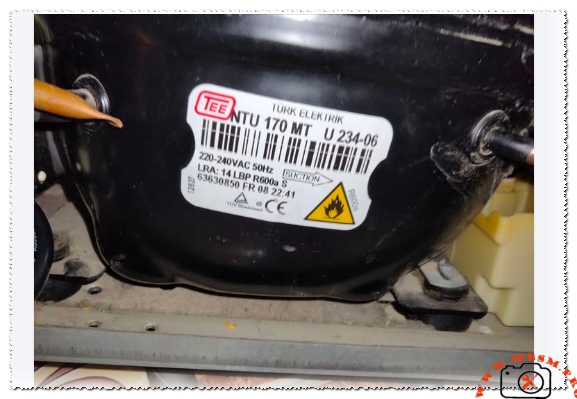
TEE NTU 170 MT Compressor 1/4 HP R600a

TEE NTU 170 MT Compressor 1/4 HP R600a mbsmpro

Focus Keyphrase: TEE NTU 170 MT Compressor 1/4 HP R600a Low Back Pressure Technical Specifications and Replacement Guide

SEO Title: Mbsmpro.com, Compressor, NTU 170 MT, 1/4 hp, TEE, Cooling, R600a, 204 W, 0.9 A, 1Ph 220-240V 50Hz, LBP, RSIR, -35°C to -10°C

Meta Description: Technical analysis of the TEE NTU 170 MT compressor. Discover 1/4 HP power specs, R600a efficiency, LBP cooling capacity, wiring diagrams, and cross-reference replacement charts.

Slug: compressor-tee-ntu170mt-r600a-1-4-hp-specs

Tags: Mbsmgroup, Mbsm.pro, mbsmpro.com, mbsm, TEE, Turk Elektrik, NTU 170 MT, R600a, 1/4 HP Compressor, LBP, Refrigerator Repair, HVAC Engineering, EMT2121U, HTK12AA, HMK12AA, NT1114Y, HYB12MHU, GL90AA, FFI7.5HAK, NL7F

Excerpt: The TEE NTU 170 MT is a high-efficiency hermetic reciprocating compressor designed for low back pressure applications using R600a refrigerant. Known for its reliability in household refrigeration, this unit operates at 220-240V 50Hz. This article explores its technical specs, cooling capacity, and suitable replacements for HVAC technicians and engineers worldwide.


The Engineering Excellence of the TEE NTU 170 MT: A Deep Dive into R600a Refrigeration

In the evolving world of domestic refrigeration, efficiency and environmental impact are the primary drivers of innovation. The TEE NTU 170 MT, manufactured by Turk Elektrik, stands as a testament to these principles. As a Low Back Pressure (LBP) compressor optimized for R600a (isobutane), this model has become a staple in modern household refrigerators and freezers across Europe and the Middle East.

Understanding the NTU 170 MT Architecture

The NTU 170 MT is engineered to handle the unique thermodynamic properties of R600a. Unlike older R134a systems, R600a operates at lower pressures but requires a larger displacement to achieve comparable cooling capacities. This compressor utilizes a robust motor designed for RSIR (Resistive Start – Inductive Run) operation, ensuring a reliable start even under varying voltage conditions typically found in domestic environments.

The “MT” series is specifically calibrated for high-performance cooling while maintaining a low noise floor. With a Locked Rotor Amperage (LRA) of 14A, it demonstrates significant starting torque, which is essential for overcoming the initial pressures of the refrigeration cycle after a defrost period.

Technical Specification Table

Feature Specification
Model NTU 170 MT
Utilisation LBP (Low Back Pressure)
Domaine Freezing / Deep Cooling
Oil Type and Quantity Mineral Oil (approx. 180 ml)
Horsepower (HP) 1/4 HP
Refrigerant Type R600a (Isobutane)
Power Supply 220-240VAC / 50Hz / 1Ph
Cooling Capacity BTU ~700 BTU/h (at -23.3°C Evaporating Temp)
Motor Type RSIR
Displacement 11.20 cc
Winding Material High-Grade Copper
Pression Charge 0.5 to 1.2 Bar (Low side depending on load)
Capillary Recommendation 0.031″ ID x 3 meters (approximate)
Temperature Function -35°C to -10°C
Cooling System Static (No fan required for compressor)
Commercial Class Domestic / Light Commercial
Amperage (FLA) 0.8 A – 1.0 A
LRA (Locked Rotor) 14 A
Relay Type PTC Starter
Capacitor Not required (RSIR), Optional Run Cap for CSIR conversion

Electrical Wiring Schema (RSIR Configuration)

For field technicians, understanding the terminal configuration is vital. The TEE NTU 170 MT follows the standard triangular pin layout:

  1. Common (C): Top pin (typically connected to the overload protector).
  2. Start (S): Right pin (connected to the PTC relay for starting).
  3. Main/Run (M): Left pin (connected to the neutral line).

Schema Logic:
[Line] -> [Overload Protector] -> [Common Pin]
[Neutral] -> [PTC Relay] -> [Main Pin] & [Start Pin (Momentary)]

Performance Comparison: R600a vs. R134a Equivalents

When comparing the NTU 170 MT to R134a units of similar horsepower, several differences emerge. The R600a model offers a superior Coefficient of Performance (COP).

Metric TEE NTU 170 MT (R600a) Equivalent R134a Model (e.g., GL90AA)
Efficiency (COP) 1.45 – 1.55 W/W 1.20 – 1.35 W/W
Operating Pressure Low / Vacuum High
Eco-Impact GWP 3 (Low) GWP 1430 (High)
Noise Level Very Low Moderate

Compatibility and Replacement Guide

Finding a direct replacement requires matching the displacement and the LBP characteristic. Below are the recommended alternatives for the NTU 170 MT.

Top 5 Replacements (R600a – Same Gas):

  1. Embraco: EMT2121U
  2. Secop (Danfoss): HTK12AA
  3. ACC / Cubigel: HMK12AA
  4. Jiaxipera: NT1114Y
  5. Huayi: HYB12MHU

Top 5 Replacements (R134a – Conversion Required):
Note: Converting from R600a to R134a requires a full system flush, capillary adjustment, and oil compatibility check.

  1. Zem: GL90AA
  2. Embraco: FFI 7.5HAK
  3. Secop: TLES7.5KK.3
  4. Tecumseh: THB1375YSS
  5. Carlyle: S26SC

Engineering Notices and Maintenance Tips

  • Vacuuming Procedure: Due to the hygroscopic nature of the systems and the low pressures of R600a, a deep vacuum (minimum 200 microns) is mandatory. R600a systems are highly sensitive to non-condensables.
  • Charging Safety: R600a is flammable. Always ensure the work area is well-ventilated. Use a dedicated electronic scale, as the charge weight is significantly lower than R134a (often only 40-60 grams).
  • Filter Drier: Always replace the filter drier with one specifically labeled for R600a (XH-9 or equivalent) during any compressor swap.
  • Capillary Blockage: Because R600a operates at lower discharge temperatures, carbonization is rare, but moisture-related ice blockages are common if the system is not perfectly dry.

Benefits for the End-User

Using a TEE NTU 170 MT ensures the refrigerator operates with minimal energy consumption. For the homeowner, this translates to lower electricity bills and a quieter kitchen environment. For the technician, the wide availability of parts for the TEE/Arçelik ecosystem makes it a preferred choice for long-term maintenance.

TEE NTU 170 MT Compressor 1/4 HP R600a mbsmpro


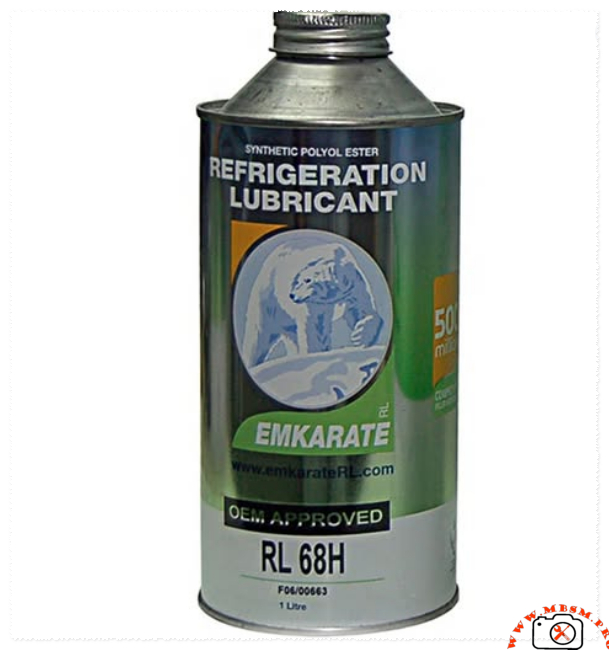
Emkarate RL 68H Compatibility Chart with HFC HCFC HFO

RL 68H POE Oil with R600 Refrigerant mbsmpro

Focus Keyphrase: Emkarate RL 68H Compatibility Chart with HFC HCFC HFO and Hydrocarbon Refrigerants

SEO Title: Mbsmpro.com, Emkarate RL 68H, Refrigeration Lubricant, POE Oil, Refrigerant Compatibility, R134a, R404A, R600a, R22, Ammonia Warning

Meta Description: Technical analysis of Emkarate RL 68H POE lubricant compatibility. Detailed guide on using synthetic oil with HFC, HCFC, HFO, and Hydrocarbon refrigerants like R600a.

Slug: emkarate-rl-68h-refrigerant-compatibility-technical-guide

Tags: Emkarate RL 68H, POE Lubricant, Refrigerant Compatibility, R134a, R600a, R22, Ammonia Compatibility, Mbsmgroup, Mbsm.pro, mbsmpro.com, mbsm, Synthetic Oil, Compressor Maintenance

Excerpt: Emkarate RL 68H is a high-performance synthetic polyol ester (POE) lubricant designed for modern refrigeration systems. Understanding its chemical compatibility across different refrigerant generations—from HFCs like R134a to hydrocarbons like R600a—is vital for system longevity. This guide breaks down compatibility, technical reasons for usage, and critical warnings for technicians.


Mbsmpro.com, Emkarate RL 68H, Refrigeration Lubricant, Synthetic POE, ISO VG 68, Global Refrigerant Compatibility Guide

In the evolving landscape of HVAC-R technology, the choice of lubricant can determine the success or failure of a compressor. Emkarate RL 68H is a premium Synthetic Polyol Ester (POE) lubricant engineered to meet the demands of various cooling systems. As an engineer or field technician, understanding the chemical relationship between this oil and different gas categories is essential for maintaining high efficiency and preventing mechanical breakdown.

Comprehensive Compatibility Analysis: Emkarate RL 68H vs. Refrigerant Categories

The following table outlines how RL 68H interacts with major refrigerant classes, providing the technical reasoning behind each classification based on chemical behavior and miscibility.

Refrigerant Class Common Examples Compatibility Status Technical Reasoning (The “Why”)
HFC (Modern Generation) R134a, R404A, R410A, R407C, R507 Fully Compatible These gases are polar and specifically require POE oils for proper miscibility, ensuring oil returns to the compressor.
HCFC (Legacy Transition) R22, R123, R401A, R402A Compatible Ideal for “Retrofit” operations when converting older systems from Mineral Oil to more environmentally friendly HFC blends.
HFO (Eco-Friendly Gen) R1234yf, R1234ze Compatible Exhibits high chemical stability, making it suitable for new low Global Warming Potential (GWP) refrigerants.
HC (Hydrocarbons) R600a, R290 Chemically Compatible Miscibility is excellent, but viscosity is the barrier; small HC systems typically require lower viscosity (ISO 10-32).
Natural (Carbon Dioxide) R744 Compatible RL 68H is robust enough to handle the high pressures and discharge temperatures typical of CO2 systems.
Ammonia R717 NOT Compatible NEVER use with Ammonia. POE oils react chemically with R717, leading to sludge, corrosion, and system failure.

Deep Dive: The Relationship with R600a and Hydrocarbons

While Emkarate RL 68H is chemically “safe” for R600a (meaning it won’t break down the oil structure), there is a significant engineering caveat regarding Viscosity.

Most domestic R600a compressors are designed for low-viscosity oils (often Mineral or Alkylbenzene). Using an ISO VG 68 oil in a system designed for ISO 15 or 22 creates internal drag. This increased resistance puts unnecessary load on the motor, leading to higher energy consumption and potential starting issues in cold environments. Therefore, while it is compatible in a laboratory sense, it is often too “heavy” for standard domestic refrigerators.


Engineering Value and Performance Comparison

When comparing Emkarate RL 68H to standard Mineral Oils (MO) or lower-grade synthetics, the performance benefits are clear in high-load scenarios.

Stability and Protection Factors:

  • Oxidation Resistance: Synthetic POE resists breakdown much better than mineral oils when exposed to heat.
  • Wear Protection: The film strength of ISO 68 is superior for commercial-grade compressors (e.g., 2 HP to 10 HP units), providing a thick protective layer on bearings.
  • Miscibility Range: It maintains flow and return characteristics across a wider temperature spectrum than traditional lubricants.
Lubricant Property Emkarate RL 68H (POE) Standard Mineral Oil (MO)
Base Fluid Synthetic Ester Petroleum Based
Moisture Sensitivity High (Hygroscopic) Low
Thermal Range Excellent (High/Low) Moderate
Application HFC / Retrofit CFC / HCFC / Ammonia

Expert Notices and Professional Advice

1. The Ammonia Rule:
As highlighted in our compatibility chart, never introduce POE oil into an Ammonia (R717) system. Ammonia requires Mineral Oils (MO) or Polyalphaolefins (PAO). The chemical reaction between POE and Ammonia creates soaps and acids that will destroy the compressor valves and seals.

2. Moisture is the Enemy:
POE oil is “thirsty.” It will pull moisture directly from the air. Always keep the cap tightly sealed. If a bottle has been open for more than a few minutes in a humid environment, its dielectric strength and chemical purity are compromised.

3. Retrofitting Legacy Systems:
When converting an R22 system to an HFC blend (like R422D), RL 68H is the industry standard for flushing. It helps carry residual mineral oil back to the separator, ensuring a clean transition.


Technical Specifications Summary

  • Model: Emkarate RL 68H
  • Viscosity Grade: ISO VG 68
  • Application: Commercial Refrigeration, Industrial Chillers, Retrofitting.
  • Approvals: Approved by major OEMs including Copeland, Bitzer, and Danfoss.

Final Engineering Verdict

The Emkarate RL 68H is a versatile powerhouse for modern HFC and HFO systems. While it offers a bridge for HCFC retrofits and possesses the chemical stability for CO2 and Hydrocarbons, the field technician must always respect the viscosity requirements of the specific compressor model and the strict exclusion of Ammonia environments. Correct lubrication is not just about the gas; it’s about the mechanical harmony of the entire system.

14.5sinfoGoogle AI models may make mistakes, so double-che

RL 68H POE Oil with R600 Refrigerant mbsmpro


mbsmgroup2026-01-16_121136-mbsmpro mbsmpro

Mbsmpro.com, Gree Multi VRF, Error Codes List, Troubleshooting Guide, E1 E2 E3 E4 E5 E6 E9 F1 F2 F3 F4 F5 F6 F7 F8 F9 FA Fb Fc Fd EH, HVAC Diagnostics, Variable Refrigerant Flow Systems


Mastering the Diagnostics of Gree Multi VRF Systems: An Engineering Perspective

In the demanding world of commercial climate control, Multi VRF (Variable Refrigerant Flow) systems represent the pinnacle of efficiency and complexity. As a field engineer who has spent countless hours on rooftops and in mechanical rooms, I understand that an error code is not just a letter and a number; it is a vital communication from the machine’s brain. When a Gree Multi VRF unit halts operation, the diagnostic display becomes your most powerful tool.

Understanding the Logic of Protection and Sensor Errors

Modern HVAC systems are built with a philosophy of “self-preservation.” The error codes displayed on the digital control panel allow technicians to pinpoint whether a fault is mechanical, electrical, or related to the refrigerant cycle. These codes are divided into primary protection triggers (the “E” series) and sensor malfunctions (the “F” series).

Table 1: Primary Protection and Communication Codes

Error Code Description Potential Root Cause Engineer’s Field Action
E1 High-Pressure Protection Blocked condenser, overcharge, or fan failure. Check high-pressure switch and coil cleanliness.
E2 Prevention against low temperature Low airflow or evaporator icing. Inspect filters and indoor blower motor.
E3 Low-pressure protection Refrigerant leak or clogged expansion valve. Leak test and check suction pressure levels.
E4 Exhaust overtemperature Shortage of refrigerant or compressor strain. Verify discharge line temperature and charge.
E5 Overcurrent Protector Voltage instability or compressor seizure. Check supply voltage and compressor windings.
E6 Communication error Wiring fault between indoor and outdoor units. Verify signal wire continuity and shielding.
E9 Water-Full protection Drain pump failure or blocked condensate line. Clean the drain pan and test the float switch.

The Role of Thermistors in System Performance

The “F” series codes are dedicated to the nervous system of the VRF—the sensors. In a Multi VRF environment, accuracy is everything. A deviation of even 2 degrees in a tube-inlet sensor can lead to inefficient cooling or unnecessary system shutdowns.

Table 2: Sensor Diagnostic Logic (Indoor and Outdoor)

Error Code Sensor Location Specific Component Circuit Check
F Indoor Ambient Temperature Check 10k/15k Ohm resistance.
F1 Indoor Tube-inlet Sensor Inspect thermistor contact with piping.
F2 Indoor Tube-middle Sensor Check for moisture ingress in sensor head.
F3 Indoor Tube-exit Sensor Ensure secure connection to the PCB.
F4 Outdoor Ambient Temperature Verify no direct sunlight on the sensor.
F5 Outdoor Tube-inlet Sensor Resistance check vs. temperature chart.
F6 Outdoor Tube-middle Sensor Check for corrosion on the terminal.
F7 Outdoor Tube-exit Sensor Ensure insulation is intact.
F8 / F9 Exhaust Temp Sensor 1 (Fixed) / 2 (Digital) Essential for discharge gas monitoring.
FA / Fb Oil Temp Sensor 1 (Fixed) / 2 (Digital) Critical for compressor lubrication health.

Advanced Valving and Relay Errors

When you encounter codes like Fc or Fd, the system is indicating a mechanical-electronic mismatch. High and Low-pressure valve errors usually point to a failure in the solenoid coil or a stuck valve body. Meanwhile, EH (Thermal Relay Error) is a critical warning that the internal heat protection of a component has been tripped, often due to excessive ambient heat or mechanical friction.

Comparative Analysis: VRF vs. Standard Split Systems

To truly appreciate the diagnostic depth of a Gree Multi VRF, one must compare it to standard residential split systems.

  • Diagnostic Granularity: While a standard split might give a generic “System Fault” blink, the VRF distinguishes between tube-inletmiddle, and exit temperatures. This allows the engineer to calculate the exact superheat and subcooling at different stages of the evaporator.
  • Operational Protection: Conventional systems often run until a mechanical failure occurs. The VRF uses E1 through E4 logic to shut down before the compressor is permanently damaged, saving thousands in repair costs.

Professional Engineering Schema: Communication (E6) Troubleshooting

For electrical diagnostics, specifically for the E6 Communication Error, follow this logic flow:

  1. Isolate Power: Turn off the breaker for both indoor and outdoor units.
  2. Verify Shielding: Ensure the communication cable (usually 2-core or 3-core) is shielded and grounded only at the outdoor unit to prevent EMI (Electromagnetic Interference).
  3. Voltage Check: With power on, measure the DC voltage across the communication terminals. A fluctuating signal (typically between 12V and 24V DC) indicates active data transmission.
  4. Resistor Check: In some daisy-chain configurations, verify if a terminal resistor is required at the end of the line.

Expert Advice and Maintenance Benefits

  • Notice: Never bypass a pressure switch (E1/E3) to “test” the system. These protections are the only thing preventing a catastrophic compressor explosion.
  • Engineering Tip: Most sensor errors (F series) are caused by poor contact or moisture. Before replacing a sensor, clean the terminal with an electronic contact cleaner and ensure the thermistor is tightly clipped to the copper pipe with thermal paste.
  • Benefit: Understanding these codes reduces “part-swapping” syndrome. A technician who knows that E9 is simply a clogged drain can fix the issue in 10 minutes, rather than misdiagnosing a faulty PCB.

Focus Keyphrase: Gree Multi VRF Error Codes Troubleshooting Guide

SEO Title: Gree Multi VRF Error Codes: Expert Troubleshooting Guide (E1-EH)

Meta Description: Decode Gree Multi VRF error codes like E1, E6, and F1. Our engineering guide provides expert solutions for pressure protection, sensor errors, and system diagnostics.

Slug: gree-multi-vrf-error-codes-diagnostics-guide

Tags: Mbsmgroup, Mbsm.pro, mbsmpro.com, mbsm, Gree HVAC, VRF Troubleshooting, Air Conditioning Repair, HVAC Engineering, Error Code E1, Error Code E6, Sensor Calibration, Refrigerant Cycle.

Excerpt: Mastering Gree Multi VRF systems requires a deep understanding of their diagnostic language. From high-pressure protection (E1) to complex sensor logic (F1-F9), this comprehensive guide offers field-proven engineering insights to help technicians identify root causes, perform precise electrical checks, and ensure optimal system performance in commercial environments.


mbsmgroup2026-01-16_121136-mbsmpro mbsmpro
air conditioning repair, Error Code E1, Error Code E6, Gree HVAC, HVAC Engineering, mbsm, mbsm.pro, mbsmgroup, mbsmpro.com, Sensor Calibration, VRF Troubleshooting