Samsung SD162H‑L4UA S01, hermetic , compressor 

Samsung SD162H‑L4UA S01, hermetic , compressor  mbsmpro

Samsung SD162H‑L4UA S01, 1/5 HP, R134a, 200‑220V 50Hz / 220V 60Hz, LBP Refrigerator Compressor – Specifications, Performance Tables, Use & Comparison

Model overview

The Samsung SD162H‑L4UA S01 is a hermetic reciprocating compressor designed for small household refrigerators using R134a refrigerant, with dual‑voltage operation at 200‑220V 50Hz and 220V 60Hz.
It belongs to the SD162 family widely used in under‑counter and reach‑in cabinets where high efficiency, reliable starting, and low noise are required.

Electrical and identification data

This section summarizes the key electrical characteristics typically associated with the SD162H series working with R134a in low back pressure applications.

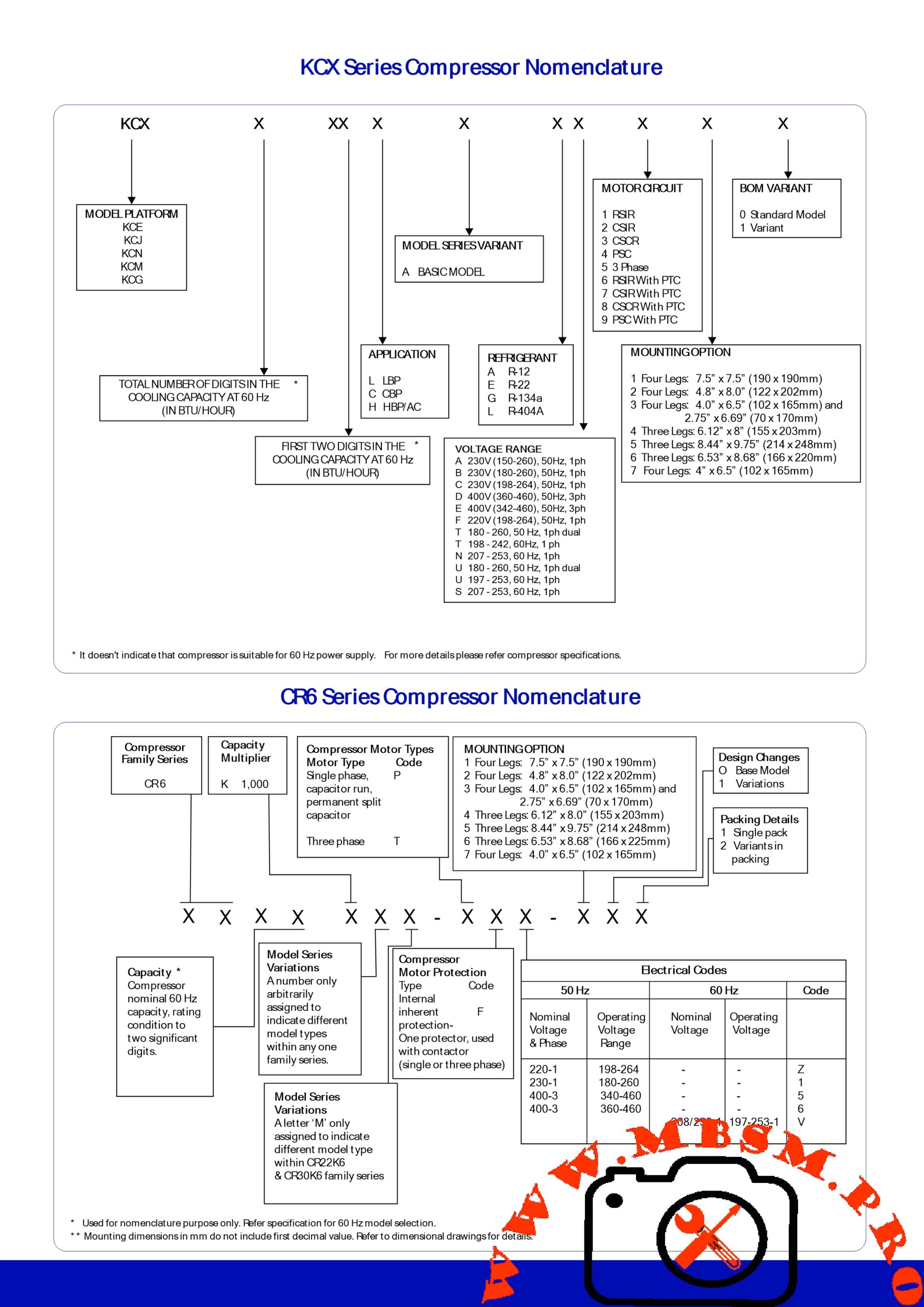
Parameter Samsung SD162H‑L4UA S01 Notes
Manufacturer Samsung Hermetic reciprocating compressor.
Refrigerant R134a Optimized for domestic refrigeration.
Voltage range 200‑220V 50Hz / 220V 60Hz Single‑phase AC power.
Phase 1Ph, thermally protected Internal overload protector.
Locked Rotor Amps (LRA) 5.5 A (label) Indicates starting current peak.
Typical displacement (family) ≈ 6–7 cm³ Comparable to SD162Q‑L1UA at 6.16 cm³.
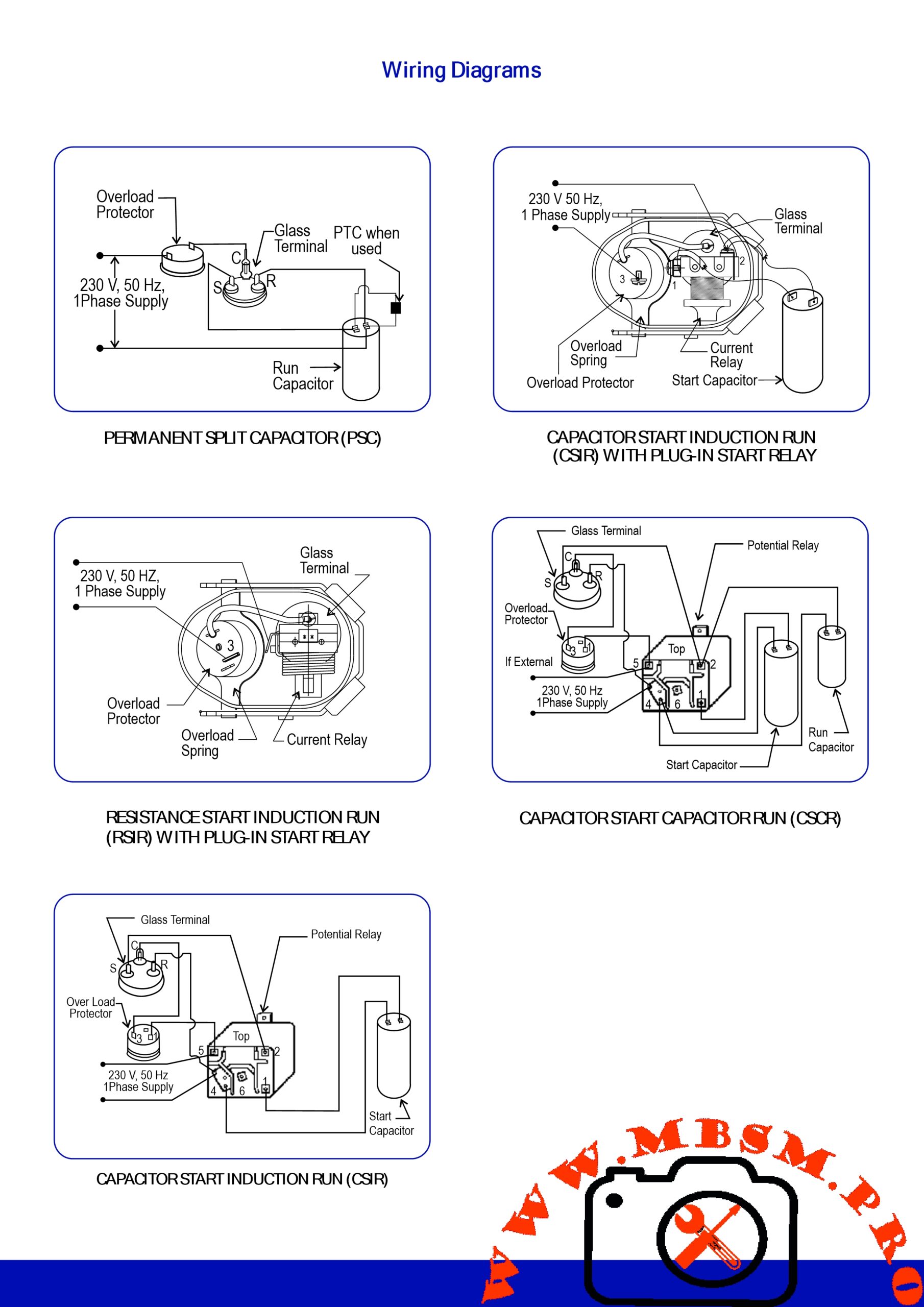
Motor type RSCR / RSIR equivalent Relay start with start capacitor, high starting torque.
Compliance CE, RoHS For household appliances in EMEA.

These values make the Samsung SD162H‑L4UA suitable for compact refrigerators in the 150–250 liter class where moderate starting current and good efficiency are important.

Cooling performance and application range

Samsung does not publish an open public sheet for every sub‑suffix, but performance can be estimated from SD162Q‑L1UA and similar 1/5 HP R134a LBP models.

Operating condition Typical value (SD162 family) Comment
Displacement about 6.1–6.9 cm³ Similar frame size to SD162Q‑L1UA (6.16 cm³).
Nominal power ≈ 1/5 HP Classified for small refrigerator duty.
Evaporating temperature −30 °C to −10 °C LBP range for fresh‑food and freezer compartments.
Condensing temperature ≈ 54 °C (ASHRAE) Standard test condition.
Cooling type Natural convection shell cooling No external fan required.

In practical use this means the compressor can work both in standard refrigerator mode around −10 °C evaporating and in small freezer compartments near −25 °C with reduced capacity but stable operation.

Comparison with similar R134a compressors

To help with replacement and design decisions, the next table compares Samsung SD162H‑L4UA with two other 1/5–1/4 HP R134a hermetic compressors often referenced in technical catalogs.

R134a domestic compressors comparison

Feature Samsung SD162H‑L4UA S01 Samsung SD162Q‑L1UA ACC GL80AN
Refrigerant R134a R134a R134a
Nominal HP 1/5 HP (family) 1/5 HP 1/5 HP
Displacement ≈ 6–7 cm³ 6.16 cm³ 8.1 cm³
Application LBP refrigerator LBP refrigerator HMBP / beverage coolers
Voltage 200‑220V 50Hz / 220V 60Hz 220‑240V 50Hz 220V 50Hz
Motor type RSCR / RSIR PTC‑RSCR RSIR
Typical use Household fridge, small freezer Household fridge, 1‑door / 2‑door Display coolers, merchandisers

Compared with SD162Q‑L1UA, the SD162H‑L4UA keeps similar capacity but offers a label‑specified 5.5 A LRA, which can be interesting when designing systems with modest starting current constraints.
Against ACC GL80AN, the Samsung unit generally has slightly lower displacement, making it better suited to compact cabinets where low noise and reduced energy use are more critical than maximum capacity.

Practical exploitation, reliability and installation tips

In workshop practice the Samsung SD162H‑L4UA S01 is appreciated for:

  • Strong load capacity during pull‑down of warm cabinets, inherited from the SD162 series design.
  • Reliable starting performance thanks to the RSCR/RSIR motor concept combined with an internal thermal protector.
  • Low noise and vibration, making it acceptable for domestic kitchens and small commercial premises.

When using this compressor as a replacement:

  • Match refrigerant (R134a), voltage, and application range (LBP) to the original unit to avoid overheating and low capacity.
  • Keep suction line sizing close to Samsung recommendations in general catalogs to preserve return gas cooling and oil return.
  • Use clean‑brazing practice and always replace the filter‑drier after opening the circuit to protect the compressor against moisture and acids.
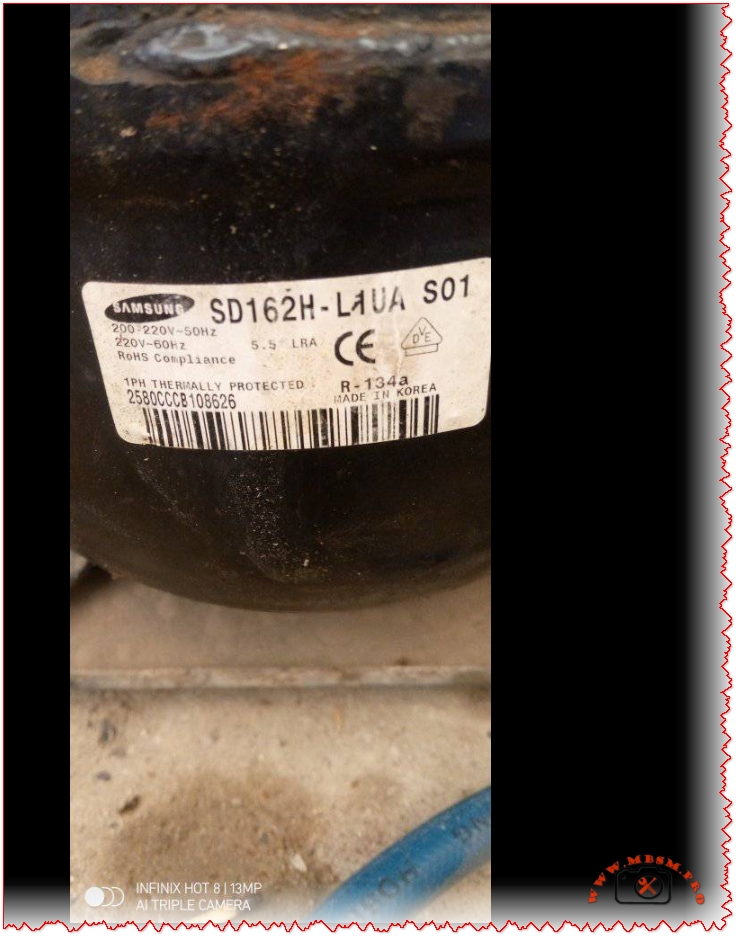
Samsung SD162H‑L4UA S01, hermetic , compressor  mbsmpro


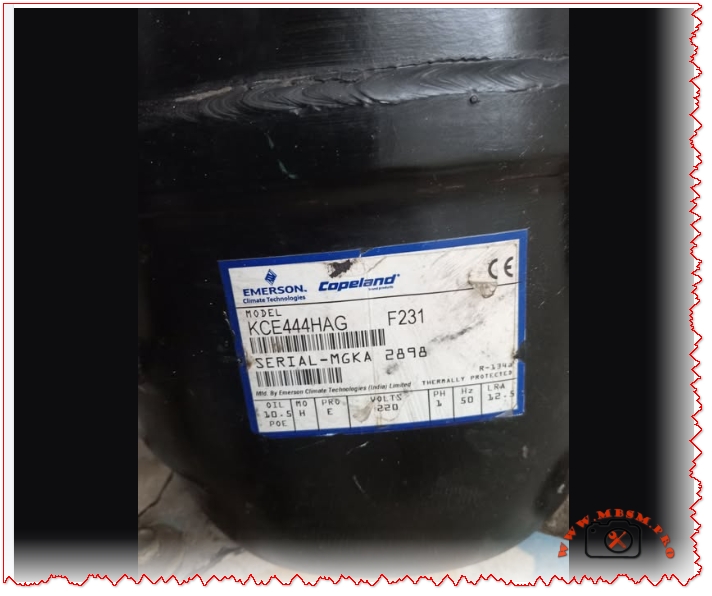
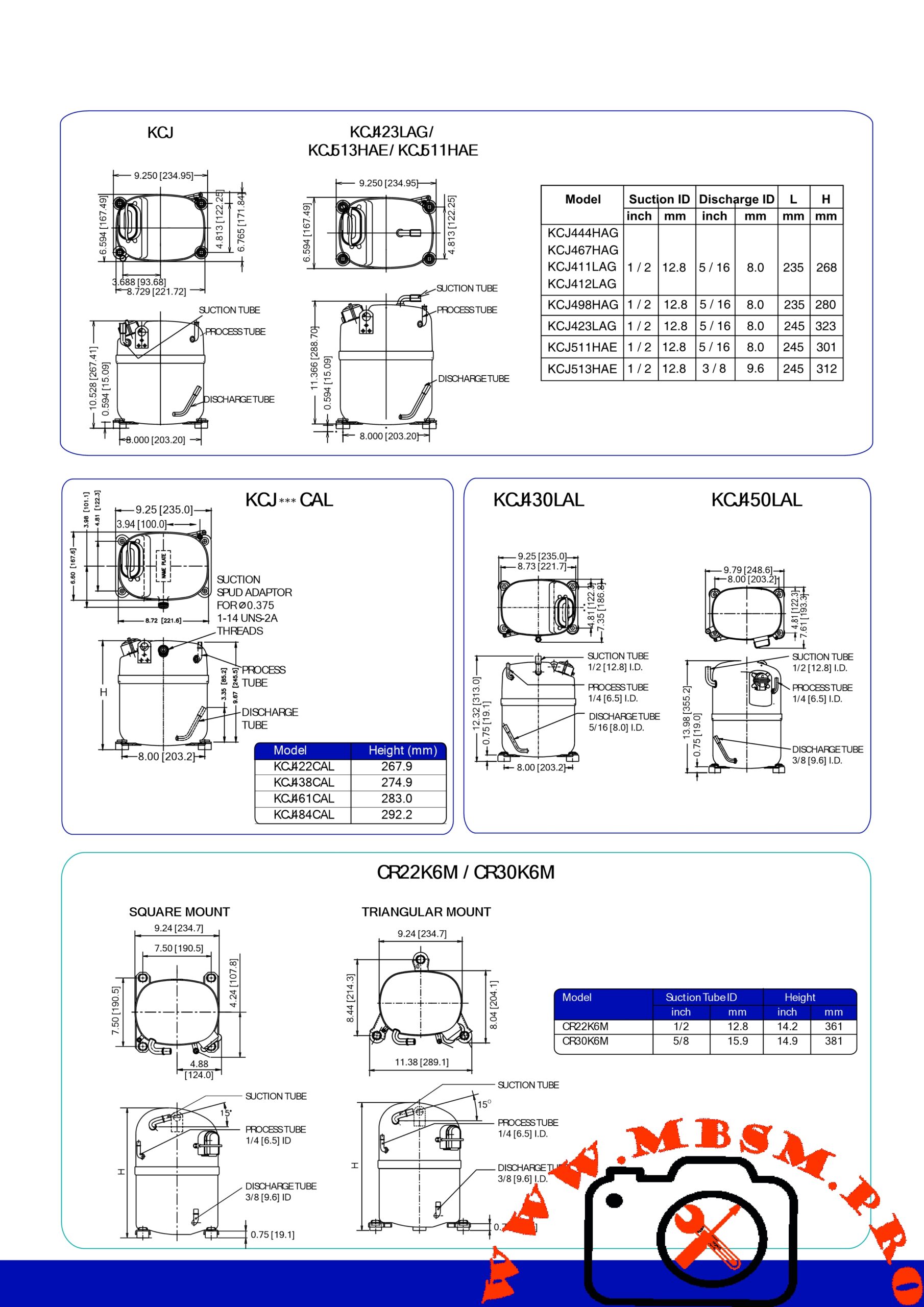
Copeland KCE444HAG hermetic compressor

Copeland KCE444HAG hermetic compressor mbsmpro

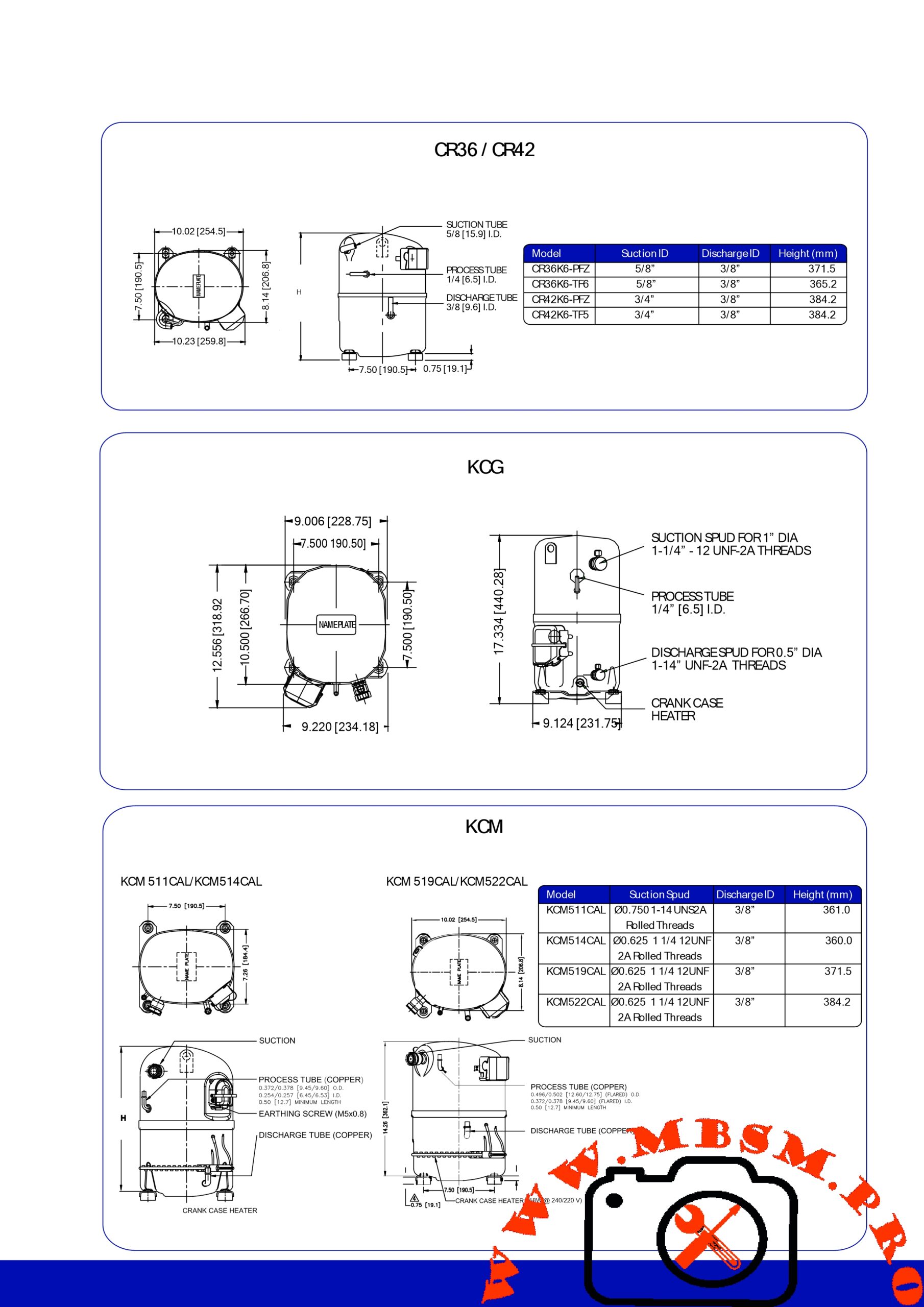
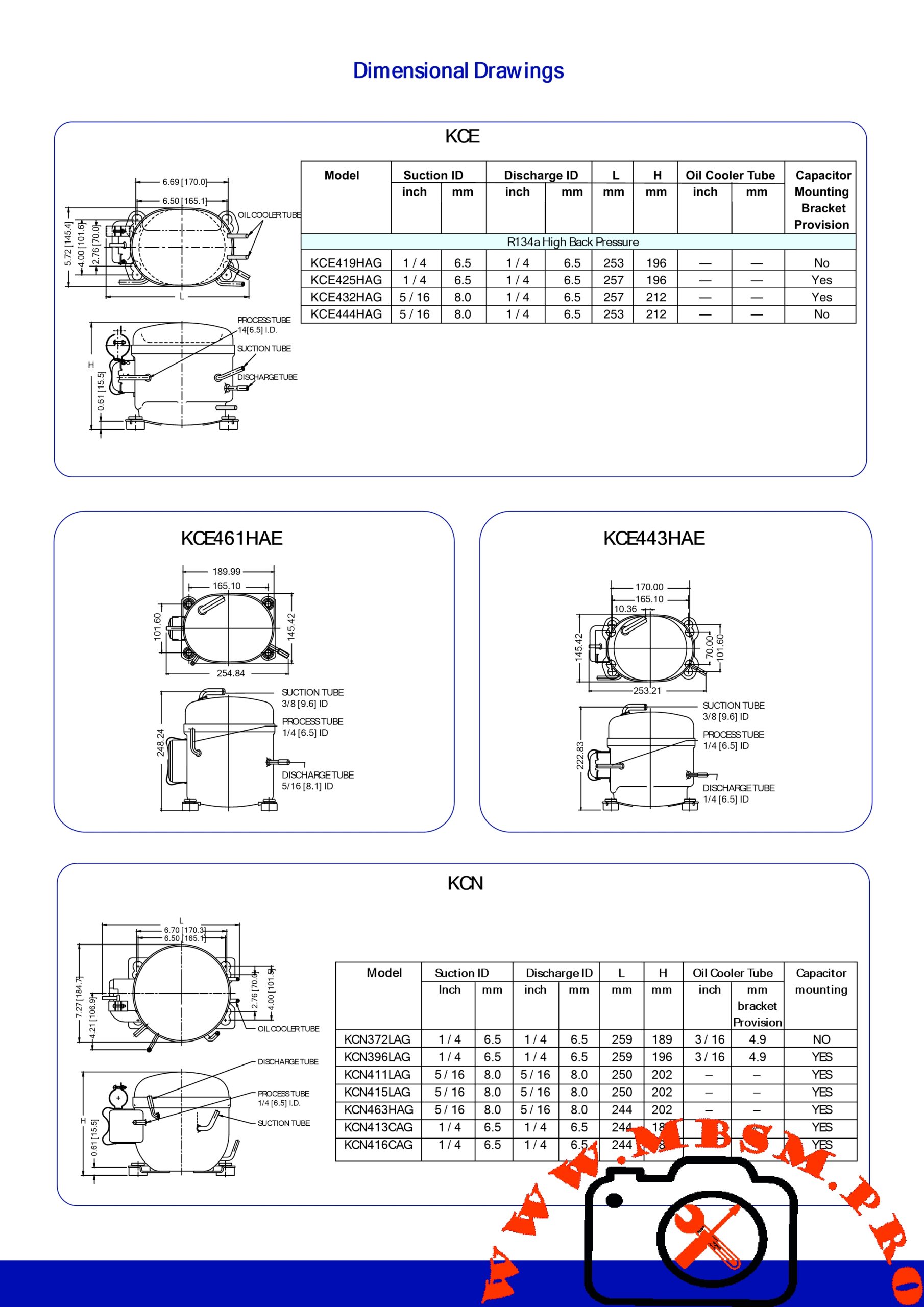
Mbsmpro.com, Compressor, KCE444HAG, 3/8 Hp, Copeland, R134a, 230V 50Hz, High / Medium temperature, Water cooler applications

Overview of the Copeland KCE444HAG compressor

The Copeland KCE444HAG is a hermetic reciprocating compressor designed for high and medium temperature commercial refrigeration using R134a refrigerant.
It is widely used in water coolers and bottle coolers where stable performance, compact size, and low noise are required.

Technical specifications and operating range

The KCE444HAG belongs to the KCE family and uses a connecting‑rod type reciprocating mechanism with a single‑phase induction motor.
Its evaporating temperature range is approximately −17.8°C to +12.8°C, covering typical high / medium temperature applications in beverage and water cooling.

Main electrical and performance data

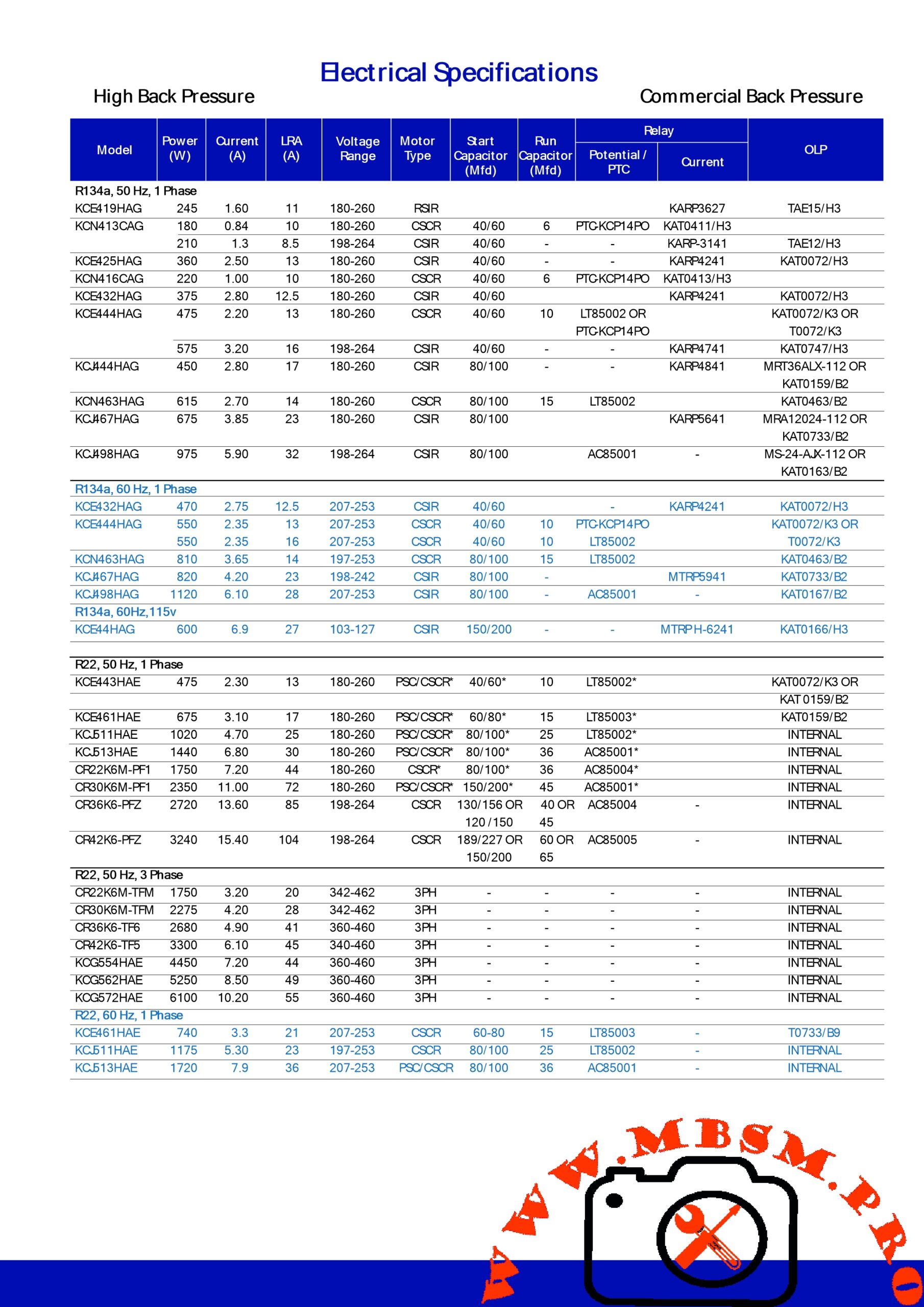
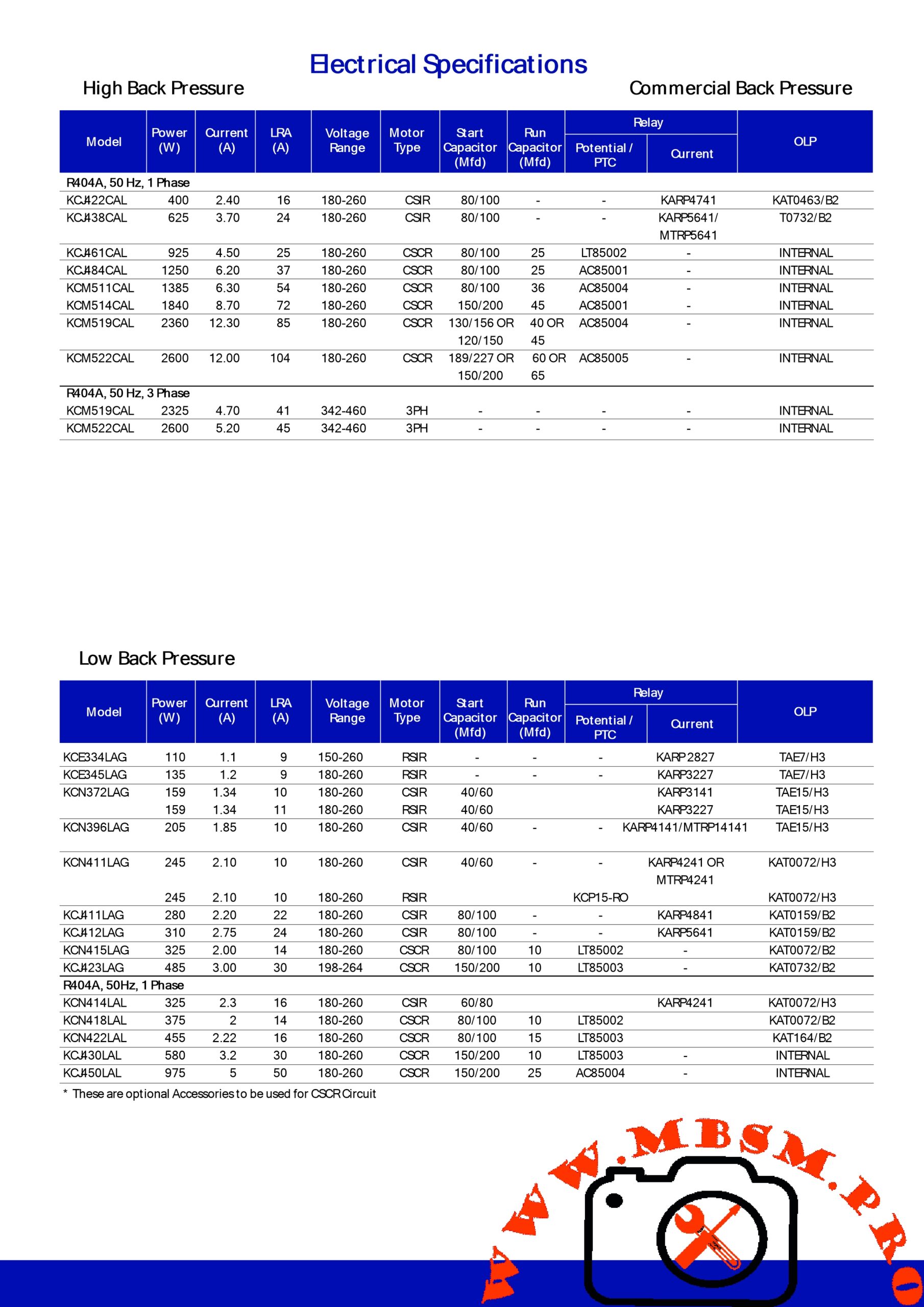
Parameter Value Notes
Refrigerant R134a HFC, medium‑pressure.
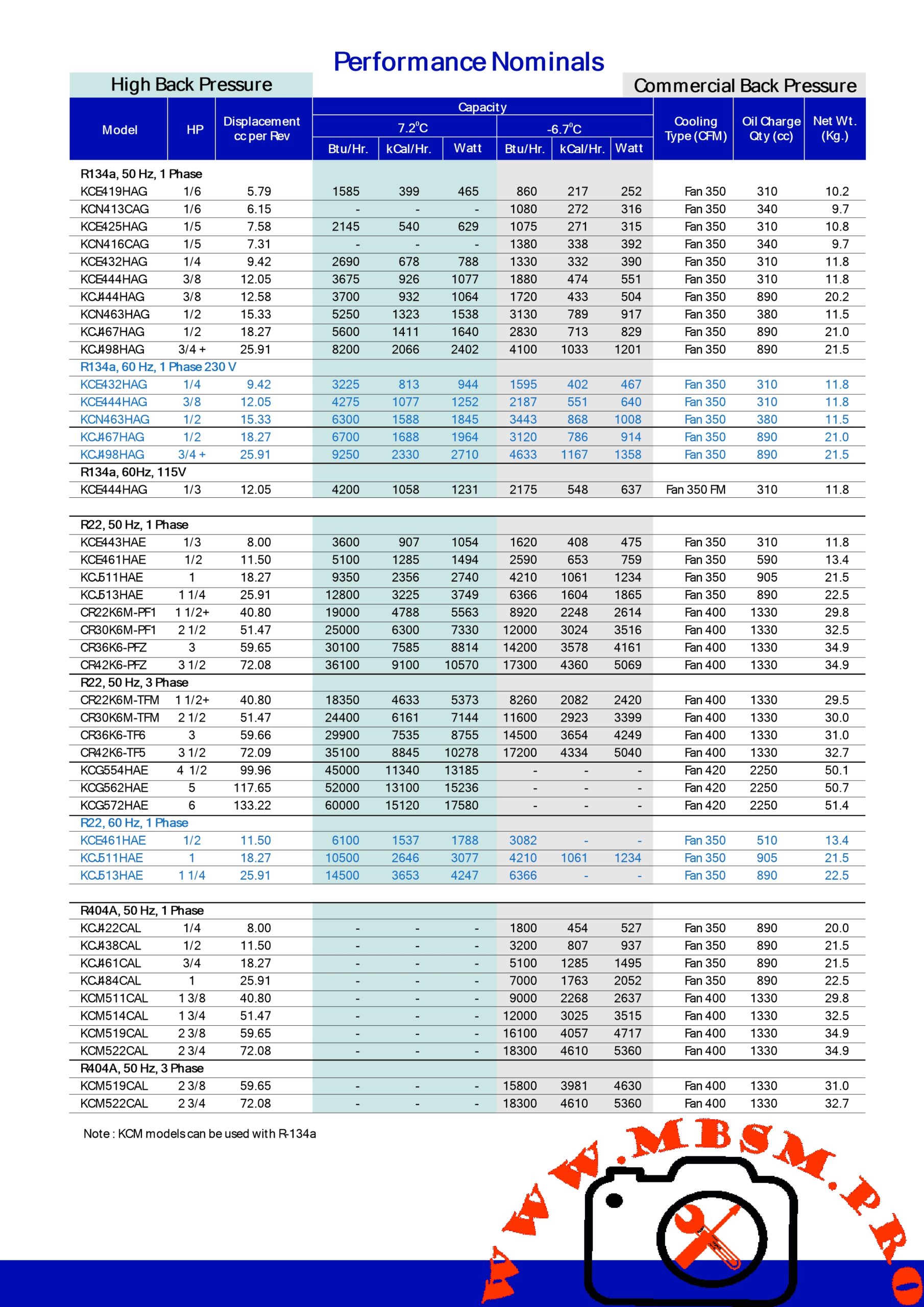
Nominal horsepower 0.36 HP (≈3/8 HP) Depending on rating condition HBP/CBP.
Cooling capacity 1077 W (HBP), 551 W (CBP) At specified EN12900 conditions.
Power input 475 W (HBP), 339 W (CBP) Single‑phase operation.
Voltage / frequency 230 V, 50 Hz, 1‑phase Typical for water coolers 40–80 L.
Motor type 2‑pole single‑phase induction Internally thermally protected.
Application group High / Medium temperature (HBP / CBP) Not suitable for low‑temperature freezing.
Compressor cooling Fan, about 350 ft³/min Forced air cooling around shell.
Oil type / volume POE, approx. 0.31 L Pre‑charged from factory.
Approx. internal free volume 2400 cm³ (81.1 oz) Without oil.

This specification table is essential for system designers who must match condenser size, evaporator load, and expansion device selection to the compressor envelope.
Using the correct voltage, frequency, and oil type is critical to preserve warranty and avoid early motor or mechanical failure.

Application examples and exploitation in the field

In practice, the KCE444HAG is commonly installed in:

  • Water coolers between 40 and 80 liter nominal storage.
  • Bottle coolers and small commercial beverage merchandisers operating in high or medium temperature ranges.

For water coolers, the compressor offers enough capacity to chill drinking water quickly while keeping energy consumption moderate, thanks to its roughly 475 W input at high‑back‑pressure conditions.
In bottle coolers, the wide evaporating envelope from negative temperatures up to more than +10°C allows flexible control of cabinet temperature without putting the compressor outside its design limits.

Performance comparison with similar compressors

To understand the real value of the KCE444HAG, it is useful to compare it with another well‑known R134a hermetic compressor such as the GL90AA (ZMC EGL90AA) widely used in domestic and light commercial refrigeration.

Capacity and power comparison

Model Refrigerant Nominal HP Cooling capacity (approx.) Input power Typical use
KCE444HAG R134a 0.36 HP 1077 W (HBP), 551 W (CBP) 475 W (HBP) Commercial water/bottle coolers.
EGL90AA (GL90AA) R134a 0.25 HP 227 W (LBP) Domestic refrigerators, small LBP cabinets.

From this table, the KCE444HAG clearly delivers a much higher cooling capacity than the EGL90AA, which translates into faster pull‑down times and suitability for larger, more demanding systems.
However, the smaller EGL90AA consumes less power and is better suited where low‑back‑pressure, small‑load operation is required, such as household fridges and compact freezers.

Application temperature range comparison

Model Application group Evaporating temperature range
KCE444HAG HBP / CBP −17.8°C to +12.8°C.
EGL90AA LBP Around −35°C to −6.7°C in typical LBP charts.

The table shows why the KCE444HAG is chosen for positive temperature applications like water coolers, while the EGL90AA works better in freezer‑type systems requiring lower evaporating temperatures.
Selecting the wrong compressor for the required evaporating range can lead to high discharge temperatures, low efficiency, and premature failure.

Installation, reliability, and service considerations

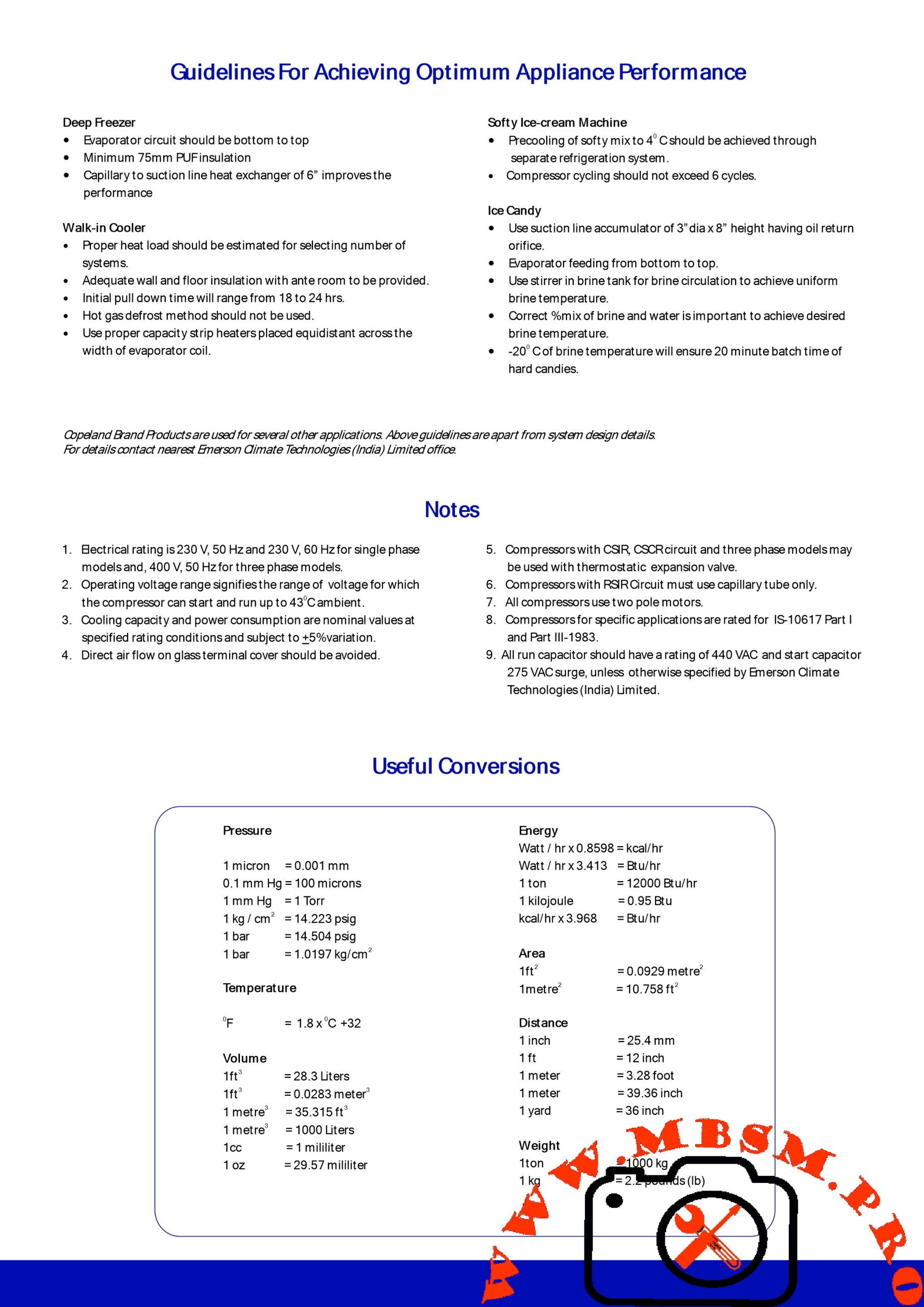
The KCE444HAG compressor must be operated inside the condensing and evaporating temperature envelope defined by the manufacturer to guarantee long service life.
The datasheet specifies that performance values are valid only inside this envelope and also gives maximum allowable internal moisture and solid residue limits, emphasizing the need for clean, well‑evacuated systems.

Technicians should:

  • Use R134a only and charge with the correct POE oil volume if a major repair requires oil replacement.
  • Keep the mounting angle within the 5° limit and respect guidelines for handling and disposal listed in the detailed product documentation.

Good airflow around the compressor and condenser, combined with properly sized capillary or expansion valve, keeps shell temperature and discharge pressure under control, further improving reliability in continuous water‑cooler duty.

Copeland KCE444HAG hermetic compressor mbsmpro


Copeland QR15M1‑TFD‑501 compressor

Copeland QR15M1‑TFD‑501 compressor mbsmpro

Copeland QR15M1‑TFD‑501 compressor: technical profile, applications and selection guide

For HVAC professionals, the Copeland QR15M1‑TFD‑501 stands out as a low‑sound, high‑capacity hermetic reciprocating compressor designed for demanding commercial air‑conditioning and refrigeration systems. This article explores its key specifications, strengths, and how to integrate it correctly into new projects or retrofit jobs.


Main technical specifications

The QR15M1‑TFD‑501 belongs to the Copeland QR low‑sound series, a four‑cylinder hermetic reciprocating platform engineered for reduced vibration and noise in packaged and split systems. It is typically rated at around 12–12.5 HP, giving contractors solid capacity for medium‑ to high‑temperature applications such as rooftop units, air‑cooled chillers and large ducted systems.

Key data that installers usually look for include:

  • Refrigerant: R22, with mineral‑oil lubrication as standard on QR “R” family models.
  • Nominal cooling capacity: up to about 142 000 Btu/h (≈ 41.6 kW) at 60 Hz, covering a wide range of evaporating conditions.
  • Power supply: 3‑phase 380–420 V / 50 Hz and 460 V / 60 Hz, matching most commercial electrical grids worldwide.
  • Cylinders: 4‑cylinder design with a double scotch‑yoke mechanism, improving balance and running smoothness versus conventional rod‑and‑piston sets.
  • Typical operating envelope: medium‑ and high‑temperature commercial air‑conditioning duty.

Construction and performance advantages

Copeland’s QR series is built around a rugged, compact shell with internal suspension, which helps to isolate mechanical vibrations and minimize structure‑borne noise when the compressor is bolted to the base frame. The forged steel crankshaft and precision bearings are designed for high‑speed operation, giving good reliability in systems that cycle frequently or run long duty hours.

Inside the compressor, pistons, yokes and slide blocks are cast from special alloy aluminium, while piston rings use cast iron to maintain sealing and durability over long runtimes. A low‑foaming mineral oil is specified to stabilize lubrication under fluctuating load conditions, supported by a crankcase heater that reduces refrigerant migration during off‑cycles.


Electrical and protection features

The QR15M1‑TFD‑501 uses a three‑phase suction‑gas‑cooled motor, which takes advantage of return gas to remove heat from the windings and improve overall motor life. On TFD models, internal inherent line‑break protection is provided, cutting power if winding temperature or current rises beyond design limits, and some QR variants complement this with an external solid‑state protection module.

Standard rotalock or stub‑tube connections simplify brazing and servicing, and many units ship with an oil level test valve plus ports positioned for easy access to service gauges. These details may seem minor, but in a tight plant room or rooftop installation, better port layout can save significant time during commissioning and troubleshooting.


Typical applications and selection tips

Because of its power rating and low‑sound design, the QR15M1‑TFD‑501 is often selected for:

  • Commercial air‑conditioning units such as rooftop packages, air handlers and split systems.
  • Medium‑temperature refrigeration where low noise is important, including supermarkets, cold rooms near occupied spaces or hotels.
  • Retrofit projects replacing older R22 compressors of similar capacity, where matching voltage, displacement and oil type is critical.

When selecting this model, technicians usually:

  • Check that the system is still legally allowed to operate with R22 in their region, or confirm compatibility with any approved drop‑in refrigerant if permitted by manufacturer guidelines.
  • Compare duty‑point capacity (evaporating and condensing temperatures) against Copeland QR performance tables rather than relying only on nominal HP ratings.
  • Ensure correct crankcase heater control and suction line sizing to protect the compressor from liquid slugging on start‑up.

QR15M1‑TFD‑501 essential data table

Specification Typical value / description
Compressor family Copeland QR low‑sound hermetic reciprocating, 4‑cylinder.
Model QR15M1‑TFD‑501.
Nominal power About 12–12.5 HP.
Refrigerant R22, mineral‑oil lubrication.
Cooling capacity (60 Hz) Up to ≈ 142 000 Btu/h (≈ 41.6 kW) depending on conditions.
Voltage / phase / frequency 380–420 V 3~ 50 Hz; 460 V 3~ 60 Hz.
Application range Commercial air‑conditioning and medium‑temp refrigeration.
Key features Low‑sound shell, internal suspension, crankcase heater, internal motor protection.

Maintenance, reliability and retrofit considerations

Maintaining a QR15M1‑TFD‑501 correctly starts with oil management: technicians should always replace oil with the same viscosity grade mineral oil specified by Copeland and verify oil level after long transport or system leaks. Adequate superheat, properly set expansion devices and clean condenser surfaces are equally important to keep discharge temperatures within safe limits and prevent thermal trips.

In retrofit scenarios, attention must be paid to any system filters and driers, as long‑serving R22 circuits often contain moisture, acids or debris that can severely shorten compressor life if not addressed before start‑up. Where local regulations phase down or ban R22, owners may consider full system replacement or carefully engineered conversions to modern refrigerants, guided by manufacturer bulletins and local codes.

Copeland QR15M1‑TFD‑501 compressor mbsmpro