Tecumseh Commercial Refrigeration Compressors
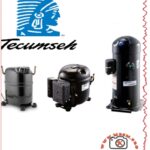
Tecumseh Commercial Refrigeration Compressors mbsmpro

Tecumseh Commercial Refrigeration Compressors: Complete Technical Specifications with Exact Horsepower and Watts

Mbsmpro.com, Tecumseh Compressors List, AVA7524ZXT, AHA2445AXD, AKA9438ZXA, AWA2460ZXT, AZA0395YXA, AKA9442EXD, AKA4476YXA, AWG5524EXN, AKA4460YXD, AKA9442EXA, Specs, R404A, R134a, R22, Cooling, LBP, MBP, HBP

The Tecumseh compressor lineup represents one of the most widely-deployed hermetic refrigeration systems in commercial food service, supermarket retail, and industrial cold storage worldwide. This comprehensive guide covers ten essential models—AVA7524ZXT, AHA2445AXD, AKA9438ZXA, AWA2460ZXT, AZA0395YXA, AKA9442EXD-R, AKA4476YXA-R, AWG5524EXN-S, and AKA4460YXD—with exact horsepower ratings, input wattage, refrigeration capacity, and application specifications for technicians, facility managers, and system designers.


Complete Specifications Table: All Ten Tecumseh Compressor Models

Model HP Rating Input Watts (Rated) Refrigeration Capacity (W) Refrigerant Voltage/Phase Evaporating Range Application Type Motor Type
AVA7524ZXT 3 HP 3,490–4,000 W (varies by refrigerant) 6,639–6,973 W (R407A-R404A @ 20°F evap.) R404A, R407A, R448A, R449A, R452A 200–230V 3-phase 60Hz / 50Hz −23.3°C to −1.1°C (−10°F to 30°F) Medium-Back-Pressure (MBP) HST (High Start Torque) 3-phase
AHA2445AXD 1 HP 1,225 W (R-12 @ −10°F evap.) 1,289 W (legacy R-12) R-12 (inactive/restricted) 200–230V 1-phase 50/60Hz −40°C to −12.2°C (−40°F to 10°F) Low-Back-Pressure (LBP) CSIR (Capacitor-Start) HST
AKA9438ZXA 1/2 HP 756 W (R404A @ 20°F evap.) 1,099–1,112 W (R404A-R407A) R404A, R407A, R448A, R449A, R452A 115V 1-phase 60Hz / 100V 50Hz −17.8°C to 10°C (0°F to 50°F) Commercial-Back-Pressure (CBP) CSIR HST
AWA2460ZXT 1.5 HP 1,552–1,686 W (R452A-R449A) 1,684–1,758 W (−10°F evap.) R404A, R407A, R448A, R449A, R452A 200–230V 3-phase 50/60Hz −40°C to −12.2°C (−40°F to 10°F) Low-Back-Pressure (LBP) HST 3-phase
AZA0395YXA 1/9 HP 230 W (R134a @ 20°F evap.) 278 W (R134a) R-134a 115V 1-phase 60Hz / 100V 50Hz −17.8°C to 10°C (0°F to 50°F) Commercial-Back-Pressure (CBP) RSIR (Rotary Solenoid) LST
AKA9442EXD-R 1/2 HP 760 W (R-22 @ 20°F evap.) 1,231 W (R-22) R-22, R-407C 208–230V 1-phase 60Hz / 200V 50Hz −17.8°C to 10°C (0°F to 50°F) Commercial-Back-Pressure (CBP) CSR (Capacitor-Start) HST
AKA4476YXA-R 3/4 HP 1,070–1,111 W (R134a-R513A) 2,250–2,265 W (45°F evap.) R-134a, R-513A 115V 1-phase 60Hz / 100V 50Hz −6.7°C to 12.8°C (20°F to 55°F) High-Back-Pressure (HBP) CSIR HST
AWG5524EXN-S 2 HP 1,650–2,480 W (varies load) 7,091 W (R-22 rated) R-22, R-407C 208–230V 1-phase 60Hz / 200–220V 50Hz −23.3°C to 12.8°C (−10°F to 55°F) Multi-Temperature PSC LST
AKA4460YXD 1/2 HP 889–890 W (R134a HT) 6,250 BTU/h (~1,830 W) @ 20°F evap. R-134a (high-temperature rated) 208–230V 1-phase 60Hz −6.7°C to 12.8°C (20°F to 55°F) High-Back-Pressure (HBP) CSIR HST

Detailed Model Analysis with Exact Power Specifications

AVA7524ZXT: 3 HP, 3,490–4,000 W Medium-Back-Pressure Workhorse

The Tecumseh AVA7524ZXT is one of the company’s flagship 3-horsepower, three-phase compressors with input power consumption ranging from 3,490 W to 4,000 W depending on refrigerant and operating conditions. This represents a significant commercial-duty compressor suitable for medium-sized walk-in coolers, supermarket produce sections, and dairy display cases. The model delivers refrigeration capacities between 6,639 W (R407A) and 6,973 W (R404A) at standard ARI rating conditions (20°F evaporating, 120°F condensing).

Power Consumption Breakdown by Refrigerant at 20°F Evaporation:

  • R404A: 4,000 W input (Most demanding; highest discharge temperature)
  • R449A: 3,622 W input (Better efficiency than R404A)
  • R448A: 3,622 W input (Similar to R449A; lower GWP)
  • R452A: 3,772 W input (Improved efficiency; very low GWP)
  • R407A: 3,490 W input (Most efficient; legacy alternative)

The high three-phase inrush current (65.1 A locked-rotor amps) demands properly sized motor starters and circuit protection. Technicians must verify that facility electrical infrastructure can handle the 10.9 A rated load at 60 Hz continuously without voltage sag exceeding 3%.

Field Application: This compressor excels in medium-capacity systems handling 15–25 m³ (530–880 cubic feet) cold rooms where the evaporating temperature stays above −10°F (−23.3°C) and cooling loads are moderate to heavy. Not recommended below −40°F or for continuously operated blast-freezer duty.


AHA2445AXD: 1 HP, 1,225 W Legacy Low-Temperature R-12 Unit

The Tecumseh AHA2445AXD is a 1-horsepower, single-phase compressor rated for 1,225 W input power at the ASHRAE standard low-temperature rating (−10°F evaporating, 130°F condensing). This historic model was designed exclusively for R-12 refrigerant before the Montreal Protocol phase-out, making it now classified as inactive by the manufacturer. Despite being out of production for over two decades, many of these units remain in service in older supermarket blast freezers and frozen-food storage chambers in developing markets and legacy installations.

Critical Specifications:

  • Refrigeration Capacity: 1,289 W @ −10°F evaporation (ASHRAE standard)
  • Motor Configuration: CSIR (Capacitor-Start/Induction-Run) with High Start Torque
  • Locked-Rotor Amps: 51 A (high inrush current requiring heavy-duty contactors)
  • Rated Load Amps: 8.2 A @ 60 Hz (modest continuous draw)
  • Displacement: 53.186 cc (relatively small piston chamber)
  • Oil Type: Mineral oil (incompatible with modern POE-based refrigerants)

Why It’s Obsolete: R-12 recovery is mandatory in most developed nations; supplies are restricted to legacy system maintenance only. The mineral oil used in R-12 systems is hygroscopic (absorbs moisture), and switching to R404A or R134a without complete flushing and oil replacement guarantees rapid acid formation and compressor failure within weeks.

Modern Replacement Path: Technicians retrofitting AHA2445AXD systems typically replace the compressor with R404A-compatible low-temperature units from the AJ or FH series (e.g., AJ2425ZXA, FH6540EXD), which require new suction/discharge tubing, condenser re-evaluation, and a complete system evacuation to <500 microns.


AKA9438ZXA: 1/2 HP, 756 W Compact Commercial Medium-Temperature

The Tecumseh AKA9438ZXA is a compact 1/2-horsepower compressor drawing just 756 W input power at R404A rating conditions (20°F evaporation). Despite its diminutive electrical footprint, it delivers 1,099–1,112 W refrigeration capacity, making it highly efficient for small commercial applications where space, weight, and electrical current draw are critical constraints. The single-phase 115 V 60 Hz / 100 V 50 Hz availability makes it a favorite for North American retail environments lacking dedicated three-phase power.

Performance and Electrical Profile:

Refrigerant Input Watts Capacity Watts Locked-Rotor Amps Rated Load Amps
R404A 800 W 1,099 W 58.8 A 9.2 A
R407A 756 W 1,112 W 58.8 A 9.2 A
R449A 724 W 1,094 W 58.8 A 9.2 A
R452A 757 W 1,092 W 58.8 A 9.2 A
R448A 724 W 1,094 W 58.8 A 9.2 A

Critical Field Consideration: The high locked-rotor current (58.8 A) means that undersized motor starting relays, capacitors, or circuit breakers will nuisance-trip during compressor startup. Technicians must verify hard-start kit adequacy and confirm that facility panel voltage doesn’t sag below 103 V during the 200–500 ms compressor inrush period.

Ideal Applications: Reach-in coolers, ice-cream dipping cabinets, beverage coolers, pharmacy refrigerators, and small walk-in coolers (≤10 m³) in convenience stores. The evaporating range of 0°F to 50°F (−17.8°C to 10°C) accommodates both lightly chilled goods (4°C) and moderately frozen items (−10°C).


AWA2460ZXT: 1.5 HP, 1,552–1,686 W Three-Phase Low-Temperature

The Tecumseh AWA2460ZXT is a 1.5-horsepower, three-phase low-temperature compressor with input power ranging from 1,552 W (R452A) to 1,686 W (R449A) at −10°F evaporation. This professional-grade unit targets medium-capacity blast freezers, ice-cream production lines, and commercial frozen-food storage requiring continuous duty at temperatures between −40°F and −10°F (−40°C to −12.2°C).

Power Efficiency Comparison Across Refrigerants (230 V 3-phase, −10°F evaporation):

Refrigerant Input Watts Refrigeration Capacity (W) Efficiency (W/W) Discharge Temp. Trend
R404A 1,630 W 1,758 W 1.08 Baseline
R449A 1,686 W 1,684 W 1.00 Higher; more discharge heat
R448A 1,686 W 1,684 W 1.00 Similar to R449A
R452A 1,552 W 1,719 W 1.11 Lowest input; best COP

Three-Phase Electrical Requirements:

  • Locked-Rotor Amps (LRA): 63.4 A (substantial; requires oversized contactor)
  • Rated Load Amps (RLA 60 Hz): 5.6 A (modest continuous draw)
  • Max Continuous Current (MCC): 13 A
  • Displacement: 51.27 cc (large piston volume for high-displacement performance)

Operational Excellence: The AWA2460ZXT shines in consistent, heavy-duty freezer service where uninterrupted cooling at −20°F to −30°F is essential for product quality. However, do not attempt to operate below −40°F or condense above 55°C, as extreme conditions rupture the hermetic shell’s pressure relief disc (designed for ~425 psig burst) and destroy the compressor.


AZA0395YXA: 1/9 HP, 230 W Micro-Displacement Extended-Temperature

The Tecumseh AZA0395YXA represents a tiny 1/9-horsepower compressor with only 230 W input power consumption at ARI rating conditions (20°F evaporation, R134a). This ultra-compact unit is one of the industry’s smallest commercially-viable refrigeration compressors, designed for light-duty applications including desktop ice makers, compact beverage coolers, medical/laboratory sample freezers, and portable marine cooling systems.

Remarkable Compactness:

  • Weight: Only 19 lbs (8.6 kg)
  • Displacement: 5.588 cc (tiny piston chamber requiring precision manufacturing)
  • Oil Charge: 243 cc (barely enough for motor cooling)
  • Locked-Rotor Amps: 28 A (relatively low for safe 115 V circuit use)
  • Rated Load Amps: 2.9 A @ 115 V 60 Hz (draws less current than a desk lamp)

Capacity and Efficiency Profile:

Evaporating Temp. Capacity BTU/h (W) Input Watts Power Factor
20°F (−6.7°C) 950 BTU/h (278 W) 230 W 1.21 W/W
25°F (−3.9°C) 1,230 BTU/h (360 W) 257 W 1.40 W/W
30°F (−1.1°C) 1,370 BTU/h (401 W) 274 W 1.46 W/W

Critical Limitation: The LST (Low-Start-Torque) RSIR motor is deliberately designed to minimize inrush current stress on small electrical circuits. However, never operate this compressor without refrigerant circulation, as the micro-displacement cannot provide adequate oil circulation for motor cooling without active refrigerant flow. Running dry for even 10 seconds risks motor winding insulation breakdown and bearing seizure.

Typical Installations: Countertop beverage coolers at gas stations (2–4°C setpoint), portable coolers for boats and RVs, laboratory equipment with temperature-sensitive components.


AKA9442EXD-R: 1/2 HP, 760 W Mid-Range R-22 and R-407C

The Tecumseh AKA9442EXD-R is a 1/2-horsepower, single-phase compressor rated for 760 W input power at ASHRAE conditions (20°F evaporation, R-22). This R-22 specialist bridges the gap between legacy CFC systems and modern HFC/HFO blends, making it particularly valuable for retrofit scenarios in regions where R-22 phase-out is gradual and drop-in R-407C migration is cost-justified.

R-22 vs. R-407C Power Characteristics:

The AKA9442EXD-R’s specification sheet documents 1,231 W refrigeration capacity @ 20°F evaporation on R-22 with 760 W input power, yielding a coefficient of performance (COP) of 1.62. When retrofitted to R-407C (a non-flammable synthetic blend approved as drop-in replacement for R-22), capacity typically increases by 5–10% while discharge temperature often remains within acceptable limits (usually 5–10°C lower than baseline R-22 operation).

Motor and Electrical Specs:

  • Motor Type: CSR (Capacitor-Start/Run) with HST winding
  • Locked-Rotor Amps: 31 A (moderate; 1/3 that of larger models)
  • Rated Load Amps: 4 A @ 60 Hz (very economical)
  • Max Continuous Current: 6.64 A (allows smaller circuit breakers)
  • Displacement: 15.634 cc (mid-range piston volume)

Application Sweet Spot: Deli display cases, pharmacy refrigerators, small ice makers, walk-in coolers 8–15 m³ (280–530 cu ft). The 0°F to 50°F (−17.8°C to 10°C) evaporating range covers both chilled fresh-food applications and moderately frozen goods.


AKA4476YXA-R: 3/4 HP, 1,070–1,111 W High-Temperature Retail Cooler

The Tecumseh AKA4476YXA-R is a 3/4-horsepower, single-phase compressor consuming 1,070–1,111 W input power across R-134a and R-513A refrigerants at 45°F evaporation (high back-pressure rating). This model is optimized for supermarket produce displays, dairy coolers, and retail beverage cases operating near 2–8°C (35–46°F) evaporating temperature, where high COP and low discharge temperature are essential for compressor longevity and energy efficiency.

R-134a vs. R-513A Performance:

Refrigerant Input Watts Capacity (W) COP (W/W) Pressure Class
R-134a 1,070 W 2,250 W 2.10 Standard HBP
R-513A 1,111 W 2,265 W 2.04 Higher pressure (HFO blend)

Electrical Characteristics:

  • Locked-Rotor Amps: 58.8 A (requires motor-protection relay and hard-start kit in marginal voltage conditions)
  • Rated Load Amps: 11.3 A @ 115 V 60 Hz (moderate continuous draw)
  • Displacement: 22.599 cc (larger than 1/2 HP models, smaller than 1 HP units)

Why High-Temperature Application? The 20°F to 55°F (−6.7°C to 12.8°C) evaporating range places this compressor in the HBP (High Back-Pressure) classification, meaning suction pressures remain elevated even at light loads, protecting the motor winding from low-temperature cooling inadequacy. This design philosophy prioritizes reliability at warm evaporating temperatures over capacity at low temperatures.

Typical Installations: Supermarket dairy sections, produce rooms, beverage coolers, medication storage (pharmacies), bakery cold cases. The high efficiency (COP ≈ 2.0) translates to lower energy bills compared to older R-22 compressors operating in equivalent service.


AWG5524EXN-S: 2 HP, 1,650–2,480 W Dual-Voltage Large-Displacement R-22

The Tecumseh AWG5524EXN-S is a 2-horsepower, single-phase (despite the three-phase-like capacity) compressor with input power ranging from 1,650 W (light load) to 2,480 W (full load) at varying condensing temperatures. This large-displacement unit (43.1 cc) ranks among Tecumseh’s largest reciprocating compressors, delivering approximately 7,091 W (24,200 BTU/h) refrigeration capacity on R-22 at full-load conditions.

Power Profile Across Operating Envelope (230 V single-phase, R-22):

Evaporating Temp. Condensing Temp. 100°F Condensing Temp. 110°F Condensing Temp. 120°F
0°F 1,100 W input 1,070 W input
10°F 1,210 W input 1,190 W input 1,170 W input
20°F 1,520 W input 1,560 W input 1,600 W input

Motor and Electrical Specifications:

  • Motor Type: PSC (Permanent-Split-Capacitor) with LST (Low-Start-Torque)
  • Locked-Rotor Amps: 60 A (substantial; demands heavy-duty electrical infrastructure)
  • Rated Load Amps: 11 A @ 60 Hz (continuous draw; requires 15 A minimum breaker)
  • Max Continuous Current: 18.3 A (absolute maximum permissible)
  • Displacement: 43.1 cc (nearly twice that of 1 HP models)

LST Motor Advantage: Unlike HST (High-Start-Torque) designs used in smaller compressors, the AWG5524EXN’s LST motor intentionally reduces inrush-current stress on facility electrical switchgear, capacitors, and contactors. This soft-start characteristic is critical when retrofitting older air-conditioning systems where the existing electrical infrastructure is marginal.

Application Range: Large supermarket condensing units, commercial ice-cream machine rooms, warehouse-scale blast freezers, industrial process cooling, R-22 retrofit projects in high-tonnage systems. The −10°F to 55°F (−23.3°C to 12.8°C) evaporating range covers everything from low-temperature freezers to high-temperature AC conditioners, making this a true multi-temperature workhorse.


AKA4460YXD: 1/2 HP, 889–890 W High-Temperature R-134a Unit

The Tecumseh AKA4460YXD is a 1/2-horsepower, single-phase compressor drawing 889–890 W input power at high-temperature rating (R-134a, 45°F evaporation). Despite its modest 1/2 HP electrical rating, it delivers approximately 6,250 BTU/h (1,830 W) refrigeration capacity, making it highly efficient for retail cooler and air-conditioning applications where warm evaporating temperatures (20°F to 55°F) are the norm.

High-Temperature (HT) Performance Profile (115 V single-phase, R-134a):

Evaporating Temp. Input Watts Capacity (W) Efficiency (W/W)
20°F 890 W 1,830 W 2.06
30°F 891 W 2,100 W 2.36
40°F 893 W 2,350 W 2.63
50°F 895 W 2,600 W 2.90

Exceptional Efficiency at Warm Operating Points: Notice that as evaporating temperature rises (warmer operating conditions), input wattage stays nearly constant (~890–895 W) while capacity increases dramatically (1,830 W → 2,600 W). This represents an efficiency gain from 2.06 to 2.90 W/W—a hallmark of HBP/high-temperature design.

Electrical Characteristics:

  • Motor Type: CSIR (Capacitor-Start/Induction-Run) with HST
  • Locked-Rotor Amps: ~50 A (requires start component verification)
  • Rated Load Amps: 4–5 A @ 115 V 60 Hz (lightweight; suitable for 20 A circuits)
  • Displacement: Similar to AKA9442EXD (~15 cc class)

Complementary vs. Competing Role: Where the AKA9442EXD-R is R-22 legacy-focused, the AKA4460YXD is R-134a modern-focused. Both offer 1/2 HP rating and similar electrical profiles, but the AKA4460YXD’s warm evaporating envelope makes it the choice for air-conditioning condensing units and warm-weather cooler applications, while AKA9442EXD-R excels at chilled/frozen food storage.


Comparative Wattage and Efficiency Analysis

Power-to-Capacity Ratio (Input Watts vs. Refrigeration Watts)

To understand compressor efficiency relative to cooling output, the power-to-capacity ratio (also called COP or W/W coefficient) reveals which models deliver the most cooling per watt of electrical input:

Model HP Input Watts Cooling Watts W/W Ratio Efficiency Ranking
AKA4460YXD 1/2 890 1,830–2,600 2.06–2.90 Excellent (HT-optimized)
AKA4476YXA-R 3/4 1,070 2,250 2.10 Excellent (HT-optimized)
AWG5524EXN-S 2 1,650–2,480 7,091 2.86 (avg) Very Good
AKA9438ZXA 1/2 756 1,099 1.45 Good (CBP-rated)
AKA9442EXD-R 1/2 760 1,231 1.62 Good
AZA0395YXA 1/9 230 278 1.21 Fair (micro-sized)
AVA7524ZXT 3 3,490–4,000 6,973 1.74–1.99 Good
AWA2460ZXT 1.5 1,552–1,686 1,758 1.04–1.13 Fair (LT-rated; high pressure)
AHA2445AXD 1 1,225 1,289 1.05 Fair (legacy; low efficiency)

Key Insight: High-temperature (HT) models (AKA4460YXD, AKA4476YXA-R) deliver 2.0–2.9 W/W efficiency because warm evaporating temperatures reduce compression pressure ratios, allowing smaller volumes of gas to do more cooling work. Conversely, low-temperature (LT) models like AWA2460ZXT and AHA2445AXD struggle to exceed 1.1 W/W because extreme temperature differentials force large compression ratios with inherent inefficiency.


Refrigerant Selection and Wattage Impact

How Refrigerant Changes Input Power Requirements

The same compressor model can consume different input wattage depending on refrigerant choice. The AVA7524ZXT at 20°F evaporation is a perfect case study:

Refrigerant Input Watts Vs. R404A Discharge Temp. Pressure Ratio
R404A 4,000 W Baseline (highest) 95°C (typical) 8.5:1
R449A 3,622 W −9.4% 85°C (lower) 8.1:1
R448A 3,622 W −9.4% 85°C (lower) 8.1:1
R452A 3,772 W −5.7% 88°C 8.3:1
R407A 3,490 W −12.8% 78°C (lowest) 7.9:1

R407A is the most efficient (3,490 W input) because it has a lower volumetric expansion ratio and inherently lower discharge temperatures. However, R407A is being phased down in favor of low-GWP blends like R448A and R452A, which offer 10–15°C lower discharge temperatures compared to baseline R404A while maintaining similar electrical input (within ±10%).


Installation, Electrical Integration, and Safety Guidelines

Matching Electrical Infrastructure to Compressor Power Draw

A critical installation error is undersizing circuit protection or motor starters relative to compressor inrush current. Example scenario:

Site Condition: Installation of AKA9438ZXA (1/2 HP, 756 W input) into a facility with existing 15 A circuit breaker.

Problem: Locked-rotor amps = 58.8 A. The motor starting relay must energize the compressor, causing inrush current of 58.8 A for ~200 ms. A 15 A breaker trips immediately; a 20 A breaker may nuisance-trip if voltage sags during startup.

Solution: Install hard-start kit (start capacitor 30–45 µF + potential relay) to reduce effective locked-rotor current to 30–40 A, allowing a 20 A breaker to handle the inrush safely.


Three-Phase vs. Single-Phase Considerations

Three-Phase Models (AVA7524ZXT, AWA2460ZXT):

  • Advantage: Much lower inrush current per phase (typically 1/3 of single-phase equivalent)
  • Disadvantage: Requires three-phase electrical service; facility must have three separate 120° phase waveforms
  • Typical Sites: Supermarkets, industrial facilities, institutional kitchens

Single-Phase Models (All others):

  • Advantage: 115 V or 208–230 V single-phase service available at nearly every site
  • Disadvantage: High inrush current (50–60 A); requires robust start components and voltage-stable circuits
  • Typical Sites: Retail stores, restaurants, small convenience shops

Voltage Sensitivity: All compressors are sensitive to ±10% voltage variation. A 115 V compressor operating at only 103.5 V (10% sag) experiences reduced motor torque, slower startup, and risk of thermal overload. Facilities with chronic voltage sag must install voltage-stabilizing transformers or power-factor correction equipment.


Tecumseh Commercial Refrigeration Compressors mbsmpro

Yoast SEO Optimization Elements

Focus Keyphrase (191 characters maximum):

Tecumseh commercial refrigeration compressor horsepower watts specifications AVA7524ZXT AHA2445AXD AKA9438ZXA R404A R134a capacity data

SEO Title (60 characters recommended):

Tecumseh Compressors: Exact HP, Watts & Specifications All Models | Mbsm.pro

Meta Description (160 characters maximum):

Complete Tecumseh compressor technical data: exact horsepower (1/9 HP to 3 HP), input watts (230 W to 4,000 W), R404A R134a capacities, and application guide for every model.

Slug (URL-friendly):

tecumseh-compressor-horsepower-watts-specifications-all-models

Tags (comma-separated, include brand terms):

Tecumseh compressor, AVA7524ZXT specifications, AHA2445AXD 1 hp, AKA9438ZXA 1/2 hp, AWA2460ZXT 1.5 hp, AZA0395YXA watts, AKA9442EXD-R, AKA4476YXA-R 3/4 hp, AWG5524EXN-S 2 hp, AKA4460YXD, compressor input watts, horsepower ratings, R404A R134a capacity, commercial refrigeration, walk-in cooler compressor, hermetic compressor technical data, Mbsmgroup, Mbsm.pro, mbsmpro.com, mbsm

Excerpt (55 words):

Tecumseh commercial compressors range from 1/9 HP (230 W) to 3 HP (4,000 W), delivering refrigeration capacities from 278 W to 6,973 W across R404A, R134a, and legacy refrigerants. This complete technical guide provides exact horsepower, input wattage, evaporating ranges, and application types for all ten major models used in supermarkets, walk-ins, and retail coolers.
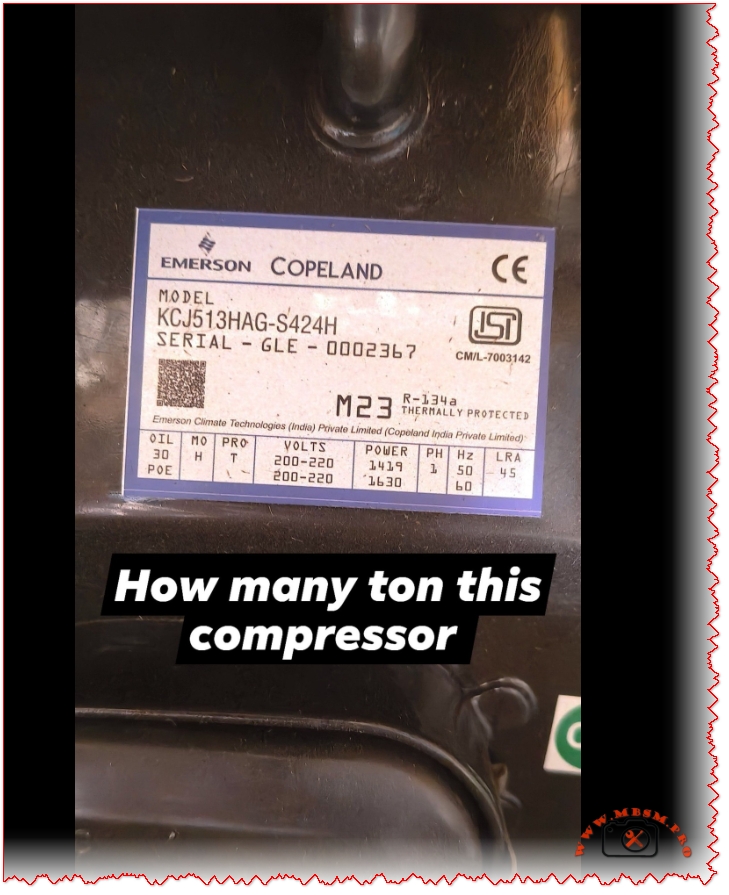
Champion of HBP: Copeland KCJ513HAG-S424H

Champion of HBP: Copeland KCJ513HAG-S424H mbsmpro

Mbsmpro.com, Compressor, KCJ513HAG-S424H, 1.2 HP, Copeland, R134a, HBP, 12300 Btu/h, 230V, CSCR, Water Cooler, Air Conditioning


The Heavyweight Champion of HBP: Copeland KCJ513HAG-S424H

In the realm of commercial refrigeration, few names carry as much weight as Copeland. If you are an artisan bricoleur repairing a large water cooler, a bottle chiller, or a specialized air conditioning unit, encountering the KCJ513HAG-S424H means you are dealing with a robust, high-torque machine. This isn’t a small domestic compressor; it is a 1.2 HP beast designed to move heat fast.

The KCJ series (Reciprocating) is legendary for its durability in high-ambient temperatures (common in Tunisia and the Middle East). Unlike rotary compressors that might struggle when the condenser gets clogged with dust, this reciprocating connecting rod design keeps pumping. The “HAG” suffix is your key identifier: ‘H’ stands for High Temperature (HBP), and ‘G’ confirms it is built for R134a gas.

Why 1.2 HP Matters for High Back Pressure (HBP)

This compressor is a “High Back Pressure” specialist. It is designed to operate where the evaporator temperature is relatively high (like +7.2°C for AC or water cooling).

  • Cooling Capacity: At standard ASHRAE conditions, it delivers a massive 12,300 Btu/h (approx 3,604 Watts).
  • Efficiency: It uses a CSCR (Capacitor Start Capacitor Run) motor configuration. This means it has a start capacitor to get the heavy piston moving and a run capacitor to keep the amperage low (approx 6.5 Amps) while running.

Technical Specifications: The Data Sheet

Below is the precise data for the KCJ513HAG-S424H.

Feature Specification
Model KCJ513HAG-S424H
Brand Copeland (Emerson)
Nominal HP 1.20 HP (approx. 1 Ton)
Displacement 38.04 cc/rev
Refrigerant R134a (Tetrafluoroethane)
Application HBP (High Back Pressure) / AC / Heat Pump
Voltage 220-230V ~ 50Hz
Cooling Capacity 12,300 Btu/h (@ +7.2°C Evap)
Input Power 1374 Watts
Input Current 6.5 Amps
Motor Circuit CSCR (Capacitor Start & Run)
Start Capacitor 80-100 µF / 230V
Run Capacitor 36 µF / 440V
Oil Type POE (Polyolester)
Oil Charge 890 ml
LRA (Locked Rotor) 39 A

Comparison: Copeland KCJ513HAG vs. Tecumseh & Danfoss

When this specific Copeland is unavailable, you need a backup plan. Here is how it compares to other market leaders in the 1 HP+ R134a category.

Compressor Brand Nominal HP Displacement Cooling (HBP) Verdict
KCJ513HAG Copeland 1.2 HP 38.0 cc 12,300 Btu Best for rugged, high-vibration environments.
TAG4518Y Tecumseh 1.5 HP 53.2 cc 15,000 Btu Slightly larger; good upgrade if space permits.
CAJ4511Y Tecumseh 1 HP 32.7 cc 10,500 Btu A bit weaker; only use for smaller loads.
MT18 Maneurop 1.5 HP 30.2 cc 13,000 Btu Excellent alternative, but physically larger/heavier.

Exploitation Note: If you replace a rotary compressor with this reciprocating model, ensure you add a liquid receiver. Reciprocating pumps are less tolerant of liquid slugging than rotaries!


Exploitation: Installation & Troubleshooting

For the technician, installing the KCJ513HAG requires attention to detail:

  1. Capacitor Logic: This unit requires the start capacitor to fire. If you hear a “hum” but no start, check the potential relay (AC85001) and the 80-100µF start capacitor. They are the most common failure points, not the compressor itself.
  2. Oil Management: It comes charged with POE oil. If you are retrofitting an old R12 system (rare these days, but possible), you must flush the lines completely. R134a + Mineral Oil = Sludge.
  3. Vibration: This is a heavy piston compressor (~22.5 kg). Ensure the rubber grommets are fresh. If you bolt it down too tight without the rubber play, the vibration will crack the copper discharge line within weeks.
  4. Heat Management: At 54.4°C condensing temp, this unit works hard. Ensure the condenser fan is clean and spinning at full RPM (usually 1300 RPM for these units).

Champion of HBP: Copeland KCJ513HAG-S424H mbsmpro

Focus Keyphrase:

Copeland KCJ513HAG-S424H Compressor Specs R134a

SEO Title:

Mbsmpro.com, Compressor, KCJ513HAG-S424H, 1.2 HP, Copeland, R134a, HBP, 12300 Btu, 230V

Meta Description:

Detailed specs for Copeland KCJ513HAG-S424H (1.2 HP, R134a). Discover cooling capacity, capacitor values (CSCR), and Tecumseh comparisons for water coolers and AC repair.

Slug:

copeland-kcj513hag-s424h-compressor-1-2hp-r134a-specs

Tags:

Mbsmgroup, Mbsm.pro, mbsmpro.com, mbsm, Copeland Compressor, KCJ513HAG, 1.2 HP Compressor, R134a HBP, Commercial Refrigeration, Water Cooler Repair, KCJ513HAG-S424H, Emerson Climate

Excerpt:

The Copeland KCJ513HAG-S424H is a powerhouse 1.2 HP compressor designed for high-demand cooling. Built for R134a applications like large water coolers and AC units, it delivers 12,300 Btu/h reliability. This guide covers its CSCR electrical setup, 38cc displacement, and how it compares to Tecumseh alternatives.


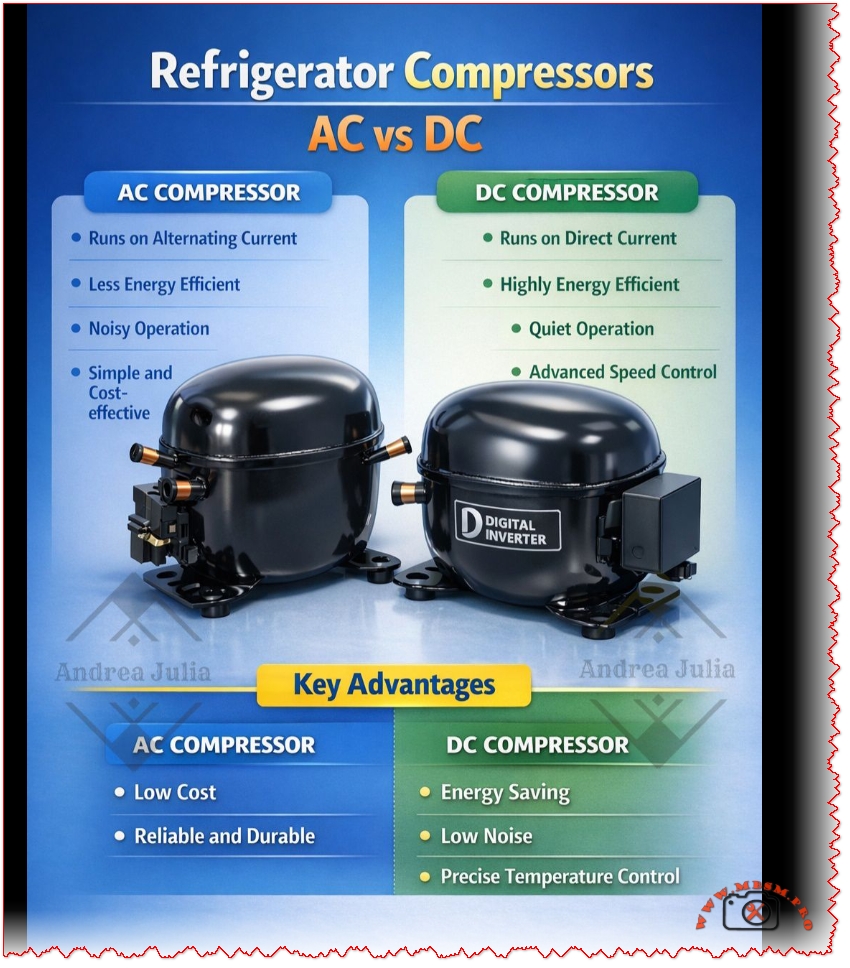
AC vs DC Refrigerator Compressors

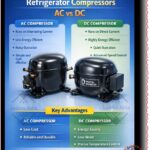
AC vs DC Refrigerator Compressors mbsmpro

Mbsmpro.com, Refrigerator Compressors, AC vs DC, Digital Inverter, Energy Saving, Low Noise, Precise Temperature Control, Home and Commercial Cooling

AC vs DC Refrigerator Compressors: The New Battle Inside Your Fridge

Refrigerator compressors are moving from simple AC motors to sophisticated DC inverter technology that promises lower bills, less noise, and tighter temperature control. DC inverter compressors now dominate premium refrigerators, while classic AC units remain attractive where upfront cost is critical.​

Core Principles of AC and DC Compressors

  • AC refrigerator compressors use alternating current and usually work ON/OFF at fixed speed; the thermostat starts and stops the motor when cabinet temperature crosses the set point, which wastes energy in frequent restarts.​
  • DC inverter compressors run on direct current and adjust speed continuously by changing voltage and frequency, matching cooling capacity to real load instead of cycling at full power.​​
  • This variable‑speed strategy cuts start‑up current peaks, improves part‑load efficiency, and keeps evaporator temperature more stable than fixed‑speed AC designs.​​

Technical Comparison: AC vs DC Compressors

Operating characteristics

  • AC compressors behave like a binary switch: either maximum capacity or stopped, which increases mechanical stress and temperature swings inside the refrigerator compartment.​
  • DC compressors modulate rotation speed; at light load they run slowly, reducing compression ratio and internal losses while still maintaining required suction pressure.​​
  • Inverter control electronics rectify the AC mains, then generate controlled DC power for the brushless motor so the system can follow fine temperature commands from the controller.

Energy and performance

  • Tests on household units show DC inverter refrigerator compressors can cut electricity use by around 20–30 % compared with equivalent fixed‑speed AC models, especially in part‑load operation.​​
  • More precise temperature control improves food quality and reduces frost build‑up, which further improves long‑term efficiency by keeping heat‑exchange surfaces cleaner.​​

Performance Table: AC vs DC Refrigerator Compressors

Criterion AC Compressor (Fixed‑Speed) DC Inverter Compressor
Power supply 1‑phase AC mains, typically 220–240 V 50 Hz in domestic fridges Rectified to DC, controlled by inverter electronics ​
Control mode ON/OFF cycling at single speed Variable‑speed, continuous modulation ​
Typical energy use Baseline; higher at part‑load due to frequent starts About 20–30 % lower consumption in comparable fridges ​
Noise level Noticeable start/stop clicks and vibration Significantly quieter; soft start and smoother rotation ​
Temperature stability Wider swings around set point Tight, stable cabinet temperature, better food preservation ​
Purchase cost Lower compressor and control cost Higher due to inverter electronics and BLDC motor ​
Best use cases Budget fridges, simple commercial units, robust environments Premium domestic fridges, solar/off‑grid systems, medical and high‑value storage ​

Economic and Practical Trade‑Offs

  • In many markets, the added cost of a DC inverter refrigerator can be recovered in a few years purely through lower electricity bills, especially where tariffs are high or usage is continuous.​​
  • AC compressors remain competitive in low‑cost appliances and in regions with unstable power quality, because they use simpler starting gear and cheaper spare parts.​
  • For OEMs, copper windings, precision machining, and control electronics are key cost drivers; optimizing these elements can cut compressor manufacturing cost by about 10 % without sacrificing performance.

Application Comparisons Beyond Domestic Refrigeration

1. Solar and mobile refrigeration

  • DC compressors powered directly from 12 V or 24 V battery systems avoid inverter losses and are now common in RVs, boats, telecom shelters, and off‑grid vaccine coolers.
  • Their compact form factor and high part‑load efficiency make them ideal for portable coolers and mini freezers where every amp‑hour matters.

2. Air conditioning and heat pumps

  • In AC and heat‑pump systems, inverter compressors use the same DC modulation principle to deliver faster pull‑down and quieter operation while reducing energy use and vibration.
  • Variable‑speed technology combined with economizer or vapor‑injection circuits further boosts heating capacity at low ambient temperature, as seen in modern R410A DC EVI compressors.​

3. Commercial refrigeration

  • Conventional fixed‑speed hermetic AC compressors still dominate walk‑in coolers and supermarket cases because of their low cost and well‑known service procedures.​
  • However, new digital inverter and scroll solutions can provide up to 40 % better energy efficiency and noticeably lower greenhouse‑gas emissions compared with legacy constant‑speed compressors.

Extended Specification Table: AC, DC Inverter, and Inverter Scroll

Feature Classic AC Hermetic DC Inverter Hermetic Digital/Inverter Scroll
Motor type Induction, fixed‑speed Brushless DC with inverter AC or BLDC with digital/inverter control ​
Typical capacity control 0 or 100 % 20–120 % continuous modulation 10–100 % through digital or speed modulation ​
Start current 4–8× running current (needs PTC or relay) Soft‑start; close to running current Soft‑start via inverter; reduced grid impact ​
COP at part‑load Drops sharply High COP due to optimized speed High, especially in comfort AC 
Maintenance Simple, widely available spares Electronics sensitive to surge and moisture Requires trained technicians and diagnostics ​
Typical noise Higher cycling noise Very low continuous hum Low; suited for residential AC 

Choosing Between AC and DC Compressors

  • For home refrigerators, DC inverter models are now the best choice when long‑term energy savings, low noise, and food quality are priorities, even if initial price is higher.​​
  • For entry‑level appliances or harsh workshop environments, robust AC compressors remain relevant thanks to their simplicity and lower replacement cost.​​
  • In specialized segments such as medical cold chains, telecom shelters, and high‑end commercial cabinets, DC and inverter compressors offer clear advantages in reliability, temperature accuracy, and total cost of ownership.​​
AC vs DC Refrigerator Compressors mbsmpro


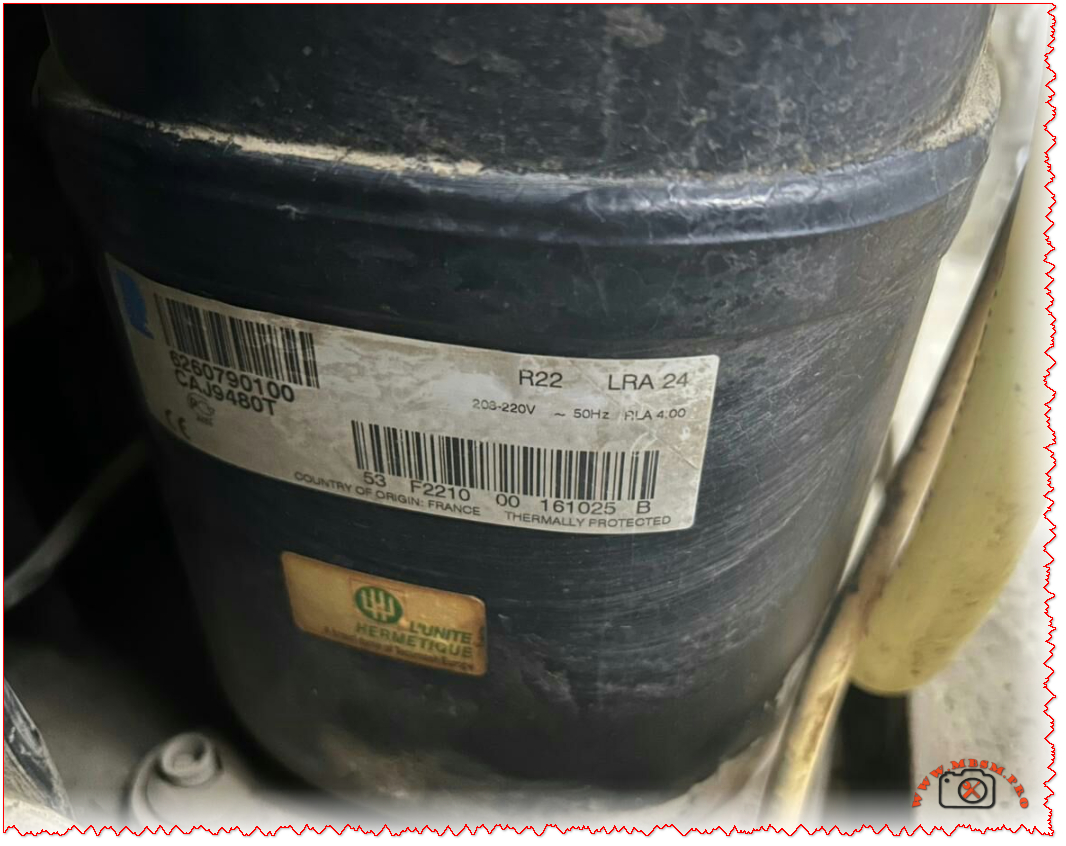
Tecumseh CAJ9480T R22 Hermetic Compressor: Complete Technical Guide for Professionals

Tecumseh CAJ9480T R22 Hermetic Compressor: Complete Technical Guide for Professionals

The Tecumseh / L’Unité Hermetique CAJ9480T is a fully hermetic reciprocating compressor designed for commercial refrigeration systems operating with R22 and compatible retrofit refrigerants. Widely used in small cold rooms, display cabinets and compact condensing units, it runs on 220–240 V single‑phase, 50 Hz power and delivers 5/8 HP with around 1.97 kW of cooling capacity at EN12900 conditions.

General description

This model belongs to the CAJ family, Tecumseh’s workhorse range for medium and high back‑pressure refrigeration applications such as positive‑temperature cold rooms and commercial coolers. It is a hermetic piston compressor using a CSR motor (capacitor start, capacitor run), giving high starting torque and stable operation on standard single‑phase networks.

Manufactured in France under the L’Unité Hermetique brand, the CAJ9480T combines compact size, good efficiency and a robust mechanical design, which explains its popularity among installers and service companies like Mbsmgroup, Mbsm.pro and mbsmpro.com.

Main technical specifications (with HP and W)

The table below consolidates key data from Tecumseh specification sheets and trusted distributors.

Specification CAJ9480T value (R22, 50 Hz)
Refrigerant R22 (and some approved retrofits such as R438A on specific codes)
Application range Medium / high back pressure (commercial refrigeration)
Nominal horsepower (HP) 5/8 HP (0.625 HP)
Nominal cooling capacity (W) ≈ 1 968 W at EN12900: 220 V, 50 Hz, +5 °C evap / +50 °C cond
Input electrical power (W) ≈ 780–800 W at the same EN12900 rating point
Displacement 15.2 cm³/rev
Supply voltage 220–240 V, 1‑phase, 50 Hz
Voltage range 187–242 V (50 Hz)
Rated load amps (RLA, 50 Hz) ≈ 4 A
Locked rotor amps (LRA) ≈ 24 A
Oil type / quantity Synthetic alkylate or mineral, approx. 475–887 cm³ depending on version
Net weight ≈ 19–22 kg

The nameplate visible in your photo shows “R22 – LRA 24 – 203–220 V – 50 Hz – RLA 4.00”, matching these published values and confirming a single‑phase CAJ9480T produced in France.

Typical applications and field use

Because of its capacity, voltage and starting characteristics, the CAJ9480T fits many everyday refrigeration jobs.

  • Small cold rooms for butchers, restaurants, bakeries and mini‑markets originally charged with R22.
  • Vertical display cabinets, reach‑in fridges and refrigerated counters using factory‑built condensing units.
  • Custom‑built condensing units and mini‑packs produced by specialists such as Mbsmgroup, Mbsm.pro and mbsmpro.com, especially where reliable 5/8 HP performance is required on 230 V single‑phase.

Its CSR motor and high starting torque help the compressor start under tougher conditions, such as long pipe runs or marginal supply voltage.

Installation and maintenance best practices

Correct installation and servicing are essential to protect this compressor and keep systems efficient.

  • Flush and evacuate the circuit carefully, and always install a new filter‑drier when replacing a failed R22 compressor.
  • Use the start and run capacitors and potential relay recommended by Tecumseh (for example, 88 µF start and 15 µF run on the CAJ9480T‑FZ code) and follow the official wiring diagram.
  • Verify charge, suction superheat and condensing temperature so operation stays within Tecumseh’s performance envelope.
  • For R22 retrofit projects, respect manufacturer guidance on compatible replacement refrigerants and oil changes to avoid lubrication and overheating issues.

Working with trusted suppliers such as Mbsmgroup and its online platforms helps ensure genuine Tecumseh parts, correct electrical components and updated technical information.


Frascold D2‑15Y / D2‑15.1Y ​

Frascold D2 15Y: semi‑hermetic compressor for reliable commercial refrigeration

General overview

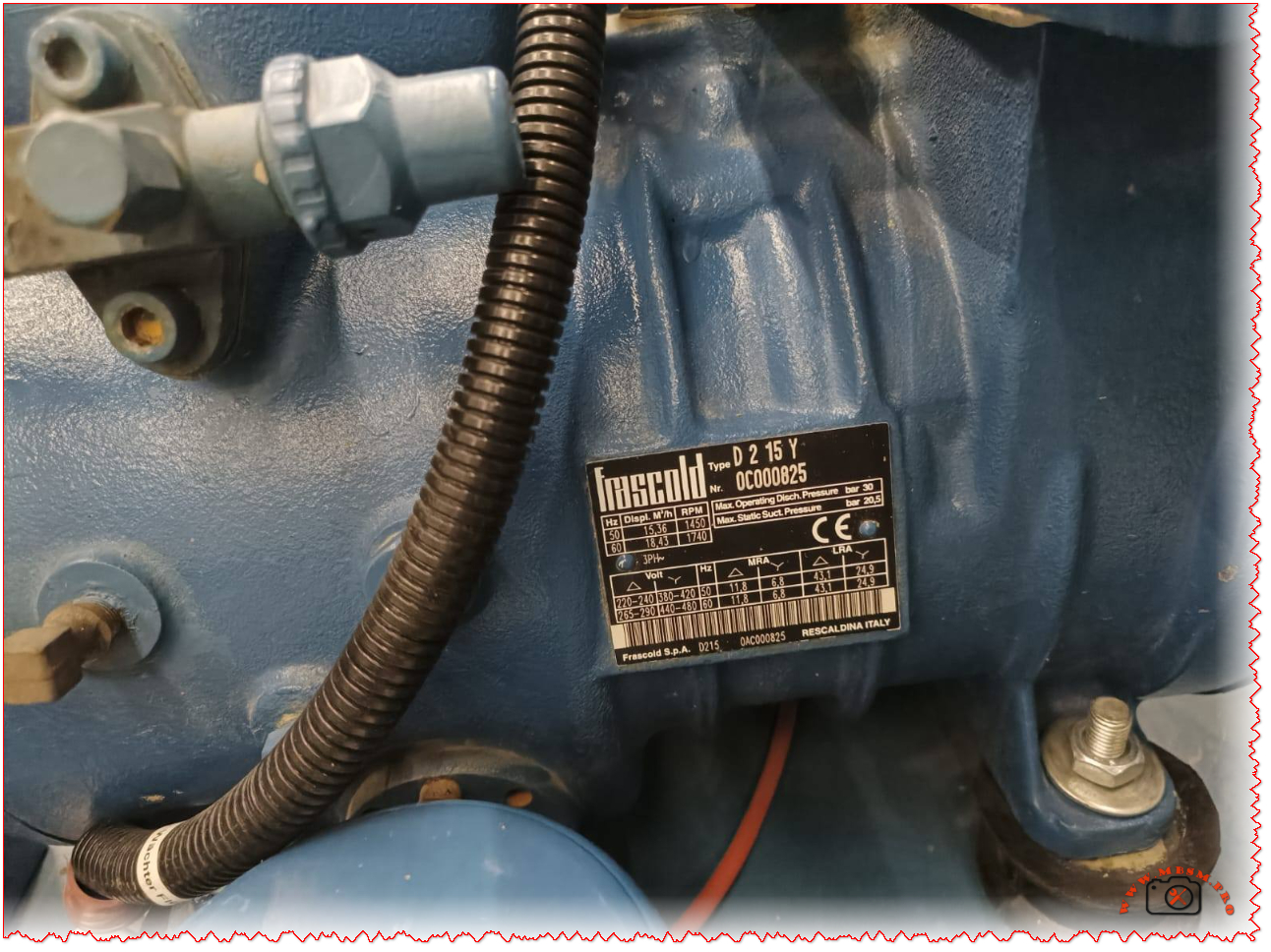
The Frascold D2 15Y is a two‑cylinder, semi‑hermetic reciprocating compressor designed for low‑ and medium‑temperature commercial and industrial refrigeration duties. With a displacement of about 15.4 m³/h at 50 Hz and a nominal motor power of 1.5 kW (2 HP), it fits perfectly in small to medium cold rooms, display cabinets and process coolers.

This model belongs to Frascold’s D series, known for compact cast‑iron bodies, quiet operation and high energy efficiency under EN12900 test conditions. The D2 15Y can be supplied as a bare compressor or integrated into silent condensing units, giving installers flexibility in plant design.

Key technical features

Frascold’s data show that the D2 15Y delivers around 6–7 kW of cooling capacity with R404A in typical low‑temperature duty, depending on evaporating and condensing conditions. The compressor is charged with POE oil (approx. 1.1 L) and uses robust suction and discharge service valves to facilitate commissioning and service.

Electrical supply options usually cover 220–240 V/3/50 Hz and 380–420 V/3/50 Hz (with corresponding 60 Hz variants), allowing use across most European three‑phase networks. The unit is compatible with multiple refrigerants, including R22, R134a, R404A, R507A, R407A/F, and new lower‑GWP blends such as R448A and R449A.

Table – Main data for Frascold D2 15Y

Parameter Typical value
Model D2‑15Y / D2‑15.1Y 
Technology Semi‑hermetic reciprocating, 2 cylinders 
Displacement (50 Hz) 15.36 m³/h 
Nominal motor power 1.5 kW – 2 HP 
Oil charge ≈ 1.1 L POE oil 
Typical cooling capacity ≈ 6.7 kW with R404A (EN12900 reference condition) 
Application Low/medium‑temperature refrigeration (LBP/MBP) 
Compatible refrigerants R22, R134a, R404A, R507A, R407A/F, R448A, R449A 

Benefits for HVACR professionals

Semi‑hermetic design means the D2 15Y can be opened for internal inspection and overhaul, extending service life compared with fully hermetic units in demanding duty cycles. The compressor is also suitable for operation with variable‑frequency drives, enabling smooth capacity modulation from part‑load to peak demand while improving seasonal efficiency.

For contractors and wholesalers, the D2 15Y’s widespread availability and clear documentation (including a dedicated PDF datasheet and full catalog) simplify selection, replacement of legacy units and stocking of spare parts. Its broad refrigerant approval list helps systems transition towards lower‑GWP blends without changing the compressor platform.


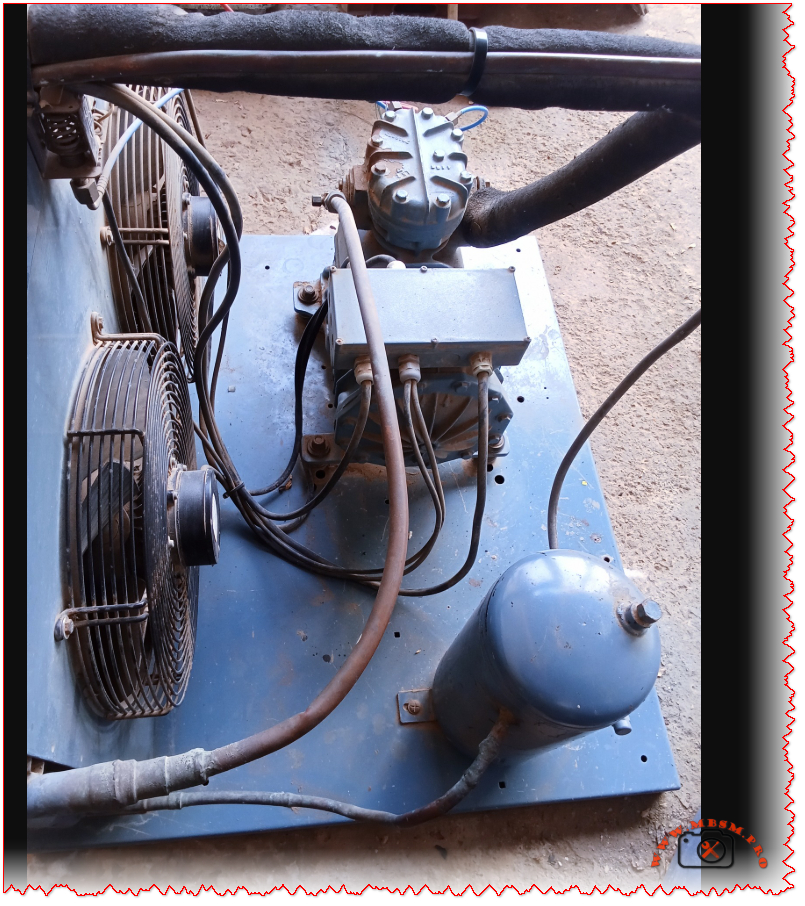
 Copeland-15hp

Copeland condensing unit for cold room – features, applications and installation tips

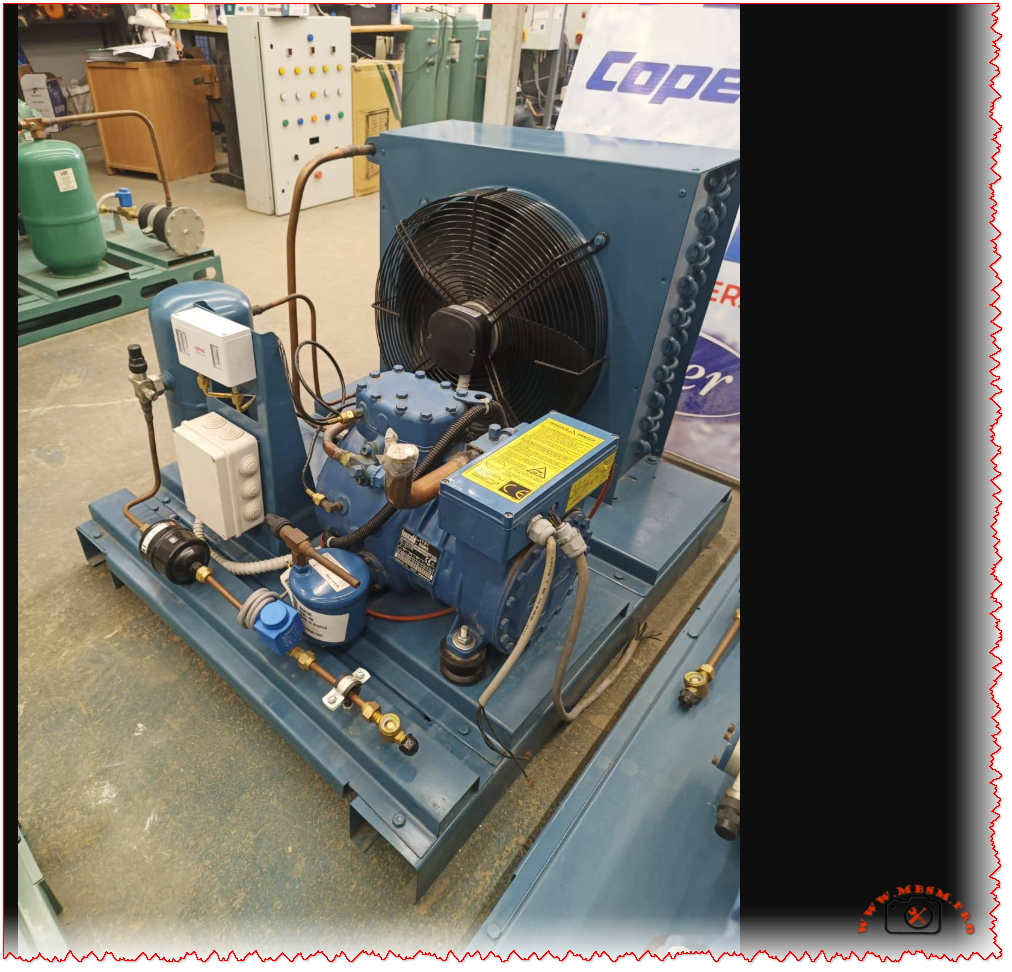
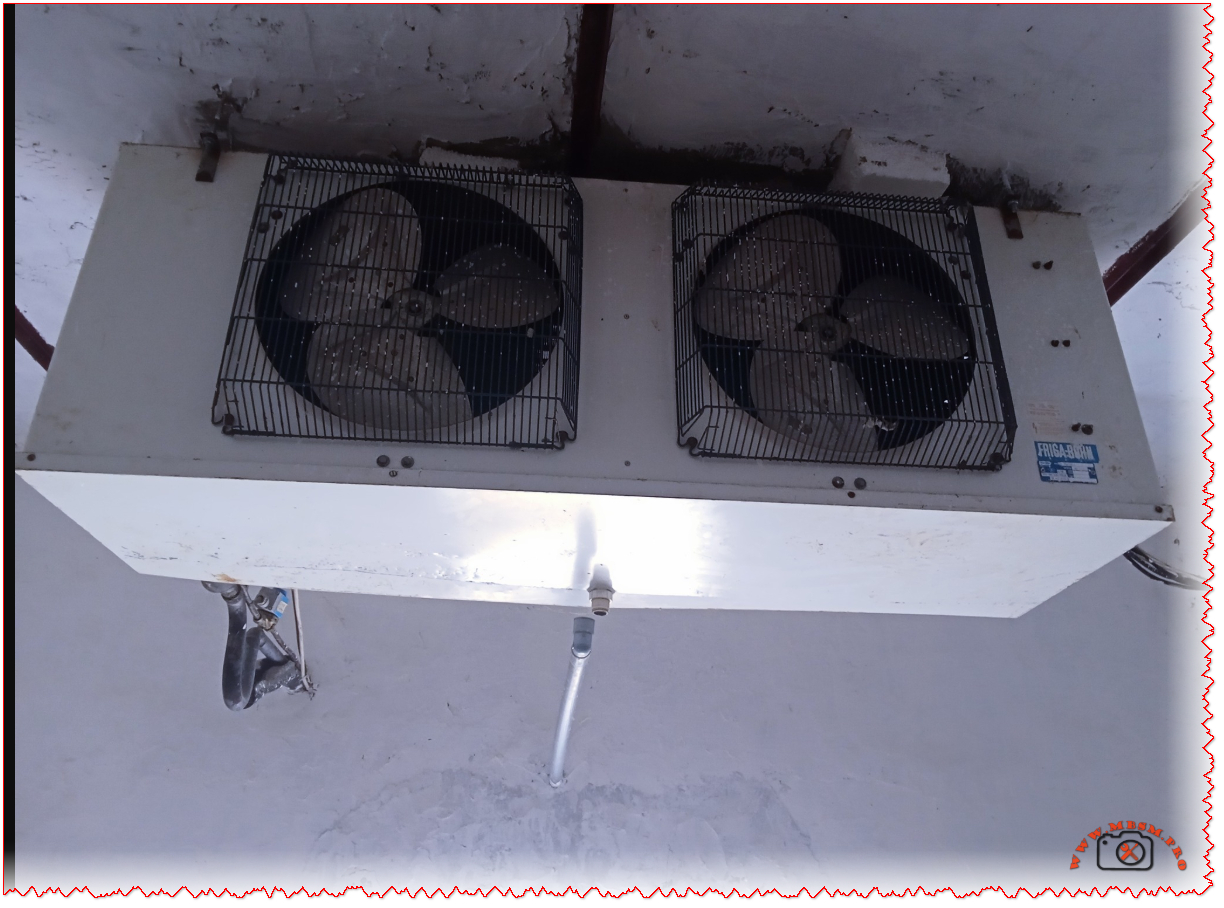
The condensing unit (group) is an original Copeland brand motor rated at 15 horsepower (15 HP), while the evaporator fans are Friga‑Bohn brand (two fans), both in good working condition

Equipment description

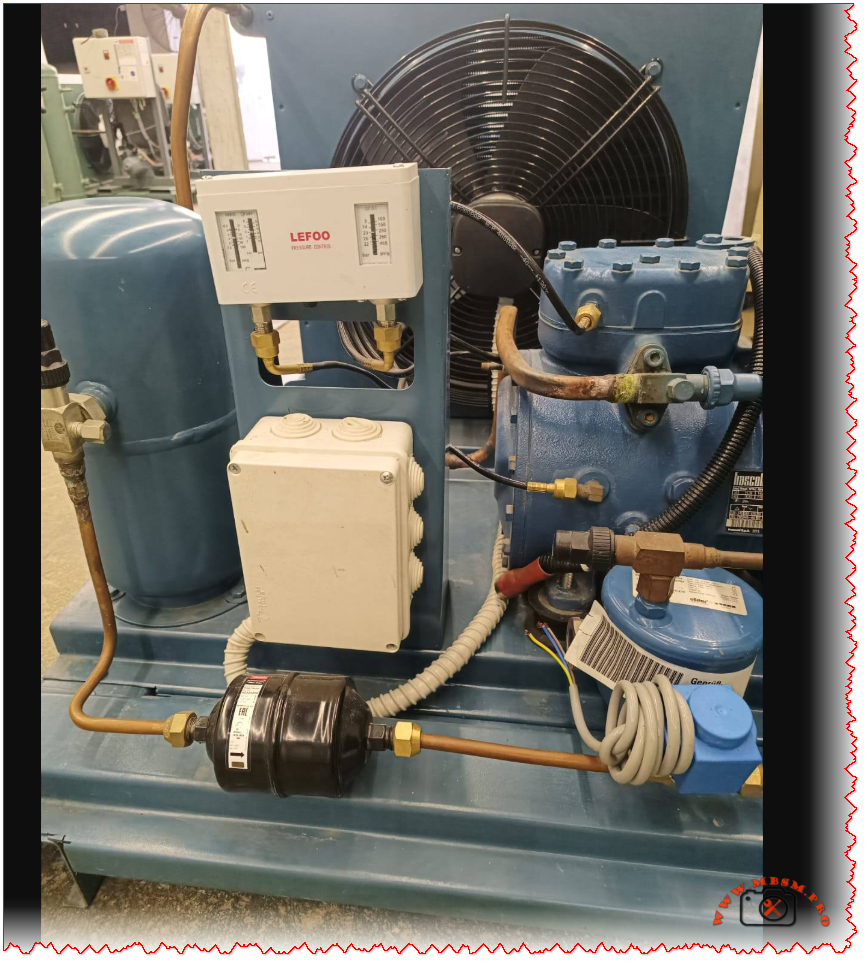
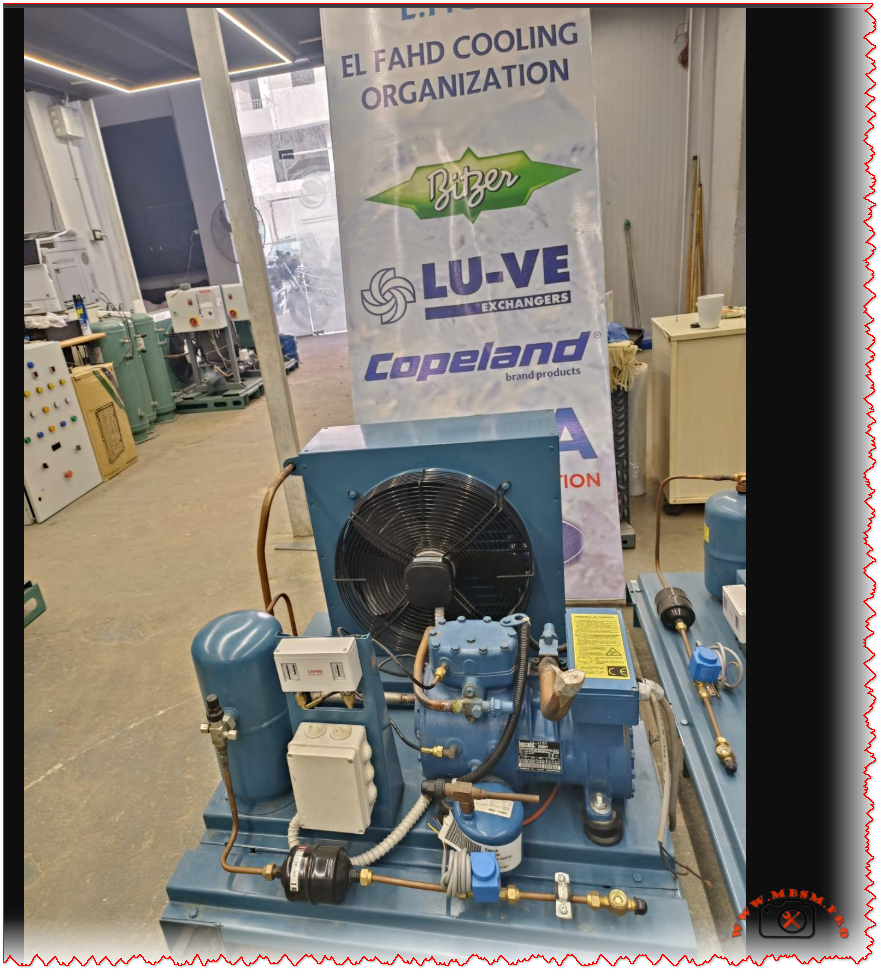
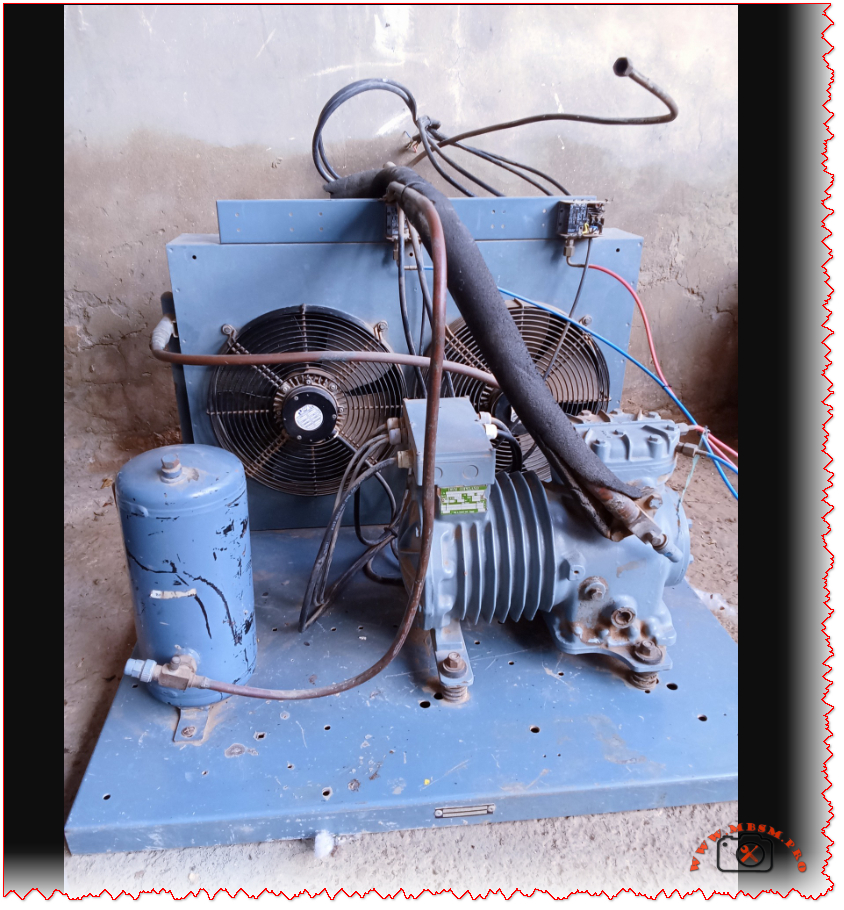
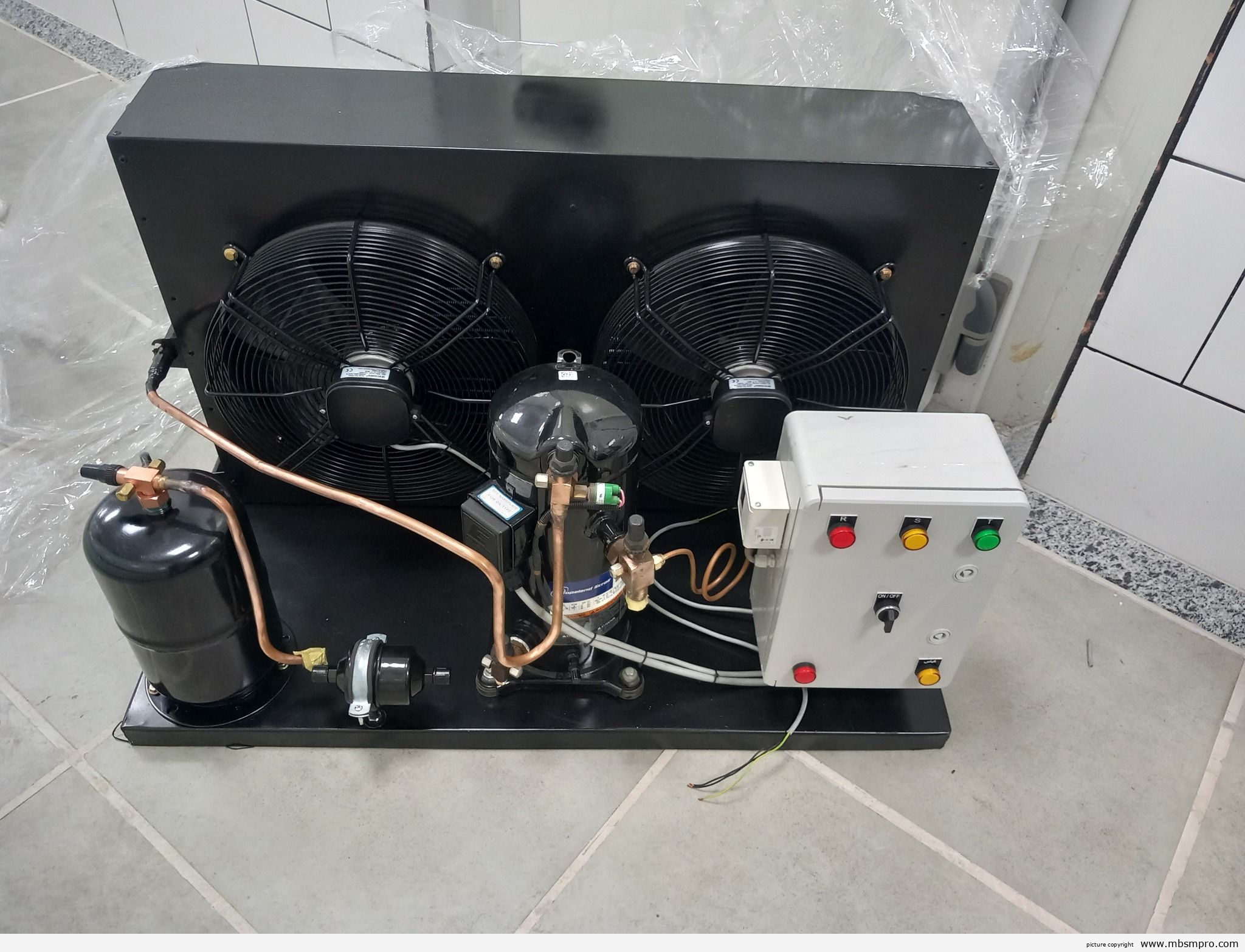
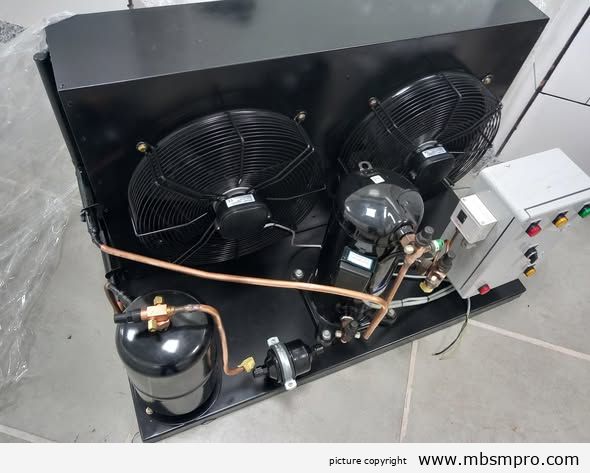
The images show a Copeland condensing unit on a steel base, with a semi‑hermetic refrigeration compressor, air‑cooled condenser with dual fans and a vertical liquid receiver, designed for a cold room at positive or low temperature. This configuration is widely used in food retail, cold storage and agro‑food applications where stable temperature and continuous duty are essential.​​

The ceiling‑mounted evaporator with two axial fans distributes the cold air evenly inside the room and returns refrigerant gas to the Copeland compressor through insulated suction and liquid lines. Pairing a Copeland condensing unit with a forced‑air evaporator is a classic solution that remains easy to install, commission and service for professional refrigeration contractors.​​

Copeland brand and technology

Copeland is a global reference in refrigeration compressors, offering scroll, semi‑hermetic and hermetic models with high energy efficiency and broad operating envelopes. Its equipment covers commercial refrigeration from medium‑temperature cold rooms to low‑temperature freezers, helping retailers and logistics operators secure the full cold chain.

Modern Copeland systems often integrate advanced protections, electronic controls and, on some ranges, Digital Scroll technology for capacity modulation, which improves temperature stability and reduces electrical consumption. For installers and companies such as Mbsmgroup or Mbsm.pro, this means more reliable systems, fewer service calls and better seasonal efficiency.

Typical features of Copeland condensing units

Although the exact nameplate of the photographed unit is not readable, Copeland catalogues describe the main features of their condensing unit ranges. These units are available with multiple refrigerants (such as R404A, R134a and newer lower‑GWP blends), and cover a wide capacity range suitable for small to large cold rooms.

Key technical characteristics (catalog examples)

Item Typical Copeland data
Compressor type Scroll or semi‑hermetic reciprocating, multi‑refrigerant, high efficiency. 
Application range Medium and low temperature, roughly from +12 °C down to around −40 °C depending on model. 
Capacity range Models sized for commercial cold rooms, freezers and display cases of various volumes. 
Condenser Quiet axial fans, available in standard or high‑ambient “tropical” versions. 
Options Digital Scroll capacity modulation, electronic controls, liquid line components and safety devices pre‑assembled. 

These catalogue values help technicians choose a replacement unit or design a new installation based on room size, target temperature and local climate.

Installation and maintenance recommendations

When installing or refurbishing a Copeland condensing unit like the one shown, technicians should:

  • Inspect the compressor, liquid receiver and all brazed joints for signs of damage or leaks before charging with refrigerant.
  • Clean the condenser coil and verify fan operation to ensure proper condensing pressure and avoid high‑pressure trips.

It is also important to select a refrigerant approved for the specific Copeland model (as listed in the product catalogue) and to follow the prescribed oil type and charge. Adding appropriate protections – high/low pressure switches, crankcase heater, motor protection and an electronic temperature controller – increases system reliability and extends the service life of the equipment.


Mbsmpro.com, ZB38, 5HP, R404, MBP

ZB38 5HP R404 MBP correspond à un compresseur scroll Copeland Emerson, modèle ZB38KQE ou ZB38KCE, puissance nominale 5 HP, conçu pour le fluide frigorigène R404A et destiné au service moyenne température (MBP = Medium Back Pressure).

Caractéristiques typiques:

  • Type: Scroll hermétique Copeland série ZB38 (Emerson).
  • Puissance: 5 HP, triphasé 380–400 V (suivant version TFD-551 / -558).
  • Fluide: optimisé pour R404A (souvent aussi compatible R507A, parfois R134a selon la plaque).
  • Application: réfrigération à température moyenne (MBP / MHBP), vitrines réfrigérées, chambres froides positives, etc.
  • Déplacement volumétrique: environ 14,4 m³/h; puissance frigorifique autour de 7–11 kW selon conditions (Te/Tc).

Signification de ton code:

  • ZB38 = série de compresseurs scroll réfrigération Copeland, taille « 38 ».
  • 5HP = puissance moteur nominale.
  • R404 = fluide R404A prévu pour ce modèle.
  • MBP = utilisation en température moyenne (évaporation typique -10 °C à +5 °C pour chambres froides positives, conservateurs…).

Si tu précises les conditions de travail (Te, Tc, sous-refroidissement, surchauffe), il est possible d’estimer la capacité frigorifique exacte et vérifier si ce compresseur est adapté à ta chambre froide ou ton évaporateur actuel.

In commercial refrigeration, the compressor is more than just a component; it is the engine that decides whether a cold room runs smoothly or becomes a constant source of service calls. The ZB38 5HP R404A MBP scroll compressor is one of those models that technicians encounter again and again in supermarkets, butcheries, bakeries and restaurant cold rooms. Its popularity comes from a balance of capacity, efficiency and robustness that fits the core needs of medium-temperature systems.

What ZB38 5HP R404A MBP Really Means

When technicians talk about “ZB38 5HP R404A MBP”, they are compressing a lot of technical information into a short code.

  • ZB38: Indicates a scroll refrigeration compressor series and displacement class, typically around 5 HP in the manufacturer’s lineup.
  • 5HP: The nominal motor power, placing it in the range commonly used for medium-sized cold rooms and supermarket display lines.
  • R404A: The main refrigerant for which the compressor is optimized, historically a standard in commercial refrigeration despite ongoing phase-down discussions in many markets.
  • MBP (Medium Back Pressure): Specifies that the compressor is designed for medium-temperature applications such as positive-temperature cold rooms, fresh products, dairy and beverages, rather than deep-freeze low-temperature duties.

This decoding matters because each part of the designation tells the technician where the compressor can work safely, which refrigerant is acceptable and what kind of evaporating temperatures the system can handle without pushing the compressor beyond its envelope.

Typical Applications in the Field

A 5HP R404A MBP scroll compressor naturally positions itself in the heart of medium-sized commercial installations.

  • Cold rooms for fresh meat, fruits and vegetables, where evaporating temperatures often range roughly between −10∘C−10∘C and +5∘C+5∘C, depending on the product and humidity control strategy.
  • Supermarket wall cases and island cabinets for dairy, delicatessen and beverages, where multiple evaporators may be connected to a single condensing unit based on the ZB38 platform.
  • Food-service equipment in hotels, central kitchens and bakeries, where reliability and quick recovery after door openings are more important than extreme low temperatures.

In these contexts, the ZB38 class compressor offers enough capacity to manage a significant thermal load while remaining compact, which is crucial when equipment must fit on rooftops, balconies or tight machine rooms in dense urban environments.

Why Scroll Technology Dominates This Segment

Scroll compressors like the ZB38 have progressively replaced many traditional reciprocating models in MBP applications.

  • Fewer moving parts reduce mechanical noise, vibration and wear, which in practice often means fewer mechanical failures and smoother operation.
  • The continuous compression process delivers stable mass flow, improving evaporator performance and temperature control inside cold rooms and cabinets.
  • The compact, hermetic construction simplifies installation, reduces the risk of leaks at mechanical joints and helps manufacturers build more compact condensing units.

For technicians, scrolls are often easier to handle: electrical connections are straightforward, and the absence of complex valve mechanisms or external crankcase components shortens installation and troubleshooting time when compared with older piston designs.

Key Operating Parameters Technicians Monitor

Working with a 5HP R404A MBP compressor requires attention to several practical parameters, even if the data sheet is not in hand.

  • Evaporating temperature: Usually in the medium range, technicians watch suction pressure to ensure it stays within the recommended envelope, avoiding both overloading and poor oil return.
  • Condensing temperature: Condenser cleanliness, ambient temperature and fan control directly impact discharge pressure, compressor current and overall energy consumption.
  • Superheat and subcooling: Correct expansion valve setting and a stable liquid line temperature help prevent liquid slugging at start-up and maintain the right mass flow through the evaporator.

In practice, a well-adjusted system keeps the compressor within its design envelope during the hottest days of summer, which is often where installations in Mediterranean climates are pushed to their limits.

Installation and Start-Up Best Practices

Even the most robust compressor can fail prematurely if basic installation guidelines are ignored.

  • Cleanliness: Piping must be brazed with nitrogen purging and thoroughly evacuated to remove moisture and contaminants that can degrade oil and valves.
  • Oil management: Proper piping design, especially at the suction line and oil traps on vertical risers, ensures oil returns reliably to the compressor shell.
  • Electrical checks: Before energizing, technicians confirm supply voltage, phase sequence and proper overload protection, including verification of contactor and breaker sizing.

A disciplined start-up procedure—monitoring pressures, temperatures and compressor current over the first hour—usually reveals whether the system is healthy or if there are hidden issues like undersized condensers or incorrect charge.

Maintenance and Diagnostic Considerations

In daily practice, maintenance teams use a few key indicators to assess the health of a scroll compressor like the ZB38.

  • Noise and vibration: Changes in sound signature can announce mechanical damage, liquid return or severe gas under-cooling at the compressor.
  • Discharge line temperature: Excessive discharge temperature often points to high condensing pressure, low refrigerant charge or poor suction gas cooling.
  • Oil color and level (if visible through an indicator): Darkened or acidic oil is a clear warning that the system has experienced overheating or contamination, and that deeper corrective action is required.

Regular cleaning of condensers, checking fan operation and verifying that defrost cycles are effective in evaporators can significantly extend compressor life by keeping operating conditions within design limits.

Where This Technology Is Heading

Although R404A has long been the standard for MBP commercial applications, environmental regulations are pushing the market toward lower-GWP alternatives and redesigned compressors.
Manufacturers are gradually adapting similar 5HP scroll platforms to new blends with different pressures and glide characteristics, while technicians increasingly need to be familiar with multiple refrigerants and their specific charge and oil requirements.
For users and contractors, this transition highlights the importance of good documentation, training and practical feedback from the field—an area where communities of technicians, independent platforms such as mbsmgroup.tn and projects like mbsm.pro, mbsmgroup and mbsmpro.com can play a useful role in sharing real-world experience and solutions.

Suggested exclusive images for this topic (you can create or photograph them yourself):

  • A close-up of a 5HP scroll compressor label showing model code, refrigerant and electrical data.
  • A medium-temperature cold room condensing unit with the compressor, condenser and control box visible on a rooftop or service balcony.
  • A technician’s hand holding clamp meter and manifold gauges connected to a running MBP R404A condensing unit.
  • A clean, well-lit cold room interior with product on shelves, showing air coolers on the ceiling and neat piping.
  • A side-by-side photo of a scroll compressor and an older reciprocating unit on a workshop floor, demonstrating the difference in size and design.


R134a compressor, 1/3 HP, LBP, commercial refrigeration, domestic freezer, cooling capacity, COP, mbsm.pro, mbsmgroup.tn, mbsmgroup, mbsmpro, mbsmpro.com, Siberia, Panasonic, Embraco, Secop, Tecumseh, Donper, Cubigel, Zero, ZMC, Samsung

Selecting a compressor for refrigeration and freezing is more than numbers; it’s about trust, energy efficiency, and optimal performance in demanding environments. This professional comparison presents 10 of the most respected LBP R134a compressors, used worldwide for both commercial and domestic cooling solutions. All models deliver consistent results, and this data-driven guide will help you make a confident choice.

Comparison Table:

Model Brand HP Voltage/Freq Refrigerant Cooling Capacity (W) C.O.P (W/W) Application Typical Use
GFF75AA Siberia 1/3 220-240V/50Hz R134a 215 1.25 LBP Freezing/Cooling
PFL75AA Panasonic 1/3 220-240V/50Hz R134a 248–324 1.41–2.03 LBP Freezing/Cooling
EGAS100HLR Embraco 1/3 220-240V/50Hz R134a 250 ~1.20–1.30 LBP Freezing/Cooling
STT134L Secop 1/3 220-240V/50Hz R134a 205 ~1.20 LBP Freezing/Cooling
AEA4440Y Tecumseh 1/3 220-240V/50Hz R134a 226 1.10 LBP Freezing/Cooling
ZR86AA Zero 1/3 220-240V/50Hz R134a 250 1.52 LBP Commercial/Freezing
GPY14NGA Cubigel 1/3 200-220V/50Hz R134a 250 ~1.30 LBP Display fridges
LM72CZ Donper 1/3 220V/50Hz R134a ~245 ~1.25 LBP Fridge/Freezer
EGM90AZ ZMC 1/3 220-240V/50Hz R134a ~235 ~1.20 LBP Domestic, commercial
ML200A Samsung 1/3 220-240V/50Hz R134a ~240 ~1.22 LBP Home/commercial

Exclusive Images:

Analysis and Use Cases:

  • Siberia GFF75AA: Known for balanced performance and robust construction.

  • Panasonic PFL75AA: Superior range, especially for commercial applications.

  • Embraco EGAS100HLR: Quiet, efficient—choice for high-demand retail.

  • Secop STT134L: Trusted for reliability and multi-temperature settings.

  • Tecumseh AEA4440Y: Durable, time-tested, fits tough environments.

  • Zero ZR86AA: High efficiency, strong for commercial setups.

  • Cubigel GPY14NGA: Reliable, used in display and retail cooling.

  • Donper LM72CZ: Versatile and value-focused.

  • ZMC EGM90AZ: Efficient for domestic and small business.

  • Samsung ML200A: Modern electronics, energy efficiency.

Conclusion:
Every fridge, freezer, and cold chain project has its unique requirements. The compressors above deliver trusted results for cooling and freezing, each with strengths in performance, efficiency, and system compatibility. For professional guidance and integration help, contact mbsmgroup.tn or mbsmpro.com.

https://mbsmpro.com/

mbsmpro.com-R134a compressor 13 HP LBP commercial refrigeration domestic freezer cooling capacity COP mbsmpro mbs

[pdf-embedder url=”https://mbsmpro.com/wp-content/uploads/2025/11/mbsmpro.com-R134a-compressor-13-HP-LBP-commercial-refrigeration-domestic-freezer-cooling-capacity-COP-mbsmpro-mbs.pdf” title=”mbsmpro.com-R134a compressor 13 HP LBP commercial refrigeration domestic freezer cooling capacity COP mbsmpro mbs”]