Maneurop MTZ160HW4VE

Maneurop MTZ160HW4VE mbsmpro

Mbsmpro.com, Compressor, MTZ160HW4VE, 13 hp, Maneurop, Cooling, R134a R404A R407C R507A, 20.3 kW, 380‑400/3/50Hz 460/3/60Hz, MBP/HBP, Hermetic reciprocating

Maneurop MTZ160HW4VE overview

The Maneurop MTZ160HW4VE is a heavy‑duty hermetic reciprocating compressor designed by Danfoss for medium‑back‑pressure commercial refrigeration with HFC refrigerants R134a, R404A, R407C, and R507A.
It targets cold rooms, process chillers, milk tanks, and larger beverage installations where robust construction, multi‑refrigerant flexibility, and three‑phase power supply are required.

Technical specifications and operating data

The MTZ160HW4VE belongs to the MTZ160‑4VI family and combines a three‑phase motor with high‑efficiency pistons to reach double‑digit horsepower levels.
Its nominal cooling capacity is about 20.3 kW at 50 Hz, with operation possible on 380‑415 V/3/50 Hz or 460 V/3/60 Hz networks.

Main technical data – MTZ160HW4VE

Parameter Value Notes
Compressor family Maneurop MTZ160‑4VI Medium‑temperature line.
Technology Hermetic reciprocating Piston design.
Nominal cooling capacity (50 Hz) 20.3 kW At R404A MBP rating.
Motor power supply 380‑415 V 3~ 50 Hz, 460 V 3~ 60 Hz Wide voltage range 340–440 V @ 50 Hz.
Motor protection Internal overload protector Thermally protected windings.
Max. operating current Around 36 A at 460 V 60 Hz Label LR (locked‑rotor) approx. 140 A.
Max. condensing temperature 50 °C According to series guideline.
Minimum suction gas temp. −35 °C LP slide TS min.
PS design pressure 22.6 bar PED data.
Oil type Danfoss POE 160PZ Factory charge of polyester oil.
Compatible refrigerants R134a, R404A, R407C, R507A and new blends like R448A/R449A/R452A Multi‑refrigerant platform.

This table shows why the MTZ160HW4VE is positioned as a 13 hp‑class compressor for large medium‑temperature duties rather than domestic or small commercial equipment.
The internal overload, POE 160PZ oil, and 22.6‑bar shell rating give it the safety margin needed for high‑pressure HFC blends like R404A and R507A.

Field applications and exploitation potential

Because of its capacity and three‑phase motor, the MTZ160 series is frequently installed in:

  • Medium‑temperature cold rooms for food storage in supermarkets and restaurants.
  • Process chillers, milk tanks, and air‑dryer systems that need stable evaporating temperatures and long run times.

For installers, the multi‑refrigerant capability is a real advantage: the same MTZ160HW4VE shell can be used with traditional R404A/R507A or retrofitted to lower‑GWP blends like R448A or R449A, provided the system is re‑calculated using Danfoss performance software.
The POE 160PZ oil ensures full miscibility with HFC and HFO blends, which is essential for good oil return in long piping runs and vertical risers in supermarket systems.

Value comparison with another Maneurop and Copeland models

To position this compressor on the market, it is useful to compare it with a smaller Maneurop MTZ80‑4VI and with a scroll alternative such as a Copeland ZR81KCE.

Capacity comparison

Model Technology Refrigerants Nominal capacity at 50 Hz Typical application
MTZ80‑4VI Hermetic reciprocating R404A/R507A/R407C/R134a ≈10 kW at MBP. Small cold rooms, display cases.
MTZ160HW4VE (MTZ160‑4VI) Hermetic reciprocating R404A/R507A/R407C/R134a 20.3 kW at MBP. Large cold rooms, process cooling.
Copeland ZR81KCE Hermetic scroll R404A/R407C etc. ≈18–19 kW at AHR MBP conditions. Packaged condensing units, rooftop units.

The MTZ160HW4VE clearly delivers about double the cooling capacity of the MTZ80‑4VI, which justifies its use in bigger cold rooms or multi‑evaporator racks.
Against a similar‑capacity Copeland scroll, the reciprocating design may be a bit noisier but offers higher displacement and strong performance at lower evaporating temperatures, making it attractive in heavy commercial refrigeration.

Operating range and refrigerant flexibility

Model Evaporating range Condensing limit Refrigerant flexibility
MTZ160HW4VE Medium‑temp, down to about −25 °C with R404A. Up to 50 °C condensing. R404A, R507A, R407C, R134a, R407A/F, R448A, R449A, R452A.
Copeland ZR scroll Medium‑temp, usually not as deep at low evaporating. Similar condensing limits depending model. Some models have narrower approved refrigerant lists.

From this table, the MTZ160HW4VE stands out by its very wide refrigerant portfolio, which is a strong value for installers looking for future‑proof solutions during HFC phase‑down.
Scroll compressors remain strong competitors in efficiency and sound level, but they are not always as tolerant to liquid slugging or deep evaporating conditions as a rugged reciprocating Maneurop.

Installation, reliability and service notes

Danfoss guidelines for MT/MTZ compressors specify that these units must be installed with proper crankcase heaters, suction line filters, and accurate superheat control to avoid liquid floodback.
They also recommend limiting the number of starts to around 12 per hour and ensuring correct phase rotation and voltage balance to protect the three‑phase motor.

During service, only POE 160PZ oil should be used, and charging must be done as a liquid from the cylinder when handling zeotropic blends such as R407C, R448A, or R449A to prevent fractionation.
When retrofitting from R404A to a lower‑GWP blend, system components such as expansion valves and line sizes must be checked against the new operating pressures and mass flow predicted by Danfoss software tools.

Maneurop MTZ160HW4VE mbsmpro


Tecumseh CAJ9480T: The French‑Made Heart of Legacy R22 Cold Rooms

Tecumseh CAJ9480T: The French‑Made Heart of Legacy R22 Cold Rooms

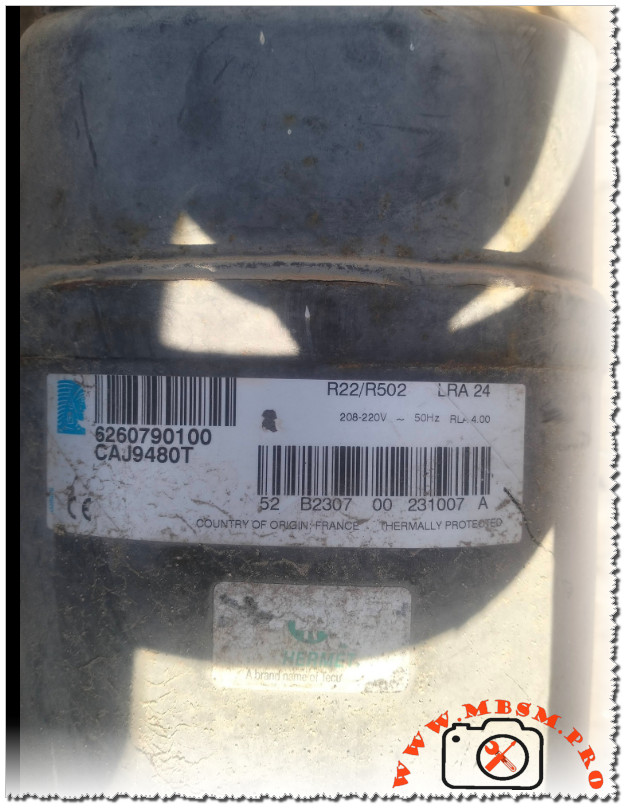
On the faded nameplate of this weathered compressor shell, one line stands out with absolute clarity: CAJ9480T – R22/R502 – Made in France. It is the unmistakable signature of a Tecumseh L’Unité Hermétique fully hermetic compressor, a workhorse still beating quietly inside thousands of small cold rooms and refrigerated cabinets around the world.


Identifying the CAJ9480T from the label

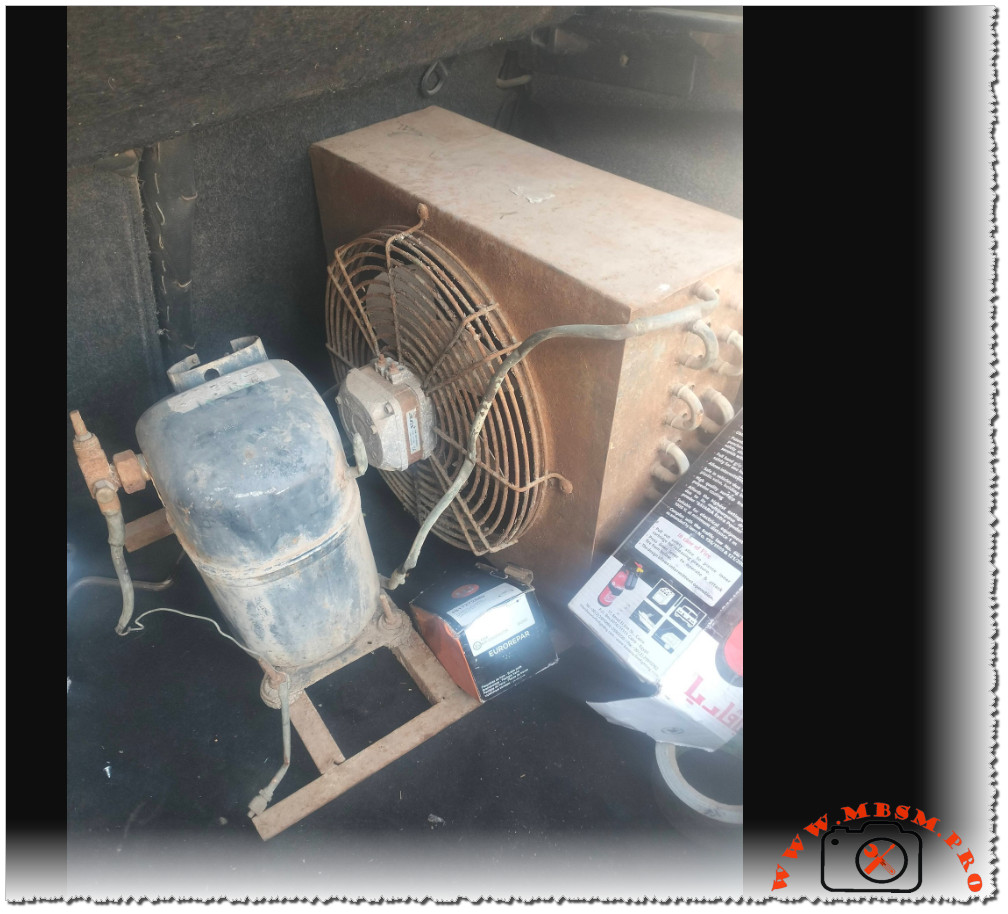
The image shows a classic welded‑shell compressor with a rectangular white label fixed on the body and a smaller green Tecumseh/L’Unité sticker below it.
Printed on the label, the model CAJ9480T appears alongside the refrigerant family R22/R502, the voltage range 208–220 V – 50 Hz, and the note THERMALLY PROTECTED, confirming an internally protected single‑phase motor.
The mention Country of origin: France links this unit to Tecumseh’s European manufacturing line, known under the historic L’Unité Hermétique brand, widely used in commercial refrigeration.


Technical profile of the CAJ9480T

Behind this modest steel shell lies a carefully engineered medium‑temperature compressor designed for reliability more than show.

  • It is a fully hermetic reciprocating compressor, meaning the electric motor and pistons are sealed in the same welded housing, minimizing leaks and simplifying service on the field.
  • In most data sheets the CAJ9480T is rated around 5/8 HP for R22 at 230 V, 50 Hz, suitable for small cold rooms, counters and display cases working in positive temperatures.
  • Typical electrical figures published for this model include a Rated Load Amps (RLA) close to 4 A and a Locked Rotor Amps (LRA) around 24 A, values that match the LRA 24 marking on many factory labels.

The following table summarises the key technical characteristics generally associated with a Tecumseh CAJ9480T in R22 applications.

Parameter Typical CAJ9480T value
Compressor type Fully hermetic reciprocating piston
Nominal horsepower Approx. 5/8 HP (medium temperature)
Refrigerant R22 (older labels may mention R22/R502; some variants accept R438A)
Voltage / frequency 220–240 V, single phase, 50 Hz (voltage code F/FZ)
Displacement About 15.2 cm³/rev
Rated Load Amps (RLA) ≈ 3.9–4.0 A at 50 Hz
Locked Rotor Amps (LRA) ≈ 24 A
Motor type CSR, high‑start torque with start and run capacitor
Oil charge Around 475–780 ml, mineral or alkylbenzene depending on version
Origin Tecumseh / L’Unité Hermétique, France

These values are essential for technicians who want to cross‑check compatibility when replacing a damaged unit or when sizing contactors, cables and protections.


Real‑world applications and typical uses

For many shop owners, the CAJ9480T is not a product code but “the compressor in the cold room that never stops”.

  • It is widely installed in small walk‑in cold rooms, butcher counters, beverage coolers and positive‑temperature cabinets where cooling capacity around 2 kW at medium evaporating temperatures is sufficient.
  • The evaporating temperature envelope usually runs from roughly –23 °C up to +12 °C, allowing the same base model to work in both cooler and slightly higher temperature applications when correctly selected.
  • Because R22 has been phased down in many markets, the CAJ9480T often appears in maintenance and retrofit projects: technicians may replace the original compressor with the same reference, or move to compatible alternative refrigerants when regulations and Tecumseh documentation allow it.

In all cases, checking the exact family (CAJ9480T‑FZ, CAJ9480T‑AJ2, etc.) is crucial, as each variant is optimized for specific refrigerants, voltages and accessories.


Installation notes from the field

Even the best compressor will not forgive poor installation. Technicians who work daily with CAJ‑series models usually insist on a few practical rules:

  • Clean piping and proper brazing: use nitrogen during brazing, replace the filter drier, and avoid introducing scale or moisture, which can quickly degrade the oil and shorten compressor life.
  • Accurate vacuum and charge: a deep vacuum combined with a charge adjusted to sight glass, superheat and manufacturer charts protects the compressor from liquid slugging and overheating.
  • Respect of operating envelope: the Tecumseh performance sheets show clear limits for high condensing temperatures and low evaporating pressures; staying inside this window prevents excessive motor current and thermal overload trips.
  • Correct starting equipment: since the CAJ9480T uses a CSR motor, the correct run capacitor, start capacitor and potential relay must be installed and wired following the original schematic to avoid hard starts and nuisance tripping.

For older R22 equipment, technicians also need to keep an eye on evolving regulations and encourage owners to plan long‑term upgrades towards more sustainable refrigerants and systems.