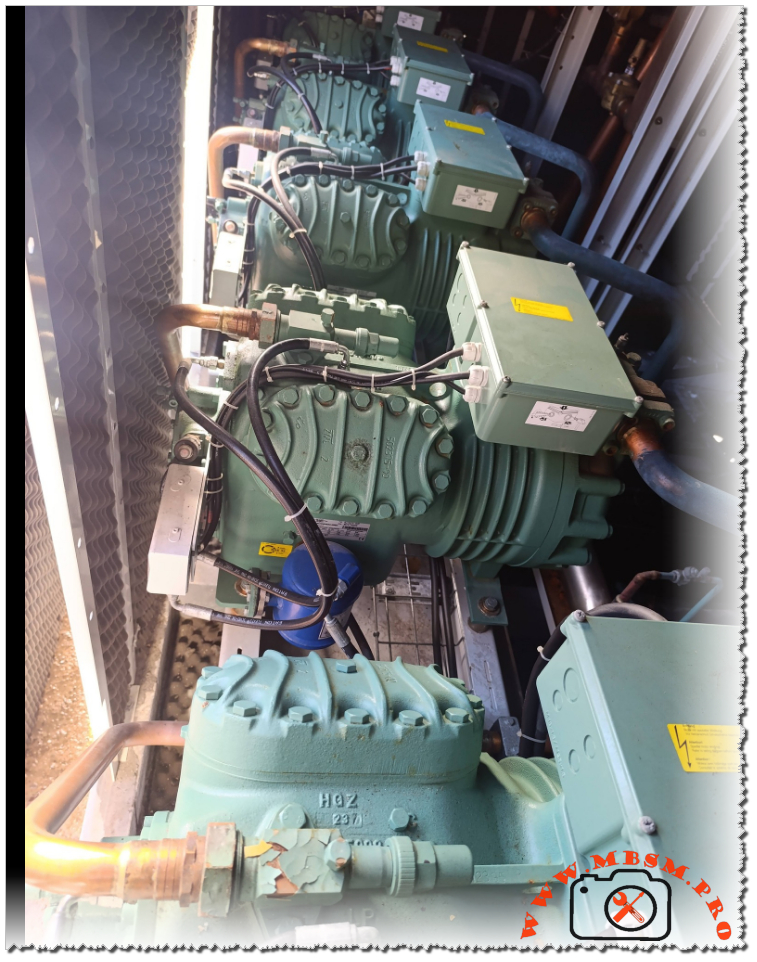
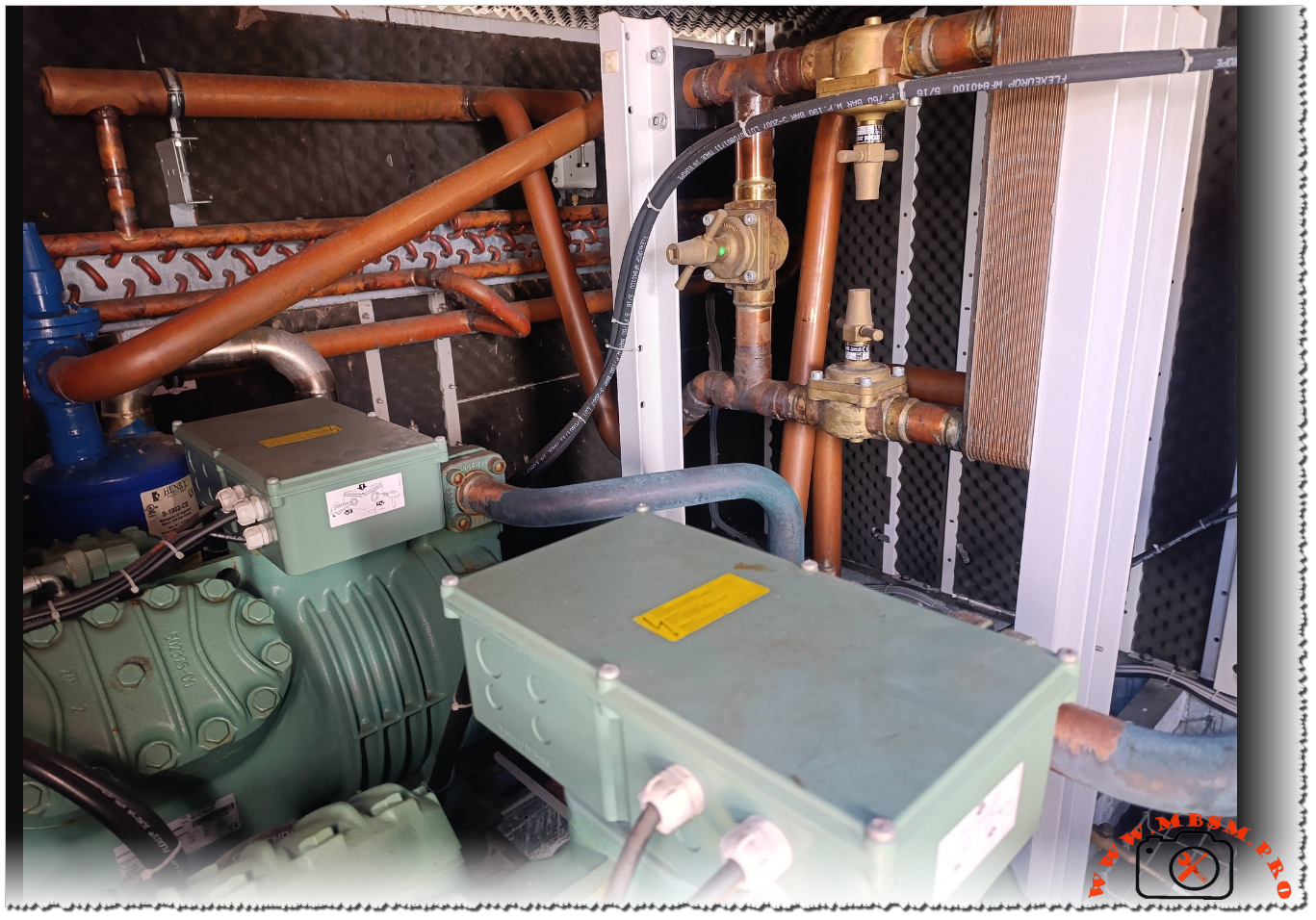
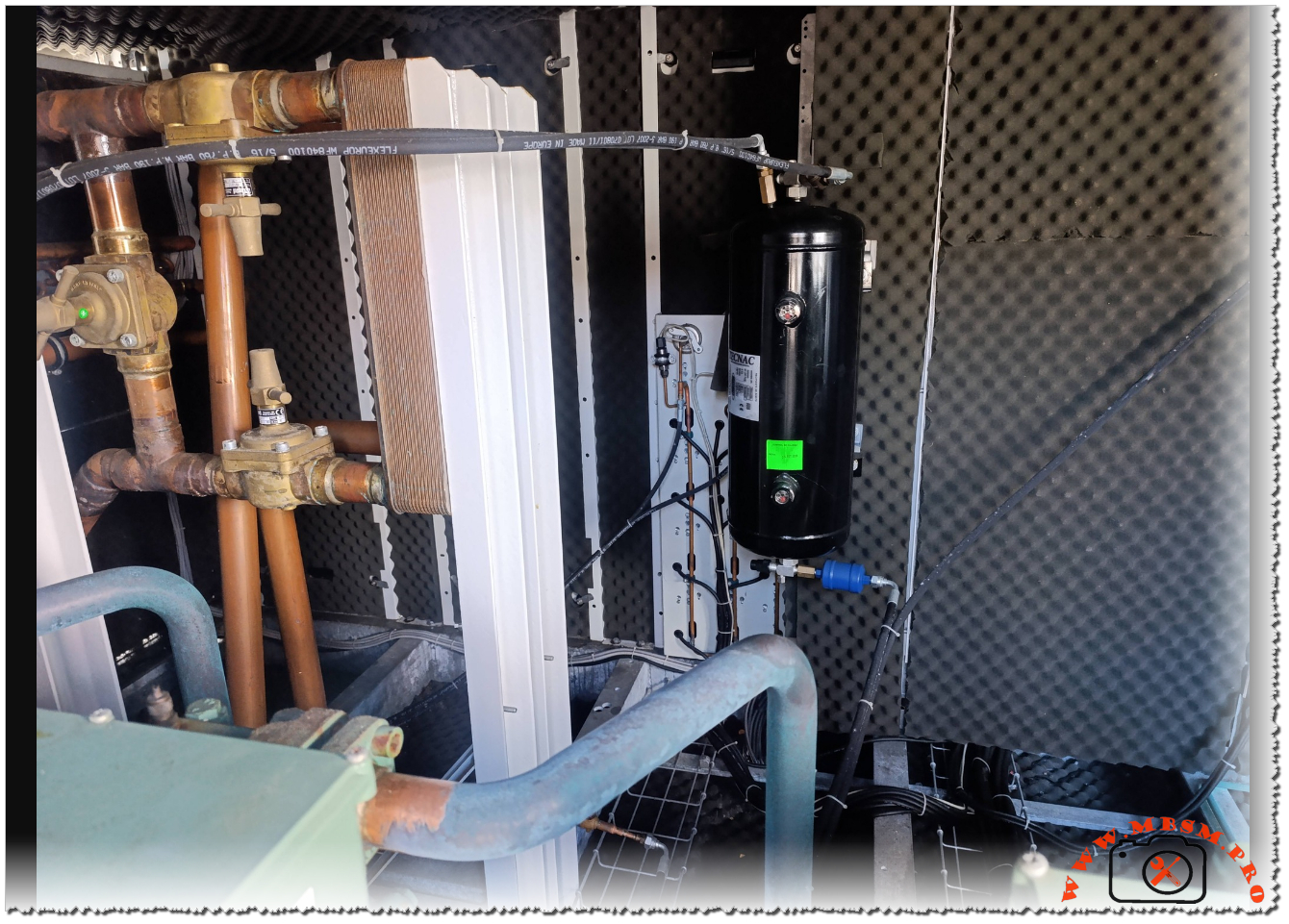
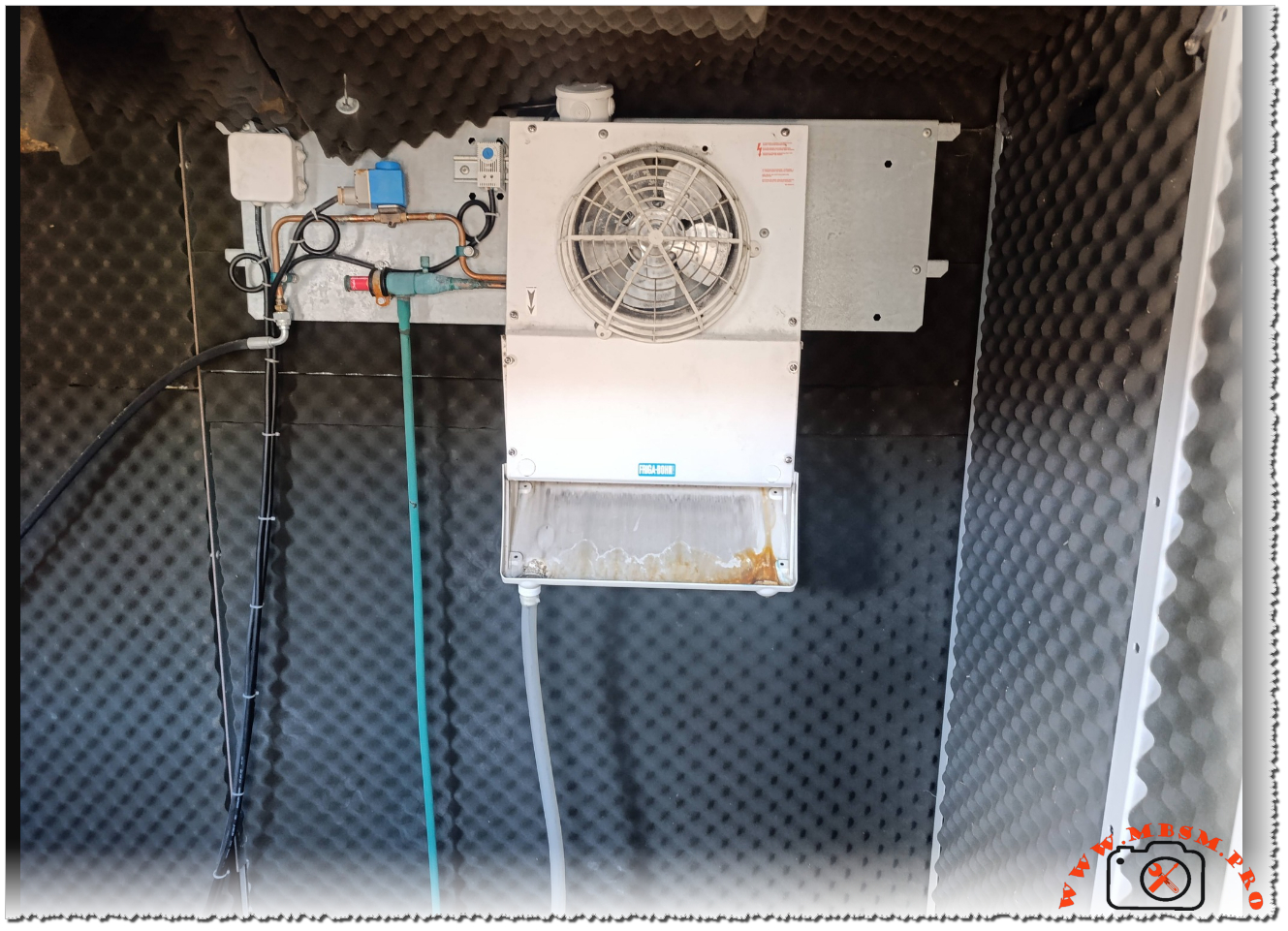
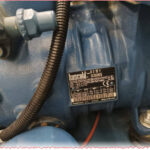
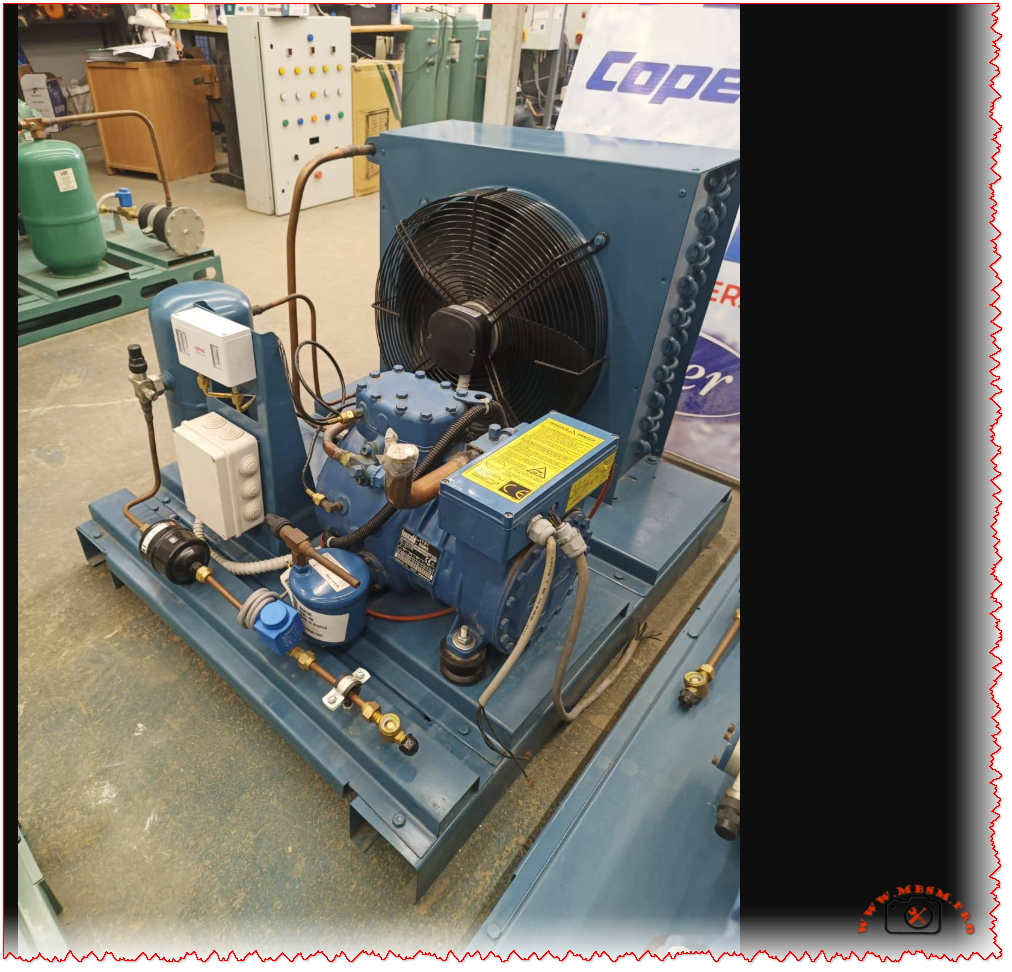
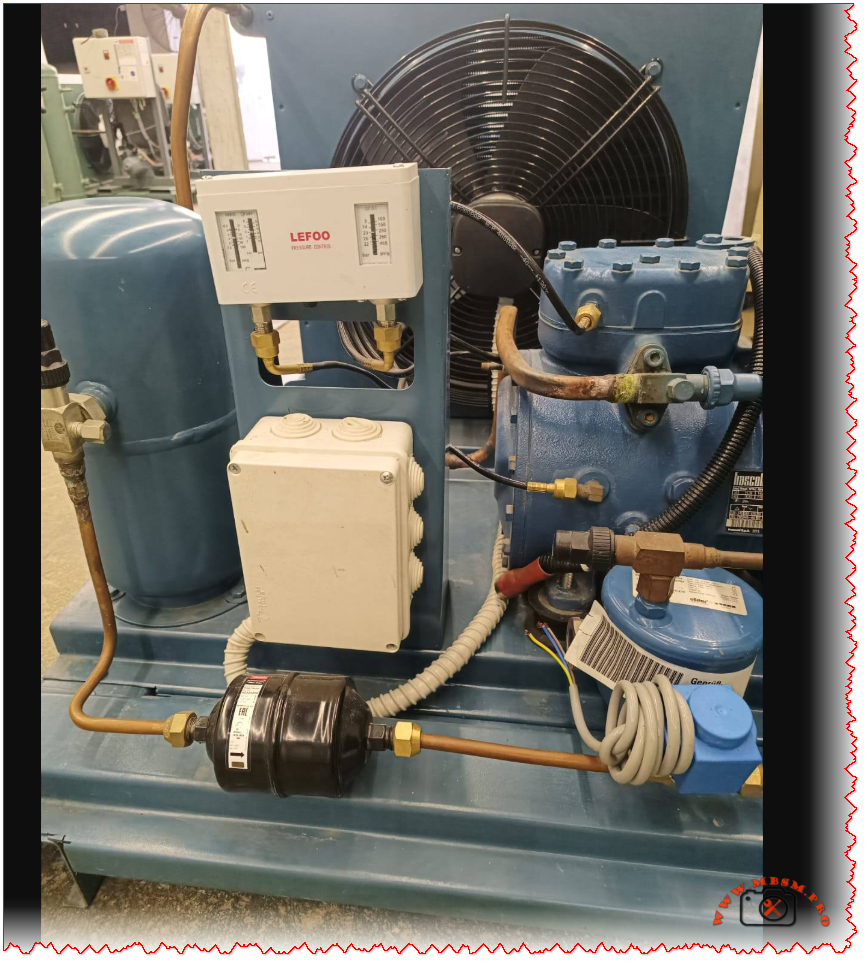
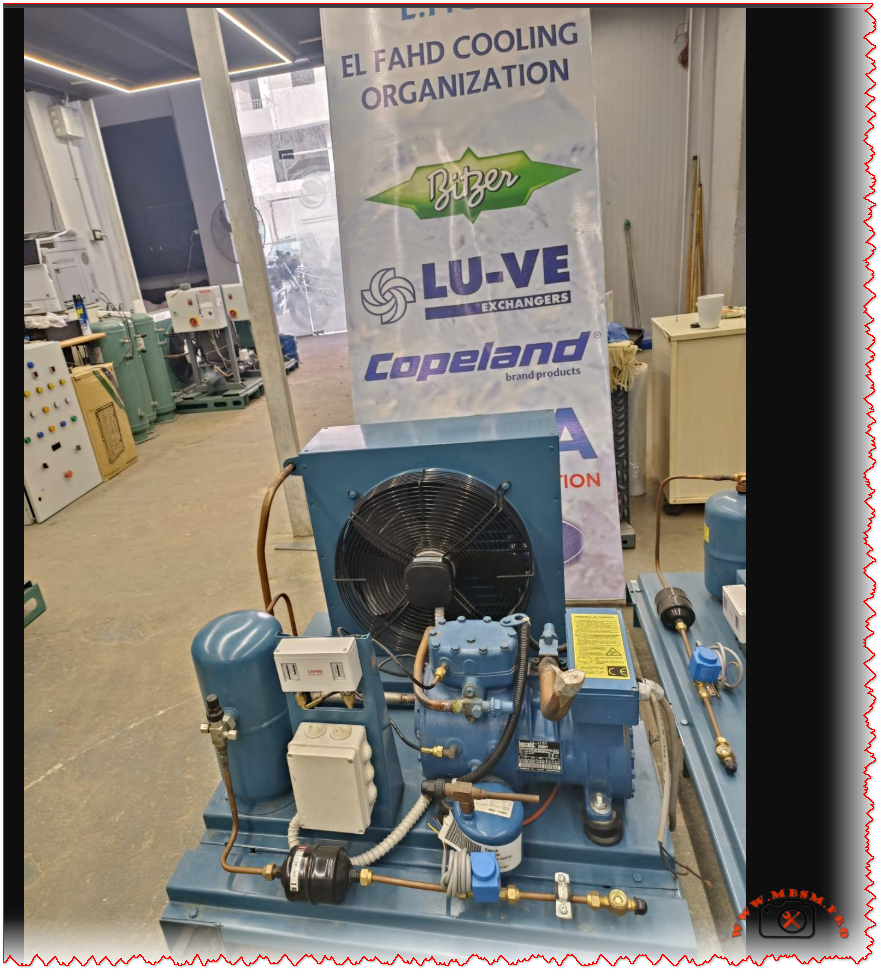
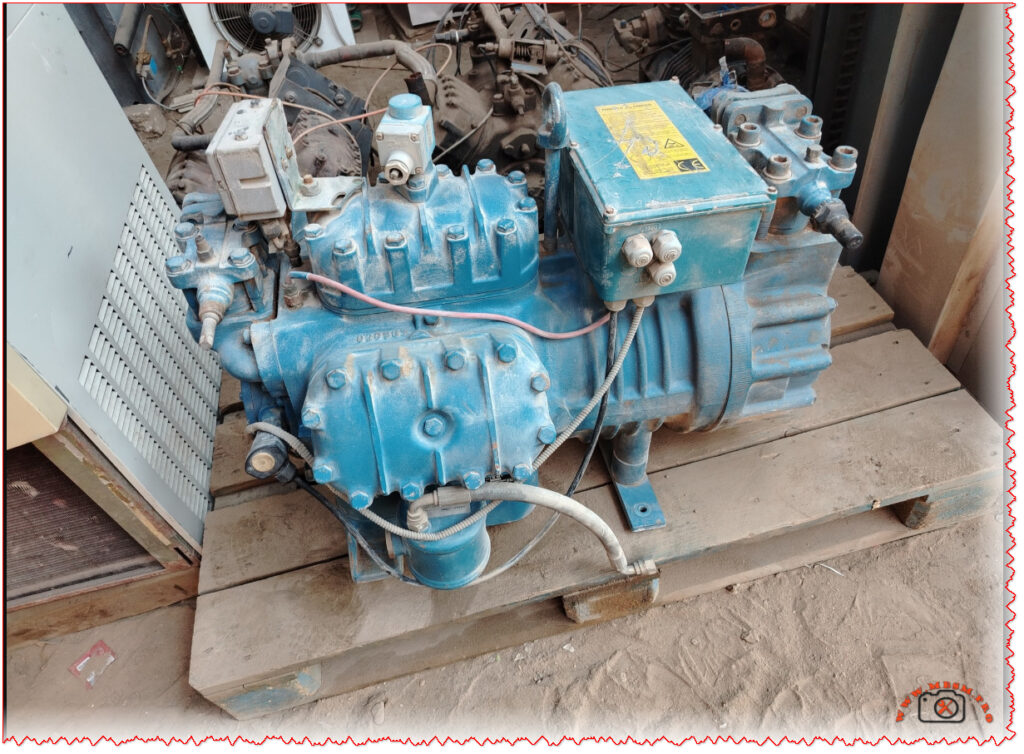
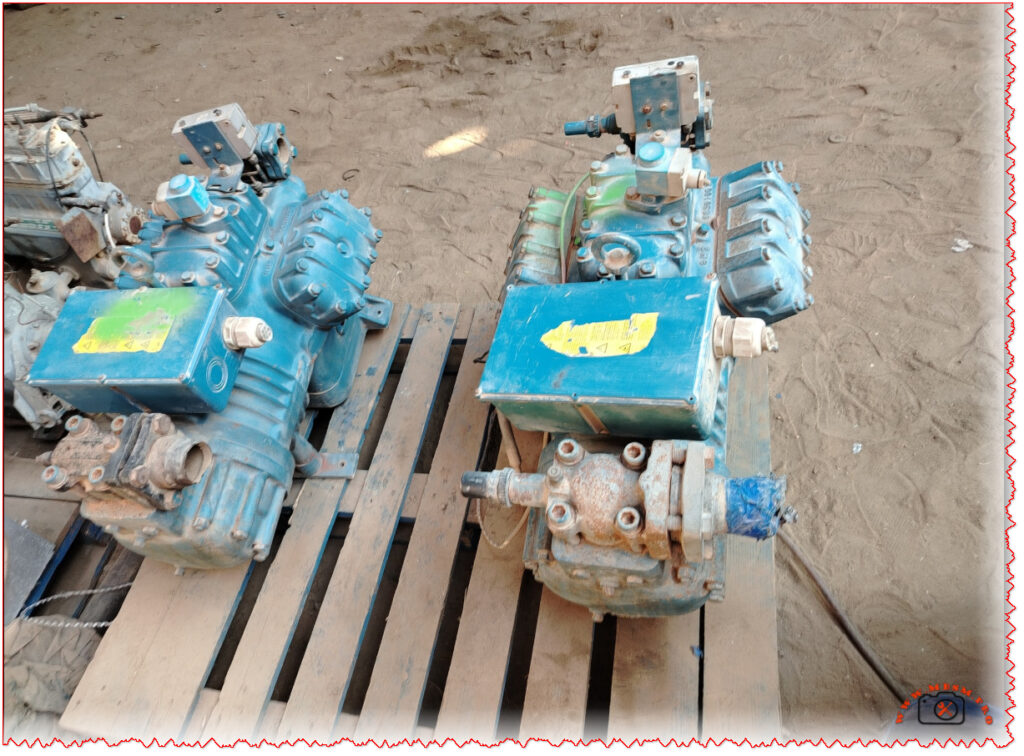
I charged the compressor CAJ4519Z with R407 gas, and upon startup, some frost appeared on the return line and expansion valve, even though the cooling was fine. Is this normal? Note that it’s a refrigeration room, not a freezer.

I charged the compressor CAJ4519Z with R407 gas, and upon startup, some frost appeared on the return line and expansion valve, even though the cooling was fine. Is this normal? Note that it's a refrigeration room, not a freezer. mbsmpro

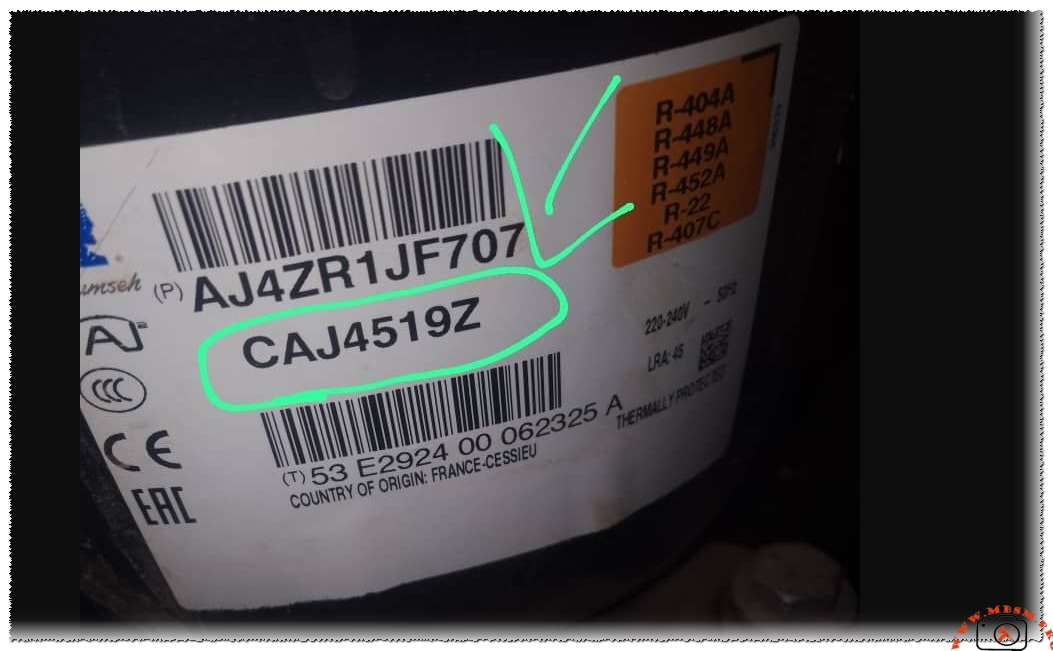
Regarding the compressor in the photo (Tecumseh CAJ4519Z) used in a cold room (chilling/positive temperature) with R-407C gas, finding frost on the suction line and the expansion valve is not normal for this type of application.

While the cooling might seem “good” now, frost on the suction line indicates that liquid refrigerant is not fully evaporating in the evaporator and is returning to the compressor.

Here is a technical breakdown of why this is happening and how to fix it:

1. Low Superheat (Expansion Valve Adjustment)

This is the most common cause. If the expansion valve is open too wide, it allows too much liquid into the evaporator.

  • The Risk: Liquid refrigerant can reach the compressor (Liquid Slugging), which can break the internal valves of the CAJ4519Z compressor.
  • The Fix: You need to adjust the Superheat. For a positive temperature cold room, the superheat should be between 5°C and 8°C. If it is lower, slightly close the expansion valve (turn the adjustment screw clockwise) in half-turn increments and wait 15–20 minutes to see the effect.

2. Overcharging the System

If you added too much R-407C, the excess refrigerant stays in the evaporator and suction line as a liquid/gas mix, causing frosting.

  • Note on R-407C: This is a “blend” refrigerant. It must always be charged in the liquid state (tank upside down). If you charged it as a vapor, the mixture ratio might be wrong, affecting performance.
  • The Fix: Check the sight glass (if available) and monitor the pressures. For R-407C in a cold room at 0°C to +4°C, your suction pressure should typically be around 45 to 55 PSI.

3. Poor Airflow at the Evaporator

If the heat exchange is poor, the refrigerant won’t boil off into a gas.

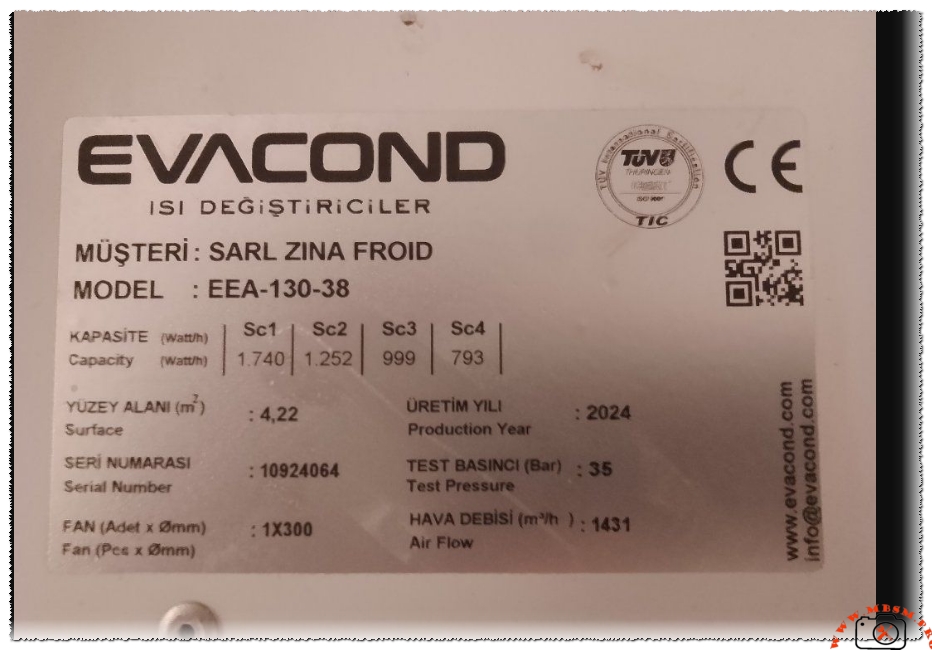
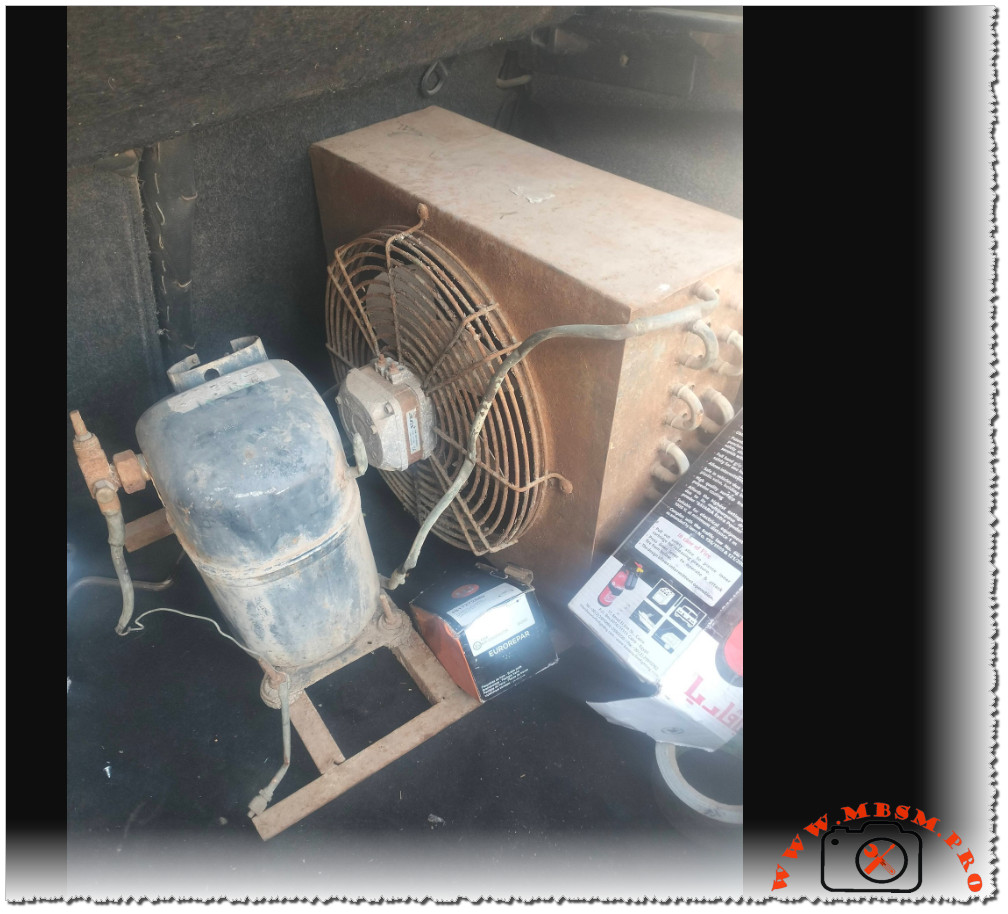
  • Check the Evaporator (EVACOND unit in your photo):

    • Are the fans spinning at the correct speed?
    • Are the fins dirty or clogged?
    • Is there already an ice buildup on the evaporator coils blocking the air?

4. Expansion Valve Sensing Bulb

Check the location of the expansion valve’s sensing bulb.

  • If the bulb is loose or not insulated properly, it “thinks” the pipe is warm and opens the valve too much, flooding the suction line.
  • The Fix: Ensure the bulb is tightly clamped to the suction pipe (at the 2 o’clock or 10 o’clock position) and well-insulated.

Summary Recommendation:

Frost should generally stop at the outlet of the expansion valve or the very beginning of the evaporator. If the frost is traveling all the way back to the compressor:

  1. Slightly close the expansion valve.
  2. Verify the airflow over the evaporator.
  3. Ensure you haven’t overcharged the system.

Allowing frost to reach the compressor will eventually lead to mechanical failure or “slugging,” which will destroy the compressor.


Focus Keyphrase:
 Comprehensive Technical Guide for Tecumseh CAJ4519Z Compressor Performance in R407C and R404A Medium High Back Pressure Refrigeration Systems

SEO Title: Mbsmpro.com, Compressor, CAJ4519Z, 1 HP, Tecumseh, Cooling, R404A, R407C, 220-240V, MHBP, Hermetic Reciprocating

Meta Description: Explore the professional specifications of the Tecumseh CAJ4519Z compressor. Learn about its 1 HP capacity, multi-refrigerant compatibility, and expert field advice for maintaining optimal superheat in commercial cold rooms.

Slug: tecumseh-caj4519z-compressor-technical-specifications-guide

Tags: Mbsmgroup, Mbsm.pro, mbsmpro.com, mbsm, Tecumseh, CAJ4519Z, AJ4ZR1JF707, R404A, R407C, R448A, R449A, R452A, Replacement Compressor, Commercial Refrigeration, Cold Room Compressor, Danfoss MTZ22, Embraco NEK6217GK, Copeland ZB15KCE, Bitzer 2KES-05, Bristol H23A383DBL

Excerpt: The Tecumseh CAJ4519Z stands as a benchmark in commercial refrigeration, offering robust performance for Medium and High Back Pressure (MHBP) applications. Engineered for versatility, it supports a wide array of refrigerants including R404A and R407C. This professional analysis covers technical data, wiring configurations, and essential maintenance practices for field engineers working on refrigeration units.


Mbsmpro.com, Compressor, CAJ4519Z, 1 HP, Tecumseh, Cooling, R404A, R407C, 220-240V 50Hz, MHBP, CSR, 34.4 cm³

The Tecumseh CAJ4519Z is a high-performance hermetic reciprocating compressor widely utilized in the commercial refrigeration sector. Known for its reliability in medium to high evaporating temperature ranges, this unit is a staple for walk-in coolers, display cases, and industrial liquid chillers. Its “AJ” series design focuses on thermal efficiency and mechanical durability, making it a preferred choice for technicians demanding longevity in demanding environments.

Technical Specification Table

Attribute Specification Details
Model CAJ4519Z
Utilisation MHBP (Medium/High Back Pressure)
Domaine Cooling / Air Conditioning / Commercial Chilling
Oil Type and Quantity POE (Polyolester) / 887 ml
Horsepower (HP) 1 HP (Nominal)
Refrigerant Type R404A, R448A, R449A, R452A, R22, R407C
Power Supply 220-240V ~ 50Hz
Cooling Capacity BTU ~15,500 BTU/h (at +7.2°C Evaporating Temp)
Motor Type CSR (Capacitor Start – Run)
Displacement 34.4 cm³
Winding Material High-Grade Copper
Pressure Charge High Pressure (Nitrogen Holding Charge)
Capillary / Expansion Expansion Valve (TXV) Recommended
Compatible Equipment Cold Rooms, Bottle Coolers, Industrial Chillers
Temperature Function -15°C to +15°C (Evaporating Range)
Fan Requirement Forced Air Cooling Required (350 m³/h minimum)
Commercial Use Yes, Heavy-Duty Commercial Grade
Amperage (RLA) 6.5 A
LRA (Locked Rotor Amps) 45 A
Type of Relay Potential Relay
Start/Run Capacitor Start: 88-108µF / Run: 20µF

Comparison with Peer Models

When evaluating the CAJ4519Z, it is helpful to compare its displacement and capacity against other industry standards in the 1 HP range.

Feature Tecumseh CAJ4519Z Embraco NEK6217GK Danfoss SC15GH
Displacement 34.4 cm³ 14.3 cm³ (LBP/HBP Mix) 15.28 cm³
Cooling Power High (Multi-Ref) Medium (R404A) Medium (R134a)
System Design CSR CSIR CSIR/CSR
Oil Compatibility Multi-Refrigerant POE POE Only POE/PAG

Engineering Insights: Managing Frost and Superheat

In field operations, specifically when retrofitting or charging systems with R407C, technicians may encounter frost on the suction line. From an engineering perspective, frost migrating toward the compressor crankcase is a critical warning sign.

Diagnostic Checkpoint:

  1. Superheat Calibration: For a positive temperature cold room, the target superheat at the evaporator outlet should be between 5K and 8K. If frost reaches the suction service valve, the superheat is likely near zero, risking liquid slugging.
  2. R407C Glide: Unlike R404A, R407C has a significant temperature glide. Charging must be performed in the liquid phase to maintain the correct blend ratio.
  3. Expansion Valve Tuning: If the cooling is effective but frosting occurs, the Thermostatic Expansion Valve (TXV) may be adjusted too “open.” Closing the valve (clockwise) increases superheat and retreats the frost line.

Potential Replacements

5 Replacements (Same Refrigerant – R404A/R407C)

  1. Danfoss: MTZ22-4VI (Slightly larger, very robust)
  2. Copeland: ZB15KCE-TFD (Scroll alternative)
  3. L’Unite Hermetique: CAJ4517Z (Slightly lower capacity)
  4. Embraco: NT6222GK
  5. Bitzer: 2KES-05 (Semi-hermetic equivalent)

5 Replacements (Alternative Refrigerants)

  1. Tecumseh CAJ4492Y: (R134a variant)
  2. Danfoss SC18G: (R134a high capacity)
  3. Tecumseh CAJ4511P: (R290 Natural Refrigerant)
  4. Embraco NEK6213GK: (R404A – slightly smaller)
  5. Bristol H23A383DBL: (R22/R407C specific)

Electrical Wiring Diagram (CSR Logic)

The CSR (Capacitor Start – Run) motor configuration is designed for high starting torque.

  • Common (C): Connected to the Overload Protector.
  • Start (S): Connected to the Potential Relay (Terminal 2) and Start Capacitor.
  • Run (R): Connected to the Main Power and Run Capacitor.
  • Potential Relay: Terminals 1 and 2 disconnect the start capacitor once the motor reaches ~75% speed.

Expert Advice and Notice

  • Notice: Always use a filter drier compatible with POE oil. POE is highly hygroscopic (absorbs moisture rapidly).
  • Benefit: The CAJ4519Z features an internal pressure relief valve, providing an extra layer of safety against system over-pressurization.
  • Engineering Tip: When using R407C, ensure the condenser is sized for the additional heat rejection requirements compared to R22. Failure to do so will result in high head pressures and reduced compressor lifespan.
I charged the compressor CAJ4519Z with R407 gas, and upon startup, some frost appeared on the return line and expansion valve, even though the cooling was fine. Is this normal? Note that it's a refrigeration room, not a freezer. mbsmpro


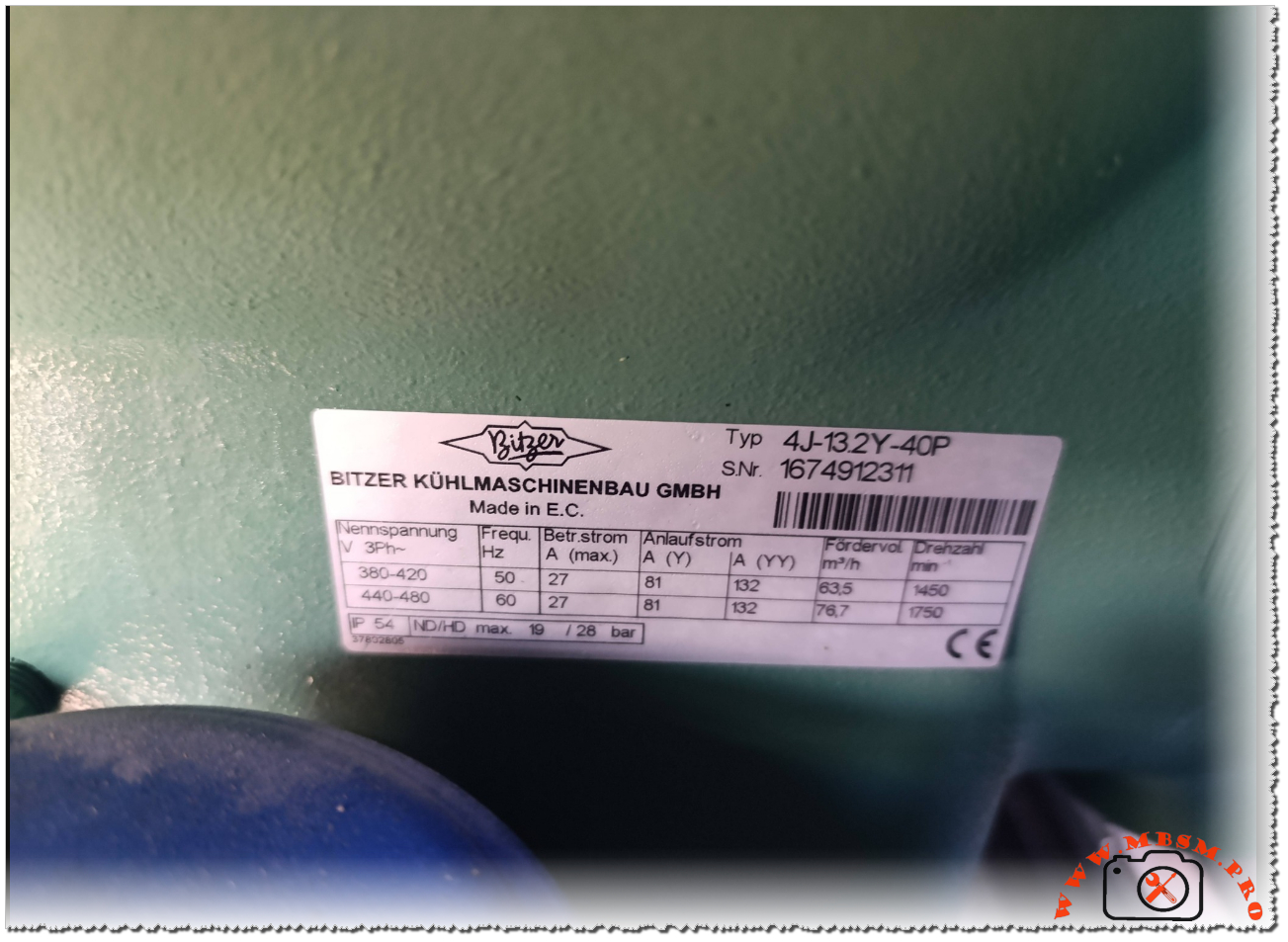
Bitzer 4J-13.2Y-40P semi-hermetic

Bitzer 4J-13.2Y-40P semi-hermetic mbsmpro

Bitzer 4J‑13.2Y‑40P Compressor: How to Read and Use the Nameplate Data

The Bitzer 4J‑13.2Y‑40P is a semi‑hermetic reciprocating compressor widely used in commercial refrigeration and process cooling installations around the world. It is designed for three‑phase power supplies and offers reliable operation in medium‑ to high‑temperature applications. Understanding its nameplate is essential for safe commissioning, correct electrical connection, and accurate system sizing.

Electrical characteristics

The identification plate lists the nominal three‑phase voltage ranges of 380–420 V at 50 Hz and 440–480 V at 60 Hz, showing that this model is suitable for international grids and export equipment. This flexibility allows installers to deploy the same compressor frame in regions with different mains standards, provided the motor protection and wiring are adjusted accordingly.​

At 50 Hz, the maximum running current is specified at 27 A, while the starting current in star (Y) connection reaches 81 A and in part‑winding (YY) configuration 132 A. At 60 Hz, the maximum running current remains 27 A, but the higher frequency increases the starting demand and speed, so the electrical design of contactors, circuit‑breakers and cables must respect these values.​

Key electrical data

Parameter 50 Hz value 60 Hz value
Nominal voltage 380–420 V 440–480 V
Max. running current 27 A 27 A
Starting current (Y) 81 A 81 A
Starting current (YY) 132 A 132 A

Performance and operating limits

The nameplate also indicates the theoretical displacement flow rate and motor speed for each frequency. At 50 Hz the compressor delivers 63.5 m³/h at 1450 rpm, while at 60 Hz the flow rises to 76.7 m³/h at 1750 rpm, which directly influences cooling capacity and requires recalculation of expansion valve and piping selections when changing frequency. These figures are important for designers who convert catalog capacities to real site conditions, especially in retrofits where a 50 Hz machine is driven from a 60 Hz supply or via a frequency inverter.​

The enclosure rating is IP54, and the plate notes the combination “ND/HD max. 19/28 bar”, indicating the maximum permissible operating pressure on the low‑ and high‑pressure sides of the compressor shell. Respecting these limits is crucial for safety valves, pressure switches and leak testing procedures during commissioning and maintenance.​

Performance snapshot

Frequency Flow rate (m³/h) Speed (rpm) Max. shell pressure (ND/HD)
50 Hz 63.5 1450 19 / 28 bar
60 Hz 76.7 1750 19 / 28 bar

Practical guidance for installers

For installers and service technicians, the nameplate of the 4J‑13.2Y‑40P acts as the main reference for electrical protection settings, cable sizing and motor starting method. Checking that the site voltage matches one of the listed ranges is a first step before any connection, followed by the choice between star‑delta, part‑winding or direct‑on‑line starting depending on the available switchgear and network capacity. The running current values help to set thermal overload relays and electronic motor protection units, reducing the risk of nuisance trips or motor damage under heavy load.​

During commissioning, technicians should also compare the actual operating pressures and temperatures with the limits derived from Bitzer’s application range diagrams for this model. This ensures that the compressor runs within its safe envelope when paired with modern refrigerants, oil types and system designs recommended by the manufacturer. Such discipline is especially important for demanding applications like supermarket racks, process chillers and cold‑storage plants where the 4J‑13.2Y‑40P is often installed.​

Documentation and further resources

Bitzer provides full technical information, performance curves and motor data sheets for the 4J‑13.2Y‑40P, which complement the basic figures printed on the nameplate. These documents are available in the official digital library and are regularly updated to reflect changes in approved refrigerants, oils and electrical components. Engineers and technicians should always consult the latest documentation before selecting replacement compressors or redesigning existing installations, as updated guidelines may affect allowed operating envelopes and accessory choices.​


Copeland ZB50KCE Scroll Compressor 

Copeland ZB50KCE Scroll Compressor  mbsmpro

Copeland ZB50KCE Scroll Compressor Nameplate: How to Read the Label and Choose the Right Polyester Oil

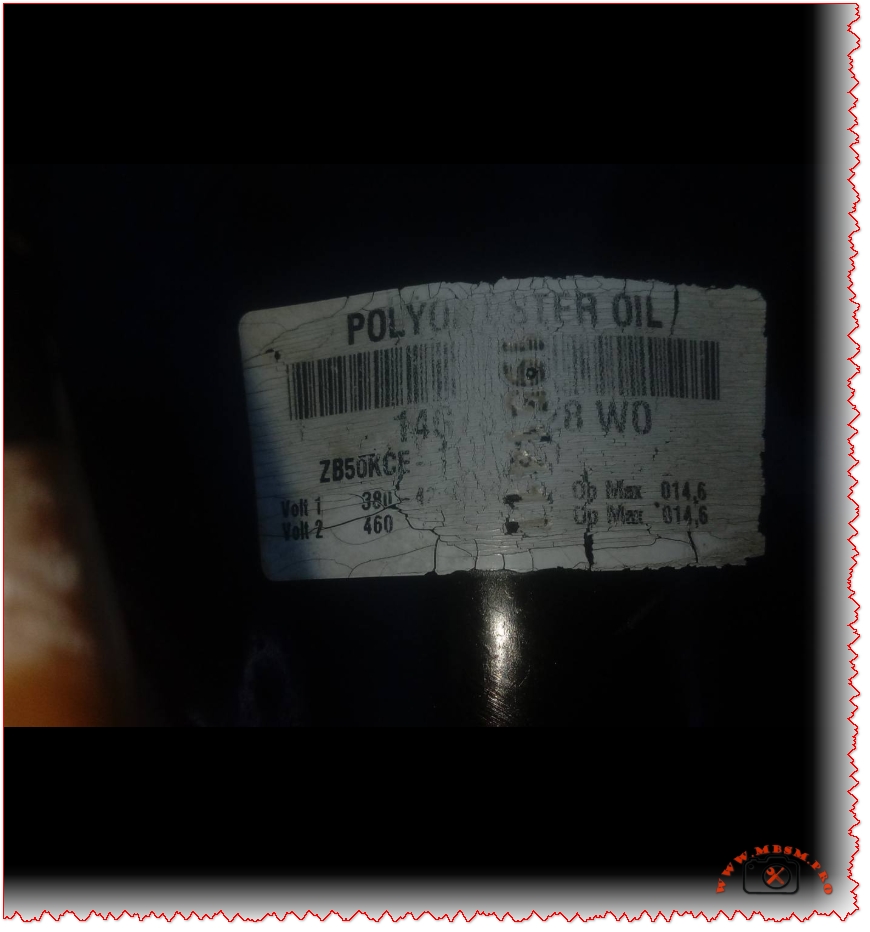
The photo shows the damaged nameplate of a Copeland ZB50KCE scroll compressor, factory‑charged with polyester (POE) oil for medium‑temperature refrigeration. Correctly interpreting this label helps technicians confirm oil, power, voltage and safety limits during service or replacement.

Compressor identification

The model belongs to the Copeland ZB series, used in commercial cold rooms and process cooling for refrigerants such as R404A, R134a and R22 alternatives. Depending on voltage code (TFD‑551, TFD‑950, etc.), it is sold as a 7 hp medium‑temperature compressor with around 11.9 kW nominal capacity.

  • Model code example: ZB50KCE‑TFD‑551 or ZB50KCE‑TFD‑950.
  • Technology: Hermetic scroll, part of the Summit series designed for higher seasonal efficiency.

Polyester oil (POE) on the label

The upper part of the label still shows POLYESTER OIL, confirming that the compressor is charged with POE lubricant. Catalogues list oil charges of about 2.6–2.7 l using approved POE types such as RL32‑3MAF or Mobil EAL Arctic 22 CC, depending on the variant.

  • POE oil absorbs moisture quickly, so systems must be evacuated deeply and fitted with quality filter‑driers.
  • Only compatible POE grades should be added; mixing with mineral or alkylbenzene oil is not permitted.

Technical data with hp and W

The following table compiles typical data for a Copeland ZB50KCE‑TFD‑551 running as a medium‑temperature refrigeration compressor; values may vary slightly by refrigerant and exact model.

Parameter Typical value for ZB50KCE*
Nominal power 7 hp
Nominal capacity 11.9 kW cooling (≈11 900 W)
Electrical power input ≈7.5–7.9 kW depending on conditions
Displacement 19.8 m³/h
Supply voltage 380–420 V/3/50 Hz and 460 V/3/60 Hz (TFD code)
Maximum operating current 14.6 A
Locked‑rotor current ≈100 A
Oil type POE (e.g. RL32‑3MAF)
Oil quantity 2.6–2.7 l
Sound level ≈64 dBA at 1 m
Net weight ≈59 kg (TFD‑551)

*Always confirm with the exact data sheet for your compressor code.

Voltage and operating limits on the sticker

On the lower part of the photographed label, remnants of “Volt 1 380 … Volt 2 460” can be identified, matching the dual‑voltage three‑phase motor used in TFD models. Another line mentions maximum current around 14.6 A, which is the value used to size breakers, contactors and cables.

  • The TFD motor code indicates 380–420 V/3/50 Hz and 460 V/3/60 Hz with internal motor protection.
  • Respecting these limits and using proper overload protection prevents overheating and nuisance trips in commercial installations.

Practical maintenance notes

For technicians such as those in Mbsmgroup and Mbsm.pro, a faded nameplate is common on older units, but the combination of model code and official catalogue restores all critical information. Creating a new service label with hp, kW, voltage, POE oil type and charge simplifies future troubleshooting and reduces the risk of mistakes during oil changes or retrofits.

  • When replacing or topping up oil, always isolate the compressor, recover refrigerant and work under clean, dry conditions.
  • If in doubt about capacity or application limits, refer to the Copeland ZB range catalogue and selection software before approving a replacement.
Copeland ZB50KCE Scroll Compressor  mbsmpro


Tecumseh CAJ9480T R22 Hermetic Compressor: Complete Technical Guide for Professionals

Tecumseh CAJ9480T R22 Hermetic Compressor: Complete Technical Guide for Professionals

The Tecumseh / L’Unité Hermetique CAJ9480T is a fully hermetic reciprocating compressor designed for commercial refrigeration systems operating with R22 and compatible retrofit refrigerants. Widely used in small cold rooms, display cabinets and compact condensing units, it runs on 220–240 V single‑phase, 50 Hz power and delivers 5/8 HP with around 1.97 kW of cooling capacity at EN12900 conditions.

General description

This model belongs to the CAJ family, Tecumseh’s workhorse range for medium and high back‑pressure refrigeration applications such as positive‑temperature cold rooms and commercial coolers. It is a hermetic piston compressor using a CSR motor (capacitor start, capacitor run), giving high starting torque and stable operation on standard single‑phase networks.

Manufactured in France under the L’Unité Hermetique brand, the CAJ9480T combines compact size, good efficiency and a robust mechanical design, which explains its popularity among installers and service companies like Mbsmgroup, Mbsm.pro and mbsmpro.com.

Main technical specifications (with HP and W)

The table below consolidates key data from Tecumseh specification sheets and trusted distributors.

Specification CAJ9480T value (R22, 50 Hz)
Refrigerant R22 (and some approved retrofits such as R438A on specific codes)
Application range Medium / high back pressure (commercial refrigeration)
Nominal horsepower (HP) 5/8 HP (0.625 HP)
Nominal cooling capacity (W) ≈ 1 968 W at EN12900: 220 V, 50 Hz, +5 °C evap / +50 °C cond
Input electrical power (W) ≈ 780–800 W at the same EN12900 rating point
Displacement 15.2 cm³/rev
Supply voltage 220–240 V, 1‑phase, 50 Hz
Voltage range 187–242 V (50 Hz)
Rated load amps (RLA, 50 Hz) ≈ 4 A
Locked rotor amps (LRA) ≈ 24 A
Oil type / quantity Synthetic alkylate or mineral, approx. 475–887 cm³ depending on version
Net weight ≈ 19–22 kg

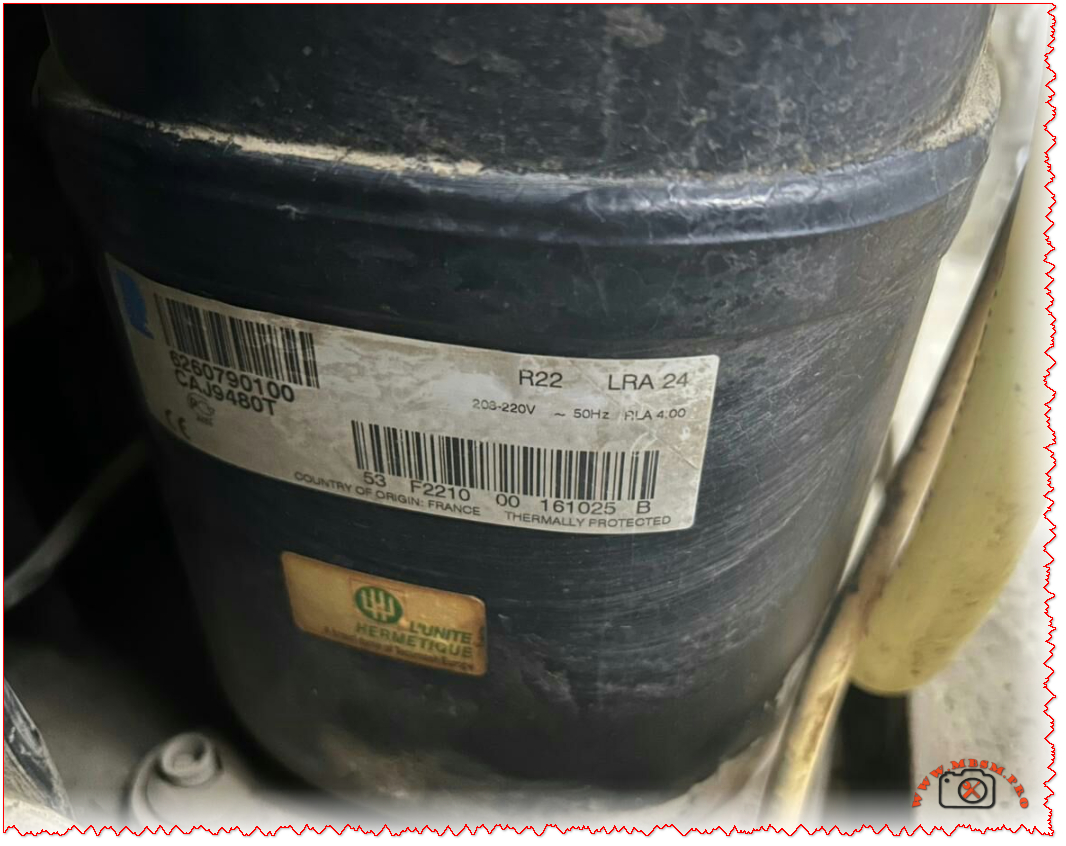
The nameplate visible in your photo shows “R22 – LRA 24 – 203–220 V – 50 Hz – RLA 4.00”, matching these published values and confirming a single‑phase CAJ9480T produced in France.

Typical applications and field use

Because of its capacity, voltage and starting characteristics, the CAJ9480T fits many everyday refrigeration jobs.

  • Small cold rooms for butchers, restaurants, bakeries and mini‑markets originally charged with R22.
  • Vertical display cabinets, reach‑in fridges and refrigerated counters using factory‑built condensing units.
  • Custom‑built condensing units and mini‑packs produced by specialists such as Mbsmgroup, Mbsm.pro and mbsmpro.com, especially where reliable 5/8 HP performance is required on 230 V single‑phase.

Its CSR motor and high starting torque help the compressor start under tougher conditions, such as long pipe runs or marginal supply voltage.

Installation and maintenance best practices

Correct installation and servicing are essential to protect this compressor and keep systems efficient.

  • Flush and evacuate the circuit carefully, and always install a new filter‑drier when replacing a failed R22 compressor.
  • Use the start and run capacitors and potential relay recommended by Tecumseh (for example, 88 µF start and 15 µF run on the CAJ9480T‑FZ code) and follow the official wiring diagram.
  • Verify charge, suction superheat and condensing temperature so operation stays within Tecumseh’s performance envelope.
  • For R22 retrofit projects, respect manufacturer guidance on compatible replacement refrigerants and oil changes to avoid lubrication and overheating issues.

Working with trusted suppliers such as Mbsmgroup and its online platforms helps ensure genuine Tecumseh parts, correct electrical components and updated technical information.


Tecumseh CAJ9480T: The French‑Made Heart of Legacy R22 Cold Rooms

Tecumseh CAJ9480T: The French‑Made Heart of Legacy R22 Cold Rooms

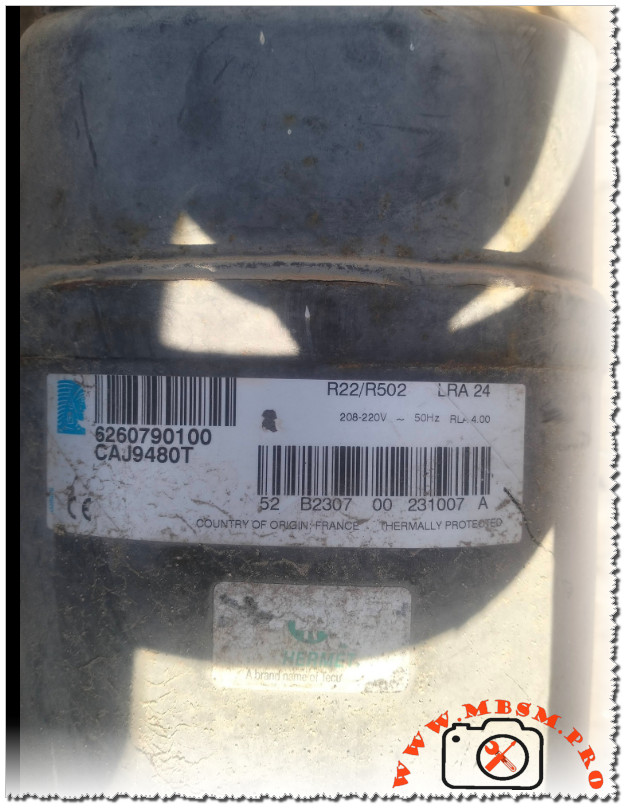
On the faded nameplate of this weathered compressor shell, one line stands out with absolute clarity: CAJ9480T – R22/R502 – Made in France. It is the unmistakable signature of a Tecumseh L’Unité Hermétique fully hermetic compressor, a workhorse still beating quietly inside thousands of small cold rooms and refrigerated cabinets around the world.


Identifying the CAJ9480T from the label

The image shows a classic welded‑shell compressor with a rectangular white label fixed on the body and a smaller green Tecumseh/L’Unité sticker below it.
Printed on the label, the model CAJ9480T appears alongside the refrigerant family R22/R502, the voltage range 208–220 V – 50 Hz, and the note THERMALLY PROTECTED, confirming an internally protected single‑phase motor.
The mention Country of origin: France links this unit to Tecumseh’s European manufacturing line, known under the historic L’Unité Hermétique brand, widely used in commercial refrigeration.


Technical profile of the CAJ9480T

Behind this modest steel shell lies a carefully engineered medium‑temperature compressor designed for reliability more than show.

  • It is a fully hermetic reciprocating compressor, meaning the electric motor and pistons are sealed in the same welded housing, minimizing leaks and simplifying service on the field.
  • In most data sheets the CAJ9480T is rated around 5/8 HP for R22 at 230 V, 50 Hz, suitable for small cold rooms, counters and display cases working in positive temperatures.
  • Typical electrical figures published for this model include a Rated Load Amps (RLA) close to 4 A and a Locked Rotor Amps (LRA) around 24 A, values that match the LRA 24 marking on many factory labels.

The following table summarises the key technical characteristics generally associated with a Tecumseh CAJ9480T in R22 applications.

Parameter Typical CAJ9480T value
Compressor type Fully hermetic reciprocating piston
Nominal horsepower Approx. 5/8 HP (medium temperature)
Refrigerant R22 (older labels may mention R22/R502; some variants accept R438A)
Voltage / frequency 220–240 V, single phase, 50 Hz (voltage code F/FZ)
Displacement About 15.2 cm³/rev
Rated Load Amps (RLA) ≈ 3.9–4.0 A at 50 Hz
Locked Rotor Amps (LRA) ≈ 24 A
Motor type CSR, high‑start torque with start and run capacitor
Oil charge Around 475–780 ml, mineral or alkylbenzene depending on version
Origin Tecumseh / L’Unité Hermétique, France

These values are essential for technicians who want to cross‑check compatibility when replacing a damaged unit or when sizing contactors, cables and protections.


Real‑world applications and typical uses

For many shop owners, the CAJ9480T is not a product code but “the compressor in the cold room that never stops”.

  • It is widely installed in small walk‑in cold rooms, butcher counters, beverage coolers and positive‑temperature cabinets where cooling capacity around 2 kW at medium evaporating temperatures is sufficient.
  • The evaporating temperature envelope usually runs from roughly –23 °C up to +12 °C, allowing the same base model to work in both cooler and slightly higher temperature applications when correctly selected.
  • Because R22 has been phased down in many markets, the CAJ9480T often appears in maintenance and retrofit projects: technicians may replace the original compressor with the same reference, or move to compatible alternative refrigerants when regulations and Tecumseh documentation allow it.

In all cases, checking the exact family (CAJ9480T‑FZ, CAJ9480T‑AJ2, etc.) is crucial, as each variant is optimized for specific refrigerants, voltages and accessories.


Installation notes from the field

Even the best compressor will not forgive poor installation. Technicians who work daily with CAJ‑series models usually insist on a few practical rules:

  • Clean piping and proper brazing: use nitrogen during brazing, replace the filter drier, and avoid introducing scale or moisture, which can quickly degrade the oil and shorten compressor life.
  • Accurate vacuum and charge: a deep vacuum combined with a charge adjusted to sight glass, superheat and manufacturer charts protects the compressor from liquid slugging and overheating.
  • Respect of operating envelope: the Tecumseh performance sheets show clear limits for high condensing temperatures and low evaporating pressures; staying inside this window prevents excessive motor current and thermal overload trips.
  • Correct starting equipment: since the CAJ9480T uses a CSR motor, the correct run capacitor, start capacitor and potential relay must be installed and wired following the original schematic to avoid hard starts and nuisance tripping.

For older R22 equipment, technicians also need to keep an eye on evolving regulations and encourage owners to plan long‑term upgrades towards more sustainable refrigerants and systems.


Frascold D2‑15Y / D2‑15.1Y ​

Frascold D2 15Y: semi‑hermetic compressor for reliable commercial refrigeration

General overview

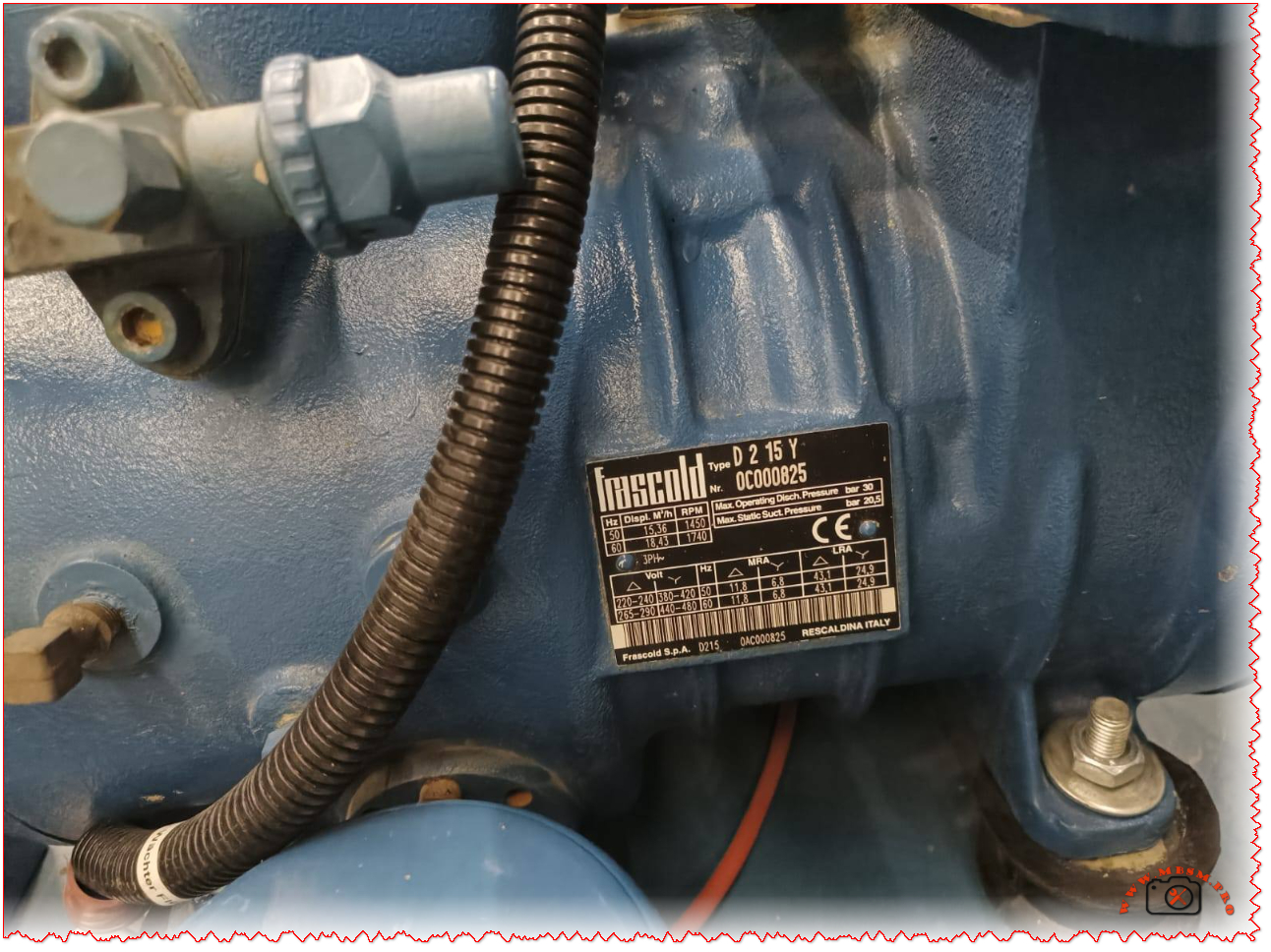
The Frascold D2 15Y is a two‑cylinder, semi‑hermetic reciprocating compressor designed for low‑ and medium‑temperature commercial and industrial refrigeration duties. With a displacement of about 15.4 m³/h at 50 Hz and a nominal motor power of 1.5 kW (2 HP), it fits perfectly in small to medium cold rooms, display cabinets and process coolers.

This model belongs to Frascold’s D series, known for compact cast‑iron bodies, quiet operation and high energy efficiency under EN12900 test conditions. The D2 15Y can be supplied as a bare compressor or integrated into silent condensing units, giving installers flexibility in plant design.

Key technical features

Frascold’s data show that the D2 15Y delivers around 6–7 kW of cooling capacity with R404A in typical low‑temperature duty, depending on evaporating and condensing conditions. The compressor is charged with POE oil (approx. 1.1 L) and uses robust suction and discharge service valves to facilitate commissioning and service.

Electrical supply options usually cover 220–240 V/3/50 Hz and 380–420 V/3/50 Hz (with corresponding 60 Hz variants), allowing use across most European three‑phase networks. The unit is compatible with multiple refrigerants, including R22, R134a, R404A, R507A, R407A/F, and new lower‑GWP blends such as R448A and R449A.

Table – Main data for Frascold D2 15Y

Parameter Typical value
Model D2‑15Y / D2‑15.1Y 
Technology Semi‑hermetic reciprocating, 2 cylinders 
Displacement (50 Hz) 15.36 m³/h 
Nominal motor power 1.5 kW – 2 HP 
Oil charge ≈ 1.1 L POE oil 
Typical cooling capacity ≈ 6.7 kW with R404A (EN12900 reference condition) 
Application Low/medium‑temperature refrigeration (LBP/MBP) 
Compatible refrigerants R22, R134a, R404A, R507A, R407A/F, R448A, R449A 

Benefits for HVACR professionals

Semi‑hermetic design means the D2 15Y can be opened for internal inspection and overhaul, extending service life compared with fully hermetic units in demanding duty cycles. The compressor is also suitable for operation with variable‑frequency drives, enabling smooth capacity modulation from part‑load to peak demand while improving seasonal efficiency.

For contractors and wholesalers, the D2 15Y’s widespread availability and clear documentation (including a dedicated PDF datasheet and full catalog) simplify selection, replacement of legacy units and stocking of spare parts. Its broad refrigerant approval list helps systems transition towards lower‑GWP blends without changing the compressor platform.


Frascold Z40‑154Y

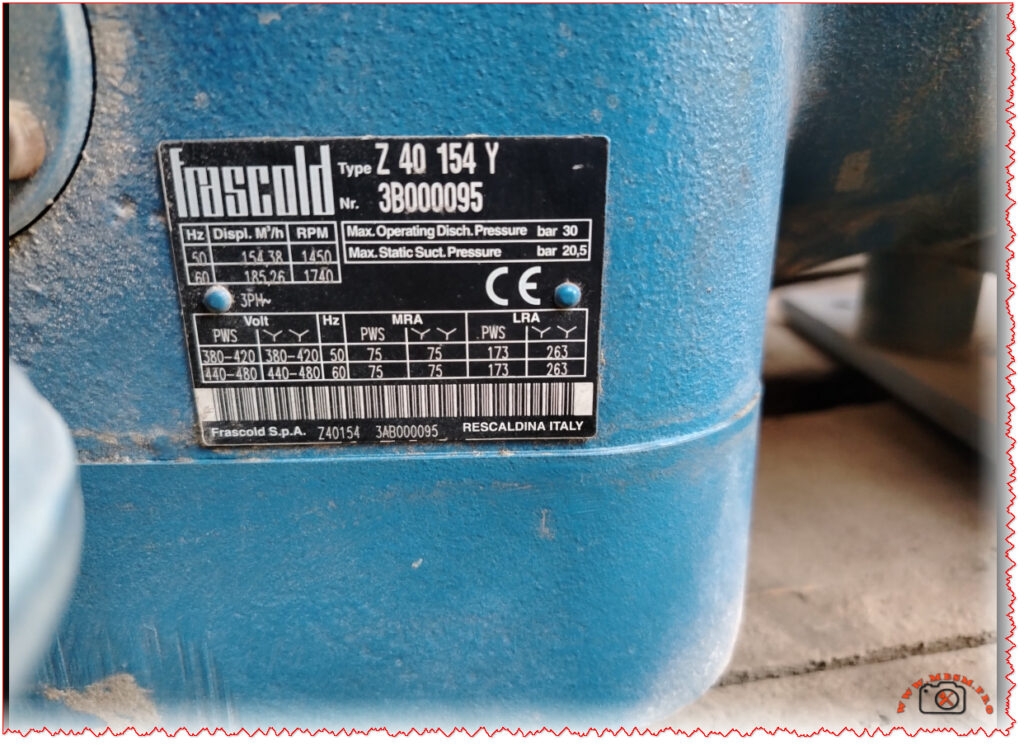
Frascold Z40-154Y is a semi-hermetic reciprocating compressor from Italy, rated at 40 horsepower for refrigeration applications with a displacement of 154 m³/h

Frascold Z40‑154Y 40 HP Italian Freezer Compressor: Full Technical Overview

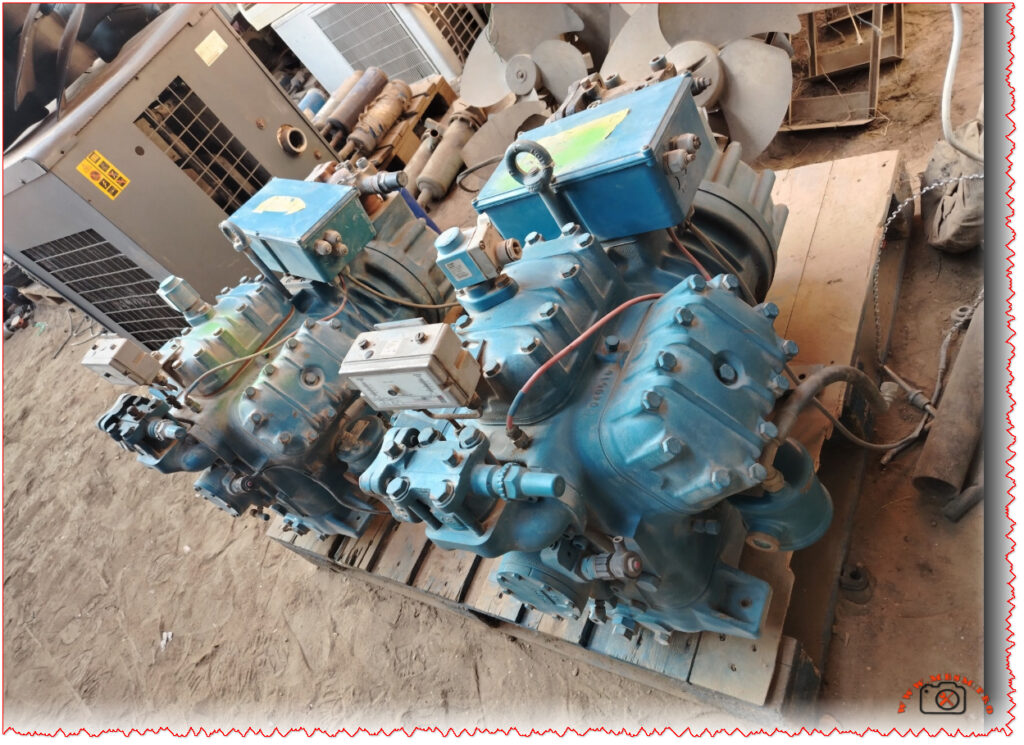
The photos show a heavy‑duty Frascold semi‑hermetic reciprocating compressor, type Z 40 154 Y, made in Rescaldina, Italy, prepared on pallets and ready for reuse in industrial cold rooms and freezer applications. The metal nameplate is clearly visible, which allows accurate identification of the model, displacement and electrical data, exactly what technicians look for when buying a second‑hand compressor in the field.

Main technical data from the nameplate

On the front plate, the compressor is marked Type Z 40 154 Y, Nr 3B000095, with the manufacturer line “Frascold S.p.A. – Rescaldina Italy”. The first line shows the displacement in cubic metres per hour and the nominal rpm at different frequencies. At 50 Hz, the displacement is listed around 154 m³/h with a speed close to 1450 rpm, while at 60 Hz it rises with a higher rpm figure. The label also shows maximum operating discharge pressure of 30 bar and maximum static suction pressure of 20.5 bar, indicating a machine designed for tough low‑temperature duty in modern refrigerants.​

In the lower section, the electrical box data indicate three‑phase power supply options. Voltages are shown as 380–420 V for 50 Hz and 440–480 V for 60 Hz, with typical MRA and LRA values that help size magnetic contactors and protection devices. This combination of mechanical and electrical information on the nameplate allows installers to check compatibility with existing plants before making any connection on site.​

Construction and visual condition of the compressor

The images reveal a robust cast‑iron body with multiple cylinder heads and a large suction side assembly, typical of Frascold’s Z‑series semi‑hermetic line used in commercial and industrial refrigeration. The compressor sits on a steel base and is coupled to an integrated oil sump, showing the familiar blue Frascold paint, even if dust and minor oxidation are visible after years of service and storage.​

Several units are shown together on wooden pallets, some with pressure switches and control accessories still mounted on the discharge line. This suggests the compressors were removed as complete condensing sets from operating plants, which is often appreciated by technicians who want to reuse existing safety controls, crankcase heaters and connection fittings. The general structure appears intact, without obvious cracks in the casting or broken mounting feet, a key point when evaluating second‑hand equipment.​

Typical applications and performance context

With its 40 HP rating and high volumetric displacement, the Frascold Z40‑154Y is usually selected for low‑temperature freezer rooms, blast freezers and industrial cold storage where evaporating temperatures can reach well below zero and the refrigeration load is very demanding. In many markets around the Mediterranean and Middle East, such compressors are widely used with refrigerants like R404A or direct alternatives specified in Frascold’s official catalogues, always respecting the authorised pressure limits and oil type recommendations.

The multi‑cylinder semi‑hermetic design offers easier maintenance than hermetic units because the heads and valve plates can be opened for inspection, valve replacement or piston work without cutting any welded shell. For owners of older plants, buying a used Italian compressor in good mechanical condition can be an economical way to extend the life of a cold room while still benefiting from European build quality.

Practical buying tips for used Frascold compressors

Before installing a second‑hand Z40‑154Y, technicians usually perform a sequence of standard checks. These include measuring insulation resistance on the motor windings, verifying that the crankshaft turns smoothly by hand, and inspecting for oil leaks around shaft seals and service valves. If the compressor passed a nitrogen pressure test and the oil is reasonably clean, the chances of successful commissioning are significantly higher.

It is also recommended to recover and replace the oil according to Frascold’s documentation and to install new filter‑driers in the system to protect the machine from moisture and acids. Finally, using the exact nameplate data for voltage, frequency and MRA/LRA, the electrician can correctly size breakers, contactors and cables, avoiding nuisance tripping and overheating during the first start‑ups of the refurbished refrigeration unit.


Technical data table (indicative values for Z40‑154Y)

Specification Value / Description
Compressor type Semi‑hermetic reciprocating, Frascold Z40‑154Y
Nominal power Approx. 40 HP
Displacement at 50 Hz About 154 m³/h (nameplate value)
Nominal speed at 50 Hz Around 1450 rpm (nameplate value)
Supply voltage (50 Hz) 380–420 V, 3‑phase
Supply voltage (60 Hz) 440–480 V, 3‑phase
Max operating discharge pressure 30 bar (nameplate)
Max static suction pressure 20.5 bar (nameplate)
Country of manufacture Rescaldina, Italy