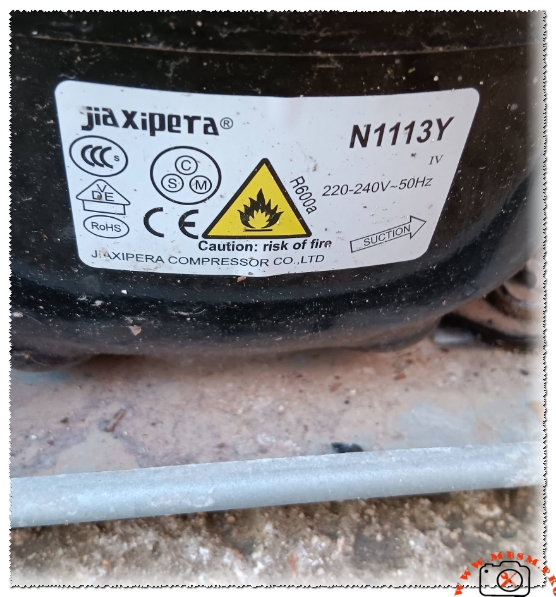
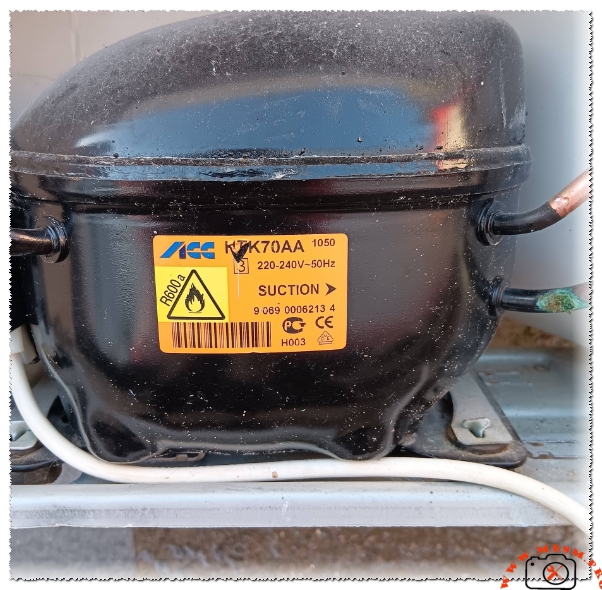
not recommended to replace compressor (Jiaxipera N1113Y) with (ACC HTK70AA).
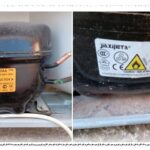
Based on the technical specifications of both compressors, it is not recommended to replace the burnt-out compressor (Jiaxipera N1113Y) with the second one (ACC HTK70AA).
Here is the technical comparison:
1. The Original Compressor (Jiaxipera N1113Y)
- Displacement: 8.9 cm³
- Cooling Capacity: Approximately 154 Watts
- Horsepower Equivalent: Roughly 1/6 HP
- Gas Type: R600a
2. The Replacement Compressor (ACC HTK70AA)
- Displacement: 6.64 cm³
- Cooling Capacity: Approximately 117 Watts
- Horsepower Equivalent: Roughly 1/8 HP
- Gas Type: R600a
Why this is a bad match:
While both compressors use the same refrigerant (R600a) and voltage (220-240V), the ACC HTK70AA is significantly weaker than the original Jiaxipera.
If you install it, the following problems will occur:
- Poor Cooling: The fridge will take a very long time to get cold, and it may never reach the desired temperature, especially in hot weather.
- Continuous Running: Because the compressor is undersized, it will stay “on” almost all the time to try to cool the unit.
- Short Lifespan: Working continuously will cause the replacement compressor to overheat, leading to a very short life before it burns out as well.
Conclusion:
You should look for a replacement compressor that has a cooling capacity of around 150–160 Watts or a displacement of 8.9 cm³ (equivalent to 1/6 HP). Using the 1/8 HP compressor (the ACC model) will likely result in a failed repair.
Focus Keyphrase: Technical analysis of Jiaxipera N1113Y and ACC HTK70AA compressor replacement compatibility
SEO Title: Mbsmpro.com, Compressor, Jiaxipera N1113Y, ACC HTK70AA, 1/6 hp, 1/8 hp, R600a, 220-240V, Cooling, LBP
Meta Description: Detailed technical review of the Jiaxipera N1113Y and ACC HTK70AA compressors. Learn why cooling capacity and displacement matter more than just the refrigerant type when performing a replacement.
Slug: jiaxipera-n1113y-vs-acc-htk70aa-compressor-technical-specifications
Tags: Jiaxipera N1113Y, ACC HTK70AA, R600a, Compressor, 1/6 hp, 1/8 hp, Mbsmgroup, Mbsm.pro, mbsmpro.com, mbsm, GL90AA, HTK80AA, GVY66AA, EMT43HDP, NLE11KK, QP91Y, Wanbao ETB80Y, Embraco EMT43HDP, Secop NLE11KK
Excerpt: Selecting the right compressor for a refrigeration system is critical for long-term performance and energy efficiency. When replacing a Jiaxipera N1113Y, simply matching the refrigerant type is not enough. This guide breaks down the technical differences between the N1113Y and the ACC HTK70AA, providing the essential data for professional technicians and refrigeration engineers.
Technical Article: The Engineering Reality of Compressor Sizing
In the field of refrigeration, a compressor is the heart of the system. For an expert technician, replacing a unit isn’t just about finding a motor that fits the mounting bracket; it is a calculation of thermal dynamics. A common question arises when a Jiaxipera N1113Y fails: Can an ACC HTK70AA serve as a reliable substitute?
The short answer is no. To understand why, we must look at the displacement and the cooling capacity (Watts). The Jiaxipera N1113Y is a powerhouse in its class, designed for medium-to-large domestic refrigerators. It features a displacement of 8.9 cm³ and delivers approximately 154 Watts of cooling at Low Back Pressure (LBP) conditions.
In contrast, the ACC HTK70AA is a smaller unit. With a displacement of only 6.64 cm³, it produces around 117 Watts. When an undersized compressor like the HTK70AA is installed in a system designed for a 154W load, the compressor will run continuously, overheat, and eventually experience mechanical failure or winding burnout.
Comparative Analysis Table
| Feature | Jiaxipera N1113Y | ACC HTK70AA | Impact of Difference |
| Displacement | 8.9 cm³ | 6.64 cm³ | Lower volume per stroke |
| Cooling Capacity | 154 W (~1/6 HP) | 117 W (~1/8 HP) | 24% loss in cooling power |
| Current (LRA) | ~7.5 A | ~6.1 A | Different torque characteristics |
| Efficiency (COP) | High Efficiency | Standard Efficiency | Increased energy consumption |
Why “Close Enough” Isn’t Good Enough
When you install a 1/8 HP compressor where a 1/6 HP unit is required, the internal pressures of the refrigeration cycle change. The suction pressure will remain higher than intended because the smaller piston cannot evacuate the evaporator quickly enough. This leads to poor frost patterns and higher cabinet temperatures, especially during high ambient summer conditions.
Technical Specifications Table (Jiaxipera N1113Y)
| Model | Jiaxipera N1113Y |
| Utilisation (mbp/hbp/lbp) | LBP (Low Back Pressure) |
| Domaine (Freezing/Cooling) | Freezing and Deep Cooling |
| Oil Type and quantity | Mineral/PAG (check label) 180ml |
| Horsepower (HP) | 1/6 HP |
| Refrigerant Type | R600a (Isobutane) |
| Power Supply | 220-240V ~ 50Hz |
| Cooling Capacity BTU | ~525 BTU/h |
| Motor Type | RSIR / RSCR |
| Displacement | 8.9 cm³ |
| Winding Material | Copper/Aluminum Alloy (Model Dependent) |
| Pression Charge | Low Pressure Side |
| Capillary | 0.026 to 0.031 inch (standard) |
| Refrigerator Type | No-Frost / Double Door 300L-400L |
| Temperature Function | -35°C to -15°C |
| With fan or no | Usually Static (No fan required) |
| Commercial or no | Domestic / Light Commercial |
| Amperage in function | 0.7 A – 0.9 A |
| LRA (Locked Rotor Amps) | 7.5 A |
| Type of relay | PTC Relay |
| Capacitor | 4µF to 5µF (Optional for RSCR) |
Replacement Options for Jiaxipera N1113Y
5 Recommended Replacements (Same Gas: R600a)
- ACC HTK80AA: A closer match with 8.1 cm³ displacement.
- Secop NLE11KK: High-efficiency replacement for 1/6 HP+ applications.
- Embraco EMT43HDP: Robust performance for R600a systems.
- Wanbao ETB80Y: Reliable Asian-market equivalent.
- Jiaxipera N1112Y: Slightly lower power but within tolerance levels.
5 Recommended Replacements (Other Gas: R134a – Requires System Flush)
- ZMC GL90AA: The industry standard for 1/6 HP R134a.
- Embraco GVY66AA: High-performance LBP unit.
- Donper QP91Y: Reliable 1/6 HP displacement equivalent.
- Tecumseh AEZ1380Y: High-torque domestic compressor.
- Secop TLES7.5KK.3: Equivalent displacement for R134a conversion.
Professional Engineering Advice
- Cleanliness is Key: When a compressor burns out, it releases acid into the oil. Always replace the filter drier and perform a nitrogen flush.
- Match the Displacement: Never go more than 10% lower in cm³ displacement.
- Vacuuming: R600a systems are extremely sensitive to moisture. A deep vacuum (below 500 microns) is mandatory.
- Safety First: R600a is flammable. Ensure no open flames or sparks are present during the charging process.
Question: If I have a 350-liter fridge, will the ACC HTK70AA work?
Answer: No. A 350-liter refrigerator typically requires the 154W capacity of the Jiaxipera N1113Y (1/6 HP). The ACC HTK70AA (1/8 HP) is designed for smaller units (around 150-220 liters). Using it will lead to continuous running and premature failure.