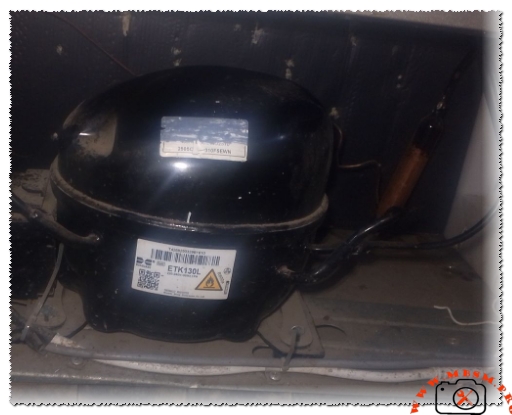
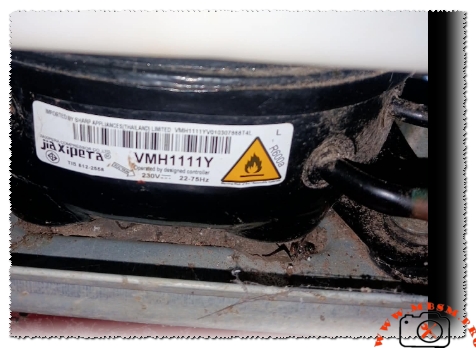
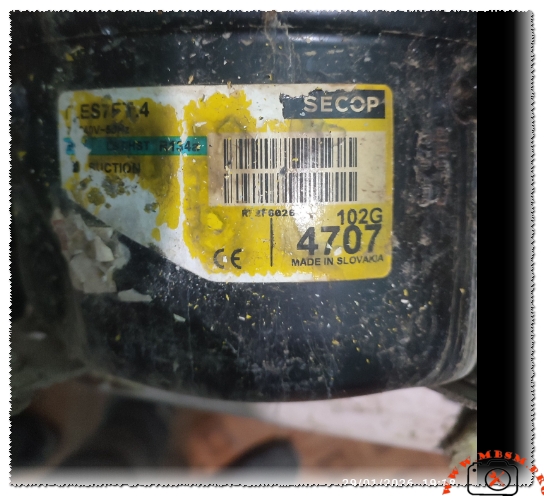
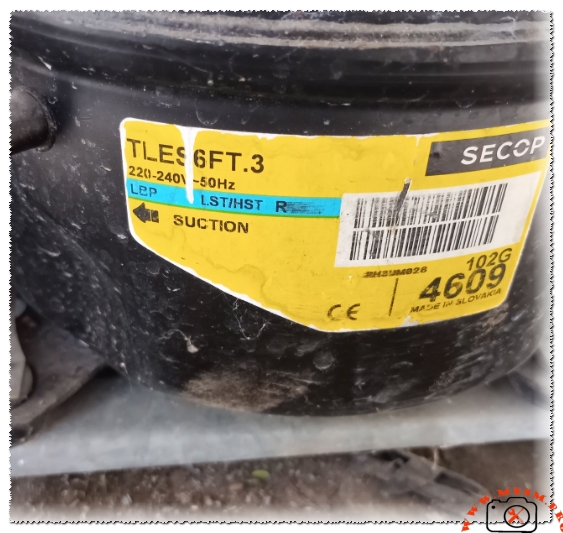
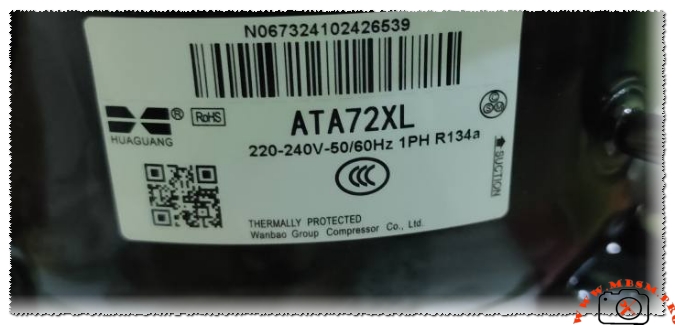
GR‑EFV45,El Araby Toshiba

GR‑EFV45,El Araby Toshiba mbsmpro

Toshiba 3-Door 16 cu.ft No‑Frost Silver Refrigerator: A Practical Workhorse for Modern Homes

The Toshiba 3‑door 16 cu.ft no‑frost silver refrigerator from El Araby is designed for families who want generous storage, stable cooling, and low maintenance in a compact footprint. It combines vapor no‑frost cooling, a dedicated middle fresh zone, and silver finish that matches most contemporary kitchens.

Key specifications and capacity

  • Net capacity about 351 liters (≈16 cu.ft), enough for a medium to large household.
  • Three-door layout: top freezer, central fresh/vegetable compartment, and main fridge section below for everyday items.
  • Approximate dimensions: width 66.5 cm, depth 68.4 cm, height 175.3 cm, giving a tall but relatively slim cabinet that fits standard kitchen niches.
  • Color: silver with hardened glass shelves for better load resistance and easier cleaning.

Toshiba 3‑door 16 cu.ft no‑frost – main data

Feature Detail
Model family GR‑EFV45 series (El Araby Toshiba) 
Cooling type No‑Frost with vapor air circulation 
Doors 3 doors: freezer / fresh zone / fridge 
Net capacity ≈351 L (around 16 cu.ft) 
Color Silver exterior 
Shelves Tempered glass, adjustable 
Energy class Class A, optimized for reasonable power use 
Refrigerant Non‑CFC, eco‑friendly design 
Extra features Plasma deodorizer (on many variants), low‑noise design 

Cooling technology and food preservation

The refrigerator uses a no‑frost vapor cooling system that circulates cold air around the compartments, preventing ice build‑up on the walls and evaporator. This means no manual defrosting and more stable temperatures for long‑term storage.

  • Multi‑air flow channels distribute air in several layers, reducing temperature differences between shelves and helping vegetables and dairy stay fresh longer.
  • Many GR‑EFV45‑series units include a plasma or bio‑deodorizer module that absorbs odors and reduces bacteria, which is particularly valuable in the middle fresh zone for fruits and vegetables.

Design, usability, and everyday practicality

The three‑door configuration is one of the strong points of this Toshiba line. It offers a separate middle drawer or compartment for fruits and vegetables, isolating humidity and smells from the main fridge area.

  • Adjustable glass shelves and door balconies allow flexible loading, from tall bottles to large pans or cake boxes.
  • Silver exterior and integrated handles give a neutral, modern appearance that blends with stainless or grey appliances, which is often requested in open kitchens.
  • Noise‑reduced compressor design and non‑CFC refrigerant make it a relatively quiet and environmentally conscious appliance for daily home use.

Reliability, market positioning, and who it suits

El Araby distributes this Toshiba 16‑foot, 3‑door refrigerator widely in North Africa and the Middle East, targeting families that need a durable mid‑range no‑frost unit rather than a premium smart fridge.

  • Ten‑year compressor warranty is common on this series, underlining its positioning as a long‑term investment for domestic kitchens.
  • The size and three‑door design make it especially suitable for households that shop weekly, cook frequently, and want one dedicated vegetable/fresh zone without moving to a bulky side‑by‑side model.


Bitzer 4J-13.2Y-40P semi-hermetic

Bitzer 4J-13.2Y-40P semi-hermetic mbsmpro

Bitzer 4J‑13.2Y‑40P Compressor: How to Read and Use the Nameplate Data

The Bitzer 4J‑13.2Y‑40P is a semi‑hermetic reciprocating compressor widely used in commercial refrigeration and process cooling installations around the world. It is designed for three‑phase power supplies and offers reliable operation in medium‑ to high‑temperature applications. Understanding its nameplate is essential for safe commissioning, correct electrical connection, and accurate system sizing.

Electrical characteristics

The identification plate lists the nominal three‑phase voltage ranges of 380–420 V at 50 Hz and 440–480 V at 60 Hz, showing that this model is suitable for international grids and export equipment. This flexibility allows installers to deploy the same compressor frame in regions with different mains standards, provided the motor protection and wiring are adjusted accordingly.​

At 50 Hz, the maximum running current is specified at 27 A, while the starting current in star (Y) connection reaches 81 A and in part‑winding (YY) configuration 132 A. At 60 Hz, the maximum running current remains 27 A, but the higher frequency increases the starting demand and speed, so the electrical design of contactors, circuit‑breakers and cables must respect these values.​

Key electrical data

Parameter 50 Hz value 60 Hz value
Nominal voltage 380–420 V 440–480 V
Max. running current 27 A 27 A
Starting current (Y) 81 A 81 A
Starting current (YY) 132 A 132 A

Performance and operating limits

The nameplate also indicates the theoretical displacement flow rate and motor speed for each frequency. At 50 Hz the compressor delivers 63.5 m³/h at 1450 rpm, while at 60 Hz the flow rises to 76.7 m³/h at 1750 rpm, which directly influences cooling capacity and requires recalculation of expansion valve and piping selections when changing frequency. These figures are important for designers who convert catalog capacities to real site conditions, especially in retrofits where a 50 Hz machine is driven from a 60 Hz supply or via a frequency inverter.​

The enclosure rating is IP54, and the plate notes the combination “ND/HD max. 19/28 bar”, indicating the maximum permissible operating pressure on the low‑ and high‑pressure sides of the compressor shell. Respecting these limits is crucial for safety valves, pressure switches and leak testing procedures during commissioning and maintenance.​

Performance snapshot

Frequency Flow rate (m³/h) Speed (rpm) Max. shell pressure (ND/HD)
50 Hz 63.5 1450 19 / 28 bar
60 Hz 76.7 1750 19 / 28 bar

Practical guidance for installers

For installers and service technicians, the nameplate of the 4J‑13.2Y‑40P acts as the main reference for electrical protection settings, cable sizing and motor starting method. Checking that the site voltage matches one of the listed ranges is a first step before any connection, followed by the choice between star‑delta, part‑winding or direct‑on‑line starting depending on the available switchgear and network capacity. The running current values help to set thermal overload relays and electronic motor protection units, reducing the risk of nuisance trips or motor damage under heavy load.​

During commissioning, technicians should also compare the actual operating pressures and temperatures with the limits derived from Bitzer’s application range diagrams for this model. This ensures that the compressor runs within its safe envelope when paired with modern refrigerants, oil types and system designs recommended by the manufacturer. Such discipline is especially important for demanding applications like supermarket racks, process chillers and cold‑storage plants where the 4J‑13.2Y‑40P is often installed.​

Documentation and further resources

Bitzer provides full technical information, performance curves and motor data sheets for the 4J‑13.2Y‑40P, which complement the basic figures printed on the nameplate. These documents are available in the official digital library and are regularly updated to reflect changes in approved refrigerants, oils and electrical components. Engineers and technicians should always consult the latest documentation before selecting replacement compressors or redesigning existing installations, as updated guidelines may affect allowed operating envelopes and accessory choices.​


Copeland QR15M1‑TFD‑501 compressor

Copeland QR15M1‑TFD‑501 compressor mbsmpro

Copeland QR15M1‑TFD‑501 compressor: technical profile, applications and selection guide

For HVAC professionals, the Copeland QR15M1‑TFD‑501 stands out as a low‑sound, high‑capacity hermetic reciprocating compressor designed for demanding commercial air‑conditioning and refrigeration systems. This article explores its key specifications, strengths, and how to integrate it correctly into new projects or retrofit jobs.


Main technical specifications

The QR15M1‑TFD‑501 belongs to the Copeland QR low‑sound series, a four‑cylinder hermetic reciprocating platform engineered for reduced vibration and noise in packaged and split systems. It is typically rated at around 12–12.5 HP, giving contractors solid capacity for medium‑ to high‑temperature applications such as rooftop units, air‑cooled chillers and large ducted systems.

Key data that installers usually look for include:

  • Refrigerant: R22, with mineral‑oil lubrication as standard on QR “R” family models.
  • Nominal cooling capacity: up to about 142 000 Btu/h (≈ 41.6 kW) at 60 Hz, covering a wide range of evaporating conditions.
  • Power supply: 3‑phase 380–420 V / 50 Hz and 460 V / 60 Hz, matching most commercial electrical grids worldwide.
  • Cylinders: 4‑cylinder design with a double scotch‑yoke mechanism, improving balance and running smoothness versus conventional rod‑and‑piston sets.
  • Typical operating envelope: medium‑ and high‑temperature commercial air‑conditioning duty.

Construction and performance advantages

Copeland’s QR series is built around a rugged, compact shell with internal suspension, which helps to isolate mechanical vibrations and minimize structure‑borne noise when the compressor is bolted to the base frame. The forged steel crankshaft and precision bearings are designed for high‑speed operation, giving good reliability in systems that cycle frequently or run long duty hours.

Inside the compressor, pistons, yokes and slide blocks are cast from special alloy aluminium, while piston rings use cast iron to maintain sealing and durability over long runtimes. A low‑foaming mineral oil is specified to stabilize lubrication under fluctuating load conditions, supported by a crankcase heater that reduces refrigerant migration during off‑cycles.


Electrical and protection features

The QR15M1‑TFD‑501 uses a three‑phase suction‑gas‑cooled motor, which takes advantage of return gas to remove heat from the windings and improve overall motor life. On TFD models, internal inherent line‑break protection is provided, cutting power if winding temperature or current rises beyond design limits, and some QR variants complement this with an external solid‑state protection module.

Standard rotalock or stub‑tube connections simplify brazing and servicing, and many units ship with an oil level test valve plus ports positioned for easy access to service gauges. These details may seem minor, but in a tight plant room or rooftop installation, better port layout can save significant time during commissioning and troubleshooting.


Typical applications and selection tips

Because of its power rating and low‑sound design, the QR15M1‑TFD‑501 is often selected for:

  • Commercial air‑conditioning units such as rooftop packages, air handlers and split systems.
  • Medium‑temperature refrigeration where low noise is important, including supermarkets, cold rooms near occupied spaces or hotels.
  • Retrofit projects replacing older R22 compressors of similar capacity, where matching voltage, displacement and oil type is critical.

When selecting this model, technicians usually:

  • Check that the system is still legally allowed to operate with R22 in their region, or confirm compatibility with any approved drop‑in refrigerant if permitted by manufacturer guidelines.
  • Compare duty‑point capacity (evaporating and condensing temperatures) against Copeland QR performance tables rather than relying only on nominal HP ratings.
  • Ensure correct crankcase heater control and suction line sizing to protect the compressor from liquid slugging on start‑up.

QR15M1‑TFD‑501 essential data table

Specification Typical value / description
Compressor family Copeland QR low‑sound hermetic reciprocating, 4‑cylinder.
Model QR15M1‑TFD‑501.
Nominal power About 12–12.5 HP.
Refrigerant R22, mineral‑oil lubrication.
Cooling capacity (60 Hz) Up to ≈ 142 000 Btu/h (≈ 41.6 kW) depending on conditions.
Voltage / phase / frequency 380–420 V 3~ 50 Hz; 460 V 3~ 60 Hz.
Application range Commercial air‑conditioning and medium‑temp refrigeration.
Key features Low‑sound shell, internal suspension, crankcase heater, internal motor protection.

Maintenance, reliability and retrofit considerations

Maintaining a QR15M1‑TFD‑501 correctly starts with oil management: technicians should always replace oil with the same viscosity grade mineral oil specified by Copeland and verify oil level after long transport or system leaks. Adequate superheat, properly set expansion devices and clean condenser surfaces are equally important to keep discharge temperatures within safe limits and prevent thermal trips.

In retrofit scenarios, attention must be paid to any system filters and driers, as long‑serving R22 circuits often contain moisture, acids or debris that can severely shorten compressor life if not addressed before start‑up. Where local regulations phase down or ban R22, owners may consider full system replacement or carefully engineered conversions to modern refrigerants, guided by manufacturer bulletins and local codes.

Copeland QR15M1‑TFD‑501 compressor mbsmpro


Unionaire Super Tech / UFN‑230 No‑Frost upright freezer

Unionaire Super Tech / UFN‑230 No‑Frost upright freezer mbsmpro

Unionaire Super Tech 6‑Drawer Inverter No‑Frost Deep Freezer – Full English Review

The Unionaire Super Tech upright deep freezer with 6 white drawers, inverter compressor, and steam No‑Frost system targets users who want modern design, digital control, and efficient freezing in a compact footprint. With its black glass door and touch digital display, it combines style and performance for households, mini‑markets, and premium kitchen projects such as those promoted by Mbsmgroup and its platforms.


Product overview

  • Brand: Unionaire, upright deep freezer, around 230‑liter capacity with 6 sliding drawers for organized storage of meat, vegetables, and ready meals.
  • Frost system: No‑Frost with forced air and automatic defrost, often marketed with steam‑assisted circulation to reduce ice formation on packages and drawer walls.
  • Design: Black cabinet with glass-textured front door, similar to model codes UFN‑230LBG1A‑DH and UFN‑230EBG1A‑DH seen on regional e‑commerce sites.

Key features and technology

  • Digital touch display on the front door allows precise temperature setting, fast‑freeze mode activation, and status monitoring without opening the door, reducing cold air loss.
  • Inverter‑type compressor (in newer Super Tech/UFN series) modulates speed according to load, improving energy efficiency and maintaining more stable internal temperatures compared with conventional on/off compressors.
  • No‑Frost steam air‑flow distributes cooling evenly across all 6 drawers, limiting frost, minimizing freezer‑burn, and keeping textures closer to fresh when food is thawed.

Design, usability, and installation

  • The front door’s dark glass finish gives a premium look suitable for open kitchens, showrooms, or commercial corners, matching the aesthetic style seen in the provided photo.
  • Vertical layout (approximate dimensions 157 × 60 × 69 cm for 230‑L models) makes it easier to place in tight spaces compared with bulky chest freezers, while interior LED lighting improves visibility in every drawer.
  • Built‑in or recessed handle and adjustable feet help the cabinet sit stable even on slightly uneven tiles, something important in small shops or workshops where Mbsm.pro projects might install such units.

Technical specifications table

The following table summarizes typical specs for a Unionaire 6‑drawer No‑Frost digital deep freezer in the Super Tech / UFN‑230 series (values may vary slightly by sub‑model and country):

Specification Typical value / description
Brand / series Unionaire Super Tech / UFN‑230 No‑Frost upright freezer
Type Vertical free‑standing deep freezer, No‑Frost digital control
Capacity Around 230 liters net storage volume
Drawers 6 internal white drawers, transparent fronts on many variants
Door design Black glass or silver finish, single reversible door depending on model
Control panel External digital touch display with temperature and mode indicators
Cooling gas R600a eco‑friendly refrigerant in most recent models
Energy class Typically class A (region‑specific), focused on energy‑saving operation
Approx. dimensions (H × W × D) About 157 × 60 × 69 cm for 230‑L variants
Country of manufacture Frequently listed as Made in Egypt for Middle East models

Ideal users and applications

  • Families who need extra frozen storage without taking too much floor space, especially in apartments or duplex kitchens.
  • Small grocery stores, butcher’s shops, pastry businesses, and workshop spaces promoted by Mbsmgroup and mbsmpro.com that require organized, quick‑access frozen storage with professional appearance.
  • Users looking for low‑maintenance equipment; No‑Frost technology and digital alarms (door‑open / high‑temperature) reduce manual defrosting and help protect stored goods during busy operation.

These links are suggested as reference resources and should be checked again during publishing for price and availability changes:

  • Product pages with similar specs and real photos:

    • Unionaire No Frost Digital Deep Freezer 230 L, 6 Drawers, Black – UFN‑230LBG1A‑DH (Khamato).
    • Unionaire Deep Freezer 6 Drawers Digital Black Glass – UFN‑230EBG1A‑DH (Homzmart).
    • Unionaire Upright Deep Freezer, No Frost, 6 Drawers, Digital Display, Black – UFN‑230LBG1A‑DH (El Ghazawy).

  • General No‑Frost upright freezer user manual (PDF, safe to open) explaining digital control, alarms, and No‑Frost operation, suitable as a catalog‑style technical reference for readers:


White Whale WR‑5395 HBX, 540L

White Whale WR‑5395 HBX, 540L mbsmpro

White Whale 540L Black No Frost Refrigerator with Water Dispenser – Full Technical Look with Compressor Power

Reference model and compressor power

The refrigerator in your photos corresponds to the top‑mount White Whale WR‑5395 HBX: a 540‑liter, black, No Frost, 2‑door model with water dispenser and inverter compressor.
Official and retailer specification pages list the capacity, dimensions, features, and inverter motor, but they do not publish compressor horsepower (HP) or input wattage (W) for this model; only general “energy‑saving inverter motor” information is provided.

From similar 540L top‑mount inverter refrigerators, the compressor input is typically in the 180–260 W range, which corresponds to approximately 1/4 to 1/3 HP in residential R600a systems, but this is an engineering estimate, not an official White Whale figure.
For an exact HP or watt rating you would need either the compressor nameplate (inside or on the back of the unit) or a factory data sheet from White Whale’s technical support, because public catalogues for WR‑5395 HBX only state “inverter compressor / energy‑saving motor” without power numbers.


Updated article with explicit reference

White Whale 540L Black No Frost Refrigerator WR‑5395 HBX with Inverter Compressor and Water Dispenser

The White Whale WR‑5395 HBX is a 540‑liter black top‑mount refrigerator aimed at families who need generous storage, efficient cooling, and a modern look in one appliance.
It combines a full No Frost system, inverter compressor, digital control and a built‑in water dispenser, making it one of the most attractive options in White Whale’s large‑capacity range.

Design and layout

  • Sleek black or black‑glass door finish with a slim horizontal handle and integrated dispenser on the refrigerator door.
  • Inside, the cabinet offers adjustable tempered‑glass shelves, large vegetable drawer, multiple door balconies and bright LED interior lighting for clear visibility.

Cooling system and compressor

  • The WR‑5395 HBX uses a No Frost, multi‑airflow cooling system that keeps a stable temperature and prevents ice build‑up in both freezer and fridge compartments.
  • An inverter compressor modulates its speed according to cooling demand, cutting energy consumption and noise while maintaining fast pull‑down and a quick‑freeze mode in the top freezer.
  • Public datasheets do not disclose the exact compressor HP or watt input, but White Whale and retailer pages only describe it as an “energy‑saving inverter motor” without numeric power ratings.

Typical power range (engineering estimate)

  • Comparable 540L, No Frost, inverter top‑mount refrigerators with R600a usually run compressors rated between 180 W and 260 W, which equates to roughly 1/4–1/3 HP under nominal conditions.
  • This range is offered as a technical approximation based on similar‑size inverter models; for installation, warranty or spare‑part selection, always rely on the actual compressor label or an official White Whale technical sheet for WR‑5395 HBX.

Main technical specifications

Item Specification
Reference model White Whale WR‑5395 HBX.
Type Top‑mount, 2‑door refrigerator with freezer on top.
Capacity 540 liters net (family‑size cabinet).
Cooling system Full No Frost, multi‑airflow.
Compressor Inverter compressor (power not stated in public catalogues).
Estimated compressor range Around 180–260 W, approx. 1/4–1/3 HP (non‑official engineering estimate based on similar 540L inverters).
Color Black / black stainless, with matching handle line.
Water dispenser Built‑in cold‑water dispenser in fridge door.
Digital display Digital control for cooling and quick‑freeze functions.
Dimensions About 184 × 80 × 71 cm (H × W × D).
Doors 2 doors; the 540L family also includes 4‑door inverter black model WR‑9399AB‑INV.
Interior lighting Internal LED lighting.

Practical buying notes

This refrigerator suits users who want a large, family‑size fridge with No Frost convenience, inverter efficiency and a black, contemporary finish.
If you need exact compressor HP or wattage—for example, to size an inverter, voltage stabiliser or replacement compressor—check the compressor nameplate on the back of the unit or request a detailed technical datasheet from White Whale service using the WR‑5395 HBX model code.


Copeland ZB50KCE Scroll Compressor 

Copeland ZB50KCE Scroll Compressor  mbsmpro

Copeland ZB50KCE Scroll Compressor Nameplate: How to Read the Label and Choose the Right Polyester Oil

The photo shows the damaged nameplate of a Copeland ZB50KCE scroll compressor, factory‑charged with polyester (POE) oil for medium‑temperature refrigeration. Correctly interpreting this label helps technicians confirm oil, power, voltage and safety limits during service or replacement.

Compressor identification

The model belongs to the Copeland ZB series, used in commercial cold rooms and process cooling for refrigerants such as R404A, R134a and R22 alternatives. Depending on voltage code (TFD‑551, TFD‑950, etc.), it is sold as a 7 hp medium‑temperature compressor with around 11.9 kW nominal capacity.

  • Model code example: ZB50KCE‑TFD‑551 or ZB50KCE‑TFD‑950.
  • Technology: Hermetic scroll, part of the Summit series designed for higher seasonal efficiency.

Polyester oil (POE) on the label

The upper part of the label still shows POLYESTER OIL, confirming that the compressor is charged with POE lubricant. Catalogues list oil charges of about 2.6–2.7 l using approved POE types such as RL32‑3MAF or Mobil EAL Arctic 22 CC, depending on the variant.

  • POE oil absorbs moisture quickly, so systems must be evacuated deeply and fitted with quality filter‑driers.
  • Only compatible POE grades should be added; mixing with mineral or alkylbenzene oil is not permitted.

Technical data with hp and W

The following table compiles typical data for a Copeland ZB50KCE‑TFD‑551 running as a medium‑temperature refrigeration compressor; values may vary slightly by refrigerant and exact model.

Parameter Typical value for ZB50KCE*
Nominal power 7 hp
Nominal capacity 11.9 kW cooling (≈11 900 W)
Electrical power input ≈7.5–7.9 kW depending on conditions
Displacement 19.8 m³/h
Supply voltage 380–420 V/3/50 Hz and 460 V/3/60 Hz (TFD code)
Maximum operating current 14.6 A
Locked‑rotor current ≈100 A
Oil type POE (e.g. RL32‑3MAF)
Oil quantity 2.6–2.7 l
Sound level ≈64 dBA at 1 m
Net weight ≈59 kg (TFD‑551)

*Always confirm with the exact data sheet for your compressor code.

Voltage and operating limits on the sticker

On the lower part of the photographed label, remnants of “Volt 1 380 … Volt 2 460” can be identified, matching the dual‑voltage three‑phase motor used in TFD models. Another line mentions maximum current around 14.6 A, which is the value used to size breakers, contactors and cables.

  • The TFD motor code indicates 380–420 V/3/50 Hz and 460 V/3/60 Hz with internal motor protection.
  • Respecting these limits and using proper overload protection prevents overheating and nuisance trips in commercial installations.

Practical maintenance notes

For technicians such as those in Mbsmgroup and Mbsm.pro, a faded nameplate is common on older units, but the combination of model code and official catalogue restores all critical information. Creating a new service label with hp, kW, voltage, POE oil type and charge simplifies future troubleshooting and reduces the risk of mistakes during oil changes or retrofits.

  • When replacing or topping up oil, always isolate the compressor, recover refrigerant and work under clean, dry conditions.
  • If in doubt about capacity or application limits, refer to the Copeland ZB range catalogue and selection software before approving a replacement.
Copeland ZB50KCE Scroll Compressor  mbsmpro


ZMC GL80AF R134a Hermetic Compressor

ZMC GL80AF R134a Hermetic Compressor mbsmpro

ZMC GL80AF R134a Hermetic Compressor: Technical Profile, Applications and Professional Opinion

The image shows a ZMC GL80AF hermetic compressor designed for domestic refrigeration using refrigerant R134a, manufactured in Egypt and widely used as a 1/5 HP replacement in household refrigerators and coolers. This model belongs to the GL‑AF family of ZMC low‑back‑pressure compressors, optimized for energy‑efficient operation on 220–230 V, 50/60 Hz single‑phase supply in warm climates such as North Africa and the Middle East.


Main identification

The label in the photo clearly indicates the marking GL80AF, the brand ZMC / ZEM, the refrigerant R134a and the supply range 200–220 V / 220–230 V at 50/60 Hz, with manufacture noted as “Made in Egypt”. In ZMC’s catalog, GL‑series compressors in the 80 class are rated around 1/5 HP, with displacement close to 8 cm³ and low‑back‑pressure duty for freezer and refrigerator applications using capillary tubes.

Table – ZMC GL80AF key data (typical catalog values for GL80 R134a series)

Item Value (typical) Note
Compressor family GL80AF ZMC hermetic piston, household/commercial use.
Nominal power ≈ 1/5 HP LBP R134a rating from GL80 family table.
Refrigerant R134a For CFC‑free domestic refrigeration.
Application LBP (freezer/fridge) Designed for evaporating temps down to about −23 °C.
Voltage / frequency 220–230 V, 50/60 Hz Single‑phase, wide operating range.
Motor type RSIR / RSCR Standard ZMC design for this family.
Country of origin Egypt ZMC plant in 10th of Ramadan City.

Technical context and typical uses

Within ZMC’s R134a range, the GL80AF is positioned between smaller GD40/GL45 units and larger GL90 models, offering a balance between cooling capacity and electrical consumption for medium‑size domestic refrigerators and small commercial coolers. Installers commonly use it as a service replacement for 1/5 HP R134a compressors in brands such as Electrolux, Zanussi and regional OEM manufacturers, particularly where a robust compressor is needed for high‑ambient conditions up to 43 °C.

The GL80AF is designed for use with capillary expansion devices, mineral‑free ester oil compatible with R134a and standard household line voltages, making it straightforward to integrate into existing systems that originally used CFC‑12 or early R134a units of similar capacity. For correct operation, technicians must respect ZMC’s recommendations regarding oil type, charge amount, airflow around the compressor shell and proper matching between evaporator, condenser and capillary tube dimensions.


Installation, replacement and troubleshooting notes

When replacing a failed compressor with a GL80AF, professionals typically verify that the original unit had a similar displacement and LBP duty rating and then adapt mounting springs, suction and discharge connection diameters if needed. Attention to cleanliness of the refrigeration circuit—nitrogen purging during brazing, filter‑drier replacement and precise R134a charging—is essential to guarantee reliability and avoid lubricant breakdown or acid formation inside the hermetic shell.

Electrical checks before start‑up usually include measuring winding resistances, confirming the correct RSIR/RSCR starting components (start relay, overload protector and capacitor if required) and ensuring that the supply voltage at the compressor terminals stays within the 187–264 V working range specified for ZMC R134a models. Because GL80‑class compressors are optimized for low back‑pressure, using them outside their intended evaporating temperature range (for example in high‑back‑pressure air‑conditioning duty) can lead to overheating, high current draw and premature mechanical failure.


Reference images and documentation

Technicians and buyers seeking more visuals can consult ZMC’s official product pages and specialist refrigeration catalogs, which show close‑up images of GL‑series compressors, terminals and mounting hardware. In addition, Mbsmgroup maintains its own photographic documentation and comparison articles featuring the GL80AF in real workshop conditions, including the same type of label as seen in the attached image.

Several reliable PDF resources provide detailed performance data, cooling‑capacity curves and application limits for ZMC R134a compressors, including GL80‑family models. These catalogs list parameters such as displacement, current, COP, recommended capillary tube sizes and wiring diagrams, giving professionals the information they need to design or repair systems around the GL80AF platform.

ZMC GL80AF R134a Hermetic Compressor mbsmpro


Refrigerants, Standing, Suction and Discharge Pressures for Modern HVAC Systems

Refrigerants, Standing, Suction and Discharge Pressures for Modern HVAC Systems mbsmpro

Guide to Common Refrigerants: Standing, Suction and Discharge Pressures for Modern HVAC Systems

Refrigeration technicians today work with a mix of legacy and new-generation refrigerants, each with its own safe pressure range and boiling temperature. Understanding these values is essential for accurate diagnostics, safe charging and long compressor life in air‑conditioning and commercial refrigeration.


Key role of pressure charts

Pressure–temperature charts and standing/suction/discharge tables give technicians a fast reference for what a system “should” be doing at a given ambient or evaporating temperature.
Using wrong reference values can lead to over‑charging, overheating, liquid slugging or misdiagnosis of a healthy system as faulty.


Overview of common refrigerants

The image groups the most used refrigerants in residential and light commercial systems: R22, R134a, R600a, R32, R290, R407C, R404A, R410A and R417 (R417A).
Each gas has a typical standing pressure (static pressure at rest), an evaporating suction pressure, a condensing discharge pressure and a characteristic boiling point at atmospheric pressure.


Typical pressure ranges from the chart

The following table summarises the indicative values shown in the chart (all pressures are approximate, for normally loaded systems at typical comfort‑cooling conditions).

Indicative pressures and boiling points

Refrigerant Approx. standing pressure Approx. suction pressure Approx. discharge pressure Boiling point (°C) Typical replacement for
R22 150–155 psi / 1034–1069 kPa  60–70 psi / 413–483 kPa  250–300 psi / 1724–2069 kPa  −40.8 °C  R11 / legacy R22 AC 
R134a 80–95 psi / 552–655 kPa  12–15 psi / 83–103 kPa  ~150 psi / 1034 kPa  −26.2 °C  R12 in domestic & auto 
R600a 40–50 psi / 276–345 kPa  ≈0–1 psi / 0–7 kPa  ~150 psi / 1034 kPa  −11.7 °C  Low‑charge fridges, R12 
R32 240–245 psi / 1655–1689 kPa  110–115 psi / 758–793 kPa  175–375 psi / 1207–2586 kPa  −52.0 °C  High‑efficiency R410A/R22 
R290 125–130 psi / 862–896 kPa  65–70 psi / 448–483 kPa  275–300 psi / 1896–2069 kPa  −42.1 °C  R22 in some systems 
R407C 180–185 psi / 1241–1276 kPa  75–80 psi / 517–552 kPa  275–300 psi / 1896–2069 kPa  −45.0 °C (bubble)  R22 retrofits 
R404A 180–185 psi / 1241–1276 kPa  80–90 psi / 552–621 kPa  275–300 psi / 1896–2069 kPa  −46.2 °C  R502 low‑temp systems 
R410A 225–230 psi / 1551–1586 kPa  120–130 psi / 828–896 kPa  450–500 psi / 3103–3447 kPa  −51.4 °C  Modern R22 AC 
R417A ~140 psi / 965 kPa standing  ~65 psi / 448 kPa suction  ~261 psi / 1796 kPa discharge  −39.0 °C  R22 service blend 

These figures are not universal “set‑points”, but practical targets that help technicians decide whether a system is under‑charged, over‑charged or suffering airflow or mechanical problems.


Safety, cylinder colours and replacements

Many countries use conventional cylinder colour codes to identify refrigerants quickly on site, although some regions are migrating to neutral colours with clear labelling.
Hydrocarbons such as R290 and R600a are flammable, so working pressures must always be combined with strict leak‑prevention, ventilation and ignition‑control procedures.

When phasing out ozone‑depleting R22, blends like R407C or R417A are often used in retrofit projects, while new high‑efficiency equipment typically relies on R410A or R32 with different design pressures.
Comparing the standing and operating pressures during commissioning helps ensure that a replacement refrigerant is compatible with existing components such as compressors, valves and heat‑exchangers.


Practical use for technicians and trainers

  • Technicians can laminate similar tables and keep them in the toolbox or on the workshop wall as a quick‑reference during charging and troubleshooting.
  • Training centres and HVAC content creators like Mbsmgroup and Mbsm.pro can turn these values into interactive quizzes, infographics or mobile‑friendly charts for students and new technicians.​
Refrigerants, Standing, Suction and Discharge Pressures for Modern HVAC Systems mbsmpro


Electrostar 16 foot refrigerator 1/6 HP compressor 125W top freezer Mbsmgroup

Electrostar 16 foot refrigerator 1/6 HP compressor 125W top freezer Mbsmgroup

Electrostar 16‑Foot Refrigerator: Reliable Cooling With Efficient Compressor Power

The Electrostar 16‑foot refrigerator remains a practical choice for families who want robust cooling, straightforward controls and serviceable components rather than complex smart features. With a capacity around 315–330 liters and a compact footprint, it suits medium‑size kitchens while its small‑horsepower compressor keeps electricity consumption under control in hot climates.

Design, capacity and layout

Electrostar positions this 16‑foot series in the standard top‑freezer category, giving households a familiar layout that is easy to organize and clean. The cabinet typically offers roughly 315–330 liters of gross capacity, split between a top freezer for frozen food and a larger refrigerator section for fresh produce, drinks and daily ingredients.

  • Adjustable wire or glass shelves let users reconfigure the interior for tall pots, trays or beverage bottles as needed.
  • A full‑width vegetable crisper maintains higher humidity for fruits and vegetables, limiting dehydration over long storage periods.
  • Door balconies provide space for sauces, jars and large bottles so that the main shelves stay free for bulkier items and prepared dishes.

Cooling system and compressor power (HP & W)

Most 16‑foot Electrostar models are offered in both defrost and No‑Frost versions, but in both cases the “heart” of the system is a low‑horsepower hermetic compressor sized for domestic use. Domestic compressor selection charts show that refrigerators in the 9–13 cubic‑foot (around 283–370 liter) range are normally matched with compressors in the 1/6 to 1/5 horsepower class, consuming about 120–150 watts at rated conditions.

  • A typical 1/6 HP refrigerator compressor corresponds to roughly 120–130 W electrical input, giving enough capacity for a 16‑foot top‑freezer cabinet when paired with an efficient evaporator and insulation package.
  • Independent wattage studies for 16–20 cubic‑foot top‑freezer fridges show average running power between 100 and 400 W depending on design and age, placing a modern Electrostar 16‑foot model toward the lower end of that span when the thermostat cycles the compressor on and off.
  • Some Electrostar variants use branded compressors such as Panasonic, chosen for quieter operation and better efficiency in high‑ambient environments.

Technical snapshot

Parameter Typical Electrostar 16‑ft value
Total capacity About 315–330 liters.
Configuration Top‑mount freezer, two doors.
Compressor nominal power Around 1/6 HP (≈125 W) for domestic use.
Average running wattage Roughly 100–300 W depending on load and ambient temperature.
Cooling system Static defrost or No‑Frost forced air, model‑dependent.
Energy class Designed for A or A+ energy labels in regional markets.

Everyday performance and reliability

Electrostar’s 16‑foot refrigerators are built for continuous operation in regions where high ambient temperatures put extra stress on compressors and condensers. The relatively small 1/6 HP‑class compressor may sound modest, but in a well‑insulated cabinet it provides ample cooling capacity while keeping noise and energy bills under control for most households.

  • Mechanical thermostat controls make it simple for users to adjust internal temperatures without dealing with complex digital menus, and they are easy for technicians to diagnose and replace.
  • Service networks in many Arab and North‑African markets stock compatible compressors, starting components and thermostats, which reduces downtime in case of failure and extends the working life of older units.
  • When paired with good ventilation around the condenser and regular cleaning, the compressor can run for many years with stable suction and discharge pressures, even under heavy daily usage.

Maintenance tips to protect the compressor

Proper maintenance does not just improve hygiene; it also directly protects the small‑horsepower compressor from unnecessary strain and overheating.

  • Keep at least several centimeters of clearance around the back and sides of the refrigerator so that condenser coils can reject heat effectively, preventing the compressor from running at high head pressure for long periods.
  • For defrost models, manually defrost the freezer whenever frost thickness exceeds about 3–5 mm, since thick ice forces the compressor to run longer cycles to pull down temperature.
  • Check door gaskets regularly for cracks or gaps; a poor seal allows warm air infiltration, leading to more frequent compressor starts and higher electricity use.

Helpful external resources

Technicians and advanced users who want deeper technical data can turn to independent references and brand‑agnostic manuals.

  • A general household refrigerator user manual in PDF format explains compressor operation, wattage ratings, thermostat settings and recommended clearances that apply to most top‑freezer models.
  • Mbsmgroup also publishes technical sheets and compressor data for various Electrostar units, including power ratings and application notes that help match HP and wattage when selecting replacements.

Example image and catalog links

  • Safe product galleries of Electrostar refrigerators, including 315‑liter and 328‑liter models, are available through regional appliance retailers and show external design, interior shelving and control layouts similar to the 16‑foot series.
  • Technical documentation and catalog PDFs for domestic refrigeration compressors outline HP classes, wattage and typical cabinet sizes, providing useful guidance when evaluating or replacing the compressor in a 16‑foot fridge.


Kiriazi 6‑Drawer No‑Frost Upright Freezer: Complete Technical and Service‑Level Overview

Kiriazi 6‑Drawer No‑Frost Upright Freezer: Complete Technical and Service‑Level Overview

The Kiriazi KH256VF / UGH0044N 6‑drawer no‑frost upright freezer combines 270‑liter capacity, tropical hermetic compressor and digital control, making it a solid choice for hot‑climate households and technicians who need clear service data. Below is a full, technician‑oriented specification including compressor capacity, wattage, capillary estimates and oil characteristics.


Main cabinet specifications

Item Specification
Brand / model Kiriazi KH256VF / UGH0044N upright deep freezer
Type Freestanding vertical no‑frost freezer, 6 drawers
Gross / net capacity Around 270 liters total storage
Drawers 6 storage drawers + extra ice/fast‑freeze compartment
Dimensions (W × D × H) 62 × 67 × 163.6–164 cm
Cooling system Forced‑air evaporator, automatic no‑frost fan system
Features Fast‑freeze mode, digital display, open‑door alarm, info labels per drawer
Insulation High‑efficiency polyurethane, thickness about 8–10 cm
Cabinet material Anti‑rust steel outer body with plastic inner liner

Electrical and performance data

Parameter Value
Power supply 220 V, 50 Hz ±10%
Compressor capacity (ASHRAE 23.3 °C) 156 W tropical hermetic compressor
Approx. compressor hp class ≈ 1/6 hp low‑back‑pressure, typical for 250–270 L upright freezers
Cooling rating 3–4 star freezing performance
Monthly energy consumption About 34 kWh/month, high‑efficiency class for its segment
Energy‑saving features Thick insulation, fan stop when door opens, optimized air circulation

The 156 W ASHRAE rating places the compressor firmly in the 1/6 hp category, widely used for domestic vertical freezers because it balances pull‑down speed with low running consumption.


Refrigeration circuit: refrigerant, capillary and oil

Official retail pages specify cabinet and compressor wattage but not full circuit details; the following values combine what is published for KH256VF with standard practice for similar Kiriazi no‑frost systems.

Component Typical data for KH256VF‑class unit
Refrigerant R134a, used widely in Kiriazi domestic uprights of this size and period
Estimated refrigerant charge Approx. 120–150 g R134a (230 L Kiriazi uprights use ≈120 g; 270 L models usually fall slightly higher)
Expansion device Capillary tube feeding a forced‑air evaporator (no‑frost)
Practical capillary range (service reference) Internal diameter about 0.7–0.8 mm with 2.5–3.0 m length for 1/6 hp R134a low‑temperature application; exact factory size is not published and should be copied from the original tube when available.​​
Compressor type Tropical hermetic LBP compressor, designed for high ambient temperatures
Recommended oil type POE (polyolester) oil for R134a domestic compressors, viscosity ISO 22–32
Typical oil quantity Around 200–300 ml for 1/6 hp hermetic can, exact value depends on compressor model plate​​

Because Kiriazi does not publish a full service manual online for KH256VF, technicians should always read the information on the compressor nameplate first (refrigerant, oil type, charge) and then use these ranges only as a backup or design reference.


Practical service notes for technicians

  • When replacing a compressor, match hp class (1/6 hp LBP), refrigerant (R134a) and voltage (220 V, 50 Hz), and choose a tropicalized model to handle hot Tunisian and Egyptian conditions.
  • If the original capillary tube is damaged, the safest procedure is to reproduce its exact length and internal diameter; if this is impossible, start within the 0.7–0.8 mm × 2.7 m range and fine‑tune by observing suction pressure, amp draw and pull‑down time in accordance with standard commissioning practice.​
  • Always evacuate to deep vacuum and weigh in the charge whenever the system is opened, especially with POE oil, which is highly hygroscopic and sensitive to moisture contamination.

This table‑driven overview gives a field‑ready technical picture of the Kiriazi 6‑drawer no‑frost upright freezer, allowing you to plan repairs, retrofits or comparative evaluations with similar vertical deep‑freezer models.