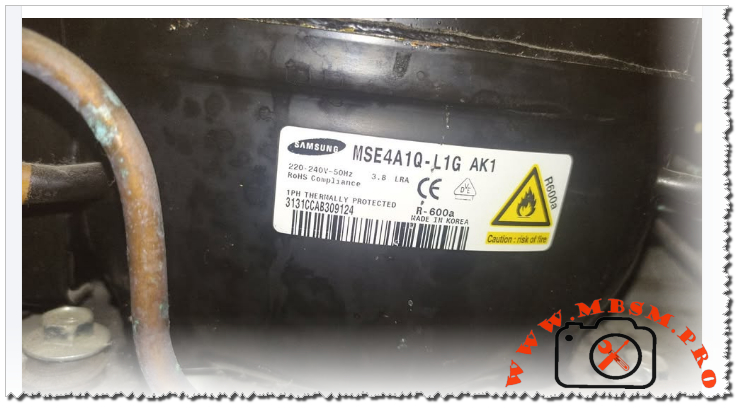
Samsung MSE4A1Q‑L1G AK1, hermetic reciprocating refrigerator compressor
Samsung MSE4A1Q‑L1G AK1, hermetic reciprocating refrigerator compressor mbsmpro

Samsung MSE4A1Q‑L1G AK1, 1/4 hp, R600a, RSCR, LBP, 220‑240V 50Hz Hermetic Compressor Technical Review

The Samsung MSE4A1Q‑L1G AK1 is a hermetic reciprocating refrigerator compressor designed for domestic LBP applications with R600a refrigerant and a nominal cooling capacity around 175–180 W at ASHRAE conditions, equivalent to roughly 1/4 hp.​
Engineers value this model for its efficient RSCR motor, compatibility with eco‑friendly isobutane, and robust design for household refrigerators and freezers.​


Main technical specifications

Samsung lists the MSE4A1Q‑L1G in its AC220‑240V 50 Hz R600a LBP family, sharing the same platform as MSE4A0Q and MSE4A2Q models used in many high‑efficiency fridges.​

Core data of MSE4A1Q‑L1G AK1

Parameter Value
Brand Samsung hermetic compressor ​
Model marking MSE4A1Q‑L1G AK1 (also written MSE4A1QL1G/AK1) ​
Application LBP household refrigerator/freezer, R600a ​
Refrigerant R600a (isobutane), flammable A3 ​
Voltage / frequency 220‑240 V, 50 Hz, single‑phase ​
Motor type RSCR (resistance‑start, capacitor‑run) ​
Cooling capacity (ASHRAE ST) ≈175–203 W, about 695 BTU/h 
Input power ≈118 W at rated conditions 
Efficiency COP around 1.49 W/W at ASHRAE standard 
LRA (locked‑rotor current) 3.8 A shown on nameplate 
Refrigerant charge type Factory designed for R600a only ​
Country of manufacture Korea (typical for this series) 

The combination of ≈175–180 W cooling and ≈118 W electrical input places this compressor in the 1/4 hp class widely used in medium‑size top‑mount and bottom‑mount refrigerators.​


Engineering view: performance and design

From an engineering perspective, the MSE4A1Q‑L1G AK1 is optimised for high efficiency at standard refrigerator evaporator temperatures while maintaining good starting torque with RSCR technology.​

  • The RSCR motor uses a start resistor and run capacitor to improve power factor and efficiency compared with simple RSIR designs, which helps manufacturers meet modern energy‑label targets.​
  • R600a’s low molecular weight and high latent heat allow lower displacement for the same cooling capacity, so the compressor can remain compact while delivering around 695 BTU/h of cooling at −23 °C evaporating conditions.​

For technicians, the relatively low LRA of 3.8 A makes this model easier on start relays and PTC starters, especially in regions with weaker grid infrastructure at 220–240 V.


Comparison with other Samsung R600a LBP compressors

Samsung’s catalog groups the MSE4A1Q‑L1G within a family of R600a reciprocating compressors from about 94 W up to 223 W cooling capacity.​

Position of MSE4A1Q‑L1G in the R600a range

Model Approx. cooling W (ASHRAE ST) Input W COP W/W Approx. hp Typical use Source
MSE4A0Q‑L1G 162–188 W ≈107 W ≈1.51 ≈1/5–1/4 hp Small to medium fridge
MSE4A1Q‑L1G 175–203 W ≈118 W ≈1.49 ≈1/4 hp Medium refrigerator, high‑efficiency
MSE4A2Q‑L1H 192–223 W ≈127 W ≈1.51 ≈1/4+ hp Larger fridge or combi

Compared with MSE4A0Q‑L1G, the MSE4A1Q‑L1G offers a modest step‑up in cooling capacity at similar efficiency, making it a good choice when cabinet size or ambient temperature requires extra margin.​
Against MSE4A2Q‑L1H, it trades some maximum capacity for slightly lower input power, which can be attractive for manufacturers targeting stringent energy‑label thresholds while keeping the same mechanical footprint.​


Professional installation and service advice

Working with R600a compressors like the MSE4A1Q‑L1G requires strict adherence to flammable‑refrigerant standards and best practices.​

Key engineering and safety recommendations

  • Use only tools and recovery systems rated for A3 refrigerants; never retrofit this compressor with R134a or other non‑approved gases because lubrication and motor cooling are optimised for R600a.​
  • Ensure the system charge is accurately weighed with a precision scale, as overcharging even small amounts can increase condensing pressure and reduce COP significantly on low‑displacement units.​
  • Maintain good airflow over the condenser and avoid installing units flush against walls; high condensing temperature quickly erodes the 1.49 W/W efficiency and can trigger thermal protector trips.​

Diagnostic and replacement tips

  • When replacing, match not only voltage and refrigerant but also cooling capacity and LBP application class; choosing a smaller 140 W class unit in place of the MSE4A1Q‑L1G risks long running times and poor pull‑down.​
  • Measure running current after start‑up; a healthy system will draw close to catalog input current at rated conditions, while notably higher current can indicate overcharge, blocked airflow, or partial winding short.

Focus keyphrase (Yoast SEO)

Samsung MSE4A1Q‑L1G AK1 1/4 hp R600a RSCR LBP refrigerator compressor 220‑240V 50Hz technical data and comparison


SEO title

Samsung MSE4A1Q‑L1G AK1, 1/4 hp, R600a, RSCR, LBP, 220‑240V 50Hz Compressor Technical Data | Mbsm.pro


Meta description

Discover the full technical profile of the Samsung MSE4A1Q‑L1G AK1 1/4 hp R600a LBP compressor: cooling capacity, RSCR motor efficiency, engineering advice, and comparisons with other Samsung R600a models.​


Slug

samsung-mse4a1q-l1g-ak1-1-4hp-r600a-lbp-compressor-data


Tags

Samsung MSE4A1Q‑L1G, MSE4A1Q‑L1G AK1, Samsung R600a compressor, 1/4 hp refrigerator compressor, RSCR LBP compressor, 220‑240V 50Hz compressor, Mbsmgroup, Mbsm.pro, mbsmpro.com, mbsm


Excerpt (first 55 words)

The Samsung MSE4A1Q‑L1G AK1 is a hermetic reciprocating refrigerator compressor designed for domestic LBP applications with R600a refrigerant and a nominal cooling capacity around 175–180 W at ASHRAE conditions, equivalent to roughly 1/4 hp. Engineers value this model for its efficient RSCR motor and robust design.​


  • Samsung global compressor page for AC220‑240V 50Hz R600a LBP family (includes MSE4A1Q‑L1G, PDF download link in page).
  • Direct Samsung “SAMSUNG COMPRESSOR” R600a catalog PDF listing MSE4A1Q‑L1G specifications.
  • Samsung AC200‑220V 50Hz R600a LBP compressor family catalog page with PDF.
  • Samsung corporate brochure “Samsung Compressor” PDF covering technical data and performance tables.
  • Spanish “Catalogo Compresores Samsung” PDF on Scribd with R600a LBP tables.
  • Tili Global technical sheet collection for Samsung household reciprocating compressors (model tables in downloadable PDF).
  • Samsung global business main compressor product brochure PDF linked from compressor overview section.
  • Additional Samsung R600a LBP catalog PDF linked in “Download PDF” button for AC220‑240V 50Hz series on product page.
  • Supplementary Samsung compressor specification PDF referenced within Scribd Samsung Compressor document.
  • General Samsung reciprocating compressor catalog PDF referenced across global business compressor section, covering multiple R600a LBP models.​
Samsung MSE4A1Q‑L1G AK1, hermetic reciprocating refrigerator compressor mbsmpro


Carrier Inverter AC Error Codes, Indoor and Outdoor Protection

Carrier Inverter AC Error Codes, Indoor and Outdoor Protection mbsmpro

Carrier Inverter AC Error Codes, Indoor and Outdoor Protection, IPM Fault, Bus Voltage, Over‑High/Over‑Low, Professional Diagnostic Guide

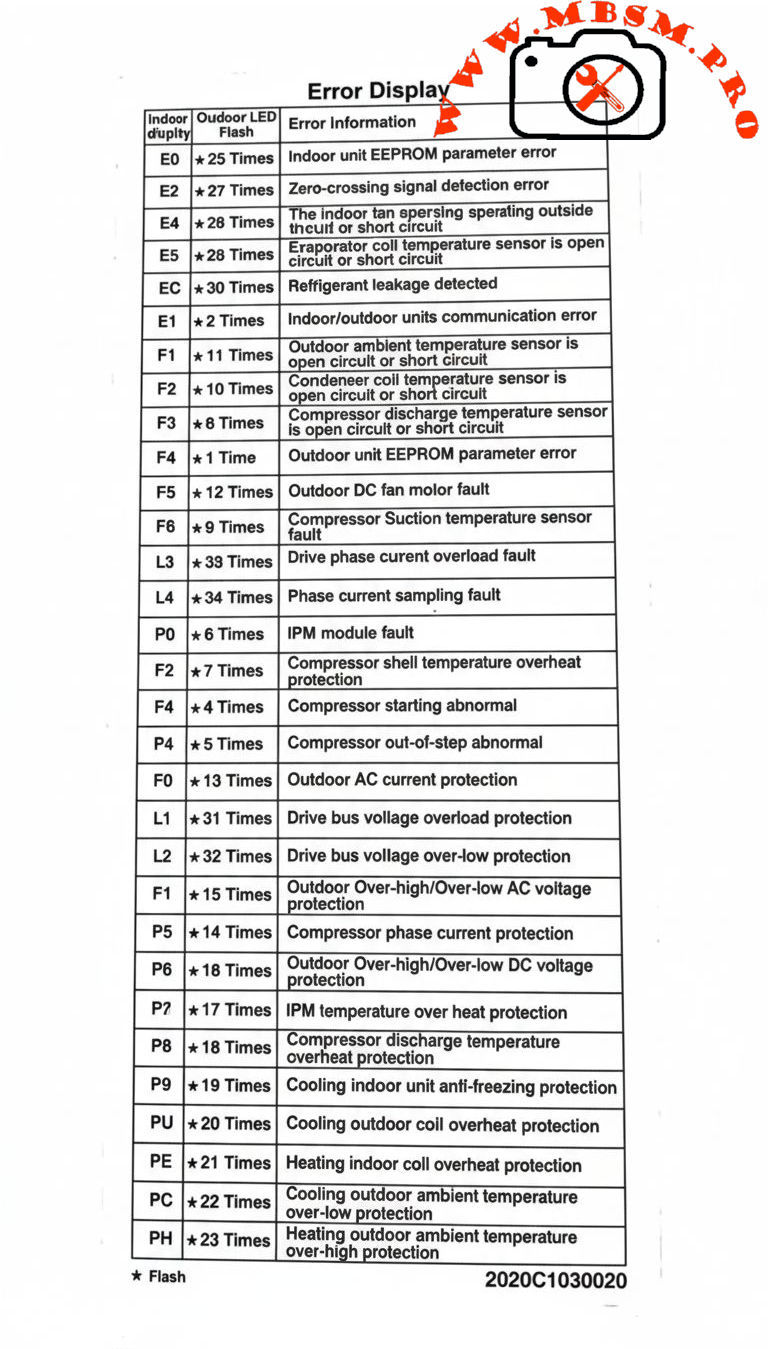
Carrier inverter air conditioners use a structured error‑code system to protect the compressor, inverter module, sensors, and power supply in both indoor and outdoor units. Knowing how to interpret these codes is essential for fast and accurate HVAC troubleshooting in residential and light‑commercial installations.​


Carrier Inverter Indoor Unit Error Codes

Indoor codes mainly relate to EEPROM parameters, communication, and temperature or refrigerant protection. The table summarizes the key entries from the error‑display list.​

Indoor code Typical description Technical meaning
E0 Indoor unit EEPROM parameter error Configuration data in indoor PCB memory cannot be read or is corrupted.​
E2 Indoor/outdoor units communication error Serial data between indoor and outdoor boards lost or unstable.​
E4 Indoor room or coil temp sensor error Temperature sensor open/short, usually T1 or similar designation.​
E5 Evaporator coil temperature sensor error T2 thermistor fault, affecting frost and overheat protection.
EC Refrigerant leakage detected Control logic detects abnormal combination of coil temperatures and runtime.​
P9 Cooling indoor unit anti‑freezing protection Evaporator temperature too low; system reduces or stops cooling.

Indoor sensor and communication errors often originate from loose connectors, pinched cables, or water ingress around the PCB rather than failed components, so visual inspection is a critical first step.​


Carrier Inverter Outdoor Unit and Power‑Electronics Codes

Outdoor codes in Carrier inverter systems cover ambient and coil sensors, DC fan faults, compressor temperature, current protection, and IPM module errors.​

Code Short description Engineering interpretation
F1 Outdoor ambient temperature sensor open/short T4 thermistor fault; affects capacity and defrost logic.
F2 Condenser coil temperature sensor open/short T3 sensor error; risks loss of condensing control.
F3 Compressor discharge temp sensor open/short T5 failure; system cannot monitor discharge superheat.​
F4 Outdoor EEPROM parameter error PCB memory error in outdoor unit.​
F5 Outdoor DC fan motor fault / speed out of control DC fan not reaching commanded speed; bearing, driver, or wiring issue.​​
F6 Compressor suction temperature sensor fault Suction line thermistor reading abnormal values.
F0 Outdoor AC current protection Abnormal outdoor current over‑high or over‑low; system enters protection mode.​
L1 / L2 Drive bus voltage over‑high / over‑low protection DC bus outside limits, often due to mains issues or rectifier problems.​
P0 IPM module fault Intelligent Power Module over‑current or internal failure; compressor speed control compromised.​
P2 Compressor shell temperature overheat protection Excessive body temperature at compressor top sensor.​
P4 Inverter compressor drive error Drive IC or gate‑signal abnormal; may follow IPM or wiring problems.​
P5 Compressor phase current or mode conflict Phase current protection or logic conflict in operating mode selection.​​
P6 Outdoor DC voltage over‑high/over‑low or IPM protection DC bus or IPM voltage feedback outside safe range.​
P7 IPM temperature overheat protection Inverter module overheating due to high load or blocked airflow.​
P8 Compressor discharge temperature overheat protection Discharge sensor indicates over‑temperature; often linked to poor condenser airflow or charge issues.​
PU / PE / PC / PH Coil or ambient overheat / over‑low protections depending on model Protection of indoor or outdoor coil and ambient sensors during extreme conditions.​

For codes like F0, P0, P1, P6, service manuals stress checking supply voltage, compressor current, and all inverter‑side connections before deciding to replace expensive PCBs or the compressor itself.​


Comparison With LG Inverter Error Logic

Both Carrier and LG inverter systems protect similar components, but the naming and grouping of codes differ slightly.​

Feature Carrier inverter codes LG inverter codes
EEPROM / memory E0 indoor / outdoor EEPROM malfunction.​ 9, 60: indoor/outdoor PCB EPROM errors.
Communication E2 indoor‑outdoor comms error.​ 5, 53: indoor‑outdoor communication errors.
IPM / inverter P0 IPM malfunction, P6 voltage protection, P7 IPM overheat.​ 21, 22, 27: IPM and current faults, 61–62 heatsink overheat.​
Current protection F0 outdoor AC current, P5 phase current, F0 manuals describe overload diagnosis.​ C6, C7, 29: compressor over‑current and phase errors.​

This comparison helps multi‑brand technicians adapt their diagnostic approach while recognizing common inverter‑system failure modes: sensor faults, communication problems, over‑current, and over‑temperature on the IPM and compressor.​


Engineering‑Level Diagnostic Consel for Carrier Inverter AC

Professional troubleshooting of Carrier inverter error codes should follow structured, safety‑oriented steps.​

  • Stabilize power and reset correctly. Disconnect supply, wait for DC bus capacitors to discharge, and then re‑energize to see if transient grid disturbances caused codes like F0, P1, or L1/L2.​
  • Measure, don’t guess. For sensor codes (F1–F3, F6, P8, P9), check thermistor resistance vs temperature and compare to tables in Carrier service manuals before replacing parts.​
  • Check airflow and refrigerant circuit. Overheat protections (P2, P7, P8, PU, PE, PH) frequently point to blocked coils, failed fans, or charge problems rather than electronic failure.​
  • Handle IPM faults carefully. For P0 and P6, confirm all compressor‑to‑IPM connections, inspect for carbonized terminals, and verify correct insulation before deciding whether the IPM module or compressor has failed.​

Following these engineering practices reduces unnecessary part replacement, protects technicians from high DC bus voltages, and helps maintain long‑term reliability of Carrier inverter installations.​

Focus keyphrase (Yoast SEO)
Carrier inverter AC error codes indoor outdoor EEPROM sensor communication IPM module fault F0 P0 P6 bus voltage over high over low professional troubleshooting guide

SEO title
Mbsmpro.com, Carrier Inverter AC, Error Codes E0–PH, Indoor and Outdoor Unit, F0 AC Current, P0 IPM Fault, Bus Voltage Protection, Professional HVAC Guide

Meta description
Comprehensive Carrier inverter AC error‑code guide covering indoor and outdoor EEPROM, sensor, communication, F0 current protection, P0 IPM faults, and bus‑voltage alarms, with engineering‑level troubleshooting tips for HVAC technicians.

Slug
carrier-inverter-ac-error-codes-f0-p0-p6-professional-guide

Tags
Carrier inverter error codes, Carrier AC F0 code, Carrier IPM fault P0, EEPROM parameter error, bus voltage protection, inverter air conditioner troubleshooting, HVAC diagnostics, Mbsmgroup, Mbsm.pro, mbsmpro.com, mbsm

Excerpt (first 55 words)
Carrier inverter air conditioners use detailed error codes to protect the compressor, sensors, and inverter electronics. Codes such as E0, F0, P0, and P6 reveal EEPROM faults, outdoor AC current problems, IPM module errors, and DC bus voltage issues, giving HVAC technicians a clear roadmap for safe, accurate troubleshooting and long‑term system reliability.

10 PDF or technical resources about Carrier inverter AC error codes

  1. Carrier air conditioner error‑code and troubleshooting tables with indoor and outdoor descriptions (E0, F0, P0, P2, etc.).
  2. Carrier AC error‑code list with explanations for F3, F4, F5, P0–P6 and separate outdoor tables.
  3. Carrier split‑inverter AC error‑code video and transcript, detailing meanings for E0–E5, F0–F5, P0–P7 and related protections.​
  4. Carrier service manual describing overload current protection and diagnostics for F0 with decision conditions and test steps.
  5. Carrier mini‑split service documentation covering IPM module errors, bus‑voltage protections, and compressor temperature protections.​
  6. Field‑Masters technical article on F0 error in Carrier split AC, focusing on outdoor current protection causes and fixes.
  7. Carrier indoor error‑code summary for installers and service technicians (EEPROM, sensor, and communication codes).
  8. Knowledge‑base article on IPM module faults explaining inspection of connections, refrigerant level, and when to replace the IPM module.
  9. General inverter error‑code reference for drive boards and IPM protections that parallels Carrier codes, including PH, PL, PU, and over‑current alarms.
  10. External Carrier code lists used by service centers to cross‑reference outdoor unit errors and recommended corrective actions.
Carrier Inverter AC Error Codes, Indoor and Outdoor Protection mbsmpro


Coil Rewinding, Universal Motor, 550 W

Coil Rewinding, Universal Motor, 550 W mbsmpro

Mbsmpro.com, Coil Rewinding, Universal Motor, 550 W, 48 mm Core, SWG 25, 210+80 Turns, Mixer Grinder, High‑Medium‑Low Speed, Field Coil Winding Diagram

Coil rewinding for small universal motors, such as mixer grinder motors with a 48 mm laminated core and 550‑watt rating, demands precise control of turns, wire gauge, and internal connections. When done correctly, a rewound motor can match or even improve the original performance, while poor technique quickly leads to overheating, sparking, or speed loss.​


Technical Overview of 550 W Universal Motor Rewinding

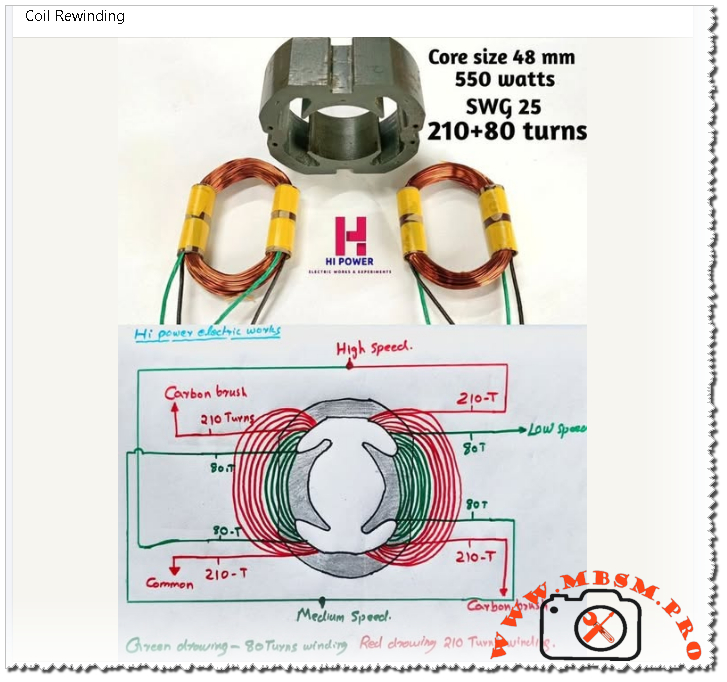
A typical 550‑watt mixer‑grinder uses a two‑pole universal motor with separate field coils and a wound armature, designed for very high speed and strong starting torque. For the 48 mm core shown, common practice is to wind each field with 210 primary turns plus an additional 80 turns using SWG 25 copper wire, giving a combined 210+80 configuration.​​

Parameter Typical value for this motor Engineering note
Core size 48 mm stack height Determines space for copper and magnetic flux path.
Output rating 550 watts (universal motor) Suited for mixer grinders and similar appliances.​
Wire gauge SWG 25 enamel copper Compromise between current capacity and slot fill.​
Turns per field 210 turns main + 80 turns auxiliary Adjusts flux for multi‑speed operation.
Supply type AC mains with commutator brushes Universal design allows AC or DC use.​

From an engineering point of view, keeping the original turns count and SWG is critical, because these define magnetizing current, torque, copper loss, and temperature rise for the motor.​


High, Medium, and Low Speed Winding Connections

Multi‑speed mixer grinders often use the same physical coils but connect them differently through the selector switch to change the effective number of active turns and the series/parallel configuration. The diagram referenced for this 550 W motor shows two colored windings per field: red for 210‑turn sections and green for 80‑turn sections, arranged symmetrically around the stator.​

Speed position Active field turns Typical connection logic Effect on performance
High speed Mainly 210‑turn sections between carbon brushes and common Lower effective field flux, higher speed but less torque per amp.
Medium speed 210 + 80 turns in series on each side Higher flux than high speed, moderate speed and torque.​
Low speed Emphasis on 80‑turn sections combined to increase net turns and resistance Highest field flux, lower speed but stronger load handling and softer start.​

Compared with simple single‑speed universal motors, this multi‑tap field arrangement gives finer control of torque and speed without using complex electronic drives, which is ideal for domestic appliances where rugged mechanical selection is preferred.​


Engineering Comparison: Universal Motor Rewinding vs Induction Motor Rewinding

Although both tasks are labeled coil rewinding, the engineering approach differs significantly between universal motors and three‑phase induction motors.

Aspect Universal motor (mixer grinder) Three‑phase induction motor
Core type Laminated stator with salient poles and series field coils.​​ Slotted stator with distributed three‑phase windings.​
Windings to rewind Field coils and armature coils with commutator segments.​ Only stator coils in most cases; rotor is squirrel cage.
Turns & gauge Often high turns with relatively fine wire (e.g., SWG 25), tailored for high speed.​ Fewer turns of thicker conductors sized for phase current and duty cycle.
Speed control By field taps, series/parallel connections, or electronic control.​ By supply frequency and pole number; rewinding changes pole count or voltage.​

Induction motor rewinding relies heavily on slot geometry, phase grouping, and pole pitch, as explained in best‑practice manuals, while universal motor rewinding demands careful routing around the commutator and precise brush alignment for spark‑free operation.​


Professional Rewinding Practices and Practical Conseil

Rewinding high‑speed universal motors for appliances requires both electrical knowledge and good workshop discipline. Some key consel for technicians and engineers:​

  • Copy the original design closely. Measure turns, wire SWG, and connection order before stripping the old winding; best‑practice guides emphasize copying coil pitch, turns, and copper cross‑section to keep performance consistent.​
  • Keep coil overhang compact. Minimize the length of end turns to reduce I²R loss and keep the motor cool, as recommended for all motor rewinds.
  • Balance both sides of the stator. Universal motors are sensitive to magnetic asymmetry; ensure that each pole pair carries identical turns and uses the same direction of winding.​
  • Secure insulation and impregnation. Use proper slot liners, phase separators, and varnish curing so that coils withstand vibration and high centrifugal forces at full speed.
  • Check commutator and brushes. After rewinding, undercut mica, true the commutator, and seat the brushes to avoid heavy sparking during high‑speed operation.​

Following these engineering‑grade steps makes the rewound 550‑watt mixer‑grinder motor safe, efficient, and durable in demanding kitchen or workshop environments.​

Focus keyphrase (Yoast SEO)
coil rewinding 550 watt universal motor 48 mm core SWG 25 210 plus 80 turns mixer grinder field coil high medium low speed connection diagram

SEO title
Mbsmpro.com, Coil Rewinding, 550 W Universal Motor, 48 mm Core, SWG 25, 210+80 Turns, Mixer Grinder Field Coil, High–Medium–Low Speed

Meta description
Technical guide to rewinding a 550 W universal mixer‑grinder motor with 48 mm core, SWG 25 wire, and 210+80 turn field coils, including speed connections, engineering comparisons, and professional workshop tips.

Slug
coil-rewinding-550w-universal-motor-48mm-core-swg25-210-80-turns

Tags
coil rewinding, universal motor winding, mixer grinder field coil, SWG 25 wire, 210+80 turns, multi speed motor, motor rewinding tips, electric motor repair, Mbsmgroup, Mbsm.pro, mbsmpro.com, mbsm

Excerpt (first 55 words)
Coil rewinding for a 550‑watt universal mixer‑grinder motor with a 48 mm core is more than just replacing burnt copper. The technician must reproduce the original 210+80 turn field coils with SWG 25 wire, respect the high‑medium‑low speed connections, and follow best rewinding practices to keep torque, speed, and temperature under control.

10 PDF or technical resources about motor and coil rewinding

  1. Mixer‑grinder field coil winding and connection details for 550 W, 48 mm core, including 210+80 turn information (Hi Power Electric Works post and shared diagrams).​
  2. General best‑practice manual “Best Practice in Rewinding Three Phase Induction Motors”, covering stripping, inserting, connecting, and insulating new coils.
  3. AC motor winding diagrams collection, explaining slot distribution, coil grouping, and phase relationships.
  4. Technical catalog of coil‑winding machines and accessories used for precision winding of small motors and transformers.
  5. Leroy‑Somer documentation on winding and unwinding solutions with analog references, focused on tension and speed control in coil production.
  6. Guide on calculating Standard Wire Gauge (SWG) for motor windings, including formulas linking current, voltage, and wire size.
  7. General catalog of winding, measuring, and warehouse systems, including manual coil and spool winders.
  8. PDF manual “Rewinding 3‑Phase Motors” that details mathematical rules for windings, torque, and flux, useful for understanding rewinding principles.
  9. Technical catalog for IMfinity three‑phase induction motors, providing background on motor design and winding data for comparison.
  10. Various educational documents and diagrams on AC motor winding available through motor‑winding training PDFs and diagram references similar to the AC motor winding document cited above.​
Coil Rewinding, Universal Motor, 550 W mbsmpro


LG Inverter AC Error Codes: Indoor and Outdoor Unit Professional Guide

LG Inverter AC Error Codes: Indoor and Outdoor Unit Professional Guide mbsmpro

LG Inverter AC Error Codes: Indoor and Outdoor Unit Professional Guide

LG inverter air conditioners use numeric error codes to identify sensor faults, communication problems, and inverter failures in both indoor and outdoor units. Understanding these codes helps technicians diagnose issues quickly, reduce downtime, and protect sensitive electronic components.​


Indoor Unit Error Codes and Meanings

The indoor unit focuses on temperature sensing, water safety, fan control, and communication with the outdoor inverter PCB. The table below summarizes the most common codes.​

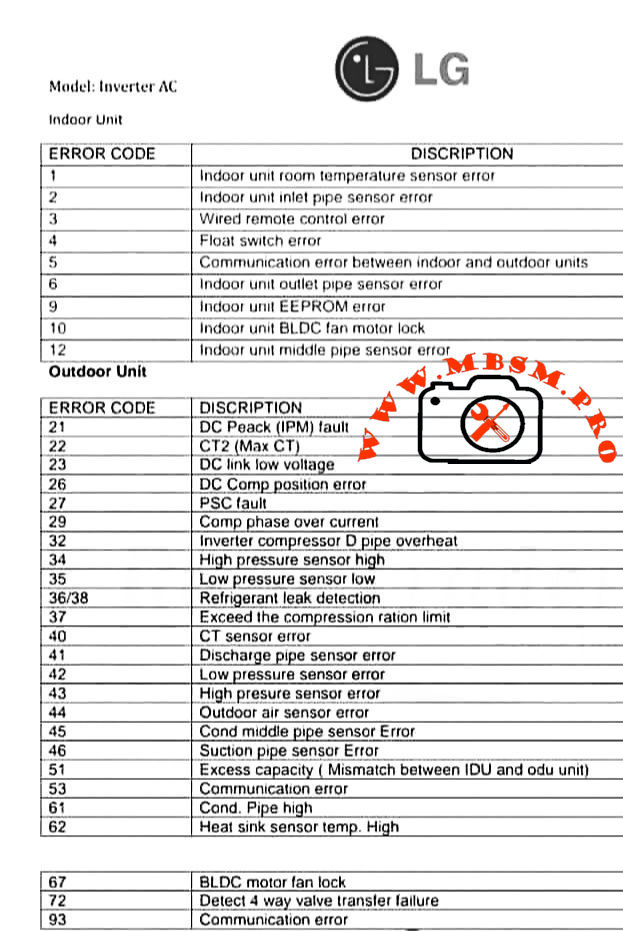
Indoor error code Description (short) Engineering meaning / typical cause
1 Room temperature sensor error Thermistor out of range, open/short circuit near return air sensor.​
2 Inlet pipe sensor error Coil sensor not reading evaporator temperature correctly; wiring or sensor fault.​
3 Wired remote control error Loss of signal or wiring problem between controller and indoor PCB.​
4 Float switch error Condensate level high or float switch open, often due to blocked drain pan.​
5 Communication error IDU–ODU Data link failure between indoor and outdoor boards.​
6 Outlet pipe sensor error Discharge side coil sensor faulty; risk of coil icing or overheating.​
9 EEPROM error Indoor PCB memory failure; configuration data cannot be read reliably.​
10 BLDC fan motor lock Indoor fan blocked, seized bearings, or motor/driver fault.​
12 Middle pipe sensor error Additional coil sensor abnormal, often in multi‑row or multi‑circuit coils.

Technician conseil: Always confirm sensor resistance vs temperature (for example 8 kΩ at 30 °C and 13 kΩ at 20 °C in many LG thermistors) before replacing the PCB; many “EEPROM” or fan faults are triggered by unstable sensor feedback.​


Outdoor Unit Error Codes: Inverter, Power, and Pressure Protection

The outdoor unit handles high‑voltage power electronics, compressor control, and refrigerant protection logic, so most serious faults appear here.​

Outdoor error code Description (short) Technical interpretation
21 DC Peak (IPM fault) Instant over‑current in inverter module; possible shorted compressor or IPM PCB failure.​
22 CT2 (Max CT) AC input current too high; overload, locked compressor, or wiring issue.​
23 DC link low voltage DC bus below threshold, often due to low supply voltage or rectifier problem.​
26 DC compressor position error Inverter cannot detect rotor position or rotation; motor or sensor issue.​
27 PSC fault Abnormal current between AC/DC converter and compressor circuit; protection trip.​
29 Compressor phase over current Excessive compressor amperage, mechanical tightness or refrigerant over‑load.​
32 Inverter compressor discharge pipe overheat Too‑high discharge temperature; blocked condenser, overcharge, or low airflow.
40 CT sensor error Current sensor (CT) thermistor open/short; feedback to PCB missing.​
41 Discharge pipe sensor error D‑pipe thermistor failure; system loses critical superheat/overheat feedback.
42 Low pressure sensor error Suction or LP switch malfunction or low refrigerant scenario.​
43 High pressure sensor error HP switch trip from blocked condenser, fan fault, or overcharge.​
44 Outdoor air sensor error Ambient thermistor failure; affects defrost and capacity control.
45 Condenser middle pipe sensor error Coil mid‑point sensor fault; can disturb defrost and condensing control.
46 Suction pipe sensor error Suction thermistor open/short; impacts evaporator protection logic.
51 Excess capacity / mismatch Indoor–outdoor capacity mismatch or wrong combination in multi‑systems.​
53 Communication error Outdoor to indoor comms failure; wiring, polarity, or surge damage.​
61 Condenser coil temperature high Overheating outdoor coil; airflow or refrigerant problem.
62 Heat‑sink sensor temp high Inverter PCB heat sink over temperature; fan or thermal grease issue.​
67 BLDC motor fan lock Outdoor fan blocked, iced, or motor defective; can quickly raise pressure.​
72 Four‑way valve transfer failure Reversing valve not changing position; coil or slide inefficiency.​
93 Communication error (advanced) Additional protocols or cascade communication problem depending on model.​

For IPM‑related codes like 21 or 22, LG service bulletins recommend checking gas pressure, pipe length, outdoor fan performance, and compressor winding balance before condemning the inverter PCB.​


Comparing LG Inverter Error Logic With Conventional On/Off Systems

Traditional non‑inverter split units often use simple CH codes driven mainly by high‑pressure, low‑pressure, and thermistor faults. LG inverter models add detailed DC link, CT sensor, and IPM protections that can distinguish between power quality issues, compressor mechanical problems, and PCB failures.​

Feature Conventional on/off split LG inverter split
Compressor control Fixed‑speed relay or contactor Variable‑speed BLDC with IPM inverter stage.​
Error detail Limited (HP/LP, basic sensor) Full DC bus, IPM, position, and communication diagnostics.​
Protection behavior Hard stop, manual reset Automatic trials, soft restart, and logged protection history in many models.​

This higher granularity allows experienced technicians to pinpoint failures faster but also demands better understanding of power electronics and thermistor networks.​


Professional Diagnostic Strategy and Field Consel

From an engineering and service point of view, working with LG inverter codes should follow a structured method rather than trial‑and‑error replacement.​

  • 1. Confirm the exact model and environment

    • Check whether the unit is single‑split, multi‑split, or CAC; some codes change meaning between product families.​
    • Verify power supply stability, wiring polarity, and grounding before focusing on PCBs or compressors, especially for IPM and CT2 faults.​

  • 2. Read sensors and currents, not only codes

    • Use a multimeter and clamp meter to measure thermistor resistance, compressor current, and DC bus voltage against the service manual tables.​
    • For sensor errors, compare readings with reference charts (for example resistance vs temperature) to avoid replacing good parts.​

  • 3. Respect inverter safety

    • Wait the recommended discharge time before touching any DC link components; capacitors can retain hazardous voltage even after power off.​
    • Use insulated tools and avoid bypassing safety switches; overriding a high‑pressure or IPM protection may damage the compressor permanently.​

  • 4. Compare with factory documentation

    • Always check the latest LG error‑code bulletins and service manuals, because some codes (for example 61 or 62) gained additional sub‑causes in new generations.​

For professional workshops, building a small internal database of “case histories” linking error codes, environmental conditions, and final solutions can significantly reduce repeated troubleshooting time.


Focus keyphrase (Yoast SEO)

LG inverter AC error codes indoor and outdoor unit sensor, communication, IPM fault and DC peak troubleshooting guide for professional air conditioner technicians


SEO title

Mbsmpro.com, LG Inverter AC, Error Codes 1–93, Indoor and Outdoor Unit, IPM Fault, Sensor Error, Communication Fault, Professional Troubleshooting Guide


Meta description

Detailed LG inverter AC error code guide for indoor and outdoor units, explaining sensor faults, communication errors, IPM and DC peak alarms, with professional diagnostic tips for HVAC technicians and engineers.


Slug

lg-inverter-ac-error-codes-indoor-outdoor-guide


Tags

LG inverter error codes, LG AC fault codes, indoor unit sensor error, outdoor unit IPM fault, DC peak CT2 error, BLDC fan lock, HVAC troubleshooting, inverter air conditioner service, Mbsmgroup, Mbsm.pro, mbsmpro.com, mbsm


Excerpt (first 55 words)

LG inverter air conditioner error codes give technicians a precise window into what is happening inside both indoor and outdoor units. From simple room temperature sensor faults to complex IPM and DC peak alarms, decoding these numbers correctly is critical for fast, safe, and accurate HVAC troubleshooting on modern LG split systems.

10 PDF or catalog links about LG inverter AC error codes and service information

  1. LG HVAC technical paper “Defining Common Error Codes” for inverter systems (official error explanations and sequences).
  2. LG air conditioning fault codes sheet for split units, including indoor sensors and compressor protections.
  3. LG universal split fault code sheet (detailed explanations for codes 21, 22, 26, 29, etc.).
  4. LG ducted error codes guide covering DC peak, CT2 Max CT, and compressor over‑current protections.
  5. LG Multi and CAC fault code sheet with advanced guidance for IPM and CT faults.
  6. LG installation and service manual for inverter units, listing DC link, pressure switch, and inverter position errors.
  7. LG USA support “Guide to Error Codes” for single and multi‑split systems, with troubleshooting summaries.
  8. LG global support page “Single / Multi‑Split Air Conditioner Error Codes” including IPM, CT2, EPROM, and communication errors.
  9. ACErrorCode.com LG inverter AC error code list, useful as a quick field reference.
  10. Valley Air Conditioning LG air conditioner error code and troubleshooting guide with indoor and outdoor tables.
LG Inverter AC Error Codes: Indoor and Outdoor Unit Professional Guide mbsmpro
BLDC fan lock, DC peak CT2 error, HVAC troubleshooting, indoor unit sensor error, inverter air conditioner service, LG AC fault codes, LG inverter error codes, mbsm.pro, mbsmgroup, mbsmpro.com, outdoor unit IPM fault


HVAC Basics: Compressors, Ducts, Filters, and Real‑World Applications

mbsmgroup2026-01-10_214148-mbsmpro mbsmpro

HVAC Basics: Compressors, Ducts, Filters, and Real‑World Applications

Understanding HVAC basics is essential for technicians, engineers, and facility managers who want reliable comfort, healthy indoor air, and efficient energy use in every type of building. This guide goes deeper than standard introductions and connects each basic element—compressors, ducts, filters, and applications—to practical field experience and engineering concepts.​


Main Types of HVAC Compressors

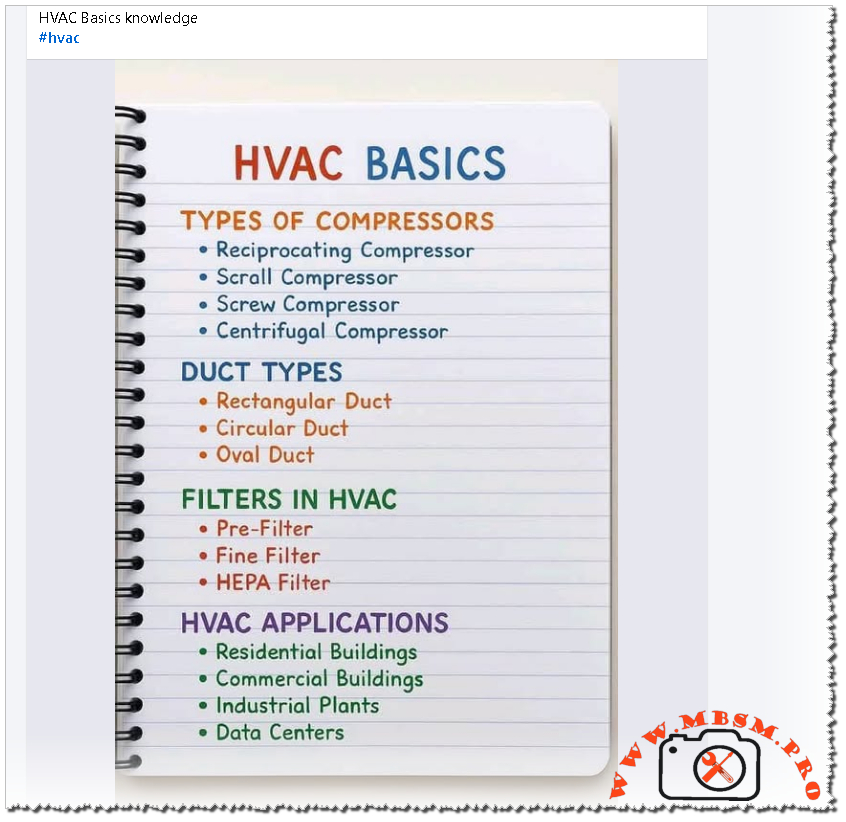
Compressors are the heart of any refrigeration or air‑conditioning system, raising refrigerant pressure so heat can be rejected outdoors and absorbed indoors. Four main compressor families dominate HVAC and refrigeration:​

Compressor type Working principle Typical applications Key advantages
Reciprocating compressor Piston moves back and forth in a cylinder, compressing refrigerant in stages.​ Small cold rooms, domestic refrigeration, light commercial AC Simple design, good for high pressure ratios
Scroll compressor Two spiral scrolls; one fixed, one orbiting, progressively traps and compresses gas.​ Residential and light commercial split AC, heat pumps Quiet, high efficiency, fewer moving parts
Screw compressor Two interlocking helical rotors rotate in opposite directions, trapping and compressing gas.​ Large chillers, industrial refrigeration, process cooling Continuous operation, stable capacity control
Centrifugal compressor High‑speed impeller accelerates refrigerant, then diffuser converts velocity to pressure.​ Large district cooling plants, high‑rise buildings, industrial HVAC Very high flow, good efficiency at large capacities

Engineering insight: choosing a compressor

  • Reciprocating vs scroll: Reciprocating units tolerate higher compression ratios and are robust for low‑temperature refrigeration, while scroll compressors deliver smoother, quieter operation for comfort cooling.​
  • Screw vs centrifugal: Screw compressors are ideal for variable industrial loads and tough conditions, whereas centrifugal units excel when a plant needs very large, steady cooling capacity with clean refrigerant and good water treatment.​

For design engineers, selecting a compressor is a trade‑off between capacity range, part‑load efficiency, noise, maintenance strategy, and refrigerant choice.​


HVAC Duct Types and Air Distribution

Ductwork acts like the circulatory system of an HVAC installation, moving conditioned air from central equipment to occupied spaces and back again. The main duct geometries are:​

Duct type Shape Typical use Performance notes
Rectangular duct Flat, four‑sided Commercial buildings, retrofits with space constraints Easy to install above ceilings; needs good sealing to reduce leakage
Circular duct Round cross‑section Industrial plants, high‑velocity systems, long runs Lower friction losses and leakage for the same air volume vs rectangular.
Oval duct Flattened circle Modern offices, tight ceiling spaces Compromise between rectangular space efficiency and circular aerodynamics

Comparison with ductless systems

  • Ducted systems distribute air through a network of ducts and are ideal when many zones share common air handling units.
  • Ductless systems (like VRF cassettes or mini‑splits) avoid duct losses but put more equipment in occupied spaces; they suit renovations where duct installation is difficult.​

Correct sizing, smooth layouts, and sealed joints are crucial engineering tasks; poorly designed ducts can waste 20–30% of fan energy and create comfort complaints.​


Filters in HVAC: From Pre‑Filter to HEPA

Air filters protect occupants and equipment by capturing dust, pollen, and fine particulates, and by keeping coils and fans clean. In a typical system, several filter stages can be combined:​

Filter type Function Typical efficiency & classification Main applications
Pre‑filter Captures coarse dust and fibers, acts as first protection.​ G2–G4 or M5 range in EN/ISO standards Central AC units, fan‑coil units, rooftop units
Fine filter Removes smaller particles, improves indoor air quality.​ F7–F9 or ePM1/ePM2.5 classes Offices, malls, schools, clean industrial spaces
HEPA filter High‑efficiency particle air filtration down to 0.3 µm.​ H10–H14, up to >99.995% efficiency Cleanrooms, hospitals, pharma, high‑tech manufacturing

Engineering view: value comparison

  • Pre‑filters extend the life of fine and HEPA filters by capturing large loads of dust, which reduces lifecycle cost and maintenance frequency.​
  • Fine filters strike a balance between air quality and pressure drop, suitable where regulations or comfort demand cleaner air but full HEPA is not required.​
  • HEPA filters are reserved for critical environments; they carry higher pressure drop and require careful design of fans, seals, and housings to avoid bypass leaks.​

Engineers should coordinate filter strategy with building use (for example, residential vs hospital), outdoor pollution levels, and standards such as EN ISO 16890 or ASHRAE 52.2.​


HVAC Applications Across Building Types

HVAC basics appear in very different configurations depending on the building category and load profile.​

Application type Typical system configuration Special design focus
Residential buildings Split AC or heat pumps, ducted or ductless; small boilers or furnaces. Comfort, low noise, simple controls, easy maintenance
Commercial buildings Central AHUs with duct networks, rooftop units, chillers with air or water‑cooled condensers.​ Energy efficiency, zoning, demand‑controlled ventilation
Industrial plants Process chillers, large air handlers, dedicated exhaust and makeup air systems. Process reliability, temperature/humidity control, safety
Data centers Precision cooling, CRAH/CRAC units, containment and raised floors. Continuous operation, redundancy, exact thermal management

Compared with process refrigeration

While comfort HVAC focuses on occupant well‑being and general air quality, industrial process refrigeration may prioritize precise temperature at equipment, sub‑zero conditions, or specific humidity requirements for production lines. In many factories, comfort HVAC and process cooling share chillers or cooling towers but operate under different control strategies and redundancy levels.​


Professional Tips and Practical Consel for Technicians

To move from theory to daily field performance, technicians and engineers can follow a few key habits:

  • Always look at the system as a chain: compressor, condenser, expansion device, evaporator, ductwork, and controls; diagnosing only one part often hides the real cause.​
  • When commissioning, verify airflow (CFM or m³/h) as carefully as refrigerant charge; incorrect duct balance can make a perfectly charged system look weak.​
  • For filters, log pressure drop across each stage and plan replacement based on performance, not just fixed dates; this protects both air quality and fan energy.​
  • In data centers and sensitive industrial zones, coordinate with IT and production teams to understand critical loads before choosing compressor type, redundancy level, and filtration strategy.​

These practices transform simple HVAC “basics” into a robust, engineered system that delivers stable comfort, safety, and reliability throughout the life of the installation.​

Focus keyphrase (Yoast SEO)
HVAC basics compressors duct types filters HEPA and HVAC applications in residential commercial industrial buildings and data centers explained for technicians and engineers

SEO title
HVAC Basics, Compressors, Duct Types, Filters, Residential and Industrial Applications | Mbsm.pro Technical Guide

Meta description
Learn HVAC basics with a technical yet practical guide to compressor types, duct systems, air filters from pre‑filter to HEPA, and key HVAC applications in homes, commercial buildings, industry, and data centers.

Slug
hvac-basics-compressors-ducts-filters-applications

Tags
HVAC basics, HVAC compressors, duct types, HVAC filters, HEPA filter, residential HVAC, industrial HVAC, data center cooling, Mbsmgroup, Mbsm.pro, mbsmpro.com, mbsm

Excerpt (first 55 words)
HVAC basics start with understanding how compressors, ducts, and filters work together to move heat and clean air in any building. From reciprocating and scroll compressors to rectangular and circular ducts, each choice affects comfort, energy efficiency, and reliability in residential, commercial, industrial, and data center applications.

10 PDF or catalog links about HVAC basics, compressors, ducts, and filters

  1. General HVAC BASICS methodology guidebook – RIT (cooling mode, components, airflow).
  2. TMS Group industrial HVAC systems guide, including ducts, filters, and components (often provided with downloadable technical PDFs).
  3. AireServ beginner’s guide to HVAC systems, with linked resources covering core components and operation.
  4. Fieldproxy “Basics of HVAC” resource, describing system elements and maintenance, with references to detailed documents.
  5. Heavy Equipment College “HVAC Parts and Their Functions” technical overview, listing all major components and roles.
  6. Gardner Denver knowledge hub on types of air compressors, including reciprocating, scroll, and screw, often linked as downloadable brochures.
  7. Sullair “Types of Compressors” knowledge document explaining rotary screw, scroll, and centrifugal compressor technology.
  8. ALP HVAC Filter Systems catalog, covering pre‑filters, fine filters, and HEPA filters with efficiency classes and applications.
  9. Camfil general ventilation filters catalog, showing bag filters, fine filters, and HEPA‑level products for HVAC applications.
  10. EU vs ASHRAE filter standards comparison for high‑efficiency and HEPA filtration, explaining classes H10–H14 and mechanisms.
Mbsmgroup2026-01-10_214148 mbsmpro


Brass Male Flare Union Fittings for Refrigeration and HVAC Systems

Brass Male Flare Union Fittings for Refrigeration and HVAC Systems mbsmpro

Brass Male Flare Union Fittings for Refrigeration and HVAC Systems

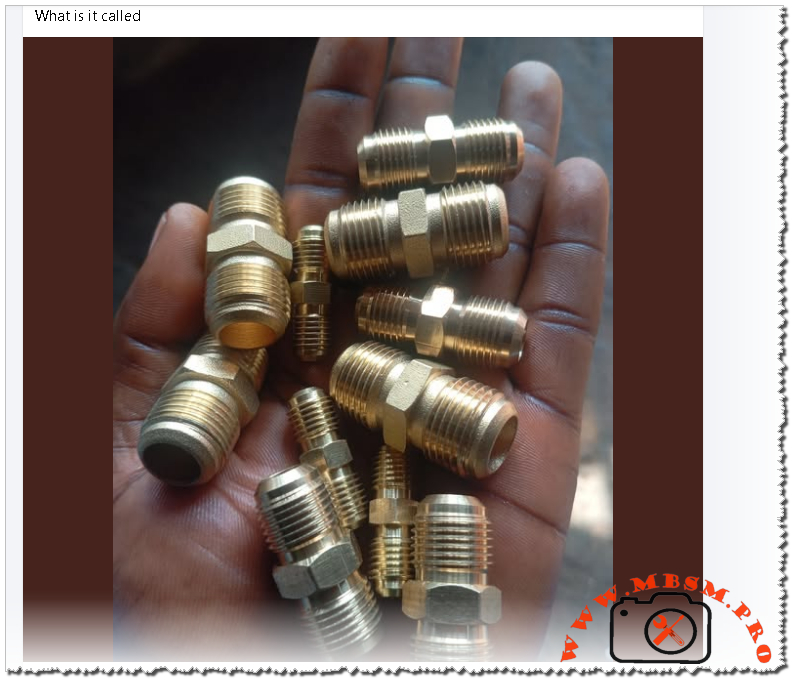
Brass male flare unions are precision fittings used to connect two flared copper or aluminum tubes in refrigeration, air‑conditioning, and gas lines without brazing or welding. These fittings are standard components in professional HVAC installations and service operations.​


What These Fittings Are Called

In professional catalogs and engineering documentation, the parts in the image correspond to:

  • Brass male‑to‑male flare union
  • Brass flare straight union
  • Brass flare adapter or half‑union (for versions with a different thread or one closed end)
  • SAE 45° brass flare fittings, typically conforming to SAE J512/J513 for refrigeration and gas service.​

These fittings are commonly listed with sizes such as 1/4″, 3/8″, or 1/2″ male flare, and are compatible with flared copper, brass, aluminum, or steel tubing in HVAC and refrigeration circuits.​


Technical Function and Engineering Advantages

Brass male flare unions provide a mechanical seal between two flared tubes, using metal‑to‑metal contact and the clamping force of the nut. This sealing method avoids filler metals and high temperatures, which is especially useful for:​

  • Connecting service hoses and gauges to refrigeration lines
  • Extending or repairing capillary tubes and liquid lines
  • Creating demountable joints in areas where future disassembly is expected

Engineering advantages include:

  • Good corrosion resistance in refrigerant and oil environments, thanks to C360/C370 brass alloys.​
  • Wide working temperature range, typically from −65 °F to +250 °F, suitable for standard HVAC refrigerants.​
  • Adequate working pressures for common refrigeration tubing; allowable pressure depends on tube material, wall thickness, and outside diameter.​

Typical Applications in HVAC/R

These fittings are standard in:

  • Refrigeration condensing units and cold rooms using copper linesets
  • Split AC systems where service valves and gauge manifolds connect via flare unions
  • Gas lines and hydraulic circuits using flared metal tubing, where leak‑tight mechanical joints are required.​

They are especially popular in light commercial and domestic refrigeration where technicians want a reversible connection during commissioning, pressure testing, or component replacement.​


Comparison With Other HVAC Fittings

Common HVAC Tube Fittings Overview

Fitting type Assembly method Typical use in HVAC/R Reusability Need for flame
Brass male flare union Flare and tighten nut Join two flared copper tubes or extend lines High No
Solder/brazed coupling Heat and filler metal Permanent joints in copper liquid/suction lines Low Yes
Compression fitting Ferrule compression Water lines and some low‑pressure services Medium No
Flare‑to‑pipe adapter Flare + NPT/BSP thread Transition between flared tubing and threaded components High No

Flare unions are preferred where disassembly, leak testing, or component replacement will be routine, while brazed couplings are chosen for long‑term permanent joints in inaccessible locations.​


Professional Installation Guidelines and Best Practices

For reliable performance and to meet professional HVAC standards:

  • Use properly sized flaring tools with a 45° flare angle compatible with SAE flare fittings.​
  • Ensure the tubing end is cut square, deburred, and cleaned before flaring to avoid scoring the sealing surface.
  • Lubricate threads lightly with refrigeration oil and tighten to the manufacturer’s recommended torque to prevent both under‑tightening (leaks) and over‑tightening (cracked flares).
  • Avoid mixing metric and imperial flare sizes or different thread standards; always match the fitting spec to the tubing and equipment rating.​

For critical circuits using high‑pressure refrigerants, consult the pressure rating tables in the manufacturer’s catalog and verify compatibility with the working and test pressures of the system.​


Practical Tips for Technicians and Engineers

Some additional professional conseils for field and design use:

  • When designing new lines, minimize the number of mechanical joints; use flare unions mainly for service points or where components must be removable.
  • During retrofits, replace damaged or rounded flare nuts; re‑using deformed nuts increases leak risk even if the tubing flare is renewed.​
  • In vibration‑prone locations (compressor discharge lines, mobile refrigeration), support the tubing near flare unions with proper clamps to reduce stress on the joint.
  • Always perform nitrogen pressure tests and vacuum leak checks after installing or re‑tightening flare unions to confirm system integrity.​

Focus Keyphrase for Yoast SEO

Focus keyphrase:
Brass male flare union fitting for refrigeration and HVAC copper tubing connections, SAE 45 degree brass flare connector for air conditioning and gas lines


SEO Title

SEO title:
Brass Male Flare Union Fittings for Refrigeration and HVAC | Mbsm.pro Technical Guide


Meta Description

Meta description:
Professional guide to brass male flare union fittings for refrigeration and HVAC systems, explaining function, applications, engineering specs, and best installation practices for reliable, leak‑tight copper tube connections.


Slug

Slug:
brass-male-flare-union-refrigeration-hvac


Tags

Tags:
Brass male flare union, flare union fitting, refrigeration flare connector, HVAC brass fittings, SAE 45 flare, copper tube union, gas line flare fitting, Mbsmgroup, Mbsm.pro, mbsmpro.com, mbsm


Excerpt (first 55 words)

Brass male flare union fittings are essential components in refrigeration and HVAC systems, providing reliable mechanical connections between flared copper tubes without the need for brazing. These brass flare unions support a wide operating temperature range and are widely used for service connections, line extensions, and removable joints in air‑conditioning and refrigeration installations.


PDF Catalogs and Technical Documents About Brass Flare Fittings

  • ROBO‑FIT brass flare fittings catalog (technical data and pressure tables)
  • Viking Instrument “Flare Fittings – The World Standard” catalog (HVAC and gas applications)
  • Refrigeration Supplies Distributor brass flare fittings section with technical specs (downloadable pages often as PDF from category)
  • Refrigerative Supply brass fittings catalog pages (brass flare connectors for HVAC)
  • AC Pro Store copper and brass fittings documentation for HVAC, including brass flare fittings
  • JB Industries brass fittings documentation for unions and adapters used in refrigeration service
  • Mueller Streamline brass flare fittings literature, commonly linked as PDF from distributor pages like Refrigerative Supply
  • Fairview Fittings brass flare and pipe adapters technical catalog, accessible via distributor product pages
  • AWH refrigeration brass male flare union product data from manufacturer listing on Alibaba (technical attributes and application field HVAC system)
  • General brass flare fitting installation and application guides included in many HVAC training documents and manufacturer catalogs referenced above, especially Viking Instrument and ROBO‑FIT.​
Brass Male Flare Union Fittings for Refrigeration and HVAC Systems mbsmpro
Brass male flare union, copper tube union, flare union fitting, gas line flare fitting, HVAC brass fittings, mbsm.pro, mbsmgroup, mbsmpro.com, refrigeration flare connector, SAE 45 flare