Trane 24000 BTU, 4MXTE24ASB000AB, 4TXKE24ASB0000A
Trane 24000 BTU, 4MXTE24ASB000AB, 4TXKE24ASB0000A mbsmpro

Trane Middle Static Pressure Duct Type Air Conditioner: Technical Overview and Performance Guide

Trane’s middle static pressure duct type air conditioner in the 24,000 BTU/h class is designed for residential and light commercial projects that demand reliability, silent operation and precise air distribution. This unit combines robust construction with R410A refrigerant technology to deliver efficient cooling and heating across a wide range of indoor applications.

Main specifications

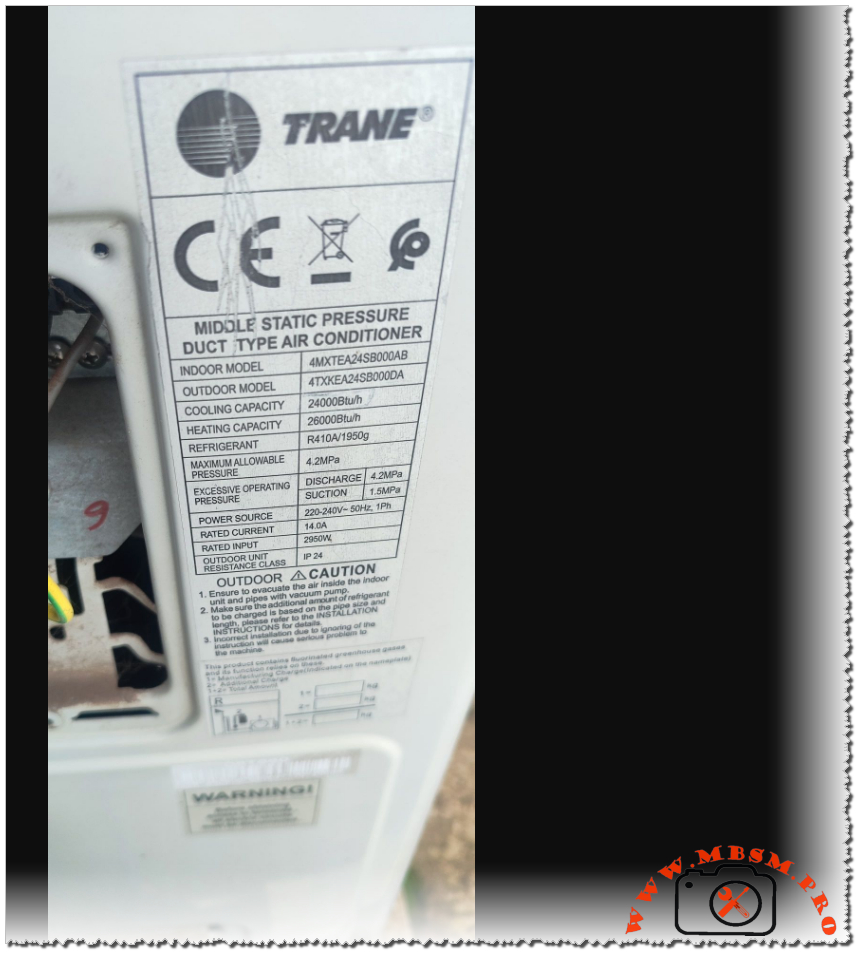
The nameplate identifies the indoor model as 4MXTE24ASB000AB and the outdoor model as 4TXKE24ASB0000A. The cooling capacity is rated at 24,000 BTU/h, while the heating capacity reaches 26,000 BTU/h, placing the system firmly in the 2‑ton segment for ducted installations. The unit uses R410A with a factory charge of 1950 g, ensuring compatibility with current environmental regulations and high operating pressures typical of this refrigerant. The maximum allowable pressure is specified at 4.2 MPa, with typical operating conditions of 4.2 MPa on discharge and 1.5 MPa on suction, reflecting the design for medium static pressure duct networks.

Electrical data and power performance

The power source requirement for this Trane ducted system is 220–240 V, 50 Hz, single phase, which aligns with standard low‑voltage networks in many markets, including residential and small commercial buildings. Rated current is listed at 14.0 A, with a rated input power of 2950 W, providing a clear reference point for circuit sizing and energy consumption estimation. The outdoor unit carries a protection class of IP24, indicating resistance to water splashes and solid objects larger than 12.5 mm, which is essential for safe operation in exposed external locations. These electrical characteristics help designers and installers evaluate cable sizing, breaker selection and overall energy performance when integrating the system into a building.

Refrigerant circuit and pressure safety

Operating with R410A at high pressures, the system is engineered to handle demanding conditions while maintaining safety. The maximum allowable pressure of 4.2 MPa for the circuit, together with specified discharge and suction pressures, underlines the importance of using compatible tools, hoses and gauges during service operations. Excessive operating pressure limits on discharge and suction sides guide technicians during commissioning and troubleshooting, helping to identify abnormal conditions such as overcharging, blocked airflow or non‑condensable gases in the circuit. Correct handling of R410A and adherence to pressure limits are critical to protect the compressor, heat exchangers and associated piping over the life of the installation.

Installation considerations and duct design

As a middle static pressure duct type air conditioner, this Trane model is optimized for installations where air must be distributed to multiple rooms through short to medium duct runs. Medium static pressure capability allows the unit to overcome resistance from supply grilles, filters and bends, while still maintaining comfortable airflow levels in each zone. Installers must calculate total external static pressure, select appropriate duct dimensions and ensure proper balancing dampers to match the fan performance curve of the indoor unit. Good duct design, combined with adequate return air pathways and filtration, contributes to stable room temperatures, low noise levels and reduced energy losses.

Safety instructions and maintenance

The manufacturer emphasizes several safety and maintenance instructions directly on the rating label of the outdoor unit. Technicians are instructed to evacuate the air inside the indoor unit and piping before charging refrigerant in order to avoid moisture and non‑condensable gases that could damage the compressor. Only qualified personnel should perform installation and service work, following local electrical and refrigeration codes to prevent electric shock, fire or refrigerant leakage. Regular maintenance, including cleaning coils, checking electrical connections and verifying refrigerant pressures against the nameplate data, is essential to keep the system operating at the stated capacities and to extend the equipment’s service life.


Key technical data table

Parameter Value
Indoor unit model 4MXTE24ASB000AB
Outdoor unit model 4TXKE24ASB0000A
Cooling capacity 24,000 BTU/h
Heating capacity 26,000 BTU/h
Refrigerant type / charge R410A / 1950 g
Power supply 220–240 V, 50 Hz, 1‑phase
Rated current 14.0 A
Rated input power 2950 W
Maximum allowable pressure 4.2 MPa
Typical discharge / suction press. 4.2 MPa / 1.5 MPa
Outdoor unit protection class IP24
Trane 24000 BTU, 4MXTE24ASB000AB, 4TXKE24ASB0000A mbsmpro


GR‑EFV45,El Araby Toshiba

GR‑EFV45,El Araby Toshiba mbsmpro

Toshiba 3-Door 16 cu.ft No‑Frost Silver Refrigerator: A Practical Workhorse for Modern Homes

The Toshiba 3‑door 16 cu.ft no‑frost silver refrigerator from El Araby is designed for families who want generous storage, stable cooling, and low maintenance in a compact footprint. It combines vapor no‑frost cooling, a dedicated middle fresh zone, and silver finish that matches most contemporary kitchens.

Key specifications and capacity

  • Net capacity about 351 liters (≈16 cu.ft), enough for a medium to large household.
  • Three-door layout: top freezer, central fresh/vegetable compartment, and main fridge section below for everyday items.
  • Approximate dimensions: width 66.5 cm, depth 68.4 cm, height 175.3 cm, giving a tall but relatively slim cabinet that fits standard kitchen niches.
  • Color: silver with hardened glass shelves for better load resistance and easier cleaning.

Toshiba 3‑door 16 cu.ft no‑frost – main data

Feature Detail
Model family GR‑EFV45 series (El Araby Toshiba) 
Cooling type No‑Frost with vapor air circulation 
Doors 3 doors: freezer / fresh zone / fridge 
Net capacity ≈351 L (around 16 cu.ft) 
Color Silver exterior 
Shelves Tempered glass, adjustable 
Energy class Class A, optimized for reasonable power use 
Refrigerant Non‑CFC, eco‑friendly design 
Extra features Plasma deodorizer (on many variants), low‑noise design 

Cooling technology and food preservation

The refrigerator uses a no‑frost vapor cooling system that circulates cold air around the compartments, preventing ice build‑up on the walls and evaporator. This means no manual defrosting and more stable temperatures for long‑term storage.

  • Multi‑air flow channels distribute air in several layers, reducing temperature differences between shelves and helping vegetables and dairy stay fresh longer.
  • Many GR‑EFV45‑series units include a plasma or bio‑deodorizer module that absorbs odors and reduces bacteria, which is particularly valuable in the middle fresh zone for fruits and vegetables.

Design, usability, and everyday practicality

The three‑door configuration is one of the strong points of this Toshiba line. It offers a separate middle drawer or compartment for fruits and vegetables, isolating humidity and smells from the main fridge area.

  • Adjustable glass shelves and door balconies allow flexible loading, from tall bottles to large pans or cake boxes.
  • Silver exterior and integrated handles give a neutral, modern appearance that blends with stainless or grey appliances, which is often requested in open kitchens.
  • Noise‑reduced compressor design and non‑CFC refrigerant make it a relatively quiet and environmentally conscious appliance for daily home use.

Reliability, market positioning, and who it suits

El Araby distributes this Toshiba 16‑foot, 3‑door refrigerator widely in North Africa and the Middle East, targeting families that need a durable mid‑range no‑frost unit rather than a premium smart fridge.

  • Ten‑year compressor warranty is common on this series, underlining its positioning as a long‑term investment for domestic kitchens.
  • The size and three‑door design make it especially suitable for households that shop weekly, cook frequently, and want one dedicated vegetable/fresh zone without moving to a bulky side‑by‑side model.


Bitzer 4J-13.2Y-40P semi-hermetic

Bitzer 4J-13.2Y-40P semi-hermetic mbsmpro

Bitzer 4J‑13.2Y‑40P Compressor: How to Read and Use the Nameplate Data

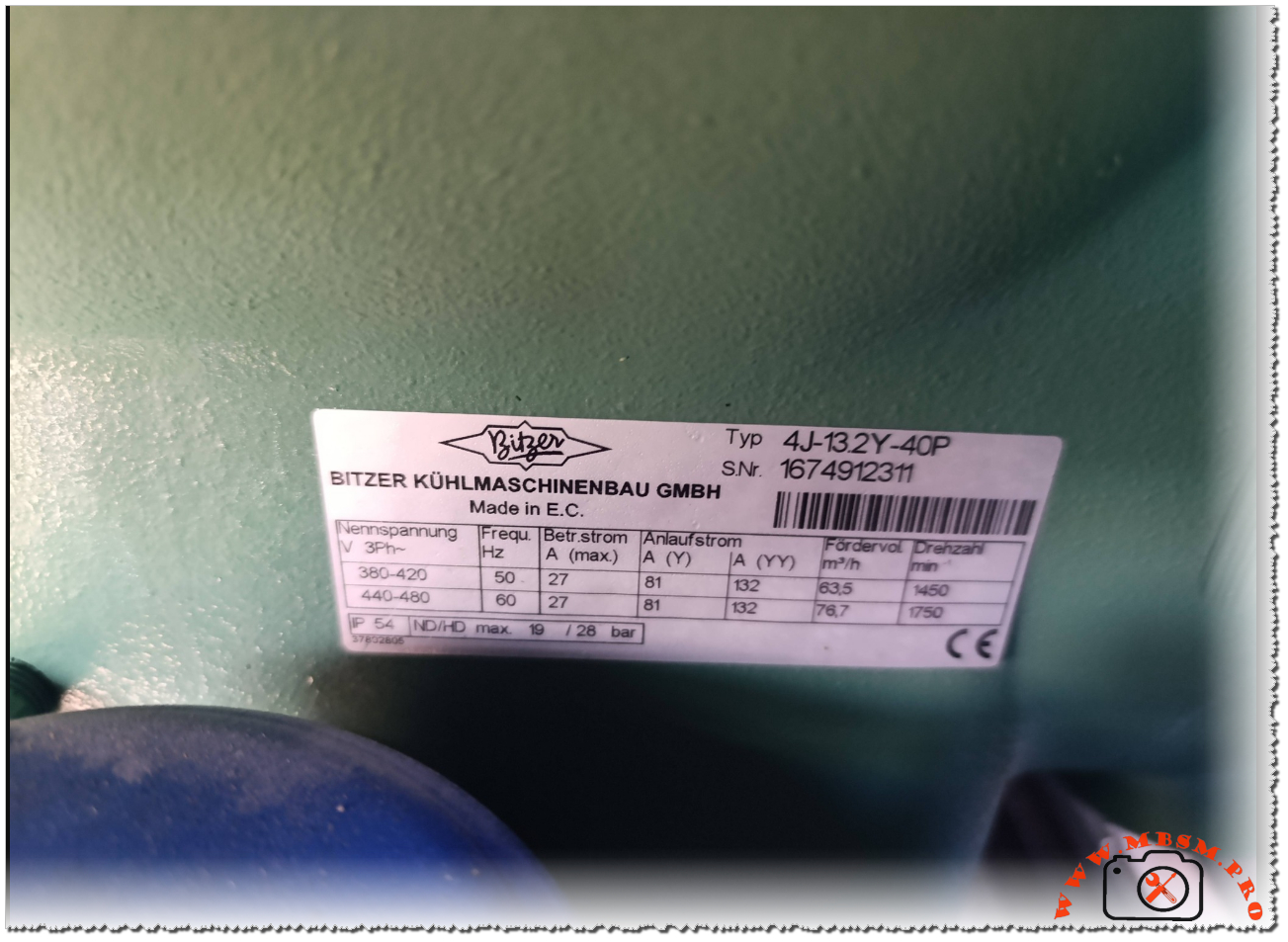
The Bitzer 4J‑13.2Y‑40P is a semi‑hermetic reciprocating compressor widely used in commercial refrigeration and process cooling installations around the world. It is designed for three‑phase power supplies and offers reliable operation in medium‑ to high‑temperature applications. Understanding its nameplate is essential for safe commissioning, correct electrical connection, and accurate system sizing.

Electrical characteristics

The identification plate lists the nominal three‑phase voltage ranges of 380–420 V at 50 Hz and 440–480 V at 60 Hz, showing that this model is suitable for international grids and export equipment. This flexibility allows installers to deploy the same compressor frame in regions with different mains standards, provided the motor protection and wiring are adjusted accordingly.​

At 50 Hz, the maximum running current is specified at 27 A, while the starting current in star (Y) connection reaches 81 A and in part‑winding (YY) configuration 132 A. At 60 Hz, the maximum running current remains 27 A, but the higher frequency increases the starting demand and speed, so the electrical design of contactors, circuit‑breakers and cables must respect these values.​

Key electrical data

Parameter 50 Hz value 60 Hz value
Nominal voltage 380–420 V 440–480 V
Max. running current 27 A 27 A
Starting current (Y) 81 A 81 A
Starting current (YY) 132 A 132 A

Performance and operating limits

The nameplate also indicates the theoretical displacement flow rate and motor speed for each frequency. At 50 Hz the compressor delivers 63.5 m³/h at 1450 rpm, while at 60 Hz the flow rises to 76.7 m³/h at 1750 rpm, which directly influences cooling capacity and requires recalculation of expansion valve and piping selections when changing frequency. These figures are important for designers who convert catalog capacities to real site conditions, especially in retrofits where a 50 Hz machine is driven from a 60 Hz supply or via a frequency inverter.​

The enclosure rating is IP54, and the plate notes the combination “ND/HD max. 19/28 bar”, indicating the maximum permissible operating pressure on the low‑ and high‑pressure sides of the compressor shell. Respecting these limits is crucial for safety valves, pressure switches and leak testing procedures during commissioning and maintenance.​

Performance snapshot

Frequency Flow rate (m³/h) Speed (rpm) Max. shell pressure (ND/HD)
50 Hz 63.5 1450 19 / 28 bar
60 Hz 76.7 1750 19 / 28 bar

Practical guidance for installers

For installers and service technicians, the nameplate of the 4J‑13.2Y‑40P acts as the main reference for electrical protection settings, cable sizing and motor starting method. Checking that the site voltage matches one of the listed ranges is a first step before any connection, followed by the choice between star‑delta, part‑winding or direct‑on‑line starting depending on the available switchgear and network capacity. The running current values help to set thermal overload relays and electronic motor protection units, reducing the risk of nuisance trips or motor damage under heavy load.​

During commissioning, technicians should also compare the actual operating pressures and temperatures with the limits derived from Bitzer’s application range diagrams for this model. This ensures that the compressor runs within its safe envelope when paired with modern refrigerants, oil types and system designs recommended by the manufacturer. Such discipline is especially important for demanding applications like supermarket racks, process chillers and cold‑storage plants where the 4J‑13.2Y‑40P is often installed.​

Documentation and further resources

Bitzer provides full technical information, performance curves and motor data sheets for the 4J‑13.2Y‑40P, which complement the basic figures printed on the nameplate. These documents are available in the official digital library and are regularly updated to reflect changes in approved refrigerants, oils and electrical components. Engineers and technicians should always consult the latest documentation before selecting replacement compressors or redesigning existing installations, as updated guidelines may affect allowed operating envelopes and accessory choices.​


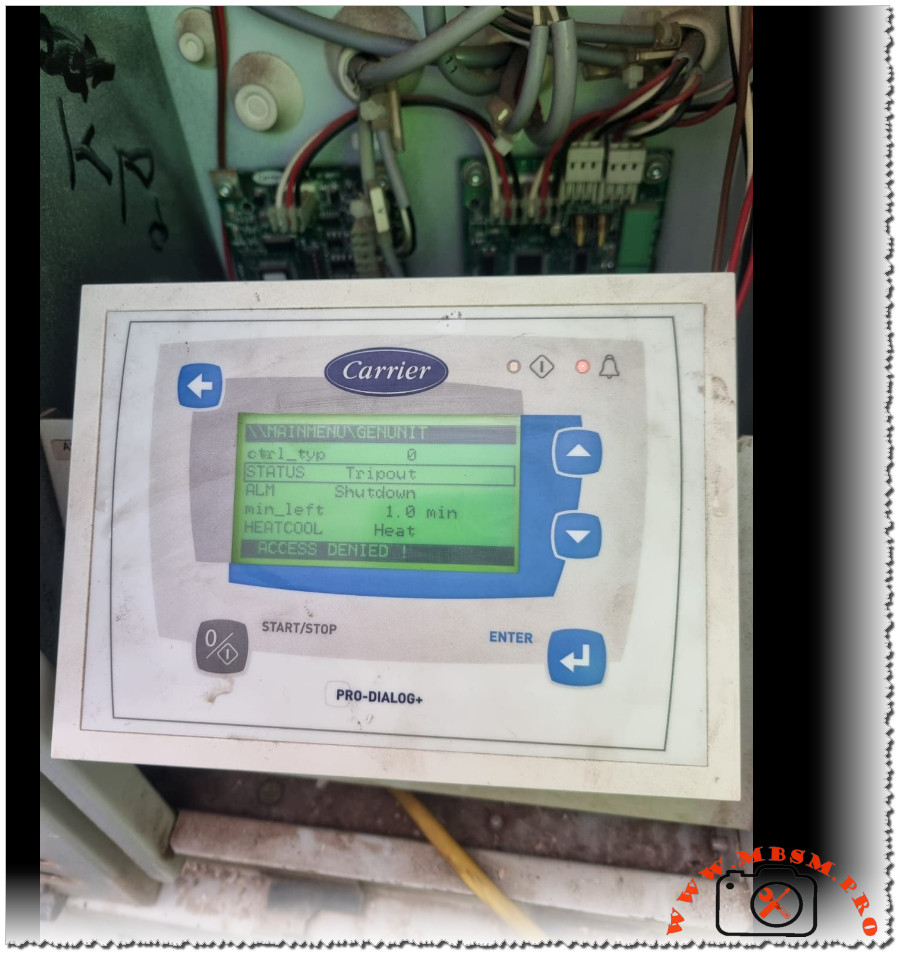
Carrier Pro-Dialog+

Carrier Pro-Dialog+ mbsmpro

Carrier Pro-Dialog+ Tripout shutdown: how the controller protects HVAC equipment

Modern Carrier Pro-Dialog+ controllers are designed to stop a chiller or rooftop unit whenever operating limits are exceeded, displaying a Tripout status and Shutdown alarm to prevent serious damage. This behaviour can seem abrupt to building owners, but for technicians it is a valuable diagnostic signal that the safety chain has done its job.

Main controller messages

The Pro-Dialog+ interface provides a structured view of the unit’s operating state and alarms.

  • STATUS = Tripout means the unit has reached a fault shutdown condition and is fully locked out until the fault is cleared and the controller is reset.
  • ALM = Shutdown indicates that the controller has issued a complete stop order because one or more safety inputs have changed state.

Other fields, such as min_left (minimum time left before restart) and HEAT/COOL mode, indicate how long the unit must remain stopped and which operating mode was requested when the alarm occurred.
If the user tries to enter restricted menus without the proper password, the display shows ACCESS DENIED, confirming that configuration-level parameters are protected.

Typical causes of Tripout

Tripout and Shutdown are linked to a well‑defined list of protective functions in Carrier’s documentation.

  • Common triggers include high‑pressure cut‑out, low‑pressure or loss of refrigerant, water or air flow loss, pump failure, motor overloads, or anti‑freeze protection on the evaporator.
  • The controller monitors digital inputs and analogue sensors; if a safety contact opens while the unit is commanded to run, it records an alarm, stops the circuit, and may require a manual reset.

For example, if the evaporator pump feedback contact opens after a start command, the Pro-Dialog logic raises a pump failure alarm and blocks any new start until a technician has verified the hydraulic circuit.
This strict logic reduces the risk of running a compressor with no flow, a situation that can quickly lead to overheating and mechanical failure.

Access levels and password protection

Carrier’s manuals emphasise that configuration changes are reserved for authorised personnel using password‑protected menus.

  • Users can navigate status, inputs, outputs, and alarm history, but changes to setpoints, safety delays, or configuration tables require entering a correct password.
  • If a password is entered when the unit is not fully stopped, the message ACCES dEniEd appears, preventing unsafe modifications while the machine is running.

This hierarchy of access levels protects the integrity of safety parameters and ensures that only trained technicians adjust critical values such as start‑up delays or capacity control settings.
For service companies like Mbsmgroup, documenting passwords and authorised changes forms a key part of professional maintenance records and quality assurance.

Troubleshooting workflow for technicians

A structured workflow helps technicians move from the Tripout message to a reliable repair.

  • First, review the ALARMS and ALARMS HISTORY menus to identify which safety triggered the fault shutdown and whether it is recurrent.
  • Next, inspect the relevant circuit: verify water or air flow, check pump or fan operation, inspect fuses and overloads, and measure system pressures and temperatures against manual values.

Once the root cause is identified and corrected—for example, resetting a tripped overload, cleaning a clogged filter, or restoring proper flow—the technician can reset the alarm at the controller and observe a full operating cycle.​
Experienced teams often cross‑check field readings with Carrier’s troubleshooting charts to confirm that operating conditions remain within the recommended envelope after restart.

Reference data table for Pro-Dialog+ Tripout

The following table summarises key concepts technicians use when analysing a Tripout situation on Carrier Pro-Dialog and Pro-Dialog+ controlled units.

Item Description Practical role in diagnosis
Tripout status Fault shutdown condition in which the unit is locked out until reset.  Confirms that a safety event has occurred and that automatic restart is blocked.
Shutdown alarm Alarm state where the controller stops the unit due to one or more active faults.  Guides the technician to consult alarm menus and history before attempting a restart.
Safety inputs Digital contacts for HP, LP, flow switches, overloads, freeze stats and interlocks.  Identifies which protective loop opened and where to begin physical inspection.
Alarm history menu Pro-Dialog function that stores a list of previous alarms and operating states.  Helps determine whether the Tripout is isolated or part of a recurring pattern.
Access denied message Display text when a user without sufficient rights attempts to enter protected settings or when password rules are not met.  Prevents accidental or unsafe adjustments and signals need for authorised access.
Manual reset procedure Sequence of acknowledging alarms and resetting the controller once the fault is corrected. ​ Restores operation while ensuring that the underlying problem has been solved.

Carrier Pro-Dialog+ mbsmpro


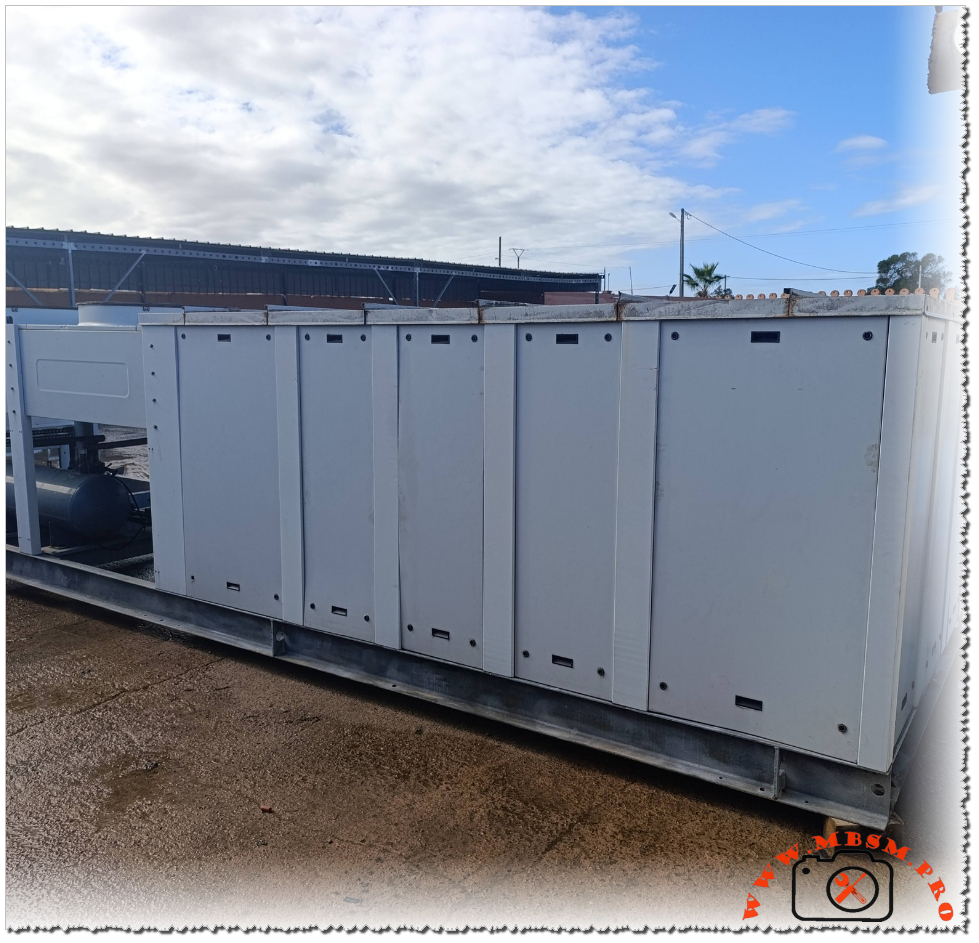
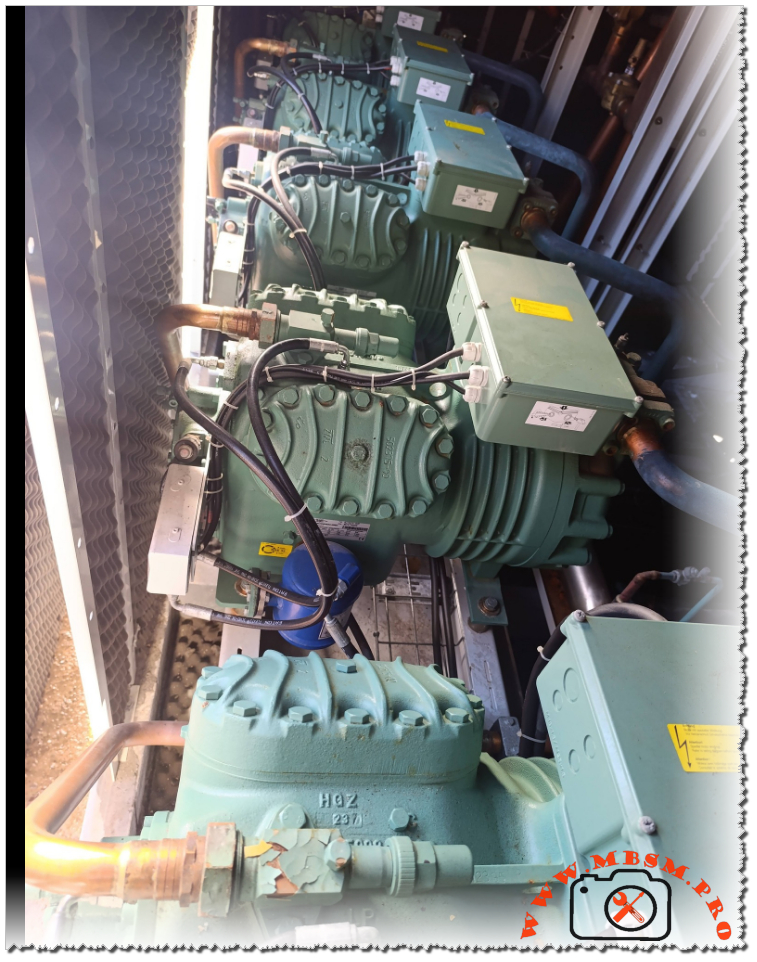
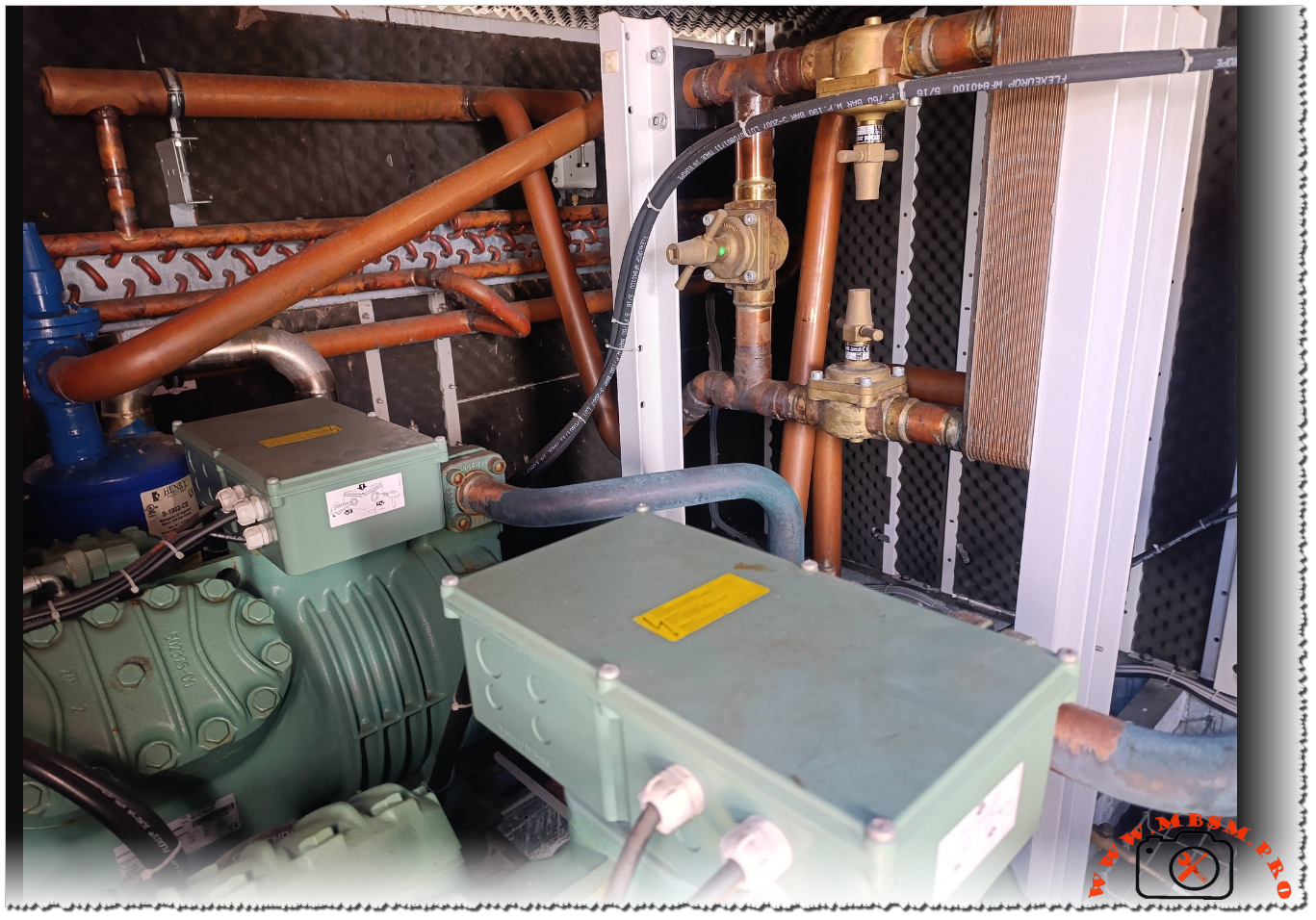
Copeland QR15M1‑TFD‑501 compressor

Copeland QR15M1‑TFD‑501 compressor mbsmpro

Copeland QR15M1‑TFD‑501 compressor: technical profile, applications and selection guide

For HVAC professionals, the Copeland QR15M1‑TFD‑501 stands out as a low‑sound, high‑capacity hermetic reciprocating compressor designed for demanding commercial air‑conditioning and refrigeration systems. This article explores its key specifications, strengths, and how to integrate it correctly into new projects or retrofit jobs.


Main technical specifications

The QR15M1‑TFD‑501 belongs to the Copeland QR low‑sound series, a four‑cylinder hermetic reciprocating platform engineered for reduced vibration and noise in packaged and split systems. It is typically rated at around 12–12.5 HP, giving contractors solid capacity for medium‑ to high‑temperature applications such as rooftop units, air‑cooled chillers and large ducted systems.

Key data that installers usually look for include:

  • Refrigerant: R22, with mineral‑oil lubrication as standard on QR “R” family models.
  • Nominal cooling capacity: up to about 142 000 Btu/h (≈ 41.6 kW) at 60 Hz, covering a wide range of evaporating conditions.
  • Power supply: 3‑phase 380–420 V / 50 Hz and 460 V / 60 Hz, matching most commercial electrical grids worldwide.
  • Cylinders: 4‑cylinder design with a double scotch‑yoke mechanism, improving balance and running smoothness versus conventional rod‑and‑piston sets.
  • Typical operating envelope: medium‑ and high‑temperature commercial air‑conditioning duty.

Construction and performance advantages

Copeland’s QR series is built around a rugged, compact shell with internal suspension, which helps to isolate mechanical vibrations and minimize structure‑borne noise when the compressor is bolted to the base frame. The forged steel crankshaft and precision bearings are designed for high‑speed operation, giving good reliability in systems that cycle frequently or run long duty hours.

Inside the compressor, pistons, yokes and slide blocks are cast from special alloy aluminium, while piston rings use cast iron to maintain sealing and durability over long runtimes. A low‑foaming mineral oil is specified to stabilize lubrication under fluctuating load conditions, supported by a crankcase heater that reduces refrigerant migration during off‑cycles.


Electrical and protection features

The QR15M1‑TFD‑501 uses a three‑phase suction‑gas‑cooled motor, which takes advantage of return gas to remove heat from the windings and improve overall motor life. On TFD models, internal inherent line‑break protection is provided, cutting power if winding temperature or current rises beyond design limits, and some QR variants complement this with an external solid‑state protection module.

Standard rotalock or stub‑tube connections simplify brazing and servicing, and many units ship with an oil level test valve plus ports positioned for easy access to service gauges. These details may seem minor, but in a tight plant room or rooftop installation, better port layout can save significant time during commissioning and troubleshooting.


Typical applications and selection tips

Because of its power rating and low‑sound design, the QR15M1‑TFD‑501 is often selected for:

  • Commercial air‑conditioning units such as rooftop packages, air handlers and split systems.
  • Medium‑temperature refrigeration where low noise is important, including supermarkets, cold rooms near occupied spaces or hotels.
  • Retrofit projects replacing older R22 compressors of similar capacity, where matching voltage, displacement and oil type is critical.

When selecting this model, technicians usually:

  • Check that the system is still legally allowed to operate with R22 in their region, or confirm compatibility with any approved drop‑in refrigerant if permitted by manufacturer guidelines.
  • Compare duty‑point capacity (evaporating and condensing temperatures) against Copeland QR performance tables rather than relying only on nominal HP ratings.
  • Ensure correct crankcase heater control and suction line sizing to protect the compressor from liquid slugging on start‑up.

QR15M1‑TFD‑501 essential data table

Specification Typical value / description
Compressor family Copeland QR low‑sound hermetic reciprocating, 4‑cylinder.
Model QR15M1‑TFD‑501.
Nominal power About 12–12.5 HP.
Refrigerant R22, mineral‑oil lubrication.
Cooling capacity (60 Hz) Up to ≈ 142 000 Btu/h (≈ 41.6 kW) depending on conditions.
Voltage / phase / frequency 380–420 V 3~ 50 Hz; 460 V 3~ 60 Hz.
Application range Commercial air‑conditioning and medium‑temp refrigeration.
Key features Low‑sound shell, internal suspension, crankcase heater, internal motor protection.

Maintenance, reliability and retrofit considerations

Maintaining a QR15M1‑TFD‑501 correctly starts with oil management: technicians should always replace oil with the same viscosity grade mineral oil specified by Copeland and verify oil level after long transport or system leaks. Adequate superheat, properly set expansion devices and clean condenser surfaces are equally important to keep discharge temperatures within safe limits and prevent thermal trips.

In retrofit scenarios, attention must be paid to any system filters and driers, as long‑serving R22 circuits often contain moisture, acids or debris that can severely shorten compressor life if not addressed before start‑up. Where local regulations phase down or ban R22, owners may consider full system replacement or carefully engineered conversions to modern refrigerants, guided by manufacturer bulletins and local codes.

Copeland QR15M1‑TFD‑501 compressor mbsmpro