DC05CDNC1C 48V DC Cabinet Air Conditioner: Technical Overview and Practical Guide
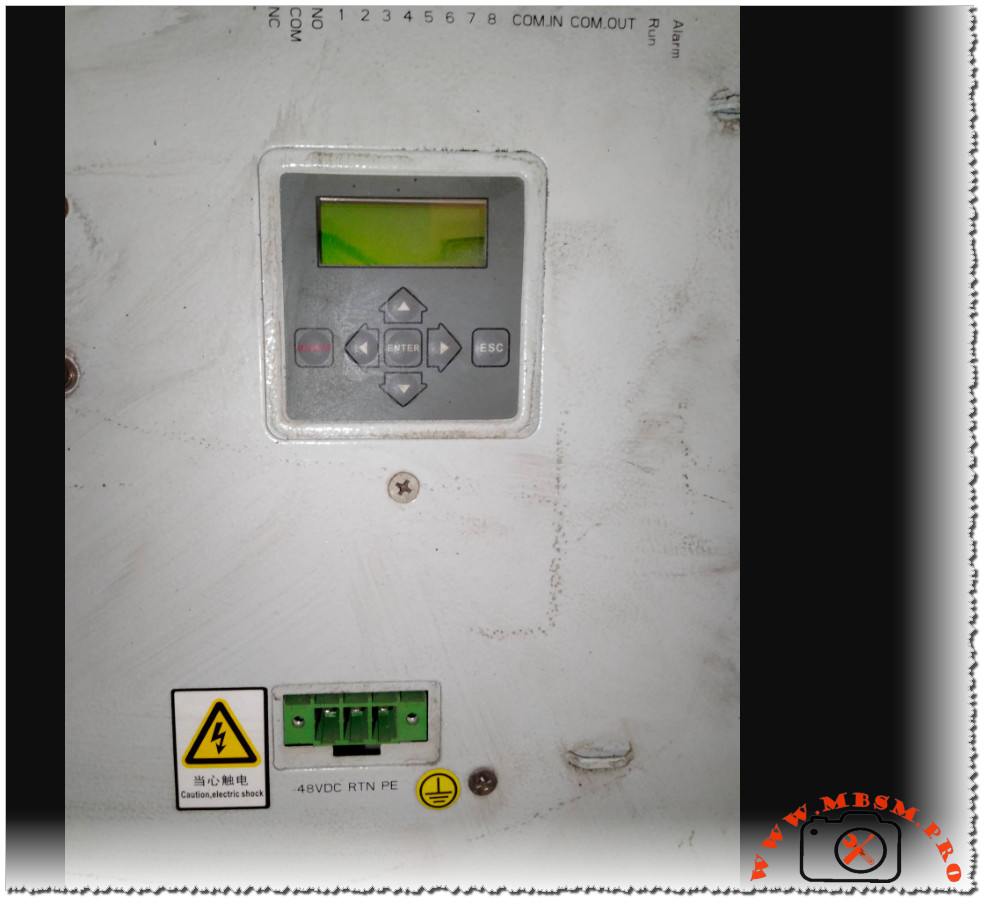
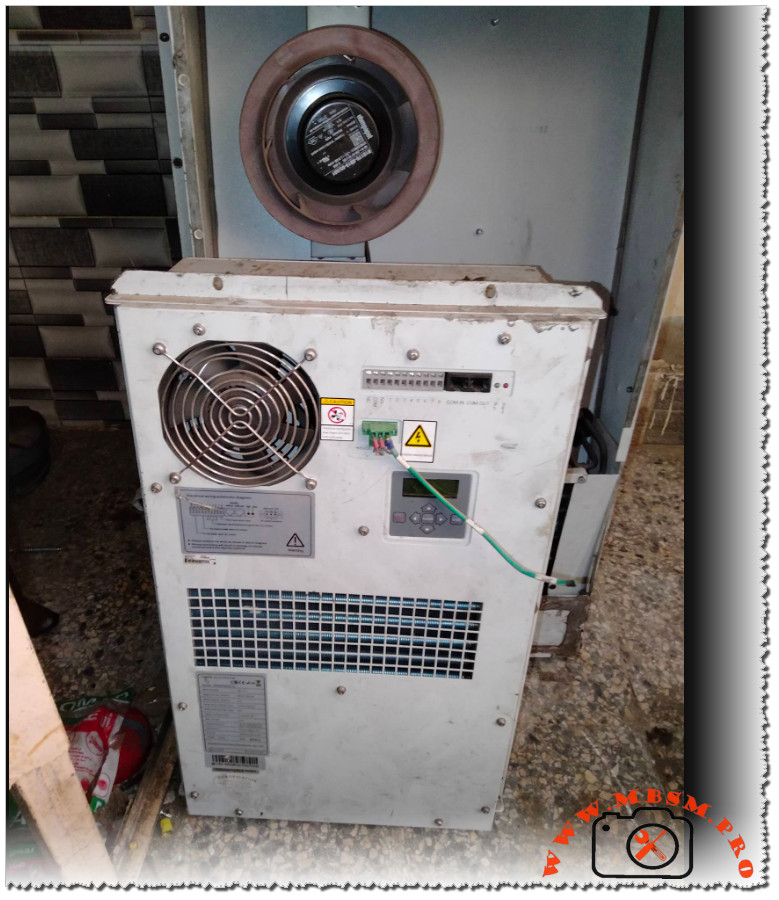
Outdoor telecom cabinets, base stations and industrial enclosures rely on compact DC air conditioners to keep sensitive electronics within a safe temperature range. The Envicool DC05CDNC1C 48V DC cabinet air conditioner is one of these dedicated solutions, delivering 550 W of cooling capacity in a sealed IP65 housing for harsh outdoor environments.
Product identification
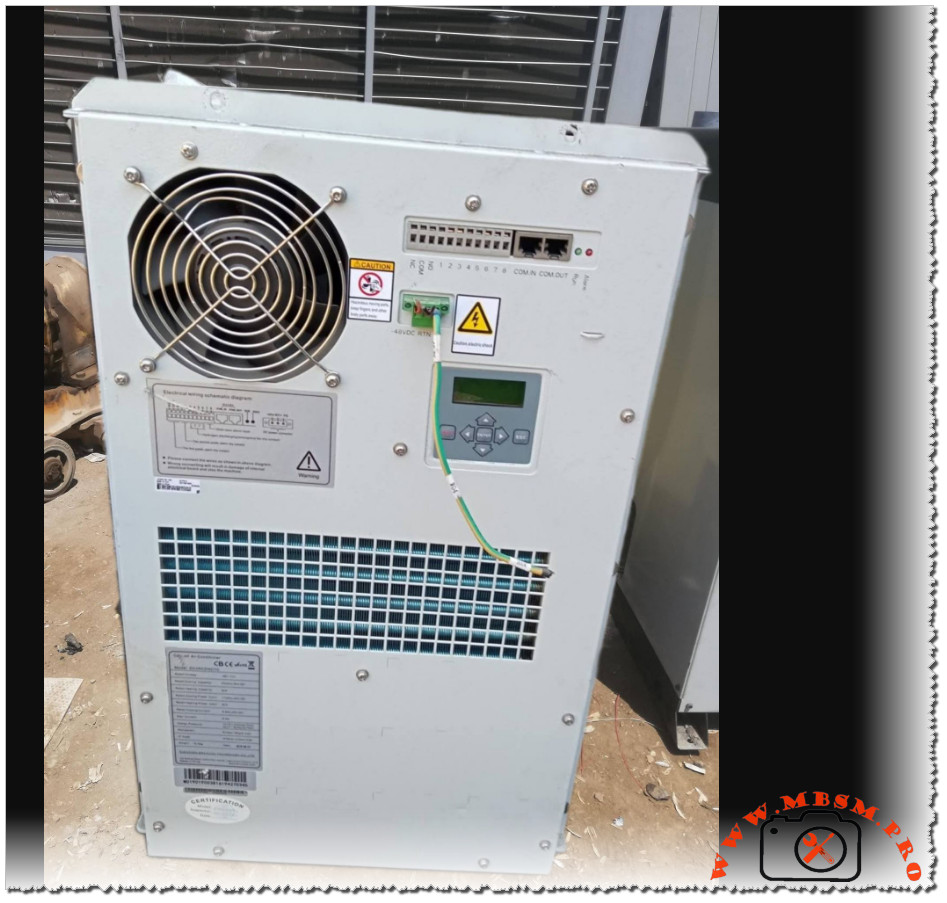
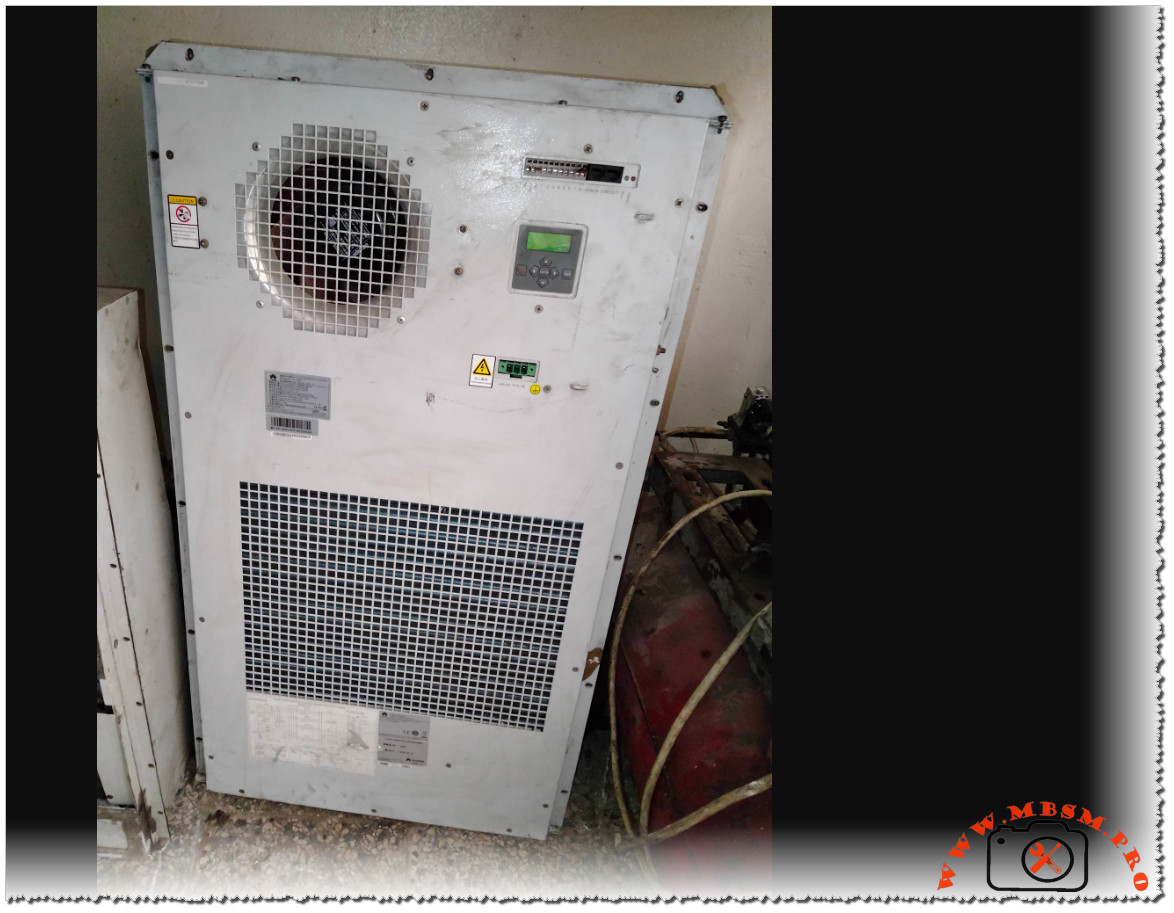
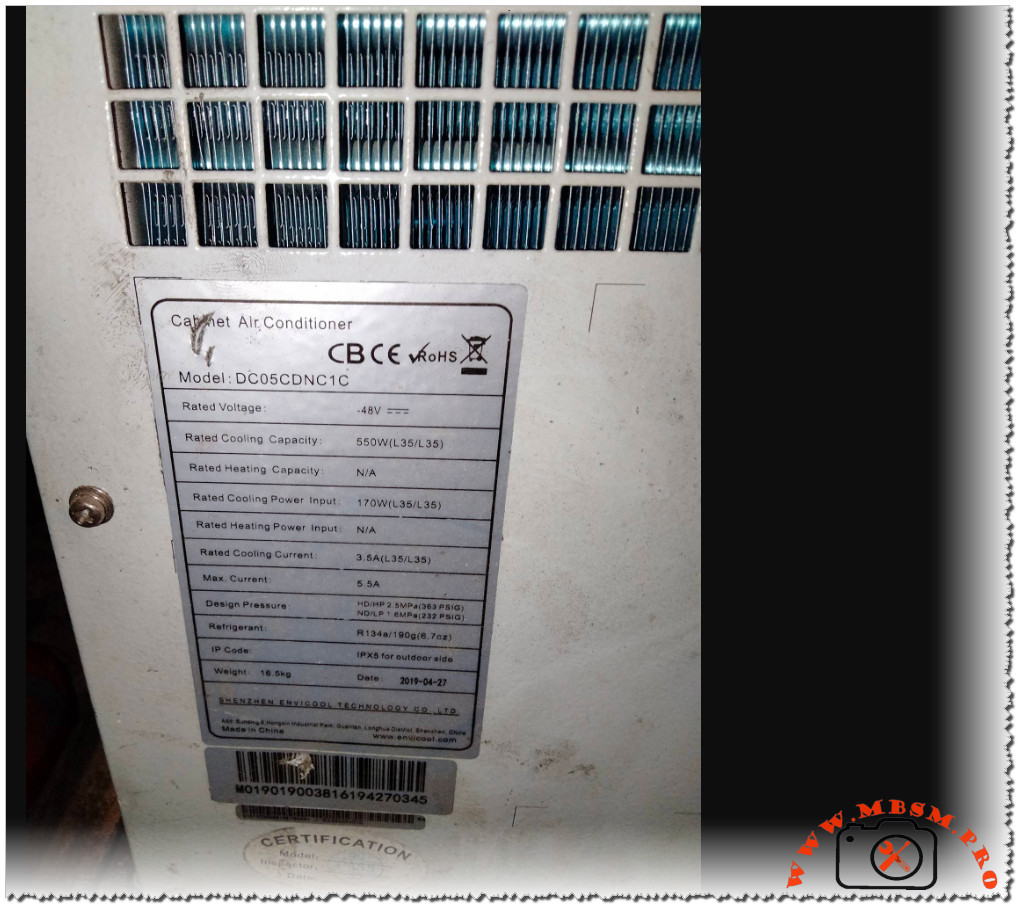
The nameplate in the photo clearly identifies the unit as a Cabinet Air Conditioner – Model DC05CDNC1C manufactured by Shenzhen Envicool Technology Co., Ltd. It is a 48 VDC powered system using refrigerant R134a, designed specifically for outdoor telecom and electronics cabinets rather than for human comfort cooling.
Main technical specifications
From the label and available product listings, the DC05CDNC1C offers 550 W (≈1700 BTU/h) of rated cooling capacity at test conditions L35/L35, with a rated cooling power input of 170 W, which indicates a high-efficiency DC compressor. The unit works on –48 V DC, draws a rated current around 3.6 A and a maximum current of 5.5 A, and uses R134a refrigerant within an IP65 enclosure suitable for dusty or rainy outdoor sites.
Key data table
Specification
Value
Model
DC05CDNC1C cabinet air conditioner
Power supply
–48 V DC nominal
Rated cooling capacity
550 W at L35/L35 (≈1700 BTU/h)
Rated cooling input
170 W at L35/L35
Refrigerant
R134a
Cooling function
Cooling only or cooling + heating (depending on configuration)
Working temperature
Approximately –40 °C to +55 °C (typical for this model range)
Protection rating
IP65 for outdoor installation
Approx. dimensions
315 × 170 × 545 mm (W×D×H)
Typical applications and installation
This compact DC air conditioner is used on outdoor telecom cabinets, wireless base stations, battery cabinets and other critical enclosures where grid AC power is limited but –48 V DC is available from telecom power systems or solar-hybrid supplies. Installers mount the unit directly on the cabinet wall, ensuring correct cut-out size, gasket sealing for IP65, and proper connection to the DC power and control terminals according to Envicool’s cabinet air-conditioner manuals.
Advantages for telecom and industrial users
The DC05CDNC1C offers several operational advantages: it reduces energy consumption by using DC power directly without an AC/DC conversion stage, keeps electronics within their design temperature for higher reliability, and protects against dust and moisture thanks to its sealed IP65 construction. For operators of remote sites, the 48 V DC architecture integrates smoothly with solar and battery systems, helping to maintain cooling even during AC grid outages and extending equipment life in severe climates.
Frascold D2 15Y: semi‑hermetic compressor for reliable commercial refrigeration
General overview
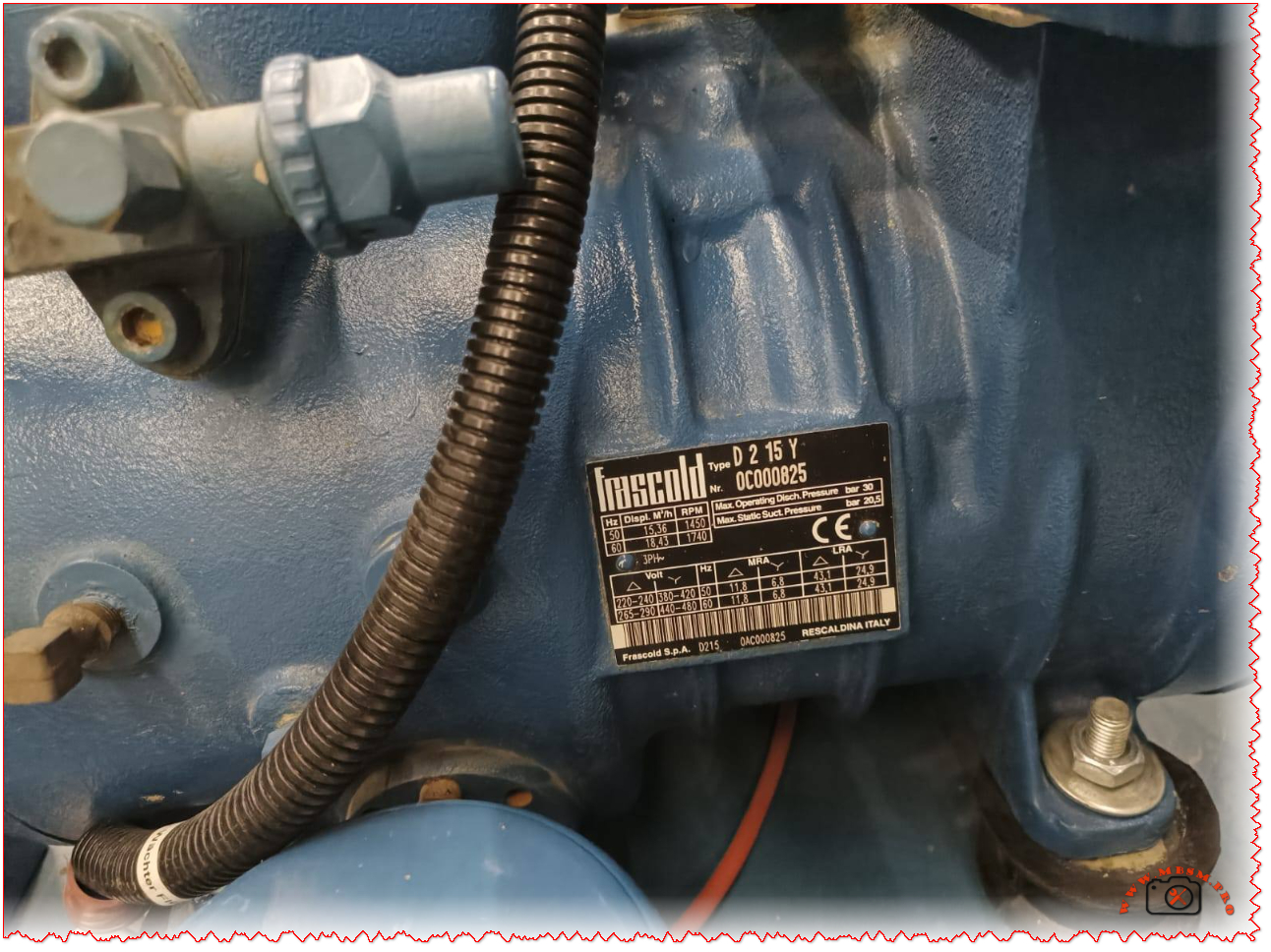
The Frascold D2 15Y is a two‑cylinder, semi‑hermetic reciprocating compressor designed for low‑ and medium‑temperature commercial and industrial refrigeration duties. With a displacement of about 15.4 m³/h at 50 Hz and a nominal motor power of 1.5 kW (2 HP), it fits perfectly in small to medium cold rooms, display cabinets and process coolers.
This model belongs to Frascold’s D series, known for compact cast‑iron bodies, quiet operation and high energy efficiency under EN12900 test conditions. The D2 15Y can be supplied as a bare compressor or integrated into silent condensing units, giving installers flexibility in plant design.
Key technical features
Frascold’s data show that the D2 15Y delivers around 6–7 kW of cooling capacity with R404A in typical low‑temperature duty, depending on evaporating and condensing conditions. The compressor is charged with POE oil (approx. 1.1 L) and uses robust suction and discharge service valves to facilitate commissioning and service.
Electrical supply options usually cover 220–240 V/3/50 Hz and 380–420 V/3/50 Hz (with corresponding 60 Hz variants), allowing use across most European three‑phase networks. The unit is compatible with multiple refrigerants, including R22, R134a, R404A, R507A, R407A/F, and new lower‑GWP blends such as R448A and R449A.
Table – Main data for Frascold D2 15Y
Parameter
Typical value
Model
D2‑15Y / D2‑15.1Y
Technology
Semi‑hermetic reciprocating, 2 cylinders
Displacement (50 Hz)
15.36 m³/h
Nominal motor power
1.5 kW – 2 HP
Oil charge
≈ 1.1 L POE oil
Typical cooling capacity
≈ 6.7 kW with R404A (EN12900 reference condition)
Application
Low/medium‑temperature refrigeration (LBP/MBP)
Compatible refrigerants
R22, R134a, R404A, R507A, R407A/F, R448A, R449A
Benefits for HVACR professionals
Semi‑hermetic design means the D2 15Y can be opened for internal inspection and overhaul, extending service life compared with fully hermetic units in demanding duty cycles. The compressor is also suitable for operation with variable‑frequency drives, enabling smooth capacity modulation from part‑load to peak demand while improving seasonal efficiency.
For contractors and wholesalers, the D2 15Y’s widespread availability and clear documentation (including a dedicated PDF datasheet and full catalog) simplify selection, replacement of legacy units and stocking of spare parts. Its broad refrigerant approval list helps systems transition towards lower‑GWP blends without changing the compressor platform.
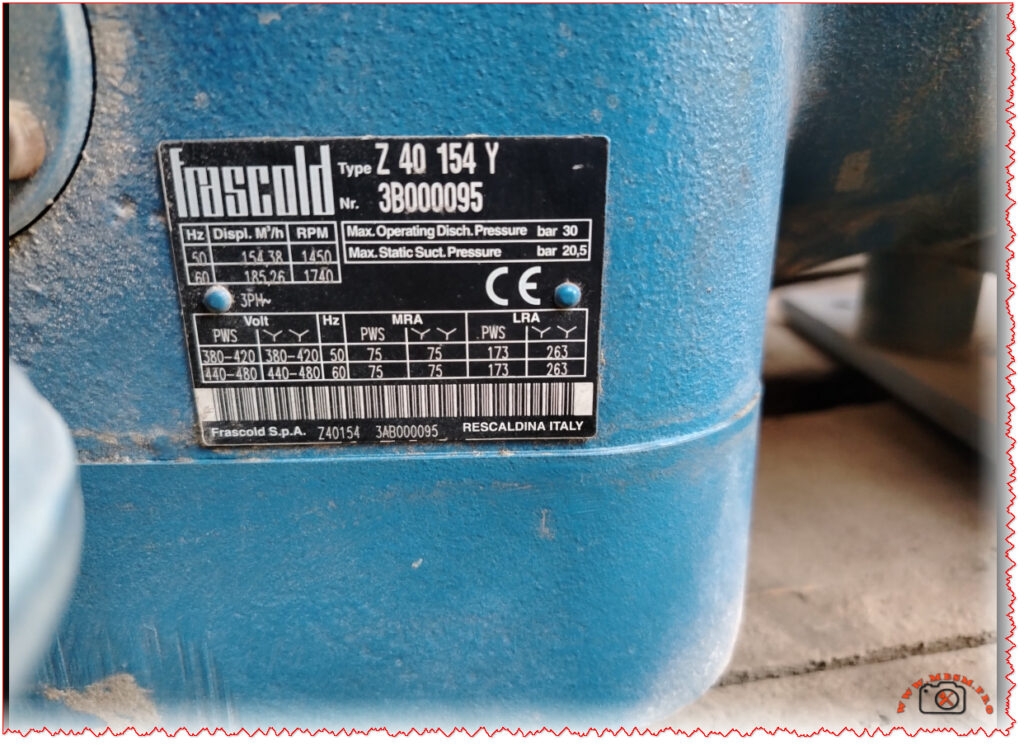
Frascold Z40-154Y is a semi-hermetic reciprocating compressor from Italy, rated at 40 horsepower for refrigeration applications with a displacement of 154 m³/h
Frascold Z40‑154Y 40 HP Italian Freezer Compressor: Full Technical Overview
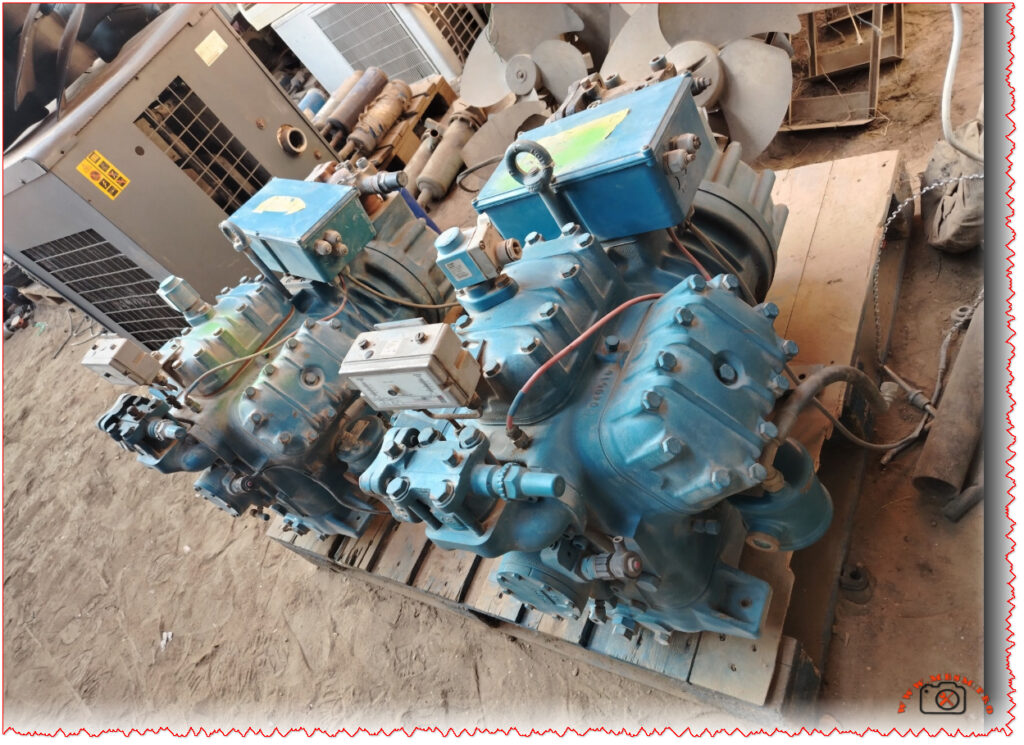
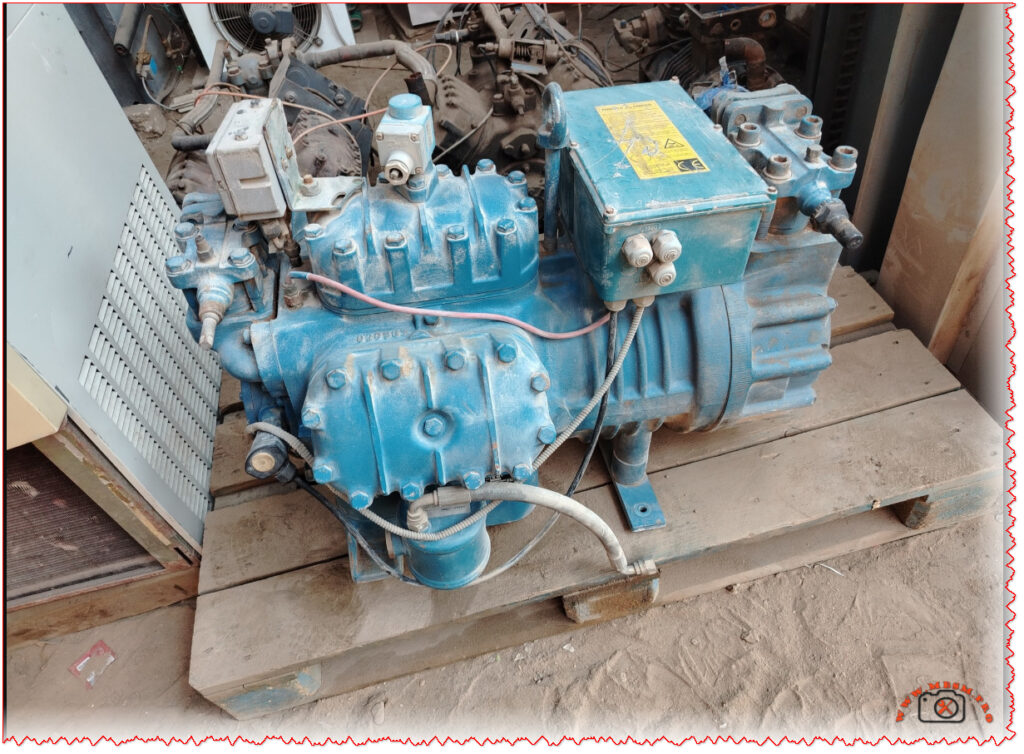
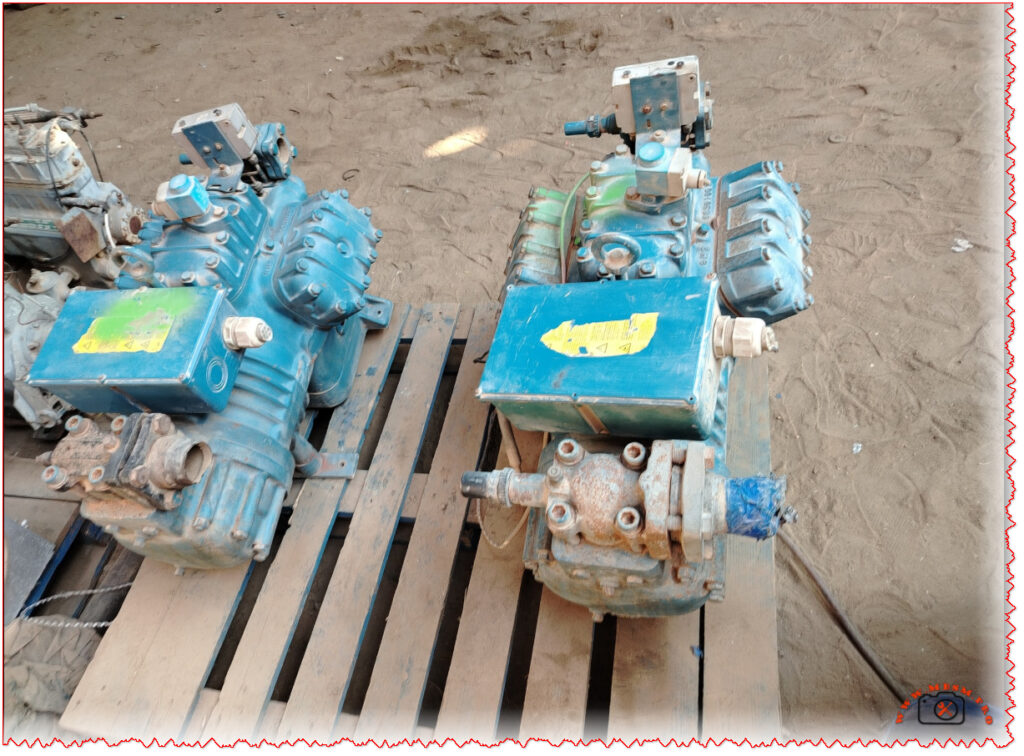
The photos show a heavy‑duty Frascold semi‑hermetic reciprocating compressor, type Z 40 154 Y, made in Rescaldina, Italy, prepared on pallets and ready for reuse in industrial cold rooms and freezer applications. The metal nameplate is clearly visible, which allows accurate identification of the model, displacement and electrical data, exactly what technicians look for when buying a second‑hand compressor in the field.
Main technical data from the nameplate
On the front plate, the compressor is marked Type Z 40 154 Y, Nr 3B000095, with the manufacturer line “Frascold S.p.A. – Rescaldina Italy”. The first line shows the displacement in cubic metres per hour and the nominal rpm at different frequencies. At 50 Hz, the displacement is listed around 154 m³/h with a speed close to 1450 rpm, while at 60 Hz it rises with a higher rpm figure. The label also shows maximum operating discharge pressure of 30 bar and maximum static suction pressure of 20.5 bar, indicating a machine designed for tough low‑temperature duty in modern refrigerants.
In the lower section, the electrical box data indicate three‑phase power supply options. Voltages are shown as 380–420 V for 50 Hz and 440–480 V for 60 Hz, with typical MRA and LRA values that help size magnetic contactors and protection devices. This combination of mechanical and electrical information on the nameplate allows installers to check compatibility with existing plants before making any connection on site.
Construction and visual condition of the compressor
The images reveal a robust cast‑iron body with multiple cylinder heads and a large suction side assembly, typical of Frascold’s Z‑series semi‑hermetic line used in commercial and industrial refrigeration. The compressor sits on a steel base and is coupled to an integrated oil sump, showing the familiar blue Frascold paint, even if dust and minor oxidation are visible after years of service and storage.
Several units are shown together on wooden pallets, some with pressure switches and control accessories still mounted on the discharge line. This suggests the compressors were removed as complete condensing sets from operating plants, which is often appreciated by technicians who want to reuse existing safety controls, crankcase heaters and connection fittings. The general structure appears intact, without obvious cracks in the casting or broken mounting feet, a key point when evaluating second‑hand equipment.
Typical applications and performance context
With its 40 HP rating and high volumetric displacement, the Frascold Z40‑154Y is usually selected for low‑temperature freezer rooms, blast freezers and industrial cold storage where evaporating temperatures can reach well below zero and the refrigeration load is very demanding. In many markets around the Mediterranean and Middle East, such compressors are widely used with refrigerants like R404A or direct alternatives specified in Frascold’s official catalogues, always respecting the authorised pressure limits and oil type recommendations.
The multi‑cylinder semi‑hermetic design offers easier maintenance than hermetic units because the heads and valve plates can be opened for inspection, valve replacement or piston work without cutting any welded shell. For owners of older plants, buying a used Italian compressor in good mechanical condition can be an economical way to extend the life of a cold room while still benefiting from European build quality.
Practical buying tips for used Frascold compressors
Before installing a second‑hand Z40‑154Y, technicians usually perform a sequence of standard checks. These include measuring insulation resistance on the motor windings, verifying that the crankshaft turns smoothly by hand, and inspecting for oil leaks around shaft seals and service valves. If the compressor passed a nitrogen pressure test and the oil is reasonably clean, the chances of successful commissioning are significantly higher.
It is also recommended to recover and replace the oil according to Frascold’s documentation and to install new filter‑driers in the system to protect the machine from moisture and acids. Finally, using the exact nameplate data for voltage, frequency and MRA/LRA, the electrician can correctly size breakers, contactors and cables, avoiding nuisance tripping and overheating during the first start‑ups of the refurbished refrigeration unit.
Technical data table (indicative values for Z40‑154Y)
Copeland condensing unit for cold room – features, applications and installation tips
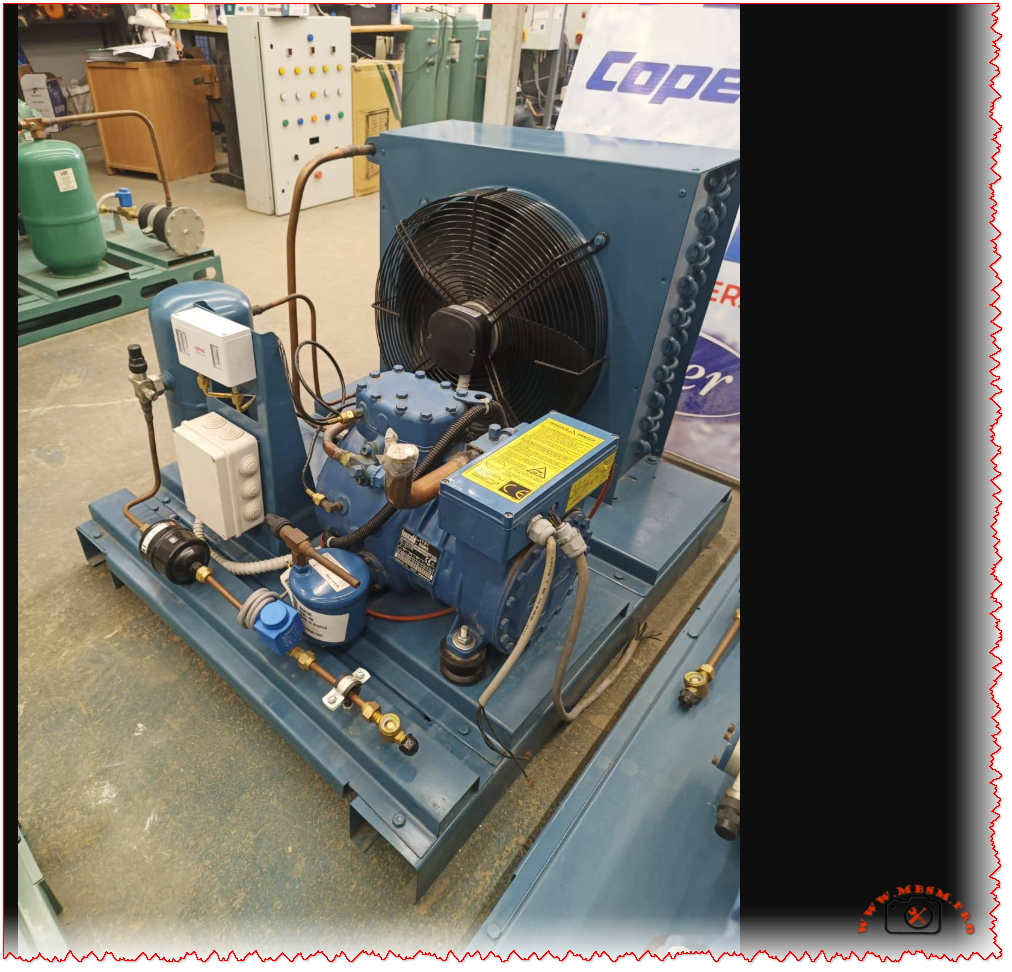
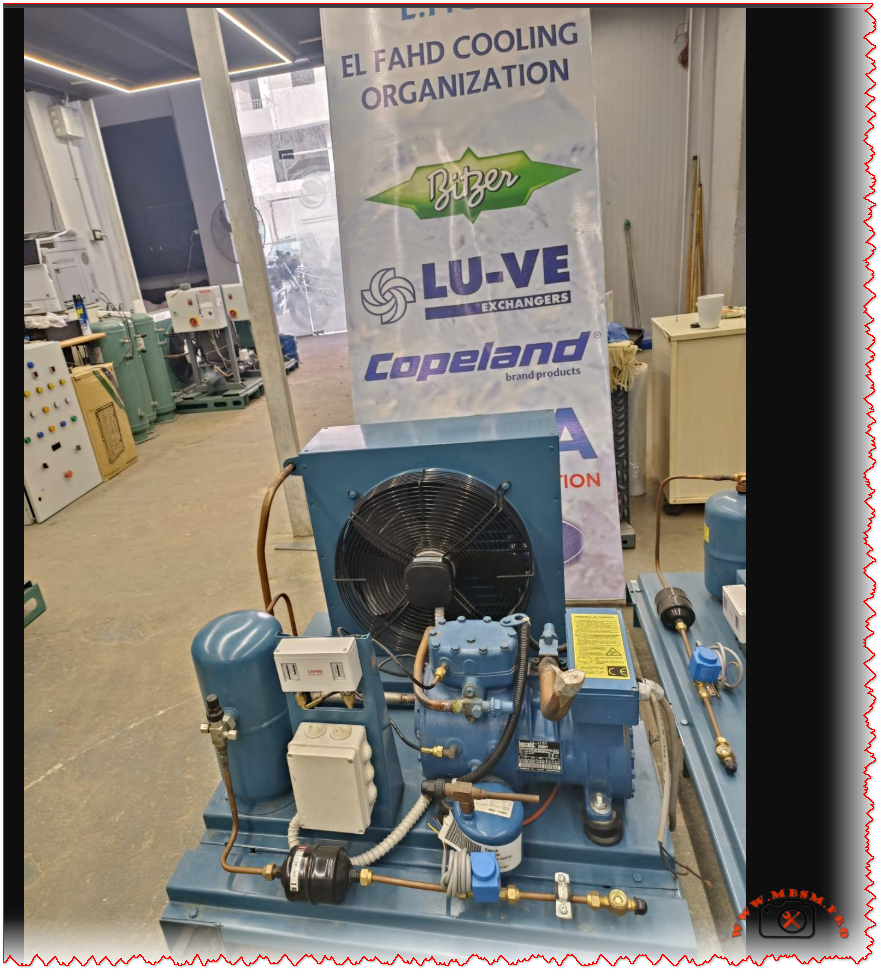
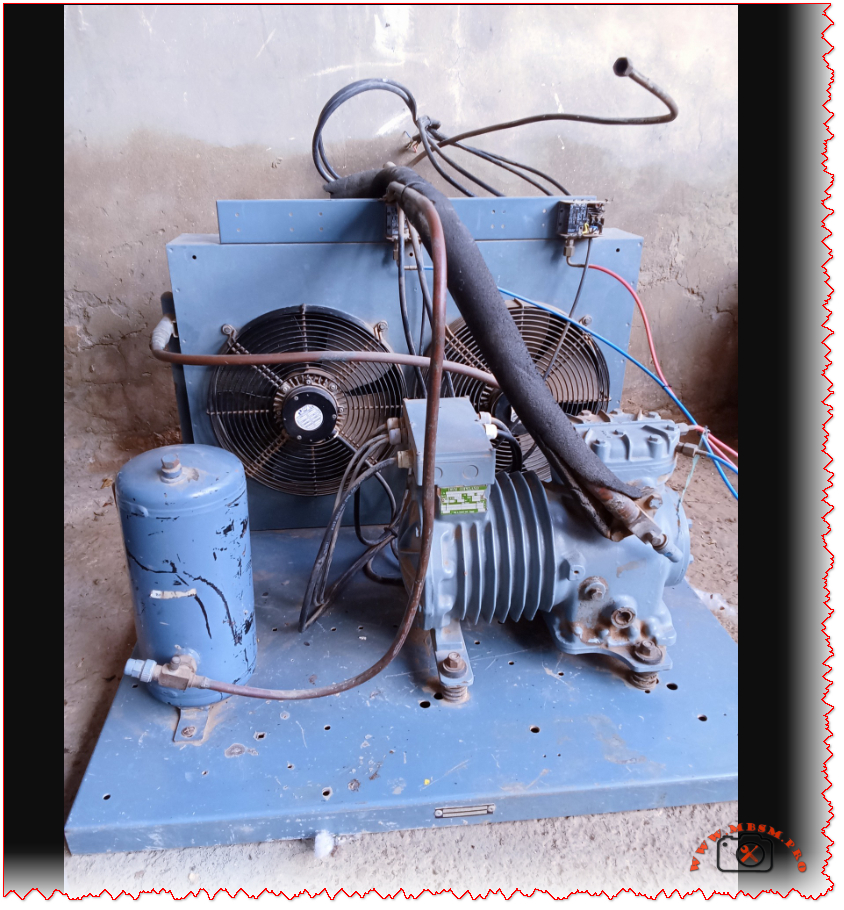
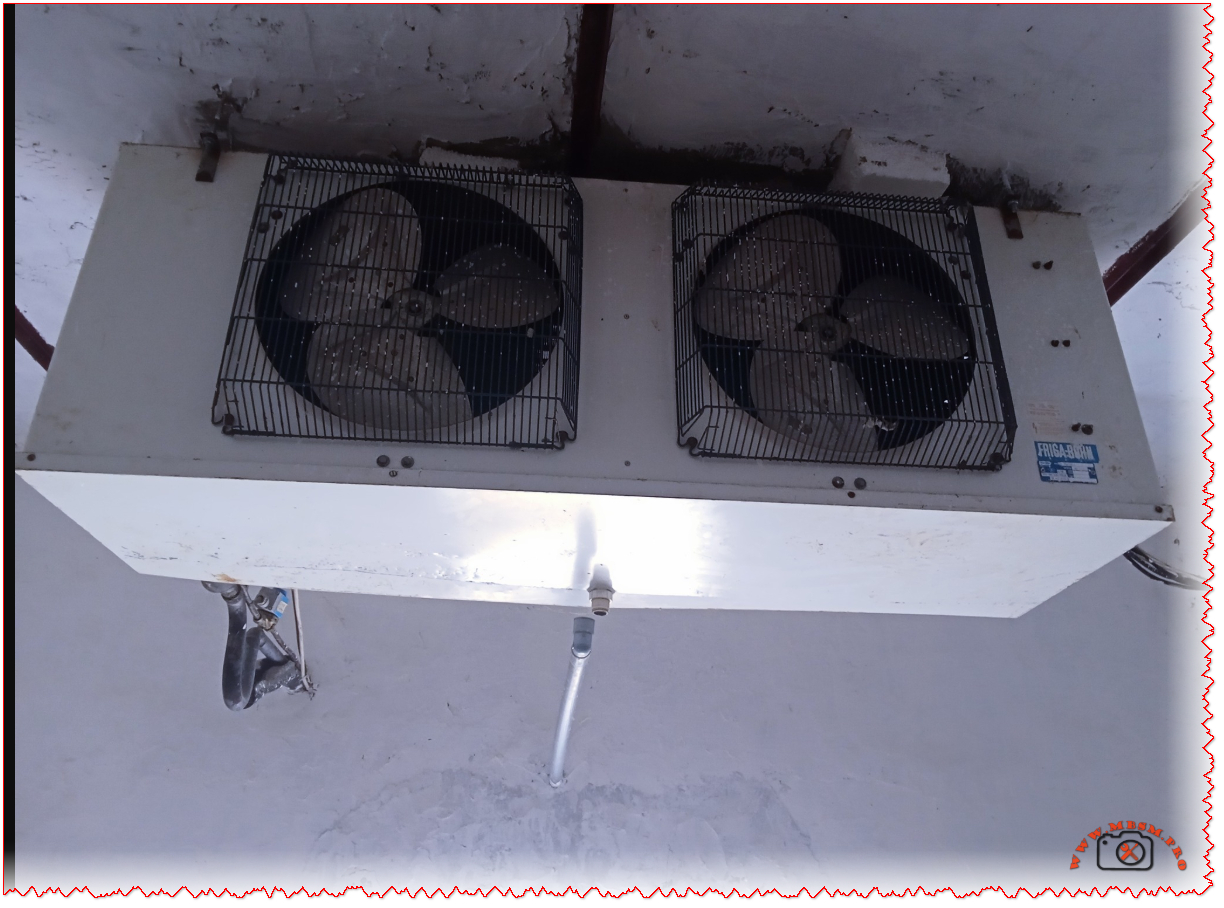
The condensing unit (group) is an original Copeland brand motor rated at 15 horsepower (15 HP), while the evaporator fans are Friga‑Bohn brand (two fans), both in good working condition
Equipment description
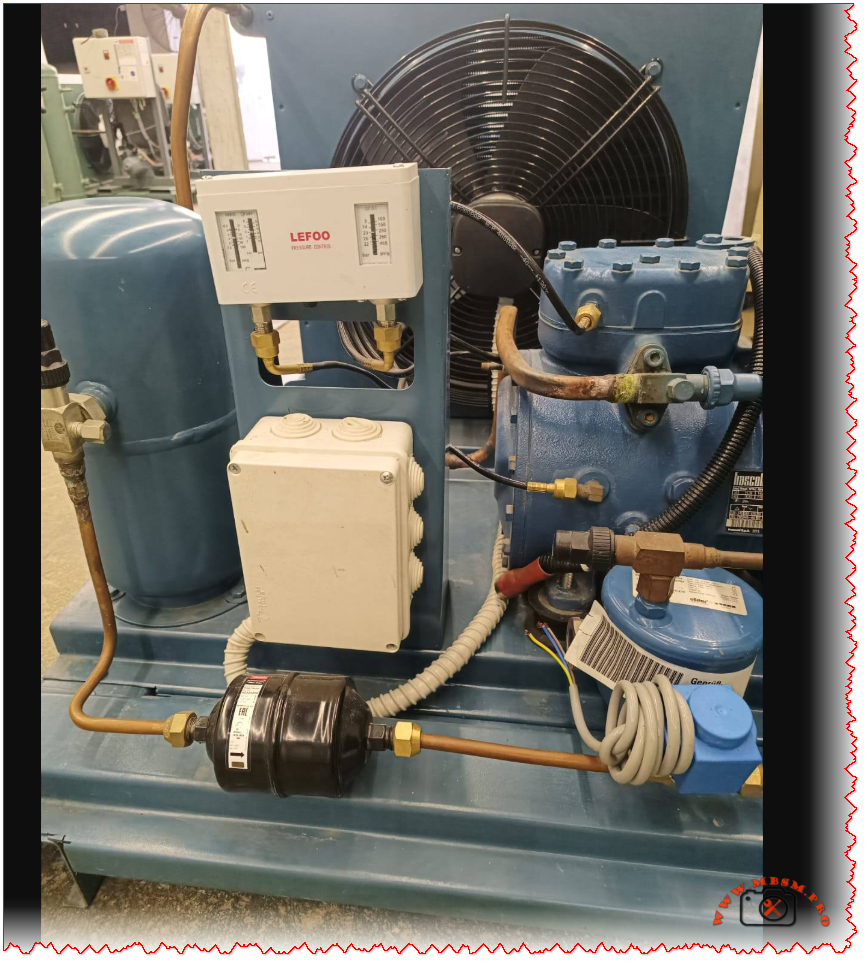
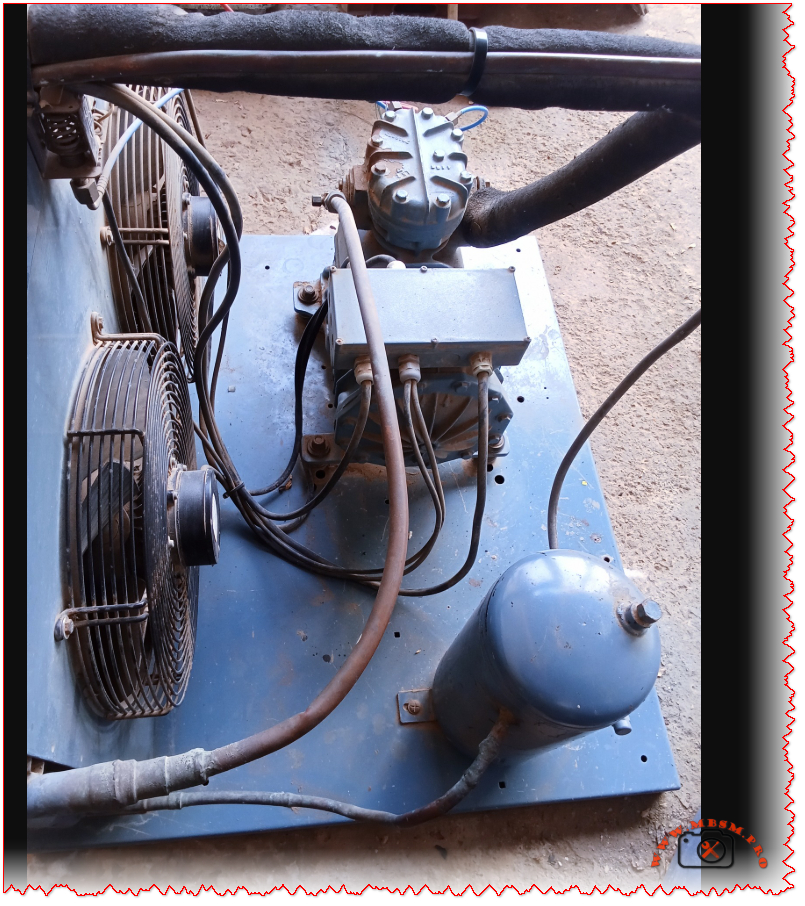
The images show a Copeland condensing unit on a steel base, with a semi‑hermetic refrigeration compressor, air‑cooled condenser with dual fans and a vertical liquid receiver, designed for a cold room at positive or low temperature. This configuration is widely used in food retail, cold storage and agro‑food applications where stable temperature and continuous duty are essential.
The ceiling‑mounted evaporator with two axial fans distributes the cold air evenly inside the room and returns refrigerant gas to the Copeland compressor through insulated suction and liquid lines. Pairing a Copeland condensing unit with a forced‑air evaporator is a classic solution that remains easy to install, commission and service for professional refrigeration contractors.
Copeland brand and technology
Copeland is a global reference in refrigeration compressors, offering scroll, semi‑hermetic and hermetic models with high energy efficiency and broad operating envelopes. Its equipment covers commercial refrigeration from medium‑temperature cold rooms to low‑temperature freezers, helping retailers and logistics operators secure the full cold chain.
Modern Copeland systems often integrate advanced protections, electronic controls and, on some ranges, Digital Scroll technology for capacity modulation, which improves temperature stability and reduces electrical consumption. For installers and companies such as Mbsmgroup or Mbsm.pro, this means more reliable systems, fewer service calls and better seasonal efficiency.
Typical features of Copeland condensing units
Although the exact nameplate of the photographed unit is not readable, Copeland catalogues describe the main features of their condensing unit ranges. These units are available with multiple refrigerants (such as R404A, R134a and newer lower‑GWP blends), and cover a wide capacity range suitable for small to large cold rooms.
Key technical characteristics (catalog examples)
Item
Typical Copeland data
Compressor type
Scroll or semi‑hermetic reciprocating, multi‑refrigerant, high efficiency.
Application range
Medium and low temperature, roughly from +12 °C down to around −40 °C depending on model.
Capacity range
Models sized for commercial cold rooms, freezers and display cases of various volumes.
Condenser
Quiet axial fans, available in standard or high‑ambient “tropical” versions.
Options
Digital Scroll capacity modulation, electronic controls, liquid line components and safety devices pre‑assembled.
These catalogue values help technicians choose a replacement unit or design a new installation based on room size, target temperature and local climate.
Installation and maintenance recommendations
When installing or refurbishing a Copeland condensing unit like the one shown, technicians should:
Inspect the compressor, liquid receiver and all brazed joints for signs of damage or leaks before charging with refrigerant.
Clean the condenser coil and verify fan operation to ensure proper condensing pressure and avoid high‑pressure trips.
It is also important to select a refrigerant approved for the specific Copeland model (as listed in the product catalogue) and to follow the prescribed oil type and charge. Adding appropriate protections – high/low pressure switches, crankcase heater, motor protection and an electronic temperature controller – increases system reliability and extends the service life of the equipment.
Embraco FFI10HAKW compressor nameplate: key data and professional overview
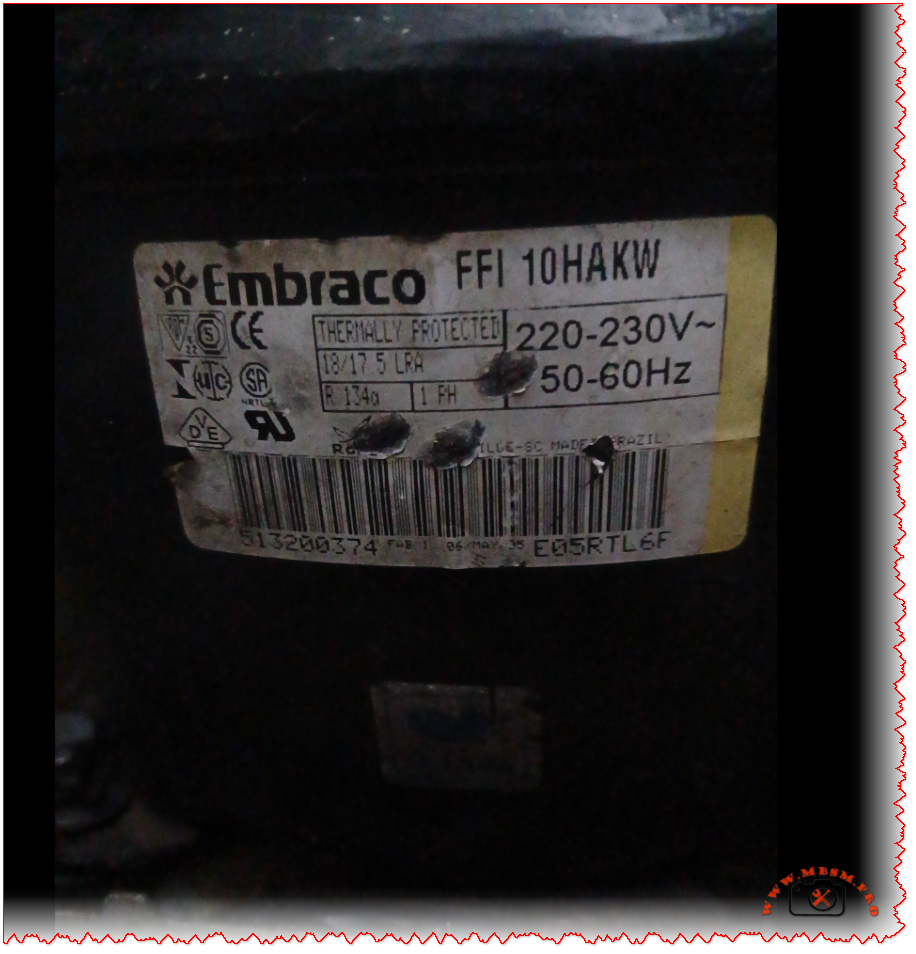
The Embraco FFI 10HAKW is a hermetic reciprocating compressor, 220–230 V single‑phase, designed for low and medium back pressure refrigeration systems using R134a. It delivers around 1/3 HP with a 9.04 cm³ displacement, fitting many small commercial cabinets, coolers, and display fridges.
Main technical specifications
The nameplate in the image shows model FFI 10HAKW, voltage 220–230 V~ and frequency 50–60 Hz, which allows operation on most European and international single‑phase networks. It is thermally protected and approved for refrigerant R134a, with locked‑rotor current around 17–18 A, and is manufactured in Brazil for the Embraco/Nidec APA family.
Technical data table
Specification
Value (typical)
Model
FFI10HAK / FFI10HAKW
Compressor type
Hermetic reciprocating, on‑off
Displacement
9.04 cm³
Voltage / phase / freq.
220–230 V, 1~, 50/60 Hz
Refrigerant
R134a
Application range
L/MBP (Low & Medium Back Pressure)
Motor type
RSIR/CSIR, LST starting torque
Nominal motor power
≃ 1/3 HP
Cooling capacity at −10 °C evap., +45 °C cond.
≃ 401–510 W (EN12900)
Typical applications in commercial refrigeration
This compressor is commonly used in upright beverage coolers, refrigerated counters, pastry displays and small commercial freezers where compact size and efficient R134a performance are critical. Thanks to its L/MBP envelope and moderate displacement, it suits positive‑temperature cabinets and light low‑temperature duties, such as small freezers or ice‑cream displays.
Selection and replacement guidelines
When replacing an FFI10HAKW, technicians should match displacement, voltage, application range (L/MBP) and refrigerant to ensure similar cooling capacity and reliability. It is good practice to consult the official Embraco datasheet for operating envelopes, oil charge and performance curves, and to respect EN12900/ASHRAE test conditions when comparing with alternative models.